College of Life Science, Sichuan Agricultural University, Ya'an, Sichuan Province, People's Republic of China.
Department of Plant Biotechnology and Bioinformatics, Ghent University, Ghent, Belgium.
BMC Plant Biol. 2019 Aug 5;19(1):339. doi: 10.1186/s12870-019-1955-z.
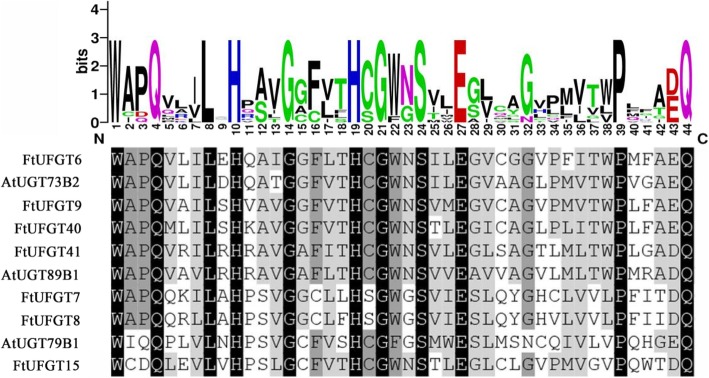
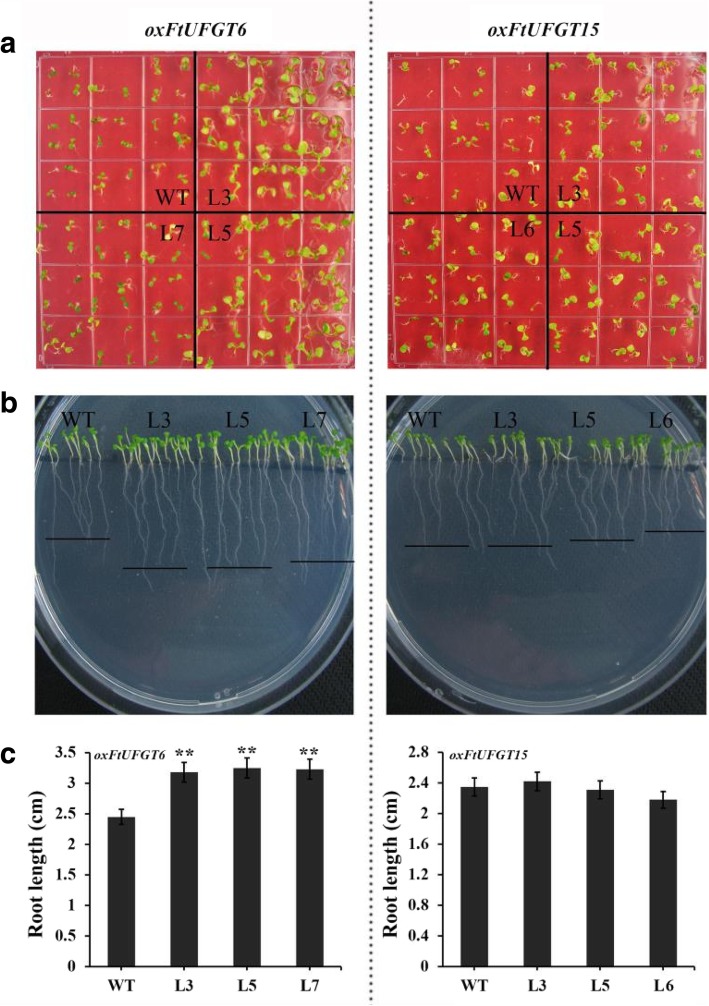
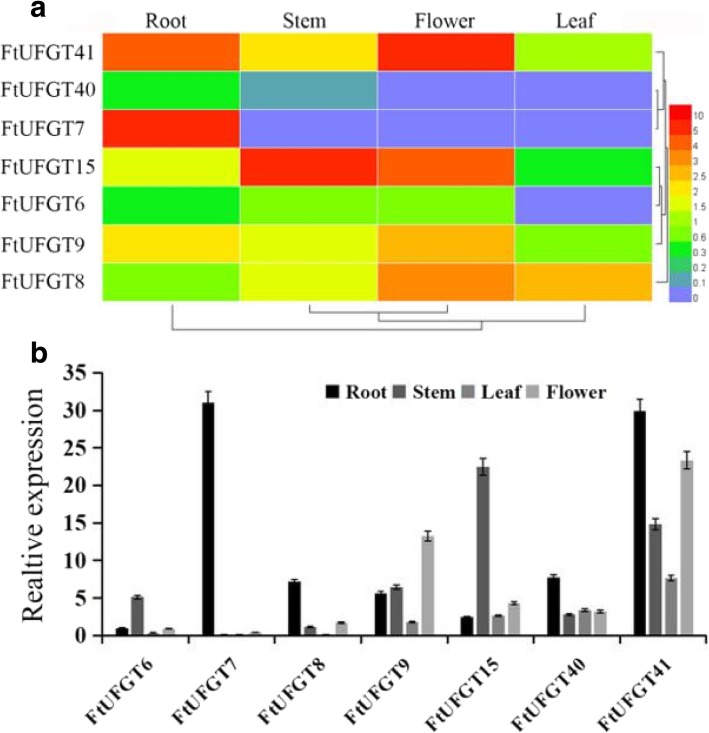
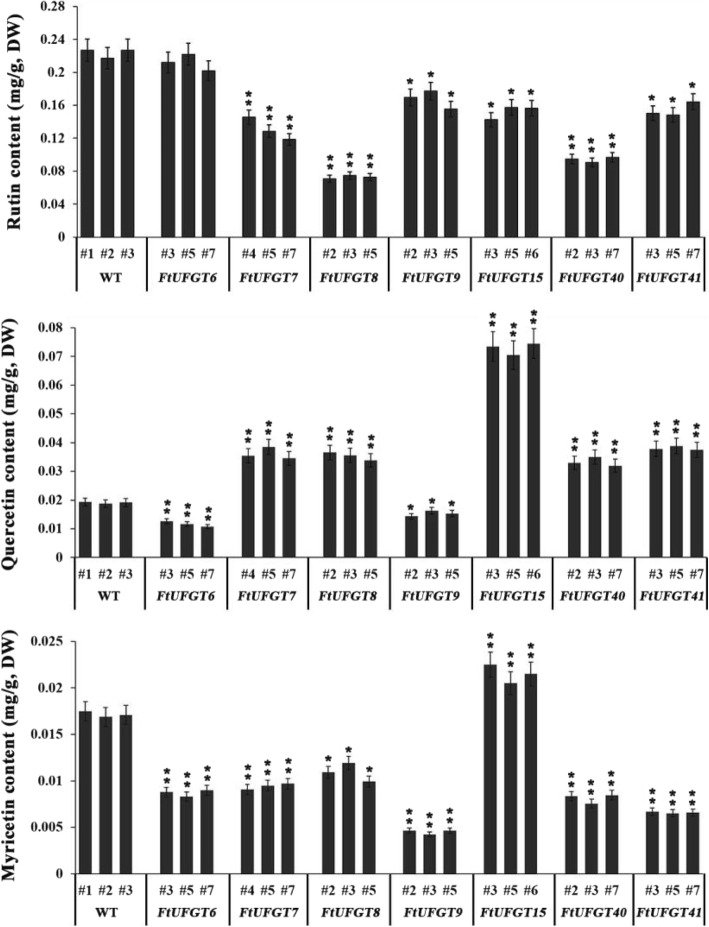
Tartary buckwheat (Fagopyrum tataricum) is an edible cereal crop whose sprouts have been marketed and commercialized for their higher levels of anti-oxidants, including rutin and anthocyanin. UDP-glucose flavonoid glycosyltransferases (UFGTs) play an important role in the biosynthesis of flavonoids in plants. So far, few studies are available on UFGT genes that may play a role in tartary buckwheat flavonoids biosynthesis. Here, we report on the identification and functional characterization of seven UFGTs from tartary buckwheat that are potentially involved in flavonoid biosynthesis (and have varying effects on plant growth and development when overexpressed in Arabidopsis thaliana.) RESULTS: Phylogenetic analysis indicated that the potential function of the seven FtUFGT proteins, FtUFGT6, FtUFGT7, FtUFGT8, FtUFGT9, FtUFGT15, FtUFGT40, and FtUFGT41, could be divided into three Arabidopsis thaliana functional subgroups that are involved in flavonoid biosynthesis of and anthocyanin accumulation. A significant positive correlation between FtUFGT8 and FtUFGT15 expression and anthocyanin accumulation capacity was observed in the tartary buckwheat seedlings after cold stress. Overexpression in Arabidopsis thaliana showed that FtUFGT8, FtUFGT15, and FtUFGT41 significantly increased the anthocyanin content in transgenic plants. Unexpectedly, overexpression of FtUFGT6, while not leading to enhanced anthocyanin accumulation, significantly enhanced the growth yield of transgenic plants. When wild-type plants have only cotyledons, most of the transgenic plants of FtUFGT6 had grown true leaves. Moreover, the growth speed of the oxFtUFGT6 transgenic plant root was also significantly faster than that of the wild type. At later growth, FtUFGT6 transgenic plants showed larger leaves, earlier twitching times and more tillers than wild type, whereas FtUFGT15 showed opposite results.
Seven FtUFGTs were isolated from tartary buckwheat. FtUFGT8, FtUFGT15, and FtUFGT41 can significantly increase the accumulation of total anthocyanins in transgenic plants. Furthermore, overexpression of FtUFGT6 increased the overall yield of Arabidopsis transgenic plants at all growth stages. However, FtUFGT15 shows the opposite trend at later growth stage and delays the growth speed of plants. These results suggested that the biological function of FtUFGT genes in tartary buckwheat is diverse.
苦荞麦(Fagopyrum tataricum)是一种可食用的谷物作物,其芽因其较高水平的抗氧化剂而被推向市场和商业化,包括芦丁和花青素。UDP-葡萄糖类黄酮糖苷转移酶(UFGTs)在植物类黄酮的生物合成中起着重要作用。到目前为止,关于可能参与苦荞麦类黄酮生物合成的 UFGT 基因的研究很少。在这里,我们报告了从苦荞麦中鉴定和功能表征的七个 UFGT,它们可能参与类黄酮生物合成(并且在拟南芥中过表达时对植物的生长和发育有不同的影响。)结果:系统发育分析表明,七个 FtUFGT 蛋白(FtUFGT6、FtUFGT7、FtUFGT8、FtUFGT9、FtUFGT15、FtUFGT40 和 FtUFGT41)的潜在功能可以分为三个与拟南芥功能亚群,涉及类黄酮生物合成和花色苷积累。在苦荞麦幼苗冷胁迫后,观察到 FtUFGT8 和 FtUFGT15 表达与花色苷积累能力之间存在显著正相关。在拟南芥中过表达表明,FtUFGT8、FtUFGT15 和 FtUFGT41 显著增加了转基因植物中的花色苷含量。出乎意料的是,过表达 FtUFGT6 虽然没有导致花色苷积累增强,但显著提高了转基因植物的生长产量。当野生型植物只有子叶时,FtUFGT6 的大多数转基因植物已经长出了真叶。此外,oxFtUFGT6 转基因植物的根的生长速度也明显快于野生型。在后期生长中,FtUFGT6 转基因植物的叶片较大,抽搐时间较早,分蘖数较多,而 FtUFGT15 则相反。结论:从苦荞麦中分离出七个 FtUFGT。FtUFGT8、FtUFGT15 和 FtUFGT41 可显著增加转基因植物总花色苷的积累。此外,在所有生长阶段,过表达 FtUFGT6 均提高了拟南芥转基因植物的整体产量。然而,FtUFGT15 在后期生长阶段表现出相反的趋势,并延迟了植物的生长速度。这些结果表明,苦荞麦中 FtUFGT 基因的生物学功能是多样化的。