Department of Microbiology, Immunology and Molecular Genetics, David Geffen School of Medicine, University of California, Los Angeles, Los Angeles, CA, USA.
UCLA AIDS Institute, Los Angeles, CA, USA.
Nat Biomed Eng. 2019 Sep;3(9):706-716. doi: 10.1038/s41551-019-0434-z. Epub 2019 Aug 5.
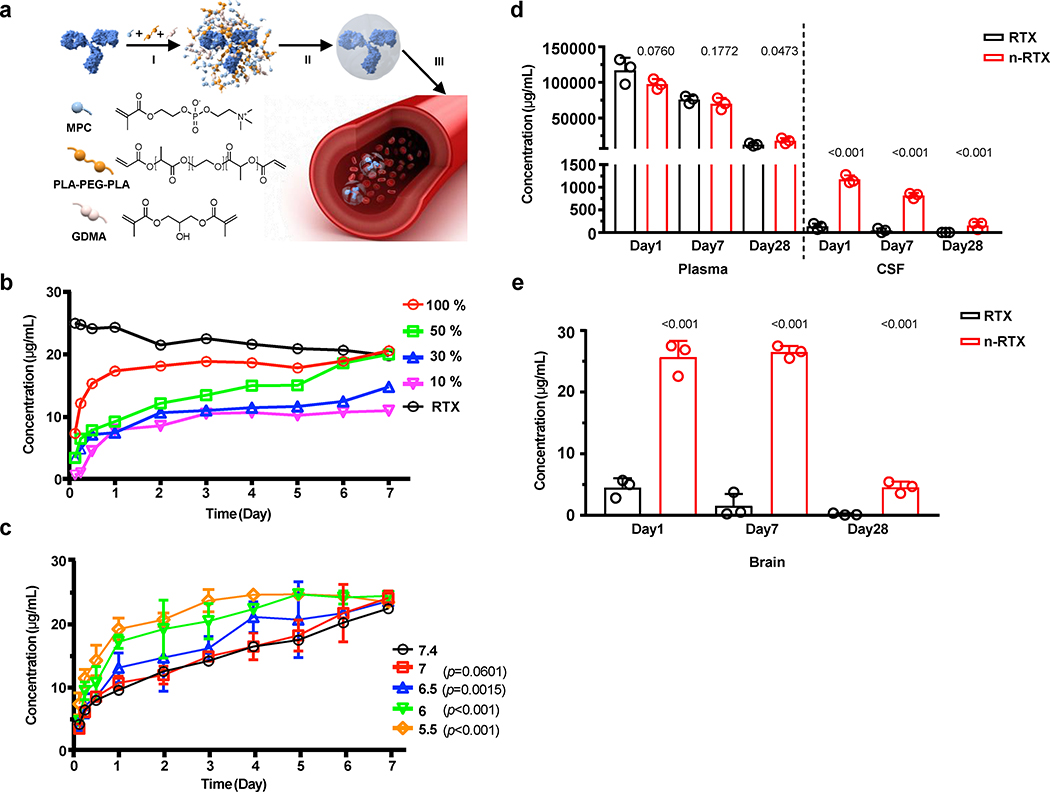
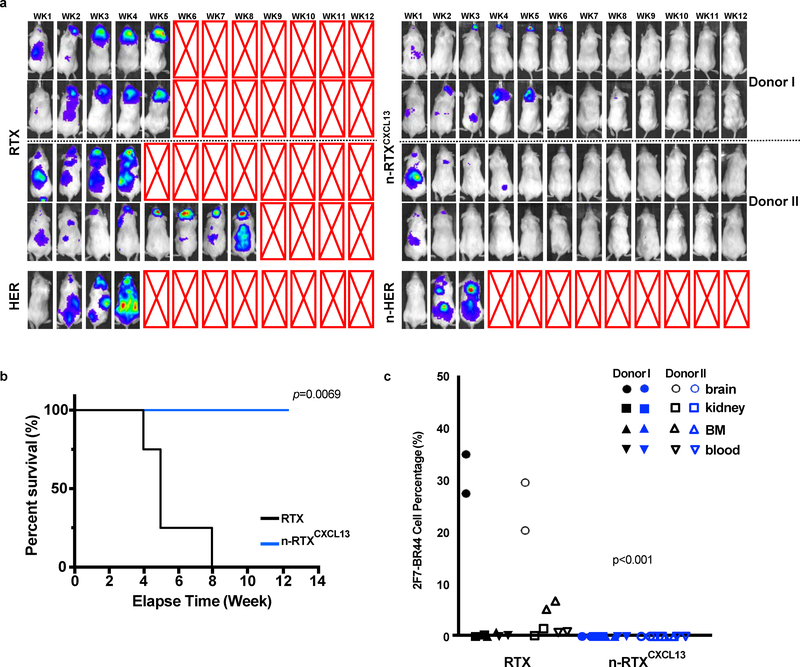
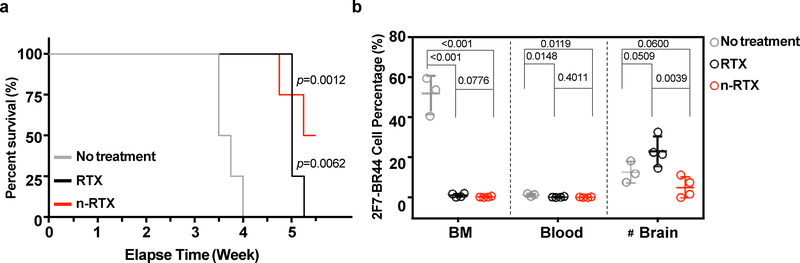
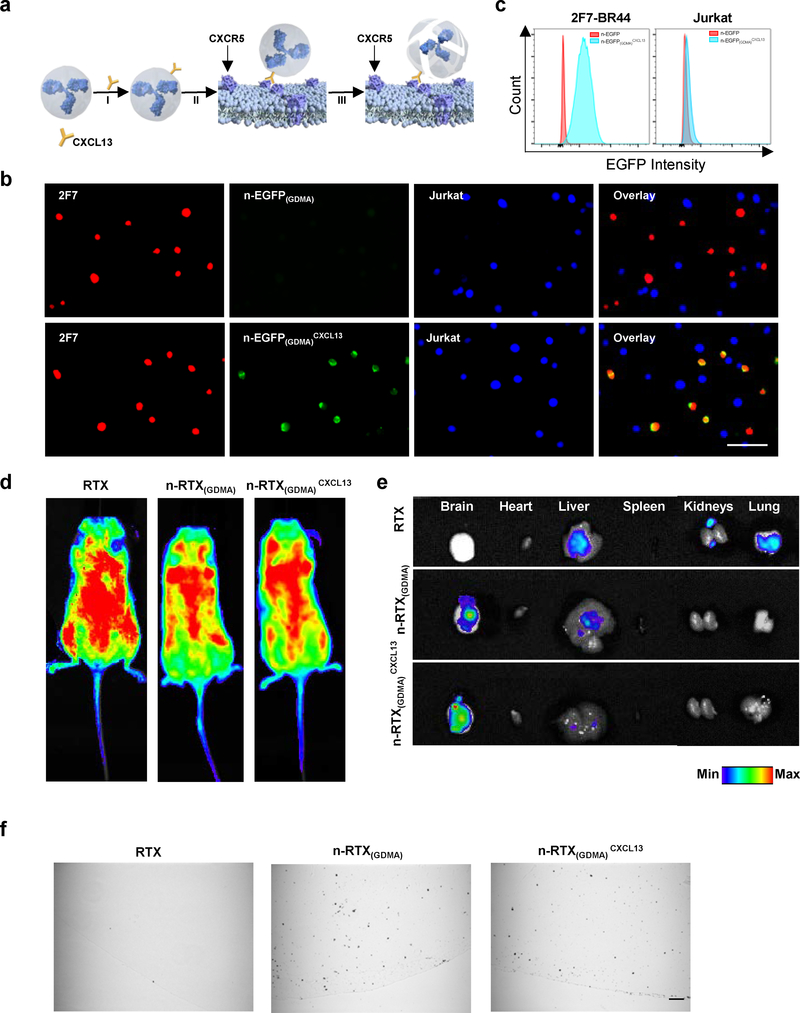
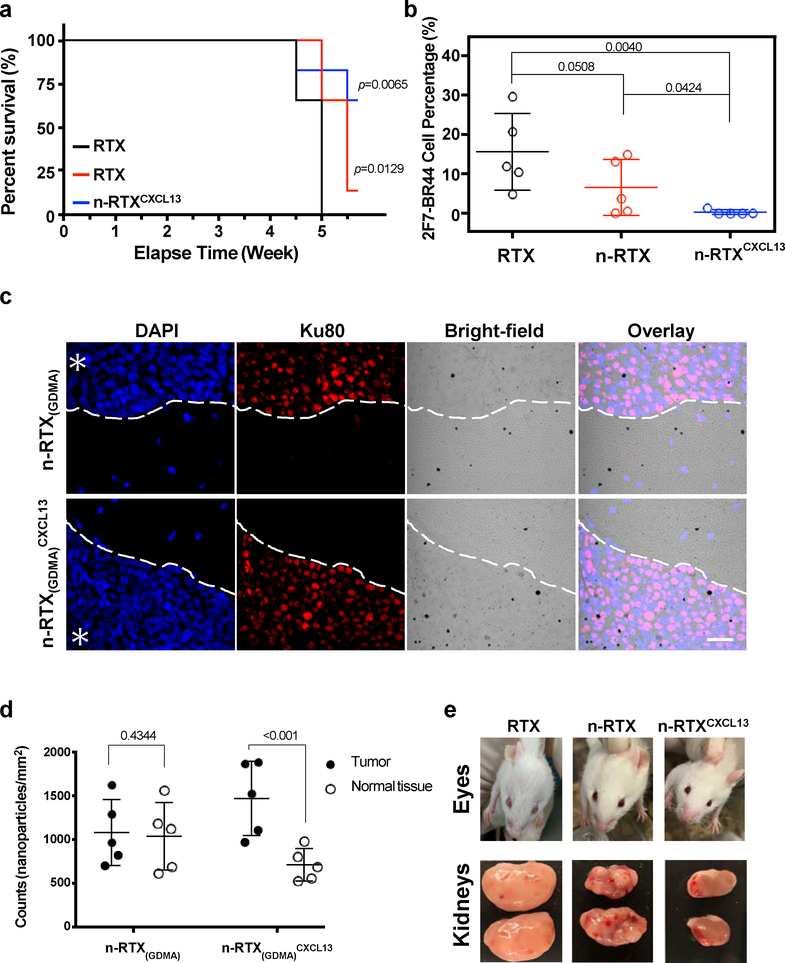
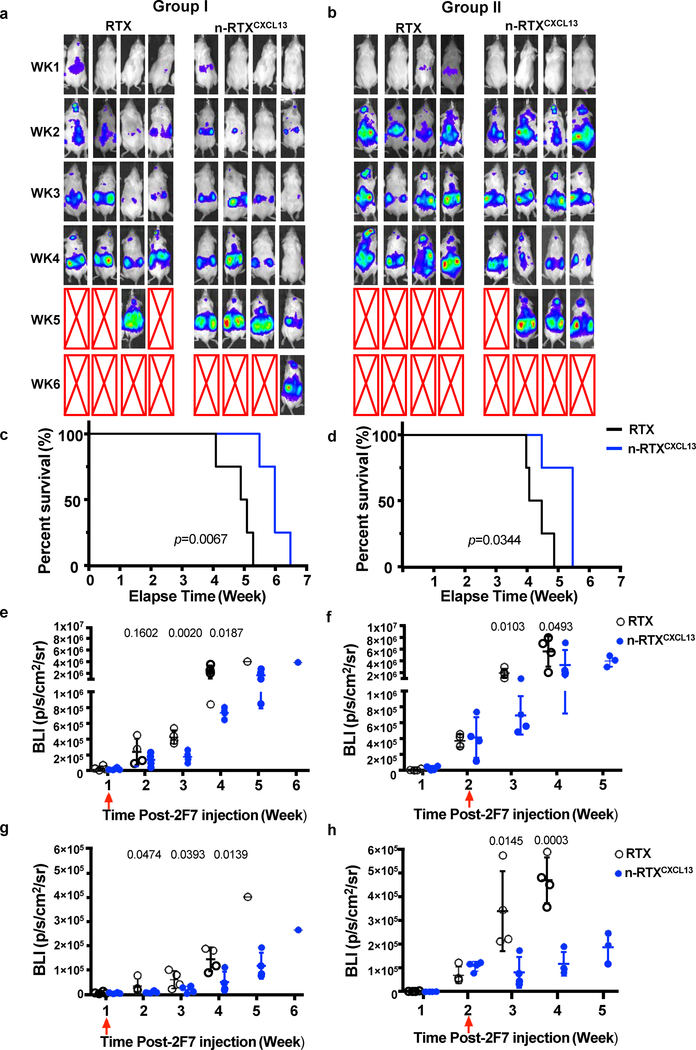
Approximately 15-40% of all cancers develop metastases in the central nervous system (CNS), yet few therapeutic options exist to treat them. Cancer therapies based on monoclonal antibodies are widely successful, yet have limited efficacy against CNS metastases, owing to the low levels of the drug reaching the tumour site. Here, we show that the encapsulation of rituximab within a crosslinked zwitterionic polymer layer leads to the sustained release of rituximab as the crosslinkers are gradually hydrolysed, enhancing the CNS levels of the antibody by approximately tenfold with respect to the administration of naked rituximab. When the nanocapsules were functionalized with CXCL13-the ligand for the chemokine receptor CXCR5, which is frequently found on B-cell lymphoma-a single dose led to improved control of CXCR5-expressing metastases in a murine xenograft model of non-Hodgkin lymphoma, and eliminated lymphoma in a xenografted humanized bone marrow-liver-thymus mouse model. Encapsulation and molecular targeting of therapeutic antibodies could become an option for the treatment of cancers with CNS metastases.
约 15-40%的癌症会在中枢神经系统(CNS)转移,但针对这些转移灶的治疗选择却很少。基于单克隆抗体的癌症疗法已被广泛应用,但由于药物到达肿瘤部位的浓度较低,对 CNS 转移的疗效有限。在这里,我们发现将利妥昔单抗封装在交联两性离子聚合物层内,随着交联剂的逐渐水解,可实现利妥昔单抗的持续释放,与给予裸利妥昔单抗相比,抗体在 CNS 中的水平提高了约 10 倍。当纳米胶囊用趋化因子配体 CXCL13 进行功能化时,这种配体可与趋化因子受体 CXCR5 结合,CXCR5 通常在 B 细胞淋巴瘤上表达,单次给药可改善对 CXCR5 表达转移灶的控制,在非霍奇金淋巴瘤的异种移植模型中消除淋巴瘤,并在异种移植的人源化骨髓-肝-胸腺小鼠模型中消除淋巴瘤。治疗性抗体的封装和分子靶向可能成为治疗 CNS 转移癌症的一种选择。