Cui Kang, Jin Shuiling, Du Yabing, Yu Junlin, Feng Han, Fan Qingxia, Ma Wang
Department of Oncology, The First Affiliated Hospital of Zhengzhou University, No 1. Jianshe Road, Erqi District, Zhengzhou, Henan 450052 China.
Cancer Cell Int. 2019 Jul 30;19:202. doi: 10.1186/s12935-019-0922-y. eCollection 2019.
Long noncoding RNA (lncRNA) has been implicated in numerous tumors, including pancreatic cancer (PC). However, the precise cellular roles and molecular mechanisms of lncRNA DIO3OS on PC development remains to be fully clarified.
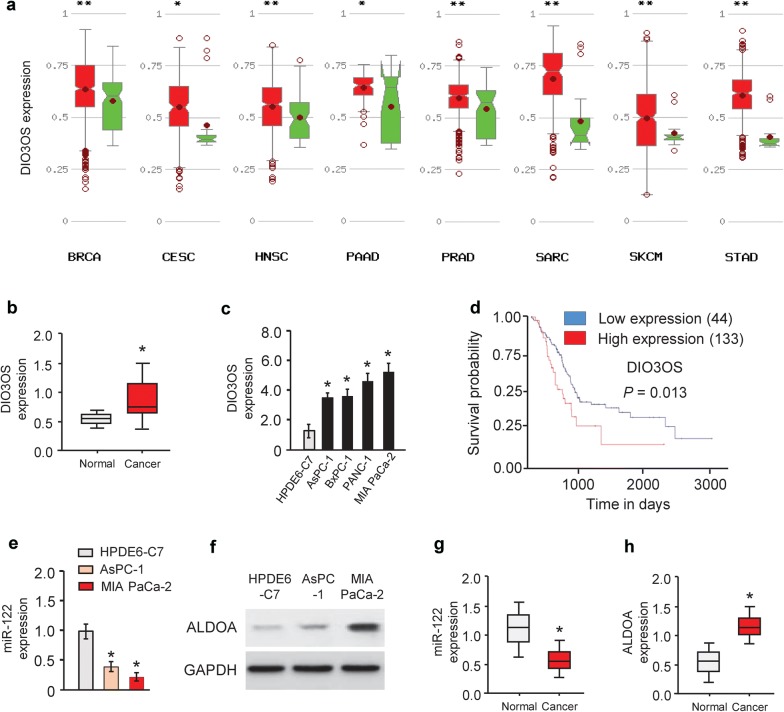
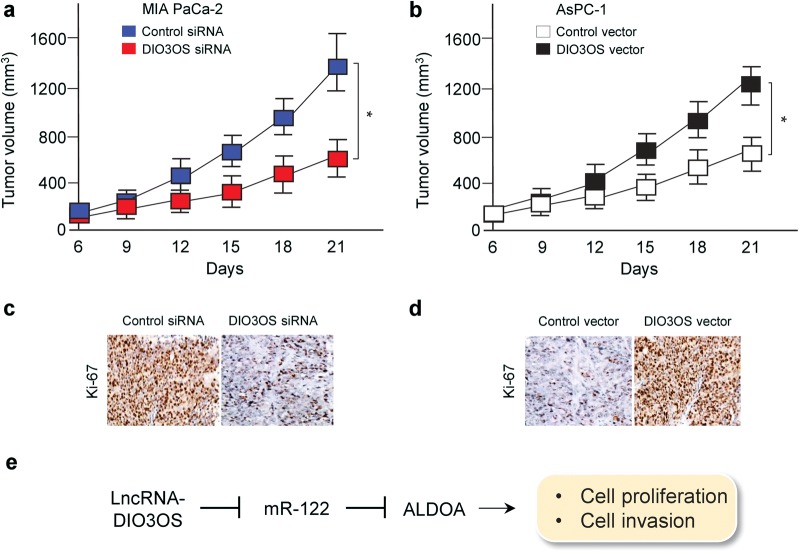
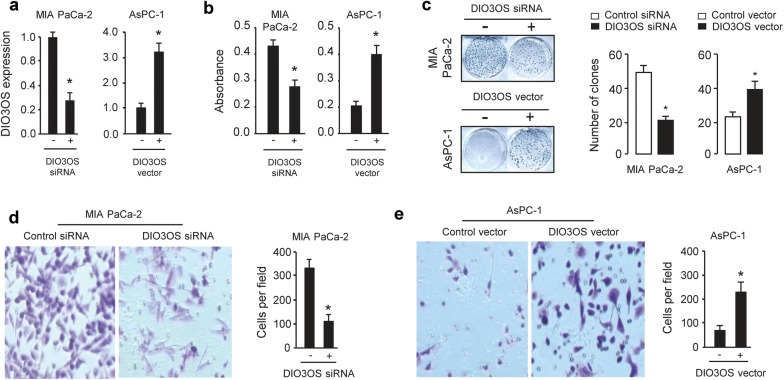
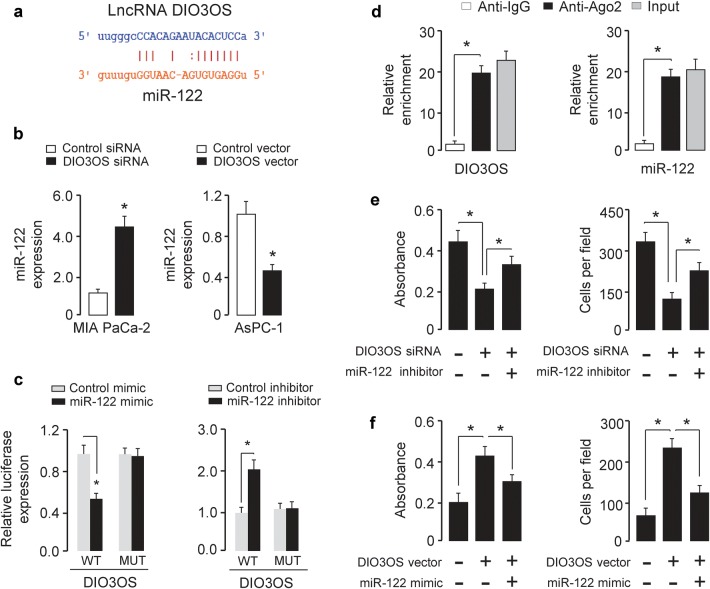
We performed the meta-analysis on PC samples and non-tumor samples retrieved from the TCGA database, and measured the levels of DIO3OS in PC cell lines and a normal pancreatic duct epithelial cell line HPDE6-C7. Cell proliferation was evaluated via CCK-8 assay. Cell invasion in vitro was investigated by transwell assay. The RNA immunoprecipitation assay and luciferase reporter assay was utilized to confirm the putative miR-122-binding site in DIO3OS. The effects of DIO3OS on PC progression were tested using in vivo subcutaneous xenografts.
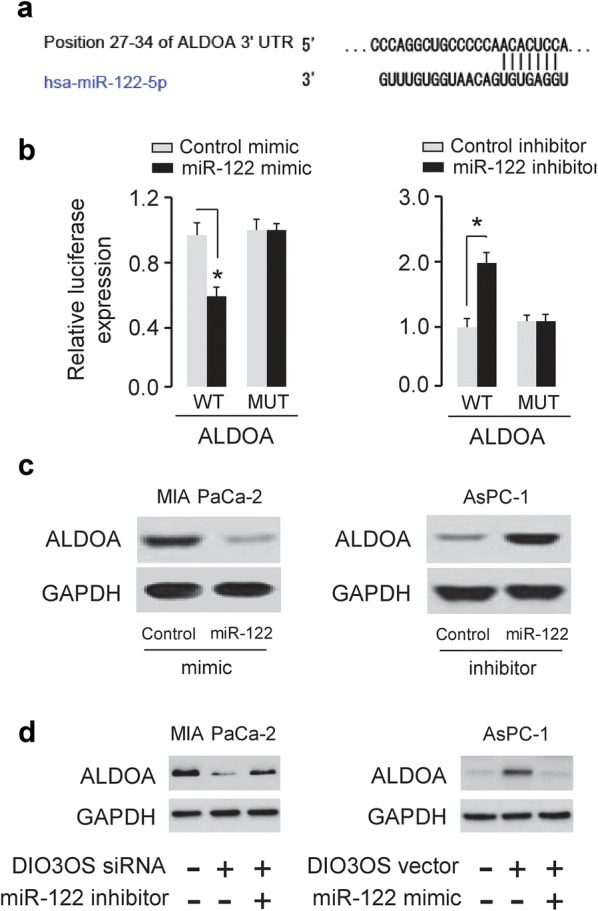
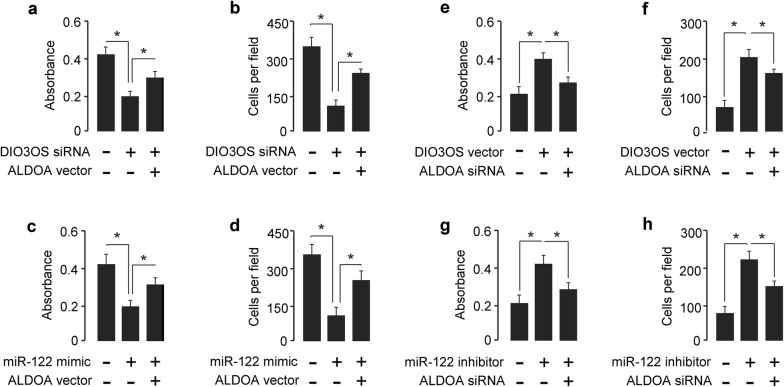
Our results showed that DIO3OS was highly expressed in human PC tissues and PC cell lines. DIO3OS exhibited oncogenic properties in stimulating PC cell proliferation and invasion in vitro and promoting cancer growth in vivo. Through online predictive tools and functional experiments, we found that DIO3OS could bind directly to microRNA-122 (miR-122) and inhibited its expression, which functioned as a tumor suppressor in PC cells. We also verified that ALDOA was the direct target of miR-122, and the tumor suppressive effects caused by DIO3OS knockdown or miR-122 overexpression could be rescued by re-expression of ALDOA in PC cells.
Overall, our study suggested that lncRNA DIO3OS promotes PC cell growth and invasion by competing for miR-122 to modulate the expression of ALDOA. These findings yield a better understanding of the potential mechanisms by which gain of DIO3OS expression accelerates PC progression.
长链非编码RNA(lncRNA)已被证实与包括胰腺癌(PC)在内的多种肿瘤相关。然而,lncRNA DIO3OS在PC发生发展过程中的确切细胞作用和分子机制仍有待充分阐明。
我们对从TCGA数据库中获取的PC样本和非肿瘤样本进行了荟萃分析,并检测了PC细胞系和正常胰腺导管上皮细胞系HPDE6-C7中DIO3OS的水平。通过CCK-8法评估细胞增殖。采用Transwell法研究体外细胞侵袭。利用RNA免疫沉淀试验和荧光素酶报告基因试验来确认DIO3OS中假定的miR-122结合位点。使用体内皮下异种移植模型测试DIO3OS对PC进展的影响。
我们的结果显示,DIO3OS在人PC组织和PC细胞系中高表达。DIO3OS在体外具有致癌特性,可刺激PC细胞增殖和侵袭,并在体内促进肿瘤生长。通过在线预测工具和功能实验,我们发现DIO3OS可直接与微小RNA-122(miR-122)结合并抑制其表达,而miR-122在PC细胞中起肿瘤抑制作用。我们还证实醛缩酶A(ALDOA)是miR-122的直接靶点,并且在PC细胞中重新表达ALDOA可挽救因DIO3OS敲低或miR-122过表达所导致的肿瘤抑制作用。
总体而言,我们的研究表明lncRNA DIO3OS通过竞争miR-122来调节ALDOA的表达,从而促进PC细胞的生长和侵袭。这些发现有助于更好地理解DIO3OS表达增加加速PC进展的潜在机制。