Frick Elisabet, Gudjonsson Thorkell, Eyfjord Jorunn, Jonasson Jon, Tryggvadóttir Laufey, Stefansson Olafur, Sigurdsson Stefan
Cancer Research Laboratory, Biomedical Center, Reykjavik, Iceland.
Faculty of Medicine, University of Iceland, Reykjavik, Iceland.
Oncotarget. 2019 Jul 23;10(45):4664-4678. doi: 10.18632/oncotarget.27083.
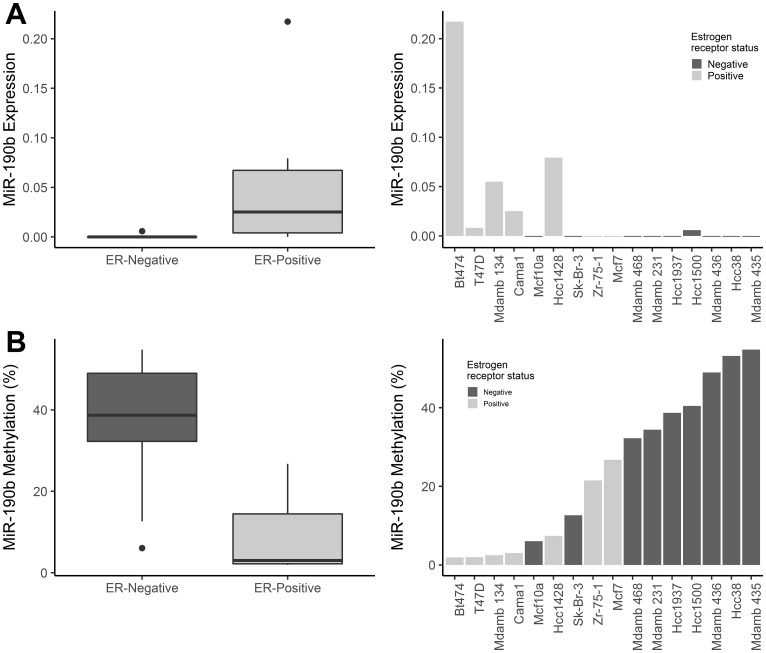
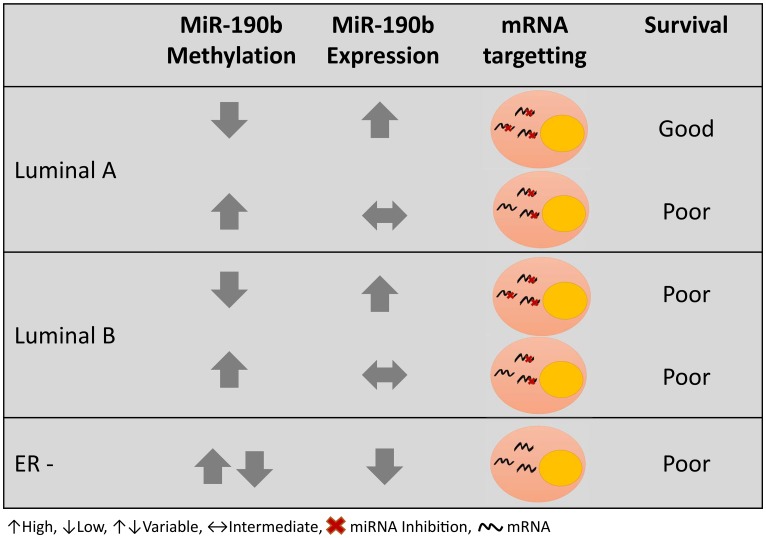
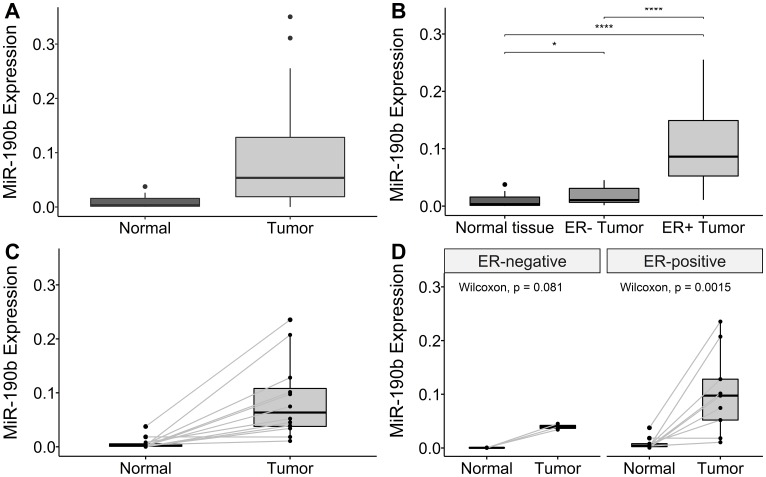
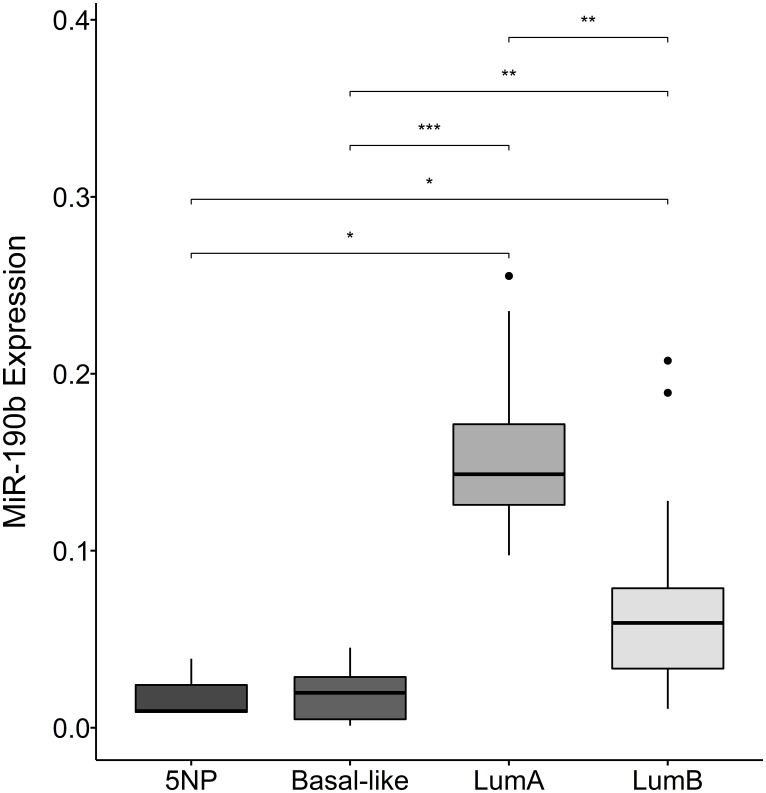
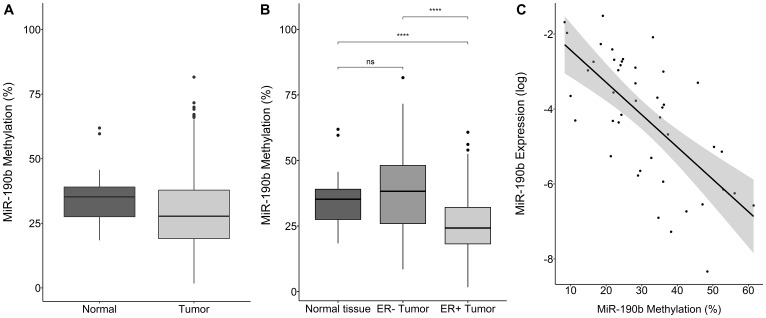
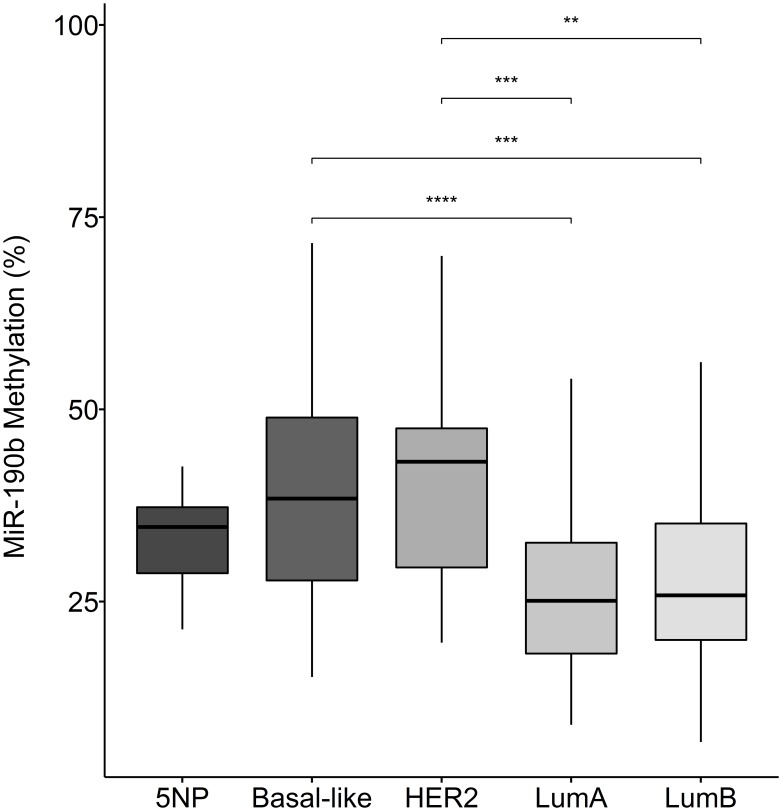
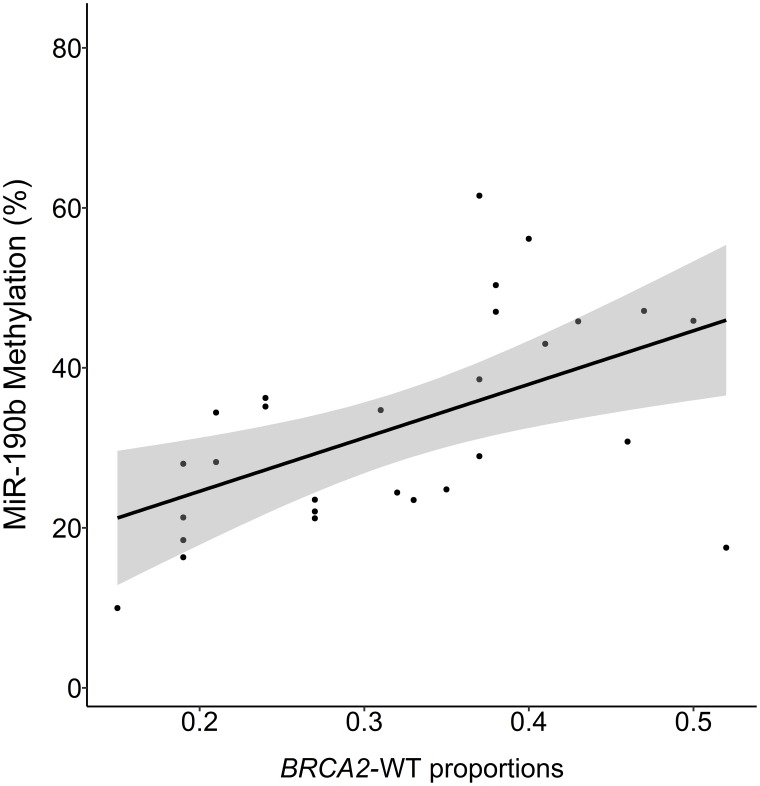
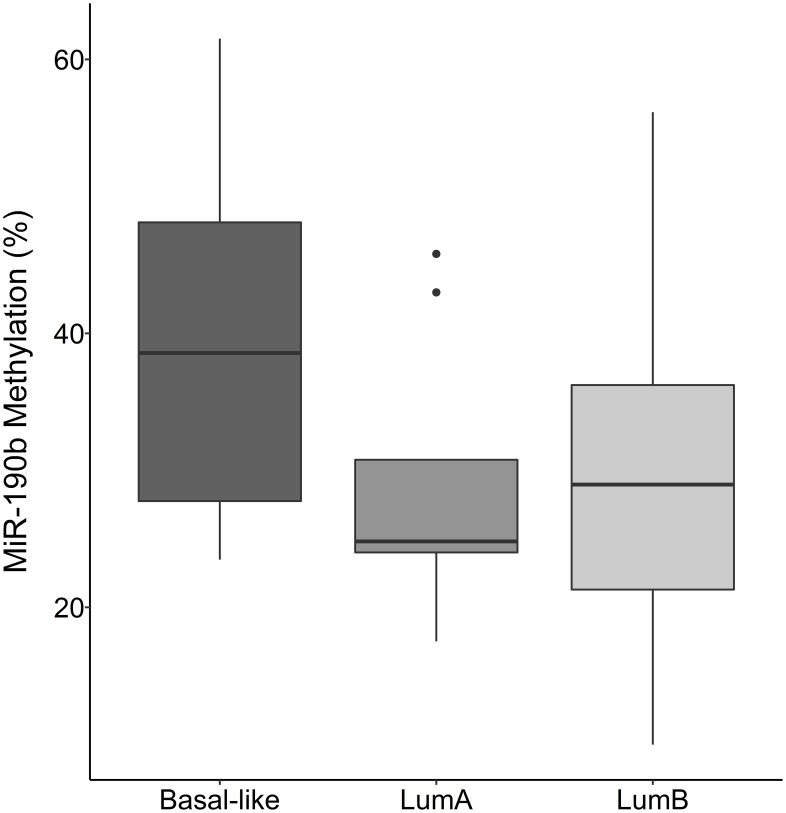
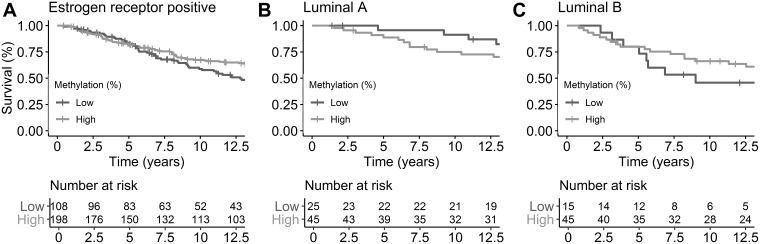
Estrogen receptor-positive breast cancer is subdivided into subtypes LuminalA and LuminalB, based on different expression patterns. MicroRNA-190b has been reported to be up-regulated in estrogen receptor-positive breast cancers. In this study we aimed to investigate the role of CpG promoter methylation in regulating miR-190b expression and its impact on clinical presentation and prognosis. DNA methylation analysis for the promotor of microRNA-190b was performed by pyrosequencing 549 primary breast tumors, of which 62 were carriers of the founder mutation, 71 proximal normal breast samples and 16 breast derived cell lines. MicroRNA-190b expression was analysed in 67 primary breast tumors, 14 paired normal breast samples and 16 breast derived cell lines. Tissue microarrays (TMAs) were available for ER ( = 436), PR ( 436), HER-2 ( = 258) and Ki67 ( 248). MiR-190b had reduced promoter methylation in estrogen receptor-positive breast cancers ( 1.02e-12, Median values: ER+ 24.3, ER- 38.26) and miR-190b's expression was up-regulated in a correlative manner ( 1.83e-06, Spearman's rho -0.62). Through breast cancer specific survival analysis, we demonstrated that LuminalA patients exhibiting miR-190b hypo-methylation had better survival than other patients ( = 0.034, HR = 0.29, 95% CI 0.09-0.91). We, furthermore, demonstrated that miR-190b hypo-methylation occurs less frequently in ER+ tumors from mutation carriers than in non-mutated individuals ( 0.038, = 4.32, 335). Our results suggest that upregulation of miR-190b may occur through loss of promoter DNA methylation during the development of estrogen-receptor (ER) positive breast cancers, and that miR-190b hypo-methylation leads to increased breast cancer specific survival within the LuminalA- subtype but not LuminalB.
雌激素受体阳性乳腺癌根据不同的表达模式可细分为LuminalA和LuminalB亚型。据报道,MicroRNA-190b在雌激素受体阳性乳腺癌中上调。在本研究中,我们旨在探讨CpG启动子甲基化在调节miR-190b表达中的作用及其对临床表现和预后的影响。通过焦磷酸测序对549例原发性乳腺肿瘤、71例近端正常乳腺样本和16种乳腺来源细胞系进行了MicroRNA-190b启动子的DNA甲基化分析,其中62例为始祖突变携带者。在67例原发性乳腺肿瘤、14例配对正常乳腺样本和16种乳腺来源细胞系中分析了MicroRNA-190b的表达。组织芯片(TMAs)可用于检测雌激素受体(n = 436)、孕激素受体(n = 436)、人表皮生长因子受体2(n = 258)和Ki67(n = 248)。在雌激素受体阳性乳腺癌中,miR-190b启动子甲基化降低(P = 1.02e-12,中位数:ER+ 24.3,ER- 38.26),miR-190b的表达以相关方式上调(P = 1.83e-06,Spearman相关系数 -0.62)。通过乳腺癌特异性生存分析,我们证明表现出miR-190b低甲基化的LuminalA患者比其他患者有更好的生存率(P = 0.034,风险比 = 0.29,95%可信区间0.09 - 0.91)。此外,我们证明与非突变个体相比,始祖突变携带者的ER+肿瘤中miR-190b低甲基化的发生率更低(P = 0.038,OR = 4.32,n = 335)。我们的结果表明,在雌激素受体(ER)阳性乳腺癌的发生过程中,miR-190b的上调可能是由于启动子DNA甲基化的缺失导致的,并且miR-190b低甲基化导致LuminalA亚型而非LuminalB亚型的乳腺癌特异性生存率增加。