Key Laboratory of Plant Resources, Institute of Botany, Innovation Academy for Seed Design, Chinese Academy of Sciences, No.20 Nanxincun, Xiangshan, Haidian District, Beijing, 100093, China.
University of Chinese Academy of Sciences, Beijing, 100049, China.
Genome Biol. 2019 Aug 6;20(1):156. doi: 10.1186/s13059-019-1771-7.
Methylation of nucleotides, notably in the forms of 5-methylcytosine (5mC) in DNA and N-methyladenosine (mA) in mRNA, carries important information for gene regulation. 5mC has been elucidated to participate in the regulation of fruit ripening, whereas the function of mA in this process and the interplay between 5mC and mA remain uncharacterized.
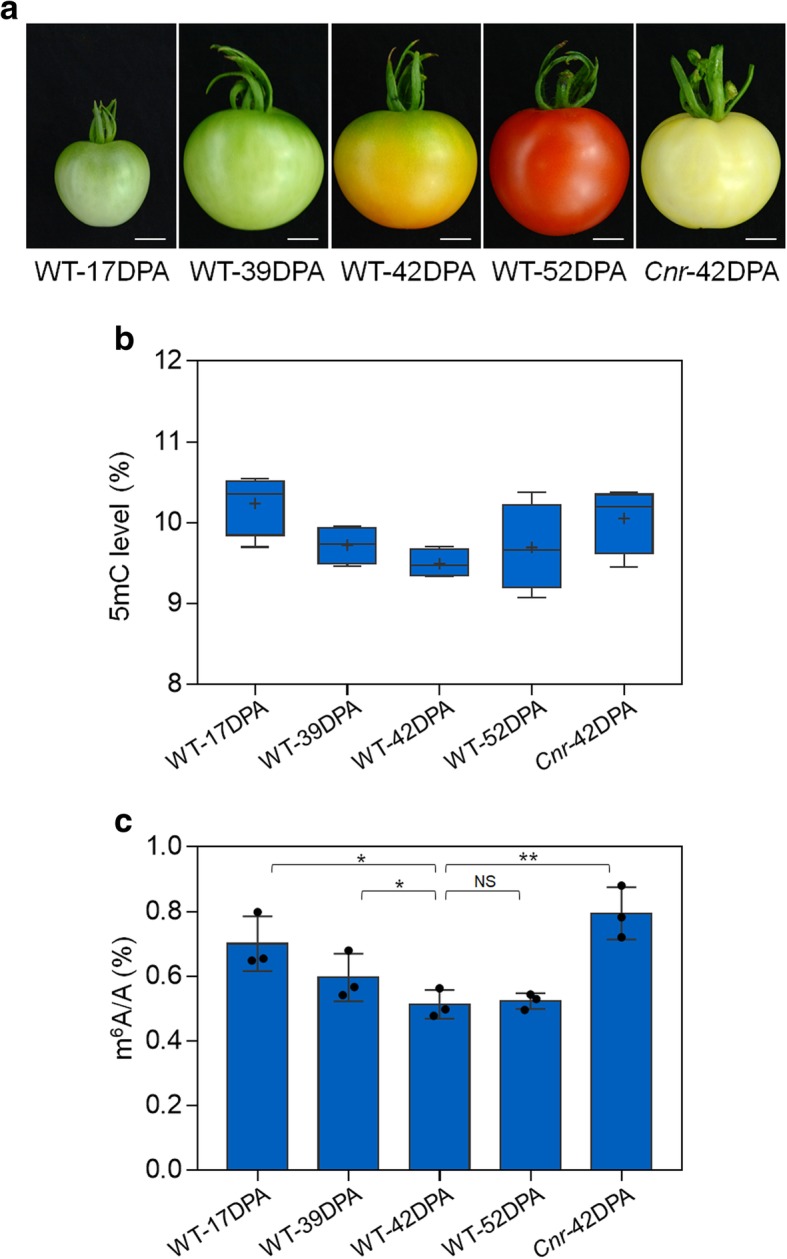
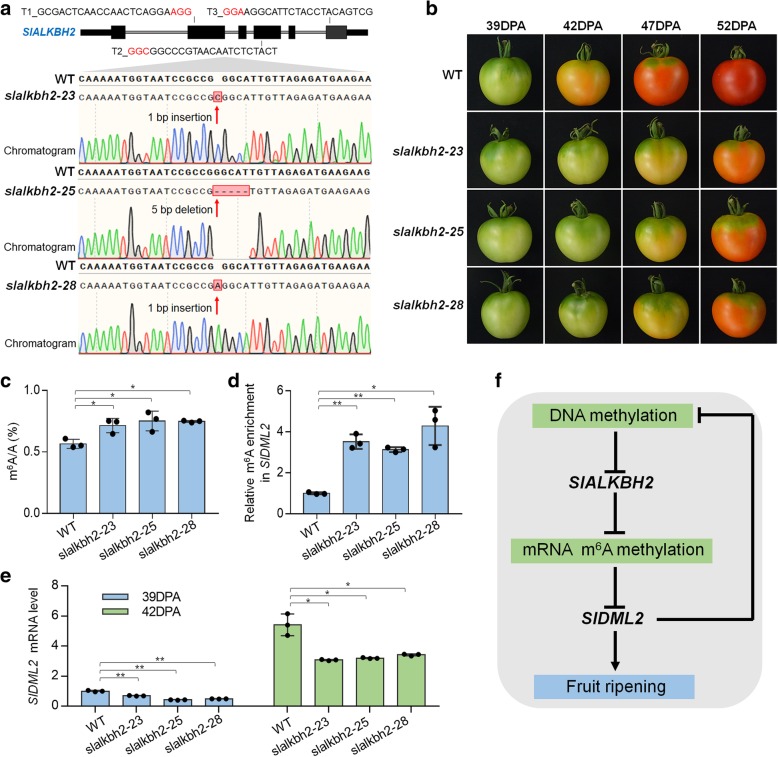
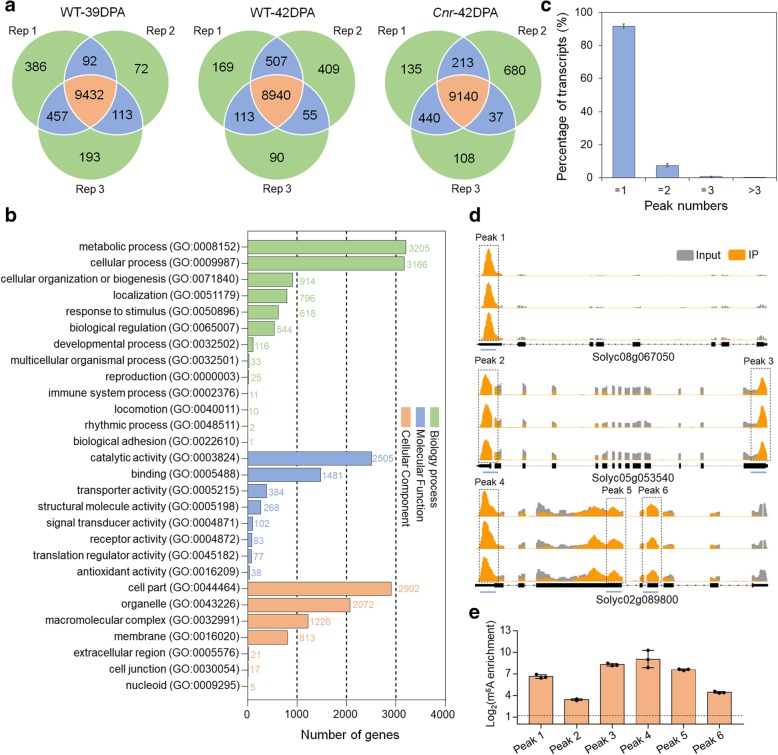
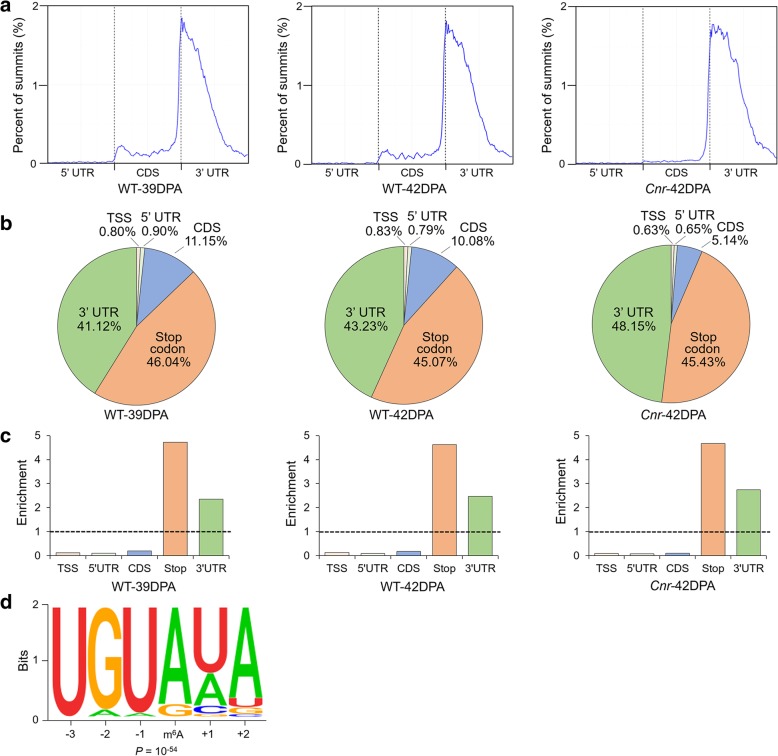
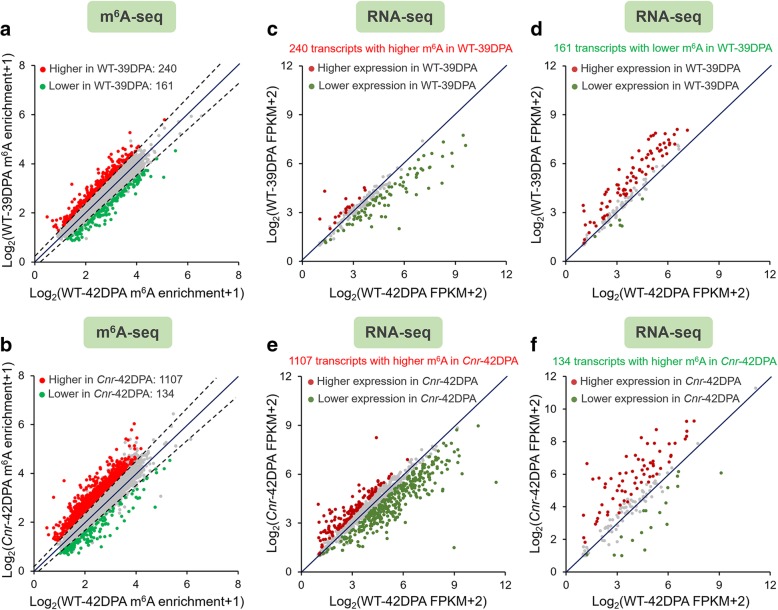
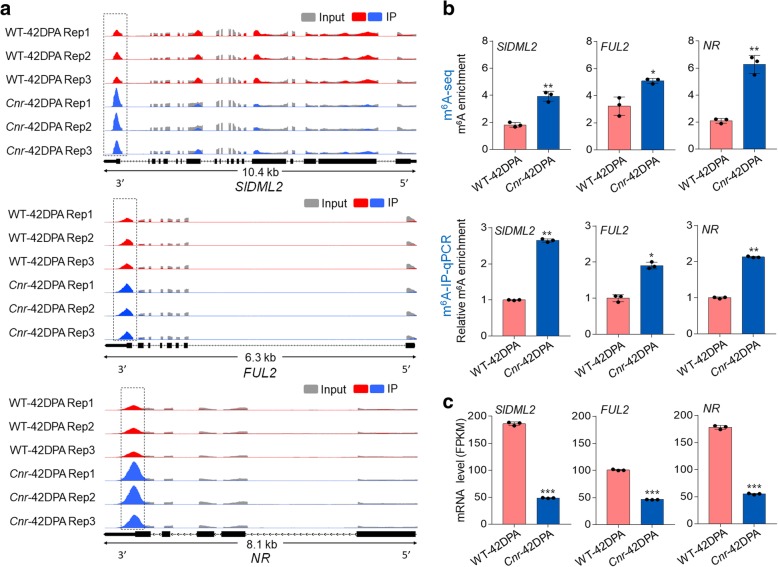
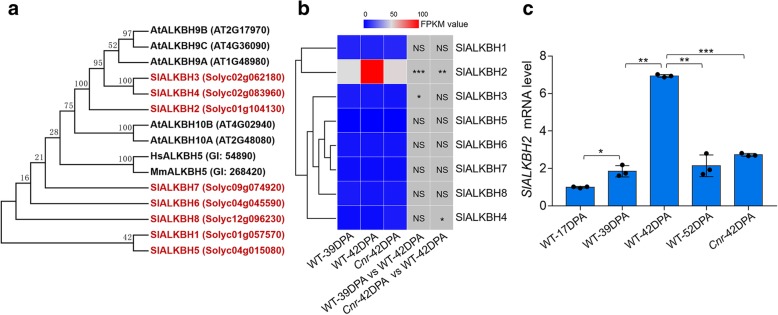
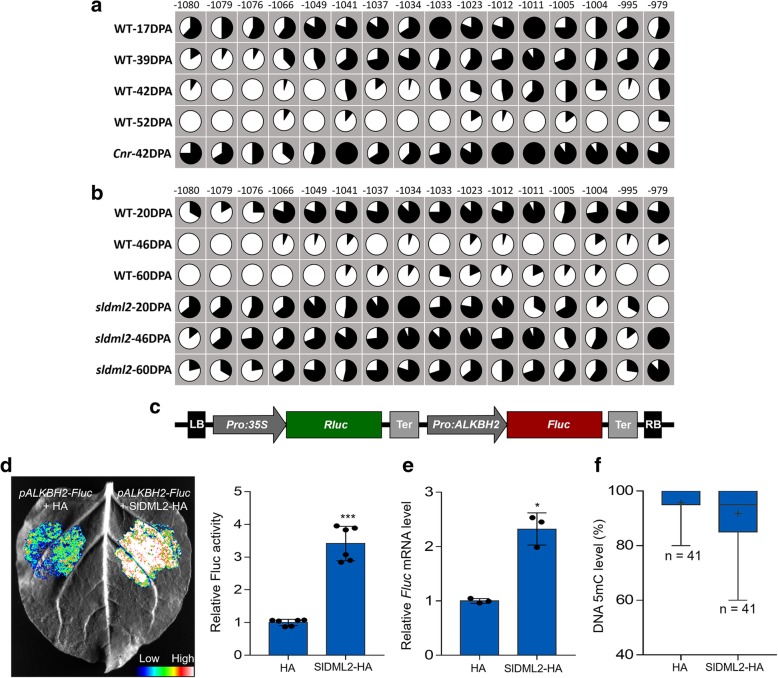
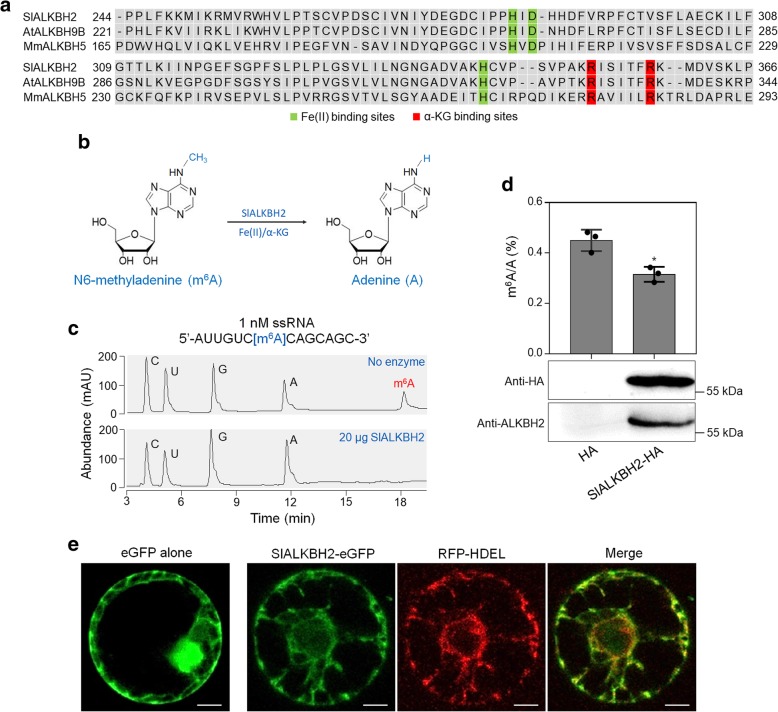
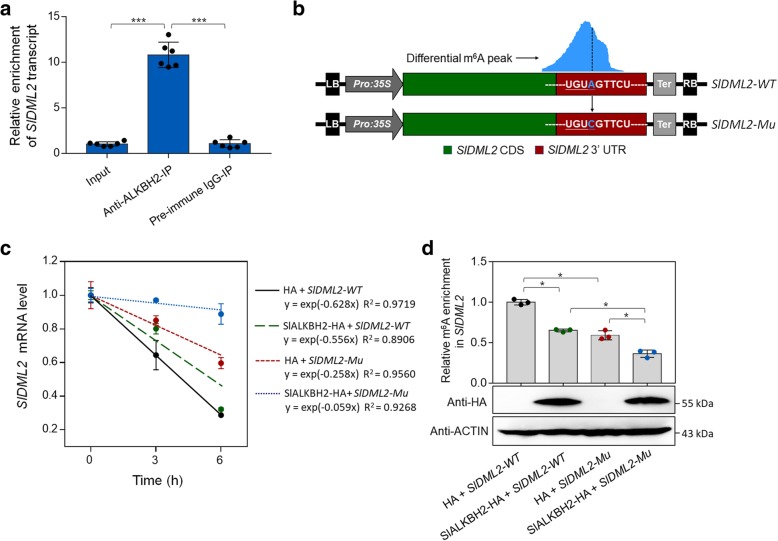
Here, we show that mRNA mA methylation exhibits dynamic changes similar to DNA methylation during tomato fruit ripening. RNA methylome analysis reveals that mA methylation is a prevalent modification in the mRNA of tomato fruit, and the mA sites are enriched around the stop codons and within the 3' untranslated regions. In the fruit of the ripening-deficient epimutant Colorless non-ripening (Cnr) which harbors DNA hypermethylation, over 1100 transcripts display increased mA levels, while only 134 transcripts show decreased mA enrichment, suggesting a global increase in mA. The mA deposition is generally negatively correlated with transcript abundance. Further analysis demonstrates that the overall increase in mA methylation in Cnr mutant fruit is associated with the decreased expression of RNA demethylase gene SlALKBH2, which is regulated by DNA methylation. Interestingly, SlALKBH2 has the ability to bind the transcript of SlDML2, a DNA demethylase gene required for tomato fruit ripening, and modulates its stability via mA demethylation. Mutation of SlALKBH2 decreases the abundance of SlDML2 mRNA and delays fruit ripening.
Our study identifies a novel layer of gene regulation for key ripening genes and establishes an essential molecular link between DNA methylation and mRNA mA methylation during fruit ripening.
核苷酸的甲基化,特别是 DNA 中的 5-甲基胞嘧啶(5mC)和 mRNA 中的 N6-甲基腺苷(mA),为基因调控携带了重要信息。5mC 已被阐明参与了果实成熟的调控,而 mA 在这个过程中的功能以及 5mC 和 mA 之间的相互作用仍未被描述。
在这里,我们表明,在番茄果实成熟过程中,mRNA mA 甲基化表现出与 DNA 甲基化相似的动态变化。RNA 甲基组分析表明,mA 甲基化是番茄果实 mRNA 中普遍存在的修饰,mA 位点富集在终止密码子周围和 3'非翻译区。在成熟缺陷的突变体无色非成熟(Cnr)果实中,DNA 超甲基化,超过 1100 个转录本显示出 mA 水平的增加,而只有 134 个转录本显示出 mA 富集的减少,这表明 mA 总体增加。mA 的沉积通常与转录物丰度呈负相关。进一步的分析表明,Cnr 突变体果实中 mA 甲基化的整体增加与 RNA 去甲基酶基因 SlALKBH2 的表达减少有关,SlALKBH2 受 DNA 甲基化调控。有趣的是,SlALKBH2 能够结合番茄果实成熟所需的 DNA 去甲基酶基因 SlDML2 的转录本,并通过 mA 去甲基化调节其稳定性。SlALKBH2 的突变降低了 SlDML2 mRNA 的丰度并延迟了果实成熟。
本研究为关键成熟基因鉴定了一个新的基因调控层,并在果实成熟过程中建立了 DNA 甲基化和 mRNA mA 甲基化之间的重要分子联系。