The National Engineering Research Center for Bioengineering Drugs and the Technologies, Institute of Translational Medicine, Nanchang University, No. 1299 Xuefu Road, Honggutan District, Nanchang, 330031, People's Republic of China.
School of Life and Science, Nanchang University, Nanchang, 330031, People's Republic of China.
Stem Cell Res Ther. 2019 Aug 9;10(1):247. doi: 10.1186/s13287-019-1366-y.
Increasing evidence has shown that mesenchymal stem cells (MSCs) yield a favorable therapeutic benefit for thermal burn skin wounds. Human amniotic MSCs (hAMSCs) derived from amniotic membrane have multilineage differentiation, immunosuppressive, and anti-inflammatory potential which makes them suitable for treating skin wounds. However, the exact effects of hAMSCs on the healing of thermal burn skin wounds and their potential mechanisms are not explored.
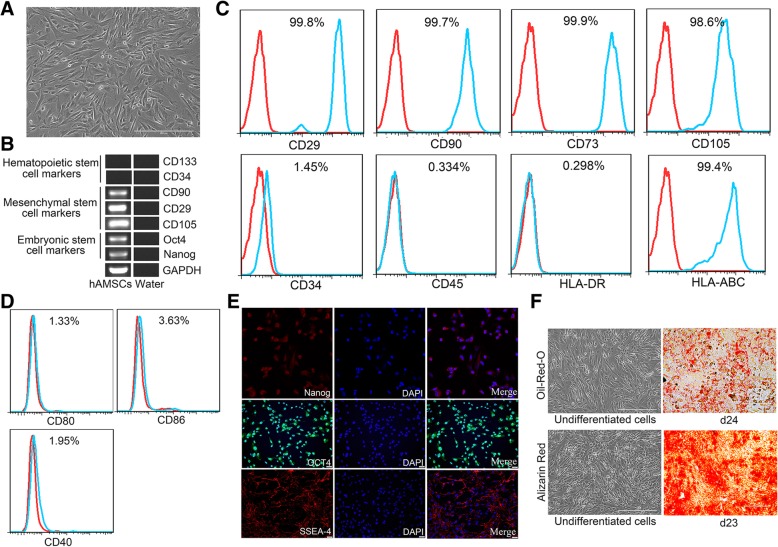
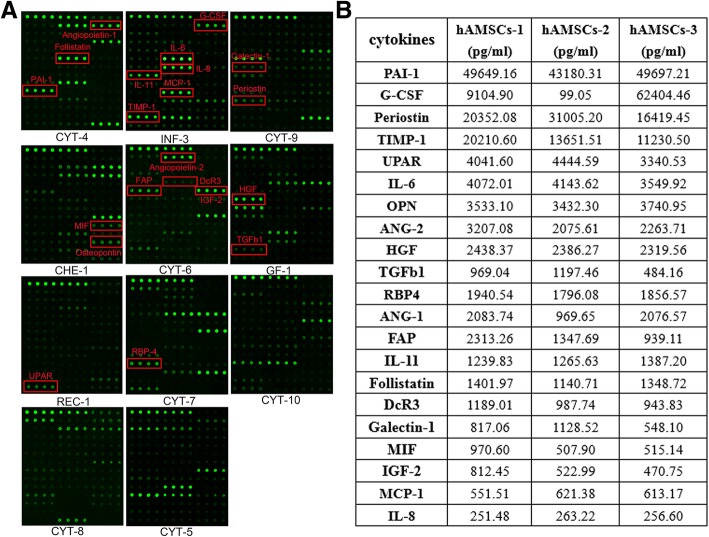
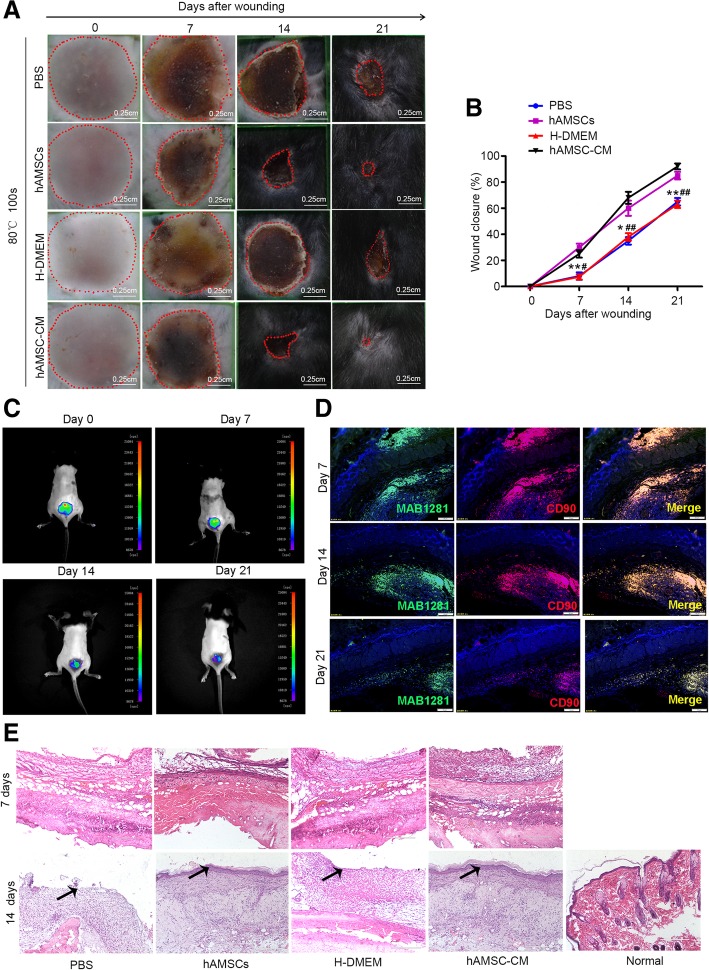
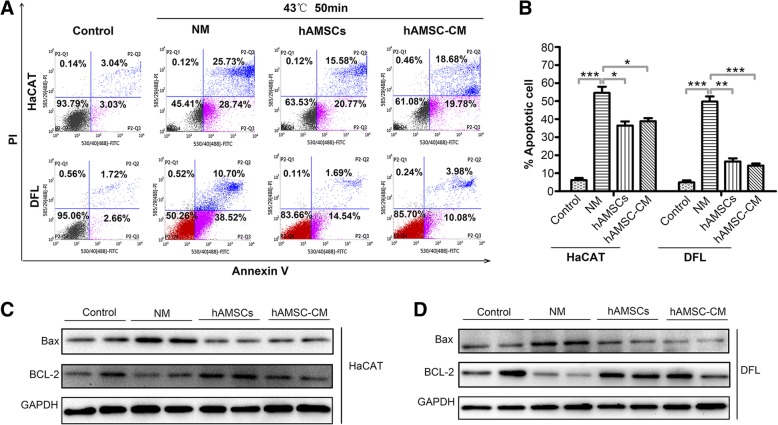
hAMSCs were isolated from amniotic membrane and characterized by RT-PCR, flow cytometry, immunofluorescence, and tumorigenicity test. We assessed the effects of hAMSCs and hAMSC conditional medium (CM) on wound healing in a deep second-degree burn injury model of mice. We then investigated the biological effects of hAMSCs and hAMSC-CM on the apoptosis and proliferation of heat stress-injured human keratinocytes HaCAT and dermal fibroblasts (DFL) both in vivo and in vitro. Next, we explored the underlying mechanisms by assessing PI3K/AKT and GSK3β/β-catenin signaling pathways in heat injured HaCAT and DFL cells after hAMSCs and hAMSC-CM treatments using PI3K inhibitor LY294002 and β-catenin inhibitor ICG001. Antibody array assay was used to identify the cytokines secreted by hAMSCs that may activate PI3K/AKT signaling pathway.
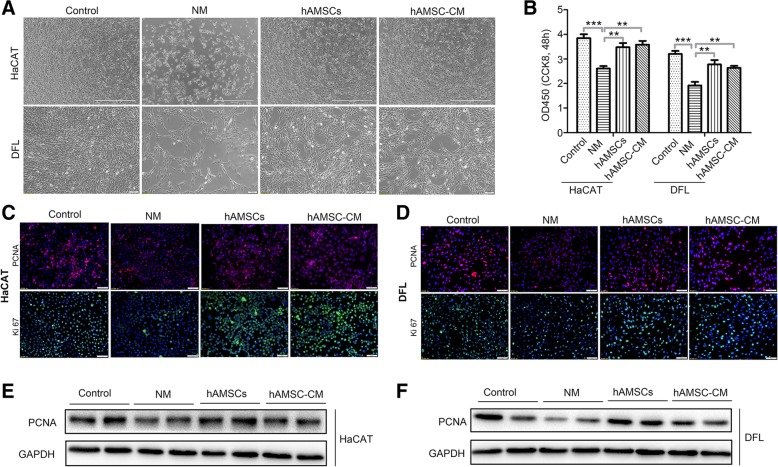
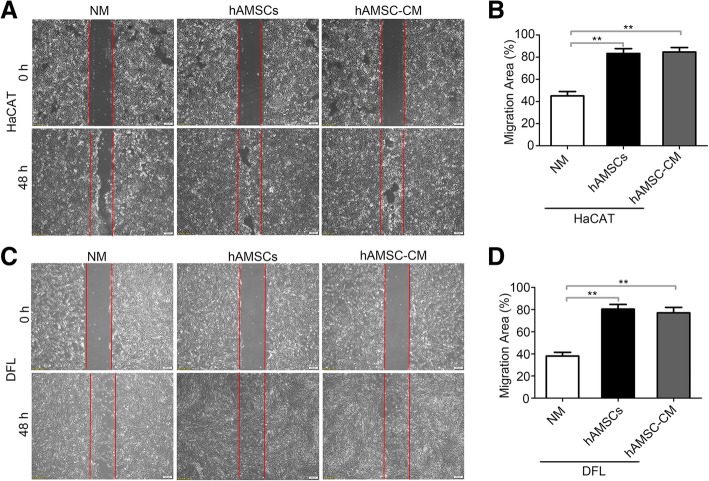
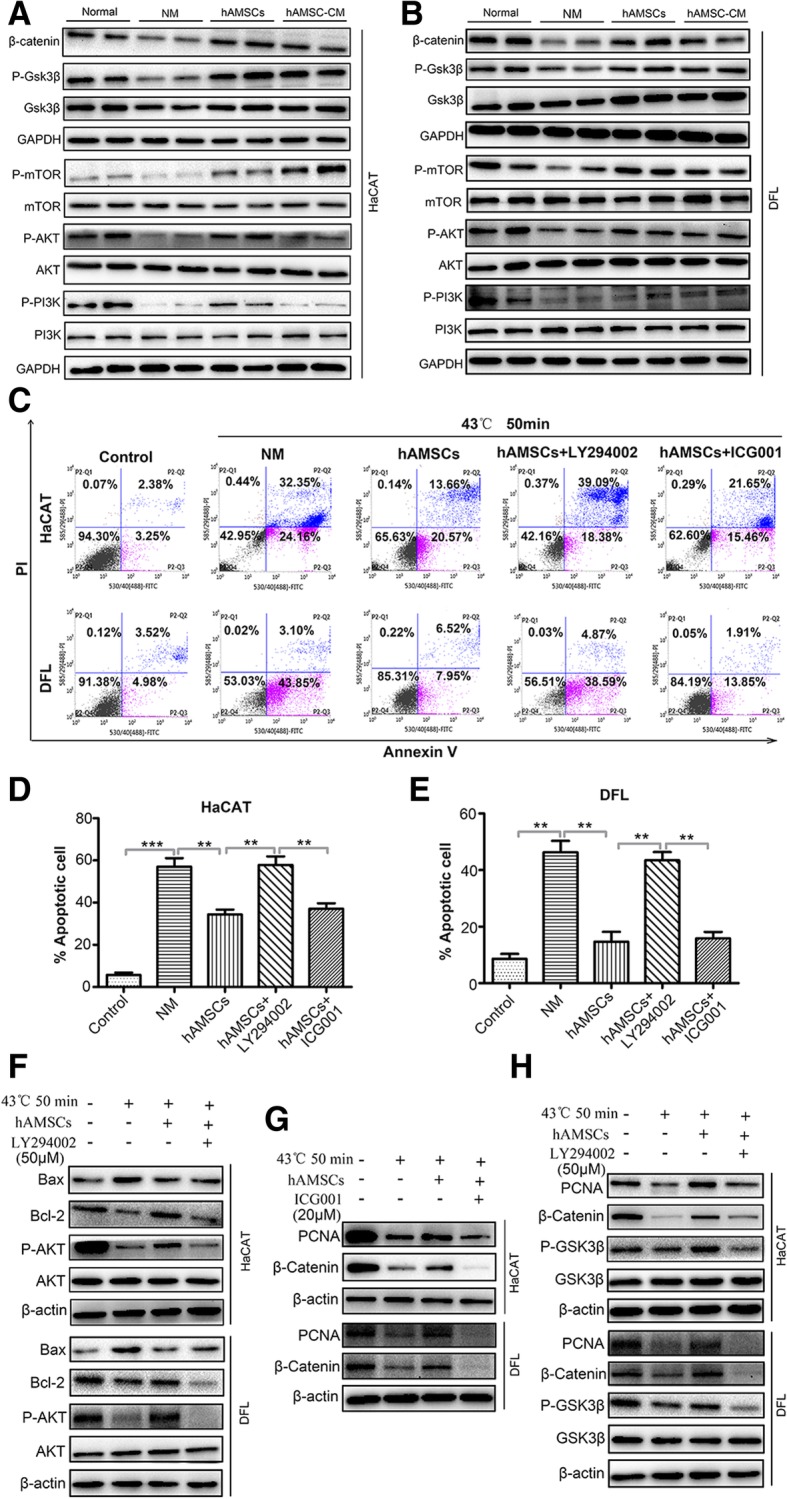
Our results showed that hAMSCs expressed various markers of embryonic stem cells and mesenchymal stem cells and have low immunogenicity and no tumorigenicity. hAMSC and hAMSC-CM transplantation significantly promoted thermal burn wound healing by accelerating re-epithelialization with increased expression of CK19 and PCNA in vivo. hAMSCs and hAMSC-CM markedly inhibited heat stress-induced apoptosis in HaCAT and DFL cells in vitro through activation of PI3K/AKT signaling and promoted their proliferation by activating GSK3β/β-catenin signaling. Furthermore, we demonstrated that hAMSC-mediated activation of GSK3β/β-catenin signaling was dependent on PI3K/AKT signaling pathway. Antibody array assay showed that a panel of cytokines including PAI-1, C-GSF, periostin, and TIMP-1 delivered from hAMSCs may contribute to the improvement of the wound healing through activating PI3K/AKT signaling pathway.
Our results demonstrated that hAMSCs and hAMSC-CM efficiently cure heat stress-induced skin injury by inhibiting apoptosis of skin cells and promoting their proliferation through activating PI3K/AKT signaling pathway, suggesting that hAMSCs and hAMSC-CM may provide an alternative therapeutic approach for the treatment of skin injury.
越来越多的证据表明,间充质干细胞(MSCs)对热烧伤皮肤伤口具有良好的治疗益处。从羊膜中分离出来的人羊膜间充质干细胞(hAMSCs)具有多能分化、免疫抑制和抗炎潜力,使其适合治疗皮肤伤口。然而,hAMSCs 对热烧伤皮肤伤口愈合的确切影响及其潜在机制尚不清楚。
从羊膜中分离出 hAMSCs,通过 RT-PCR、流式细胞术、免疫荧光和致瘤性试验进行鉴定。我们评估了 hAMSCs 和 hAMSC 条件培养基(CM)对小鼠深二度烧伤模型中伤口愈合的影响。然后,我们研究了 hAMSCs 和 hAMSC-CM 对热应激损伤的人角质形成细胞 HaCAT 和真皮成纤维细胞(DFL)体内和体外凋亡和增殖的生物学影响。接下来,我们使用 PI3K 抑制剂 LY294002 和 β-连环蛋白抑制剂 ICG001 评估 hAMSCs 和 hAMSC-CM 处理后热损伤 HaCAT 和 DFL 细胞中 PI3K/AKT 和 GSK3β/β-连环蛋白信号通路,探讨潜在机制。抗体数组检测用于鉴定可能激活 PI3K/AKT 信号通路的 hAMSCs 分泌的细胞因子。
我们的结果表明,hAMSCs 表达胚胎干细胞和间充质干细胞的各种标志物,具有低免疫原性且无致瘤性。hAMSC 和 hAMSC-CM 移植可通过体内 CK19 和 PCNA 表达增加显著促进热烧伤伤口愈合,加速再上皮化。hAMSCs 和 hAMSC-CM 可通过激活 PI3K/AKT 信号通路,显著抑制体外热应激诱导的 HaCAT 和 DFL 细胞凋亡,并通过激活 GSK3β/β-连环蛋白信号通路促进其增殖。此外,我们证明 hAMSC 介导的 GSK3β/β-连环蛋白信号的激活依赖于 PI3K/AKT 信号通路。抗体数组检测显示,一组细胞因子,包括 PAI-1、C-GSF、periostin 和 TIMP-1,可能通过激活 PI3K/AKT 信号通路,有助于改善伤口愈合。
我们的研究结果表明,hAMSCs 和 hAMSC-CM 通过抑制皮肤细胞凋亡和促进其增殖来有效治愈热应激诱导的皮肤损伤,激活 PI3K/AKT 信号通路,这表明 hAMSCs 和 hAMSC-CM 可能为皮肤损伤的治疗提供一种替代的治疗方法。