Institute of Laboratory Animals, Kyoto University Graduate School of Medicine, Yoshidakonoe-cho, Sakyo-ku, Kyoto, 606-8501, Japan.
RIKEN BioResource Research Center, Tsukuba, Ibaraki, 305-0074, Japan.
Sci Rep. 2019 Aug 9;9(1):11571. doi: 10.1038/s41598-019-47964-1.
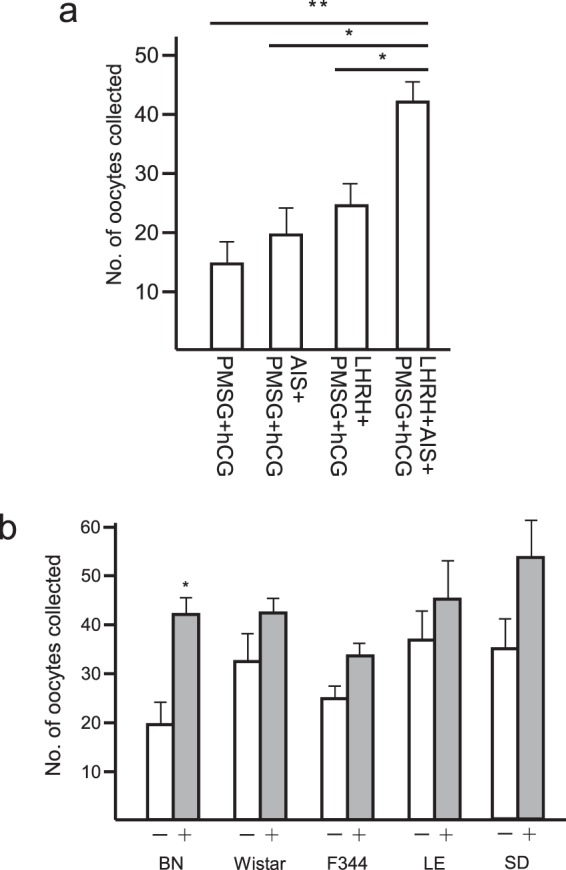
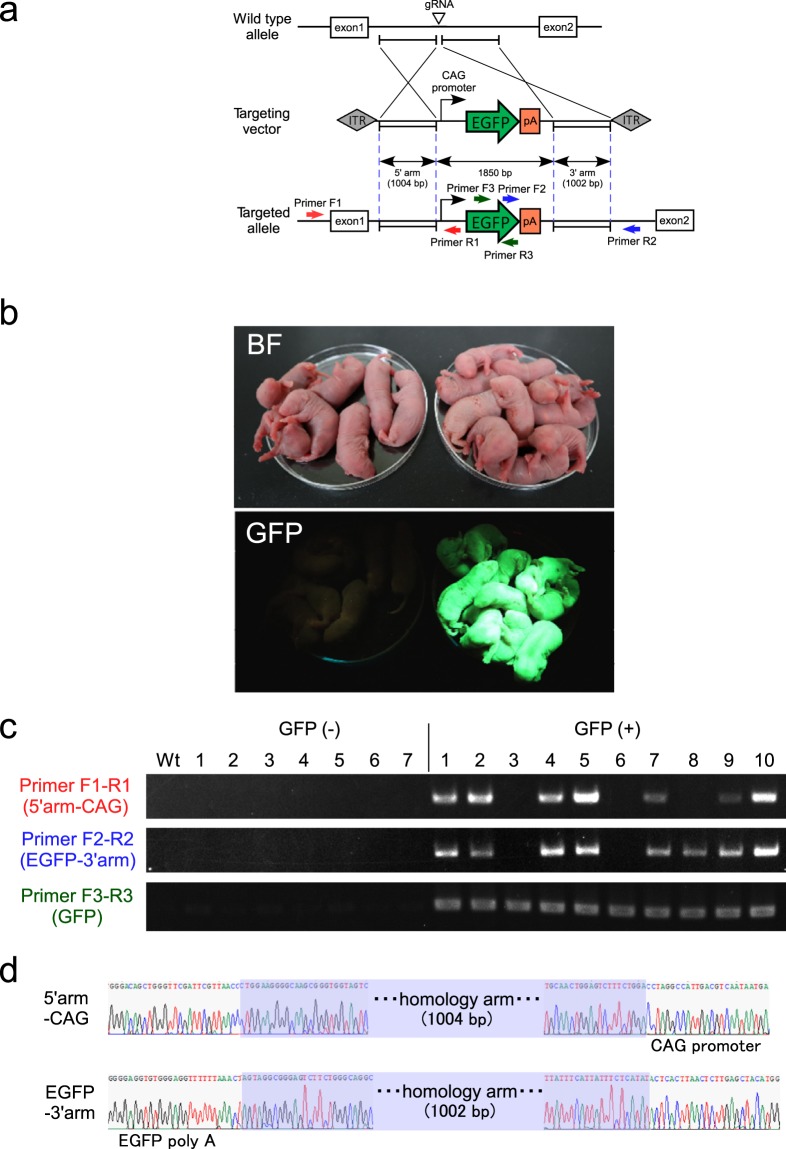
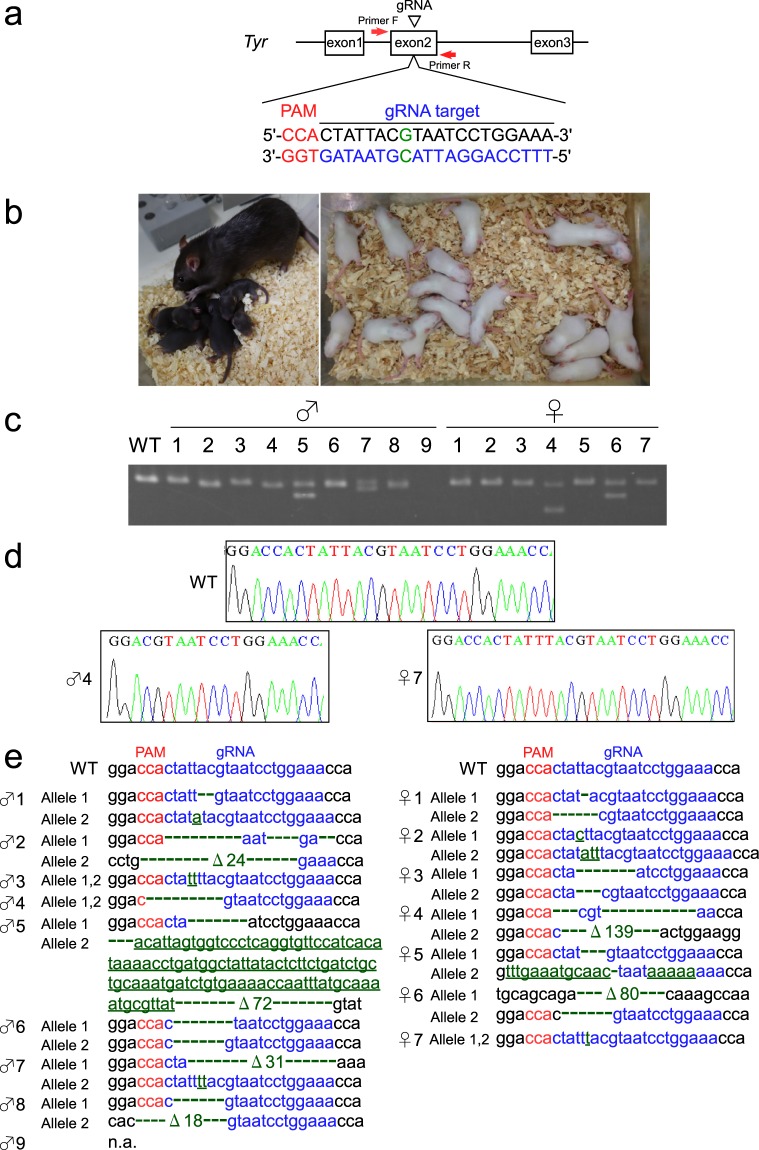
Rats are effective model animals and have contributed to the development of human medicine and basic research. However, the application of reproductive engineering techniques to rats is not as advanced compared with mice, and genome editing in rats has not been achieved using embryos obtained by in vitro fertilization (IVF). In this study, we conducted superovulation, IVF, and knock out and knock in using IVF rat embryos. We found that superovulation effectively occurred in the synchronized oestrus cycle and with anti-inhibin antiserum treatment in immature rats, including the Brown Norway rat, which is a very difficult rat strain to superovulate. Next, we collected superovulated oocytes under anaesthesia, and offspring derived from IVF embryos were obtained from all of the rat strains that we examined. When the tyrosinase gene was targeted by electroporation in these embryos, both alleles were disrupted with 100% efficiency. Furthermore, we conducted long DNA fragment knock in using adeno-associated virus and found that the knock-in litter was obtained with high efficiency (33.3-47.4%). Thus, in this study, we developed methods to allow the simple and efficient production of model rats.
大鼠是有效的模式动物,为人类医学和基础研究的发展做出了贡献。然而,与小鼠相比,生殖工程技术在大鼠中的应用并不先进,并且使用体外受精 (IVF) 获得的胚胎尚未在大鼠中实现基因组编辑。在这项研究中,我们对 IVF 大鼠胚胎进行了超数排卵、体外受精、敲除和敲入。我们发现,在同步发情周期中,通过使用抗抑制素抗血清处理,包括布朗-挪威大鼠在内的非常难以超数排卵的大鼠品系可以有效地进行超数排卵。接下来,我们在麻醉下收集超排卵的卵母细胞,并从我们检查的所有大鼠品系中获得源自 IVF 胚胎的后代。当这些胚胎中的酪氨酸酶基因通过电穿孔靶向时,两个等位基因的破坏效率均达到 100%。此外,我们使用腺相关病毒进行了长 DNA 片段敲入,发现敲入品系的获得效率很高(33.3-47.4%)。因此,在这项研究中,我们开发了简单而高效的模型大鼠生产方法。