UMC Utrecht Brain Center, Department of Neurology & Neurosurgery, University Medical Center Utrecht, Utrecht, the Netherlands.
Institute of Biomedical Engineering, Old Road Campus Research Building, University of Oxford, Oxford OX3 7DQ, UK.
Clin Neurophysiol. 2019 Oct;130(10):1798-1803. doi: 10.1016/j.clinph.2019.07.020. Epub 2019 Jul 27.
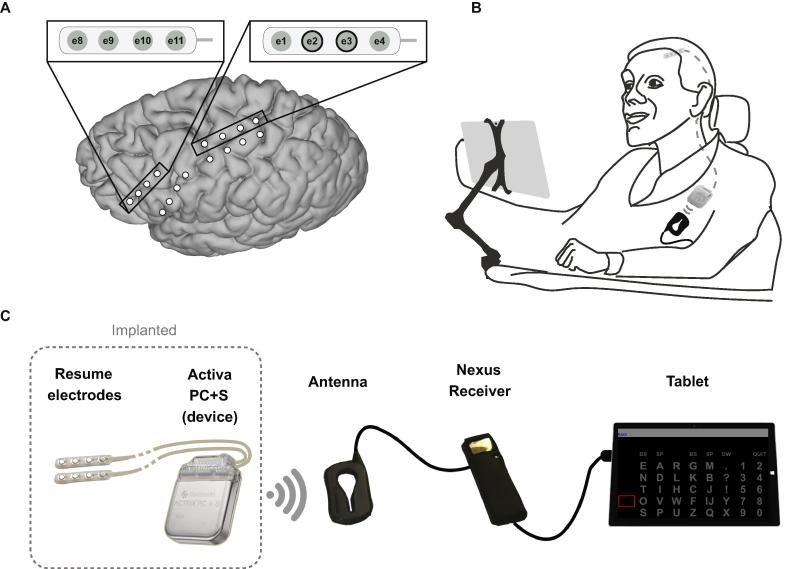
We investigated the long-term functional stability and home use of a fully implanted electrocorticography (ECoG)-based brain-computer interface (BCI) for communication by an individual with late-stage Amyotrophic Lateral Sclerosis (ALS).
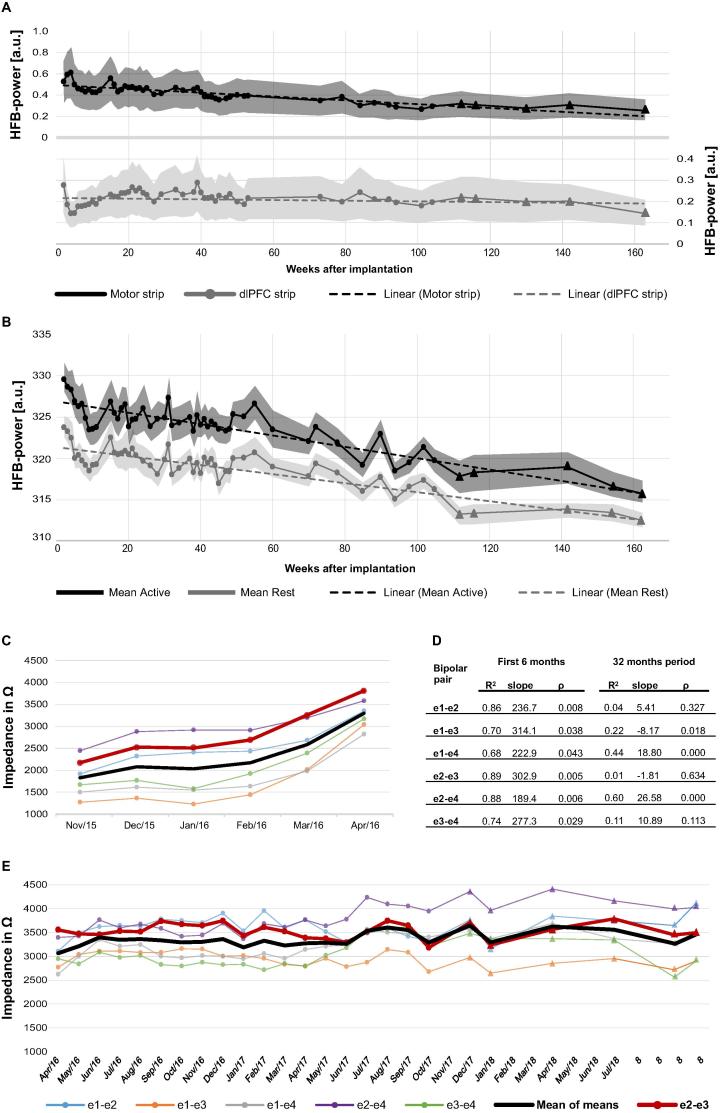
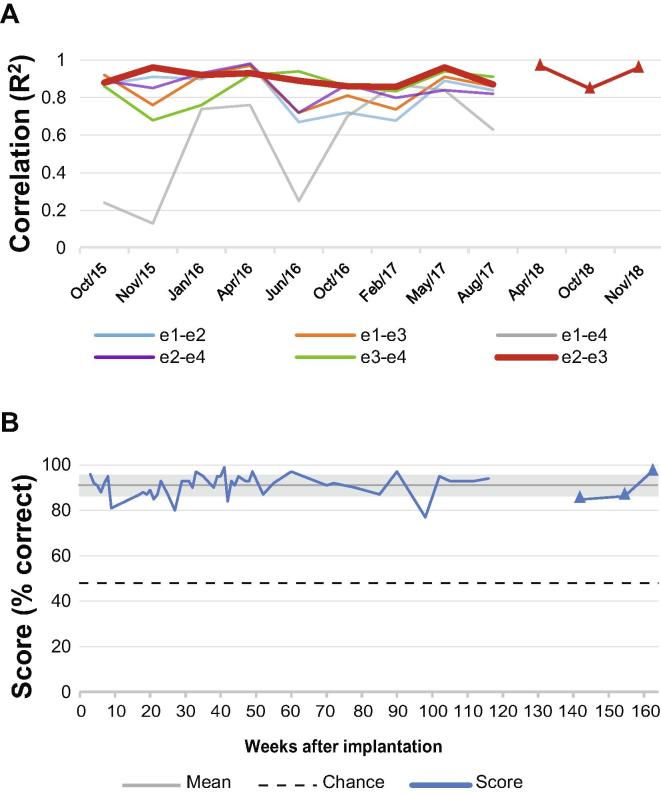
Data recorded from the cortical surface of the motor and prefrontal cortex with an implanted brain-computer interface device was evaluated for 36 months after implantation of the system in an individual with late-stage ALS. In addition, electrode impedance and BCI control accuracy were assessed. Key measures included frequency of use of the system for communication, user and system performance, and electrical signal characteristics.
User performance was high consistently over the three years. Power in the high frequency band, used for the control signal, declined slowly in the motor cortex, but control over the signal remained unaffected by time. Impedance increased until month 5, and then remained constant. Frequency of home use increased steadily, indicating adoption of the system by the user.
The implanted brain-computer interface proves to be robust in an individual with late-stage ALS, given stable performance and control signal for over 36 months.
These findings are relevant for the future of implantable brain-computer interfaces along with other brain-sensing technologies, such as responsive neurostimulation.
我们研究了一位晚期肌萎缩侧索硬化症(ALS)患者长期使用完全植入式脑-机接口(BCI)进行交流的功能稳定性和家庭使用情况。
在一位晚期 ALS 患者植入系统后 36 个月内,评估了从植入式脑-机接口设备的皮质表面记录的运动和前额皮质数据。此外,还评估了电极阻抗和 BCI 控制精度。主要测量指标包括系统用于交流的使用频率、用户和系统性能以及电信号特征。
在过去的三年中,用户的表现始终很高。用于控制信号的高频带中的功率在运动皮层中缓慢下降,但信号的控制不受时间影响。阻抗增加到第 5 个月,然后保持不变。家庭使用频率稳步增加,表明用户采用了该系统。
在晚期 ALS 患者中,植入式脑-机接口表现出较强的稳健性,在 36 个月以上的时间里,性能和控制信号稳定。
这些发现对于植入式脑-机接口以及其他脑传感技术(如响应性神经刺激)的未来具有重要意义。