Tang Zhi, He Zhengwen
Department of Neurosurgery, Hunan Cancer Hospital and The Affiliated Cancer Hospital of Xiangya School of Medicine, Central South University, Changsha, Hunan 410013, P.R. China.
Oncol Lett. 2019 Sep;18(3):2509-2517. doi: 10.3892/ol.2019.10574. Epub 2019 Jul 5.
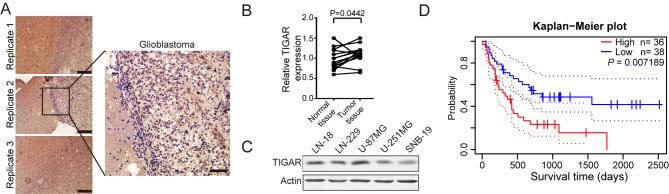
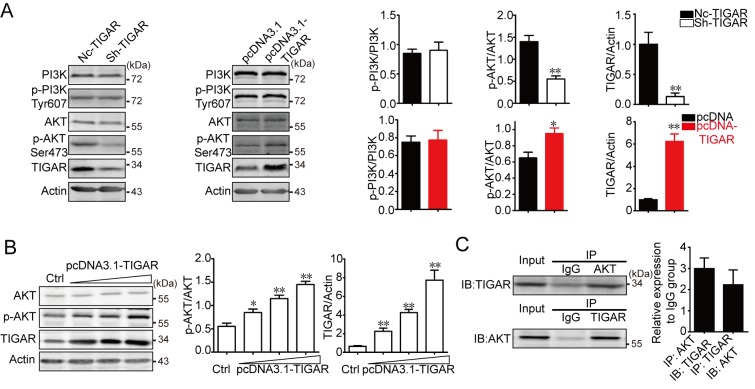
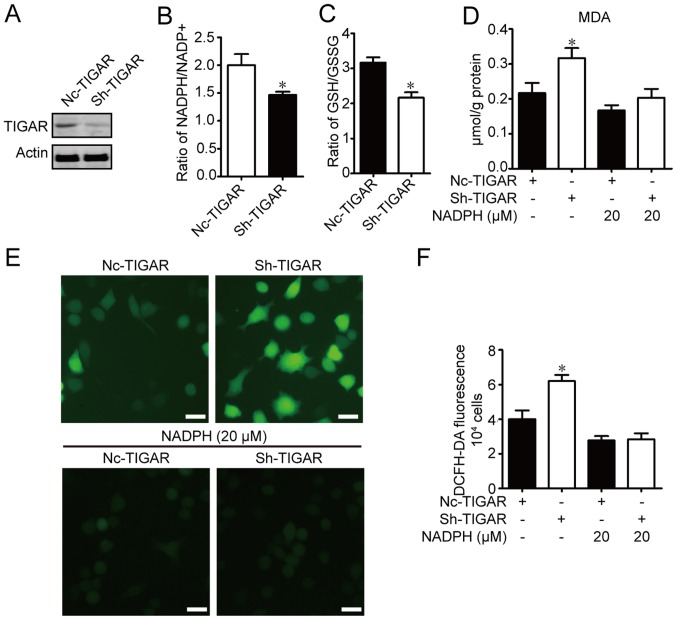
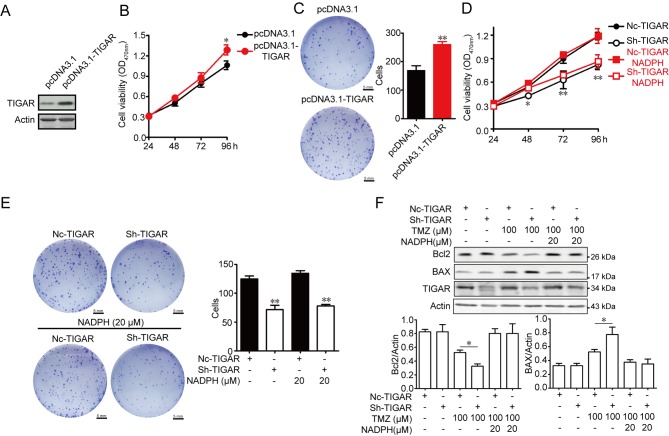
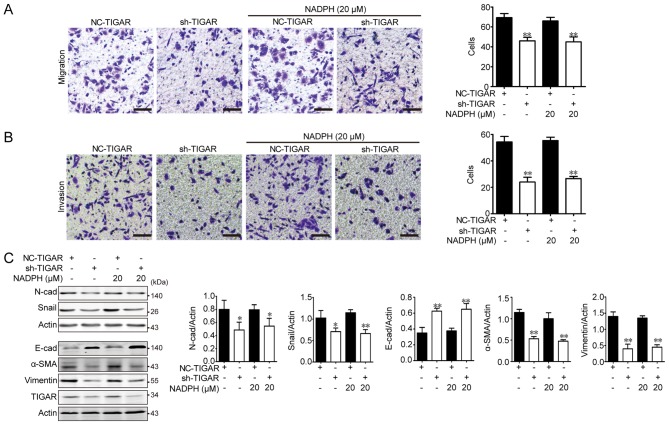
Glioblastoma has a poor prognosis and is one of the most lethal types of cancer in the world. TP53 induced glycolysis regulatory phosphatase (TIGAR) is upregulated in various types of cancer. Therefore, the present study investigated the role of TIGAR in glioblastoma. TIGAR expression was measured in glioma samples and cell lines using immunohistochemistry and western blotting. Reduced nicotinamide adenine dinucleotide phosphate (NADPH), glutathione, malondialdehyde and intracellular reactive oxygen species levels were detected to measure oxidative stress in U-87MG cells following short hairpin RNA (shRNA)-mediated knockdown of TIGAR. Cell viability was determined using an MTT assay for TIGAR-overexpression vector- and TIGAR-shRNA-transfected U-87MG cells. Apoptosis was assessed to evaluate whether TIGAR knockdown sensitized cells to the antitumor effects of temozolomide (TMZ). Migration, invasion and epithelial-mesenchymal transition (EMT) were further assessed using Transwell and western blotting assays. A co-immunoprecipitation assay was used to detect the interaction between TIGAR and protein kinase B (AKT). The results of the present study revealed that TIGAR was positively associated with poor survival and was upregulated in glioblastoma. TIGAR knockdown significantly increased oxidative stress, decreased cell proliferation and exacerbated TMZ-induced apoptosis in U-87MG cells. Additionally, TIGAR knockdown decreased migration, invasion and EMT, and treatment of TIGAR-shRNA-transfected cells with NADPH had no effect on metastasis. In addition, TIGAR promoted AKT activation and bound to AKT. In conclusion, the present study demonstrated that TIGAR may promote glioblastoma growth and progression through oxidation resistance and AKT activation.
胶质母细胞瘤预后较差,是全球最致命的癌症类型之一。TP53诱导的糖酵解调节磷酸酶(TIGAR)在多种癌症类型中表达上调。因此,本研究调查了TIGAR在胶质母细胞瘤中的作用。采用免疫组织化学和蛋白质印迹法检测胶质瘤样本和细胞系中的TIGAR表达。在短发夹RNA(shRNA)介导的TIGAR敲低后,检测还原型烟酰胺腺嘌呤二核苷酸磷酸(NADPH)、谷胱甘肽、丙二醛和细胞内活性氧水平,以测量U-87MG细胞中的氧化应激。使用MTT法测定TIGAR过表达载体和TIGAR-shRNA转染的U-87MG细胞的细胞活力。评估细胞凋亡以评价TIGAR敲低是否使细胞对替莫唑胺(TMZ)的抗肿瘤作用敏感。使用Transwell和蛋白质印迹分析进一步评估迁移、侵袭和上皮-间质转化(EMT)。采用免疫共沉淀分析检测TIGAR与蛋白激酶B(AKT)之间的相互作用。本研究结果显示,TIGAR与较差的生存率呈正相关,且在胶质母细胞瘤中表达上调。TIGAR敲低显著增加氧化应激,降低细胞增殖,并加剧TMZ诱导的U-87MG细胞凋亡。此外,TIGAR敲低减少迁移、侵袭和EMT,用NADPH处理TIGAR-shRNA转染的细胞对转移无影响。此外,TIGAR促进AKT激活并与AKT结合。总之,本研究表明,TIGAR可能通过抗氧化和AKT激活促进胶质母细胞瘤的生长和进展。