Jabbari Bahman, Jalilnejad Elham, Ghasemzadeh Kamran, Iulianelli Adolfo
Faculty of Chemical Engineering, Urmia University of Technology, Urmia 57166-17165, Iran.
Institute on Membrane Technology of the Italian National Research Council (CNR-ITM), via P. Bucci Cubo 17/C, 87036 Rende (CS), Italy.
Membranes (Basel). 2019 Aug 10;9(8):100. doi: 10.3390/membranes9080100.
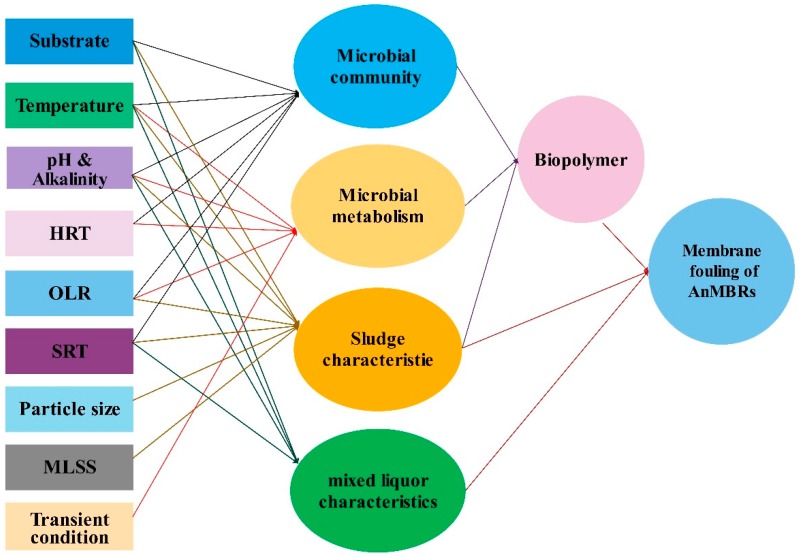
Biohydrogen is a clean and viable energy carrier generated through various green and renewable energy sources such as biomass. This review focused on the application of membrane bioreactors (MBRs), emphasizing the combination of these devices with biological processes, for bio-derived hydrogen production. Direct biophotolysis, indirect biophotolysis, photo-fermentation, dark fermentation, and conventional techniques are discussed as the common methods of biohydrogen production. The anaerobic process membrane bioreactors (AnMBRs) technology is presented and discussed as a preferable choice for producing biohydrogen due to its low cost and the ability of overcoming problems posed by carbon emissions. General features of AnMBRs and operational parameters are comprehensively overviewed. Although MBRs are being used as a well-established and mature technology with many full-scale plants around the world, membrane fouling still remains a serious obstacle and a future challenge. Therefore, this review highlights the main benefits and drawbacks of MBRs application, also discussing the comparison between organic and inorganic membranes utilization to determine which may constitute the best solution for providing pure hydrogen. Nevertheless, research is still needed to overcome remaining barriers to practical applications such as low yields and production rates, and to identify biohydrogen as one of the most appealing renewable energies in the future.
生物氢是一种通过生物质等各种绿色和可再生能源产生的清洁且可行的能量载体。本综述重点关注膜生物反应器(MBR)的应用,强调这些装置与生物过程相结合用于生物制氢。直接生物光解、间接生物光解、光发酵、暗发酵和传统技术被作为生物制氢的常见方法进行了讨论。厌氧工艺膜生物反应器(AnMBR)技术作为一种制氢的优选方案被提出并讨论,因其成本低且能够克服碳排放带来的问题。AnMBR的一般特征和运行参数得到了全面概述。尽管MBR作为一种成熟的技术在世界各地有许多全规模工厂在使用,但膜污染仍然是一个严重的障碍和未来的挑战。因此,本综述突出了MBR应用的主要优点和缺点,还讨论了有机膜和无机膜利用的比较,以确定哪种膜可能构成提供纯氢的最佳解决方案。然而,仍需要进行研究以克服实际应用中如低产量和生产率等剩余障碍,并将生物氢确定为未来最具吸引力的可再生能源之一。