Departamento de Bioquímica, Instituto de Química, Universidade de São Paulo, São Paulo, Brazil.
Departamento de Bioquímica, Escola Paulista de Medicina, Universidade Federal de São Paulo, São Paulo, Brazil.
Sci Rep. 2019 Aug 12;9(1):11642. doi: 10.1038/s41598-019-48059-7.
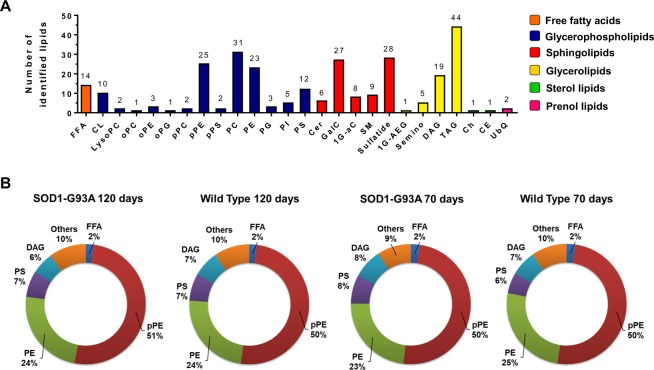
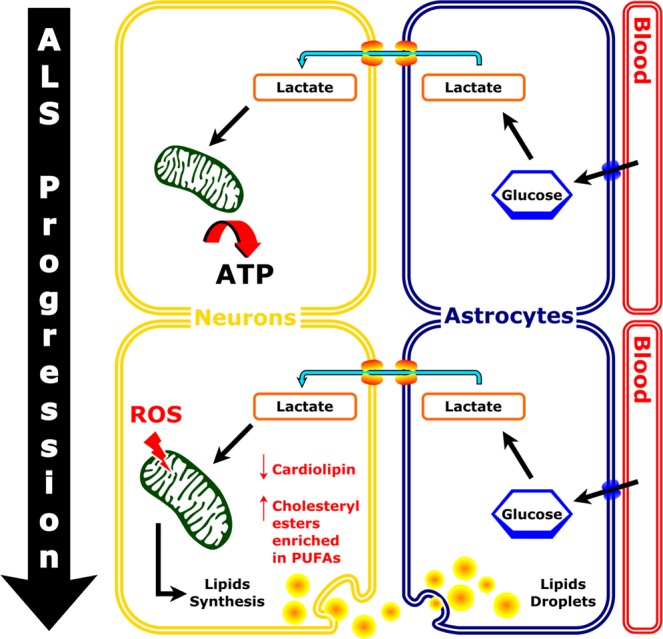
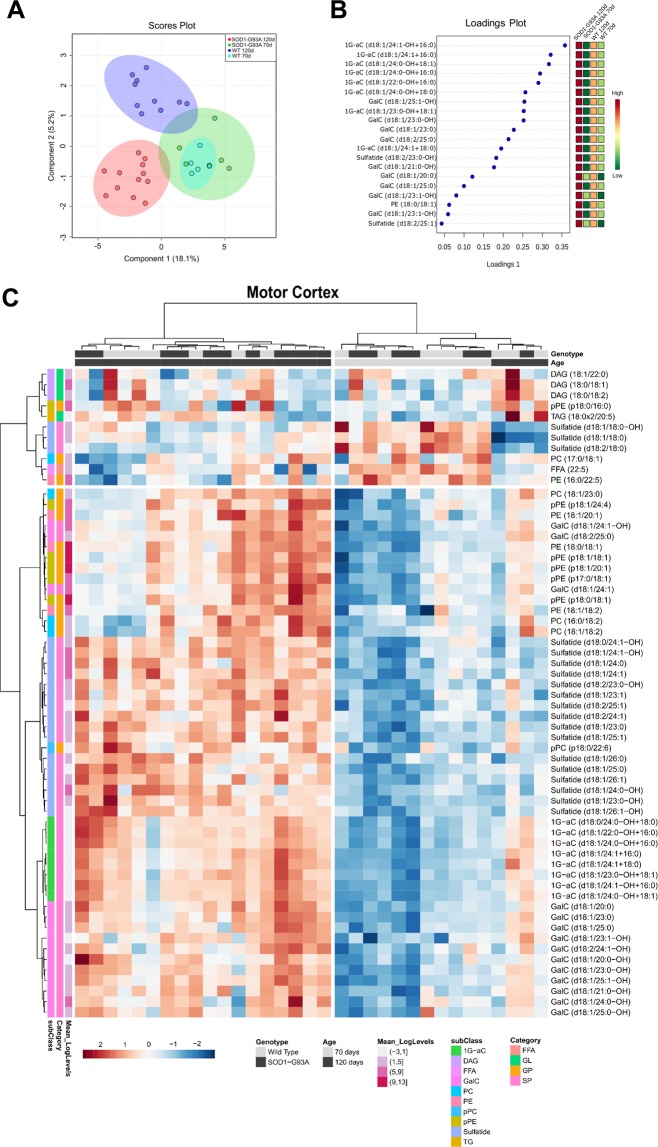
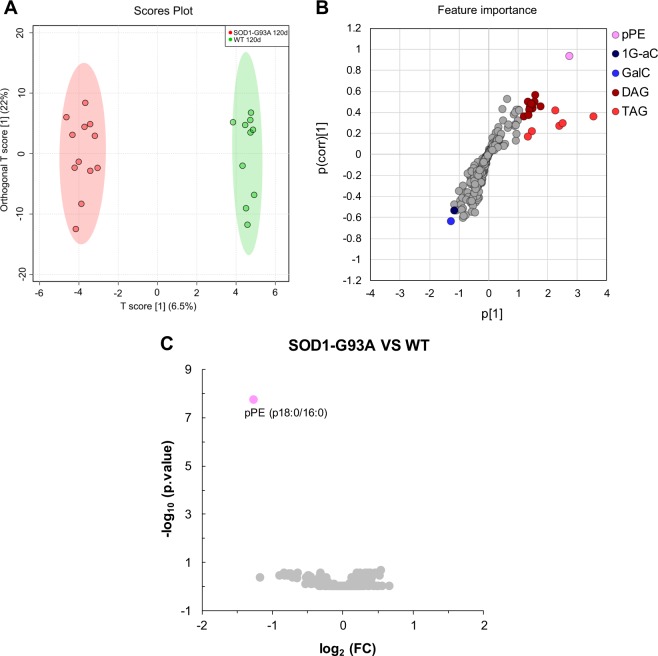
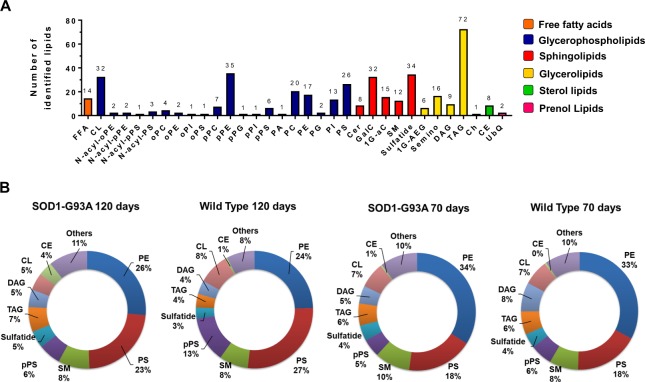
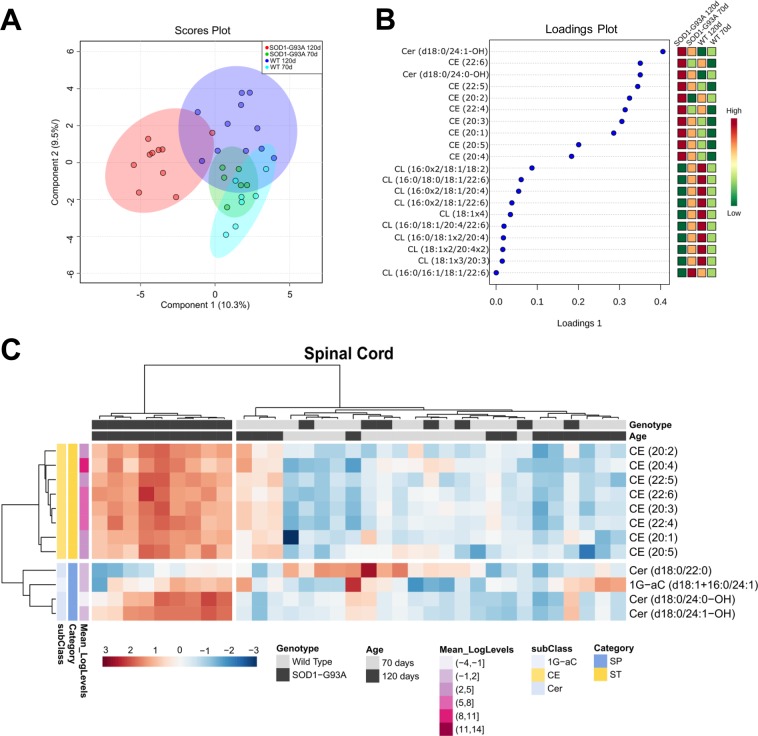
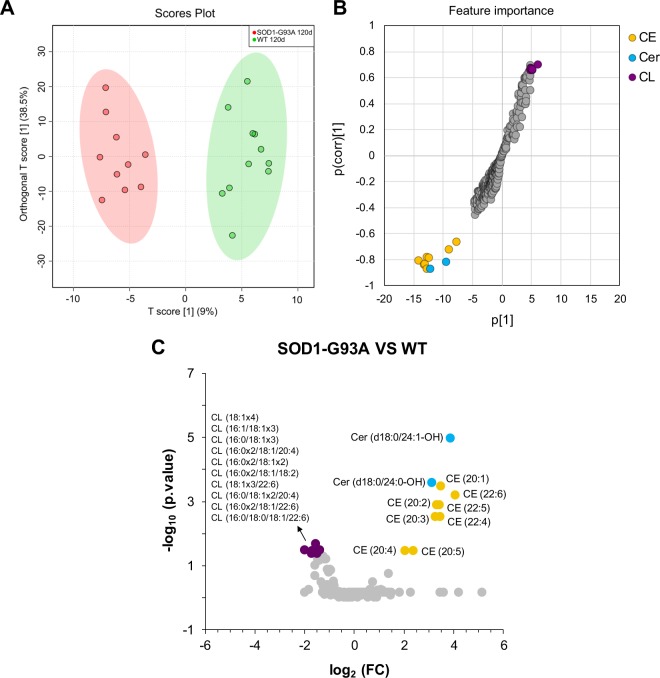
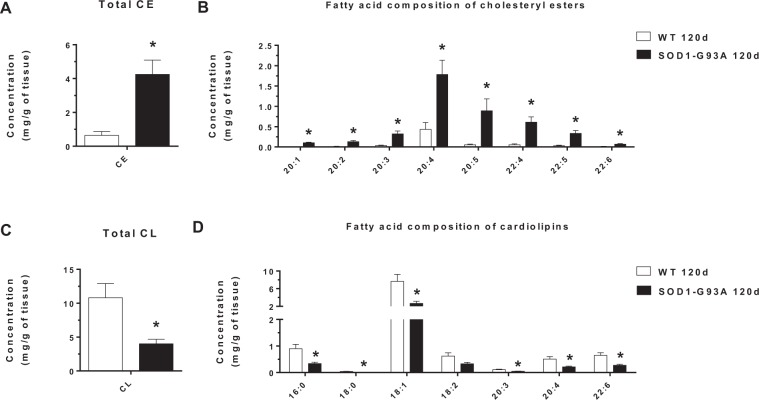
Amyotrophic lateral sclerosis (ALS) is characterized by progressive loss of upper and lower motor neurons leading to muscle paralysis and death. While a link between dysregulated lipid metabolism and ALS has been proposed, lipidome alterations involved in disease progression are still understudied. Using a rodent model of ALS overexpressing mutant human Cu/Zn-superoxide dismutase gene (SOD1-G93A), we performed a comparative lipidomic analysis in motor cortex and spinal cord tissues of SOD1-G93A and WT rats at asymptomatic (70 days) and symptomatic stages (120 days). Interestingly, lipidome alterations in motor cortex were mostly related to age than ALS. In contrast, drastic changes were observed in spinal cord of SOD1-G93A 120d group, including decreased levels of cardiolipin and a 6-fold increase in several cholesteryl esters linked to polyunsaturated fatty acids. Consistent with previous studies, our findings suggest abnormal mitochondria in motor neurons and lipid droplets accumulation in aberrant astrocytes. Although the mechanism leading to cholesteryl esters accumulation remains to be established, we postulate a hypothetical model based on neuroprotection of polyunsaturated fatty acids into lipid droplets in response to increased oxidative stress. Implicated in the pathology of other neurodegenerative diseases, cholesteryl esters appear as attractive targets for further investigations.
肌萎缩侧索硬化症(ALS)的特征是上运动神经元和下运动神经元进行性丧失,导致肌肉瘫痪和死亡。虽然已经提出了脂质代谢失调与 ALS 之间的联系,但涉及疾病进展的脂质组改变仍在研究中。我们使用表达突变型人 Cu/Zn-超氧化物歧化酶基因(SOD1-G93A)的 ALS 啮齿动物模型,在无症状(70 天)和症状期(120 天)对 SOD1-G93A 和 WT 大鼠的运动皮层和脊髓组织进行了比较脂质组分析。有趣的是,运动皮层中的脂质组改变主要与年龄有关,而与 ALS 无关。相比之下,SOD1-G93A 120d 组的脊髓中观察到明显的变化,包括心磷脂水平降低,与多不饱和脂肪酸相关的几种胆甾醇酯增加了 6 倍。与先前的研究一致,我们的发现表明运动神经元中异常的线粒体和异常星形胶质细胞中脂质滴的积累。尽管导致胆甾醇酯积累的机制仍有待确定,但我们提出了一个假设模型,即多不饱和脂肪酸为了应对增加的氧化应激而将神经保护作用转移到脂质滴中。胆甾醇酯与其他神经退行性疾病的病理学有关,因此作为进一步研究的有吸引力的目标。