School of Food and Nutritional Sciences, University College Cork, Cork, Republic of Ireland.
Department of Medicine, Faculty of Medicine and Dentistry, University of Alberta, 5-10 University Terrace, 8303-112 St, Edmonton, AB, T6G 2E1, Canada.
Nutr J. 2019 Aug 13;18(1):46. doi: 10.1186/s12937-019-0471-1.
Ethiopia is the second-most populous country in Africa. Although most people still live in rural areas, the urban population is increasing. Generally, urbanisation is associated with a nutrition transition and an increase in risk factors for non-communicable diseases (NCDs). The objective of this study was to determine how the nutritional composition of the Ethiopian food supply has changed over the last 50 years and whether there is evidence of a nutrition transition.
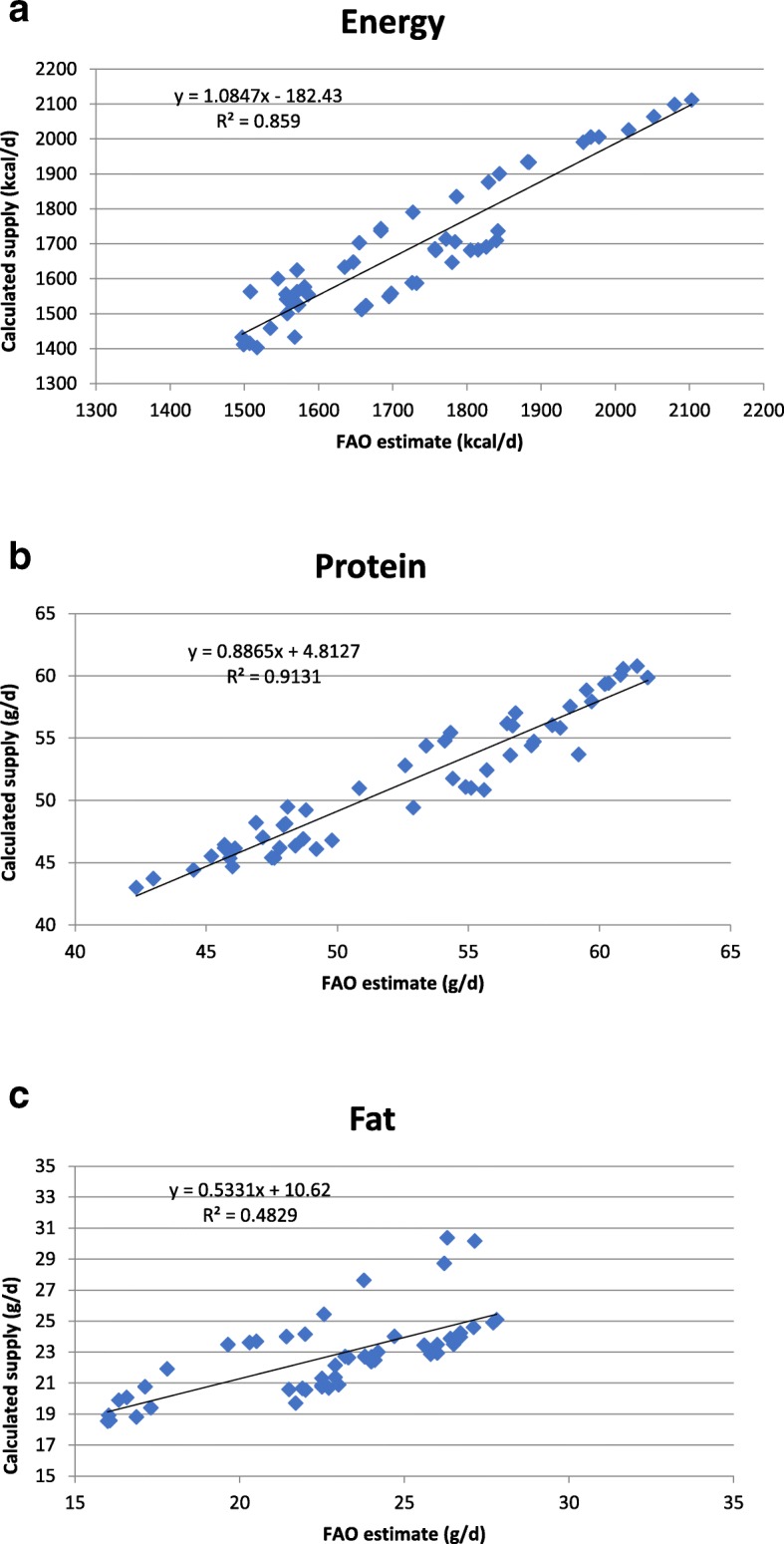
Food balance sheets for Ethiopia from 1961 to 2011 were downloaded from the FAOSTAT database and daily per capita supply for 17 commodity groupings was calculated. After appropriate coding, per capita energy and nutrient supplies were determined.
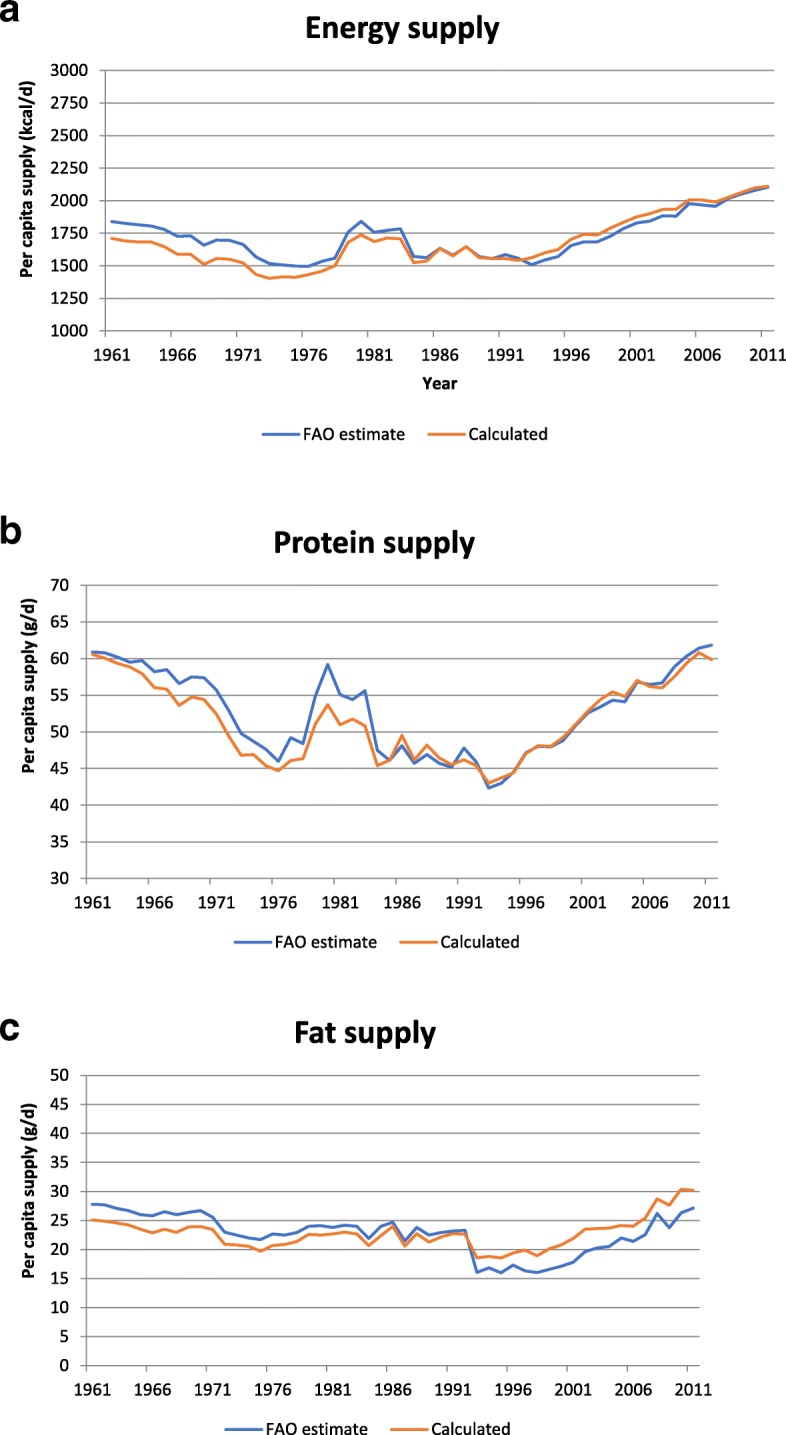
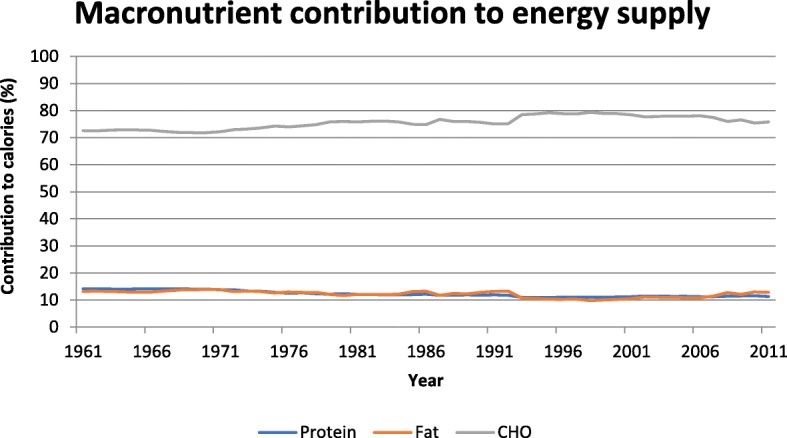
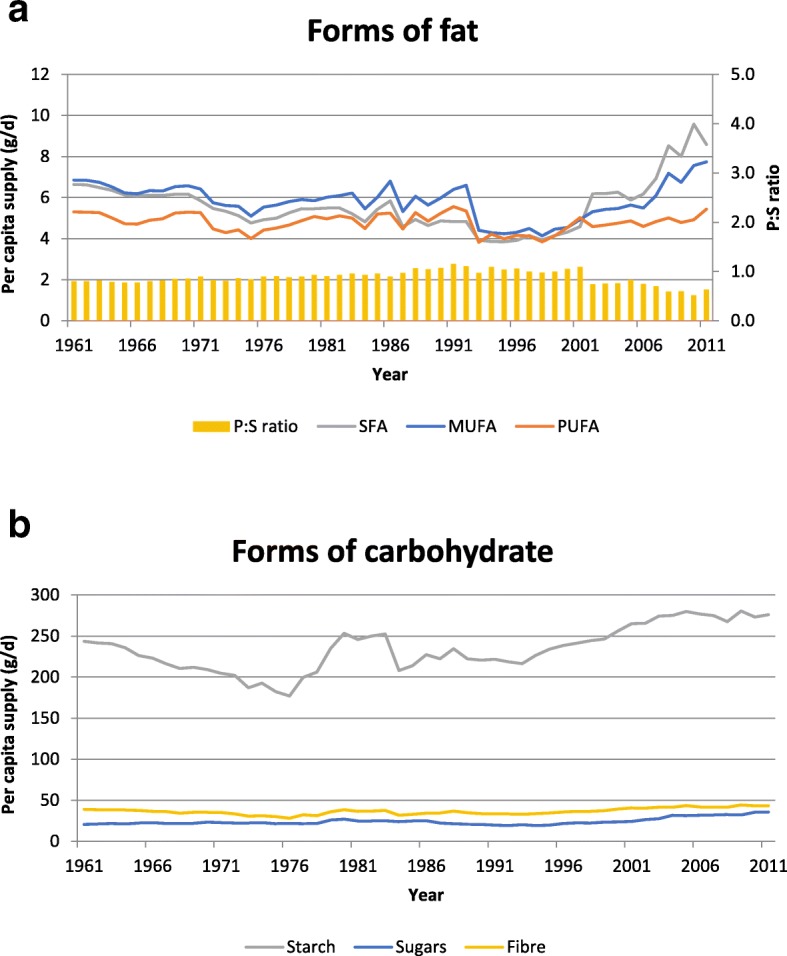
Per capita energy supply was 1710 kcal/d in 1961, fell to 1403 kcal/d by 1973, and increased to 2111 kcal/d in 2011. Carbohydrate was by far the greatest energy source throughout the period, ranging from 72% of energy in 1968 to 79% in 1998; however, this was mostly provided by complex carbohydrates as the contribution of sugars to energy only varied between 4.7% in 1994 and 6.7% in 2011. Energy from fat was low, ranging from 14% of energy in 1970 to 10% in 1998. Energy from protein ranged from 14% in 1962 to 11% in 1994. Per capita supplies of calcium, vitamin A, C, D, folate and other B-vitamins were insufficient and there was a low supply of animal foods.
The Ethiopian food supply is still remarkably high in complex carbohydrates and low in sugars, fat, protein, and micronutrients. There is little evidence yet of changes that are usually associated with a nutrition transition.
埃塞俄比亚是非洲第二大人口大国。尽管大多数人仍居住在农村地区,但城市人口正在增加。一般来说,城市化与营养转型和非传染性疾病(NCD)风险因素的增加有关。本研究的目的是确定在过去 50 年中,埃塞俄比亚食物供应的营养成分发生了怎样的变化,以及是否存在营养转型的证据。
从 FAOSTAT 数据库下载了 1961 年至 2011 年期间的埃塞俄比亚粮食平衡表,并计算了 17 种商品组别的人均日供应量。经过适当编码,确定了人均能量和营养素的供应量。
1961 年,人均能量供应量为 1710 千卡/天,1973 年降至 1403 千卡/天,2011 年增至 2111 千卡/天。碳水化合物是整个时期最大的能量来源,范围从 1968 年的 72%到 1998 年的 79%;然而,这主要是由复杂碳水化合物提供的,因为糖在能量中的贡献仅在 1994 年的 4.7%和 2011 年的 6.7%之间变化。脂肪提供的能量较低,范围从 1970 年的 14%到 1998 年的 10%。蛋白质提供的能量范围从 1962 年的 14%到 1994 年的 11%。人均钙、维生素 A、C、D、叶酸和其他 B 族维生素的供应量不足,动物食品的供应量也很低。
埃塞俄比亚的食物供应仍然以复杂碳水化合物为主,糖、脂肪、蛋白质和微量营养素含量较低。目前几乎没有证据表明发生了通常与营养转型相关的变化。