Department of Pharmaceutics, University of Minnesota, Minneapolis, MN, USA.
Cancer Center, Sanford Burnham Prebys Medical Discovery Institute, La Jolla, CA, USA.
Nat Commun. 2019 Aug 13;10(1):3646. doi: 10.1038/s41467-019-11631-w.
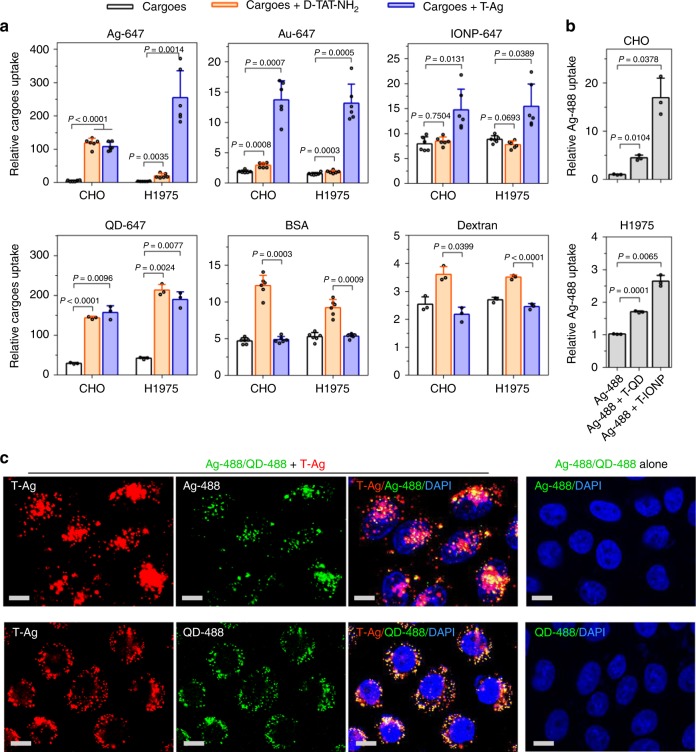
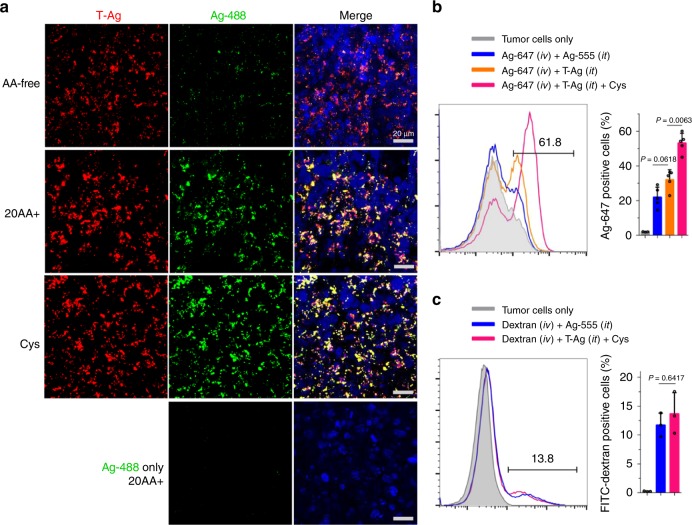
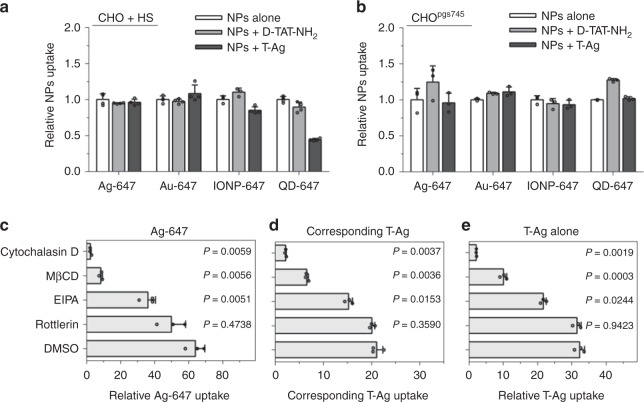
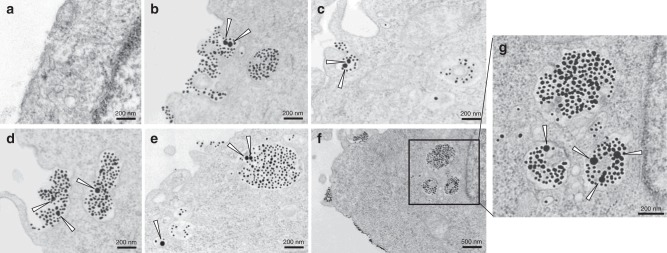
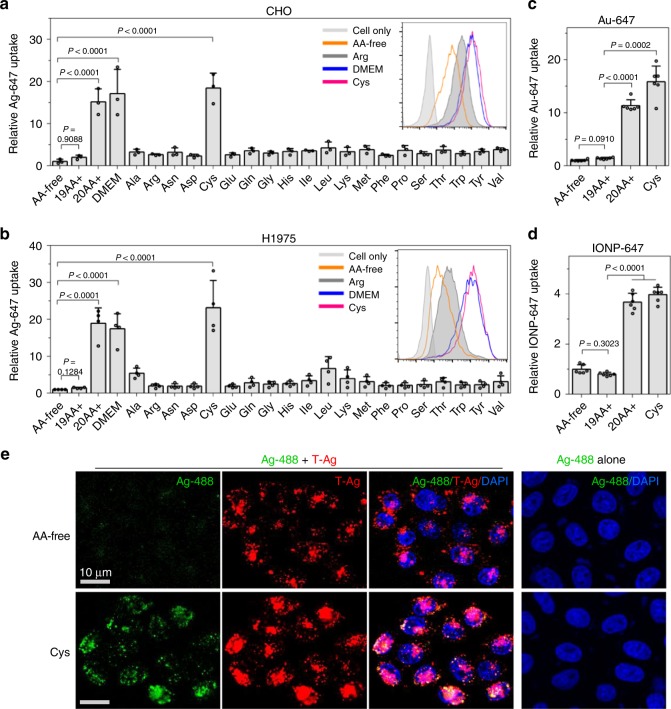
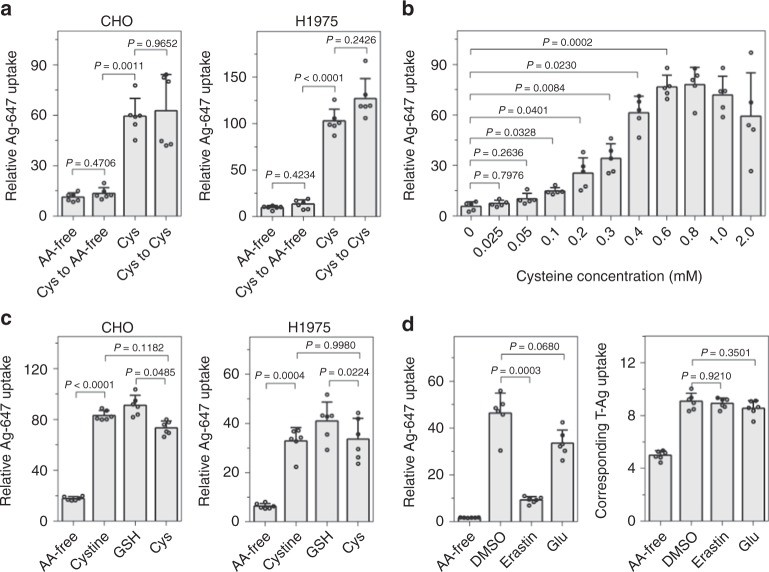
Entry into cells is necessary for many nanomaterial applications, and a common solution is to functionalize nanoparticles (NPs) with cell-penetrating ligands. Despite intensive studies on these functionalized NPs, little is known about their effect on cellular activities to engulf other cargo from the nearby environment. Here, we use NPs functionalized with TAT (transactivator of transcription) peptide (T-NPs) as an example to investigate their impact on cellular uptake of bystander cargo. We find that T-NP internalization enables cellular uptake of bystander NPs, but not common fluid markers, through a receptor-dependent macropinocytosis pathway. Moreover, the activity of this bystander uptake is stimulated by cysteine presence in the surrounding solution. The cargo selectivity and cysteine regulation are further demonstrated ex vivo and in vivo. These findings reveal another mechanism for NP entry into cells and open up an avenue of studying the interplay among endocytosis, amino acids, and nanomaterial delivery.
进入细胞是许多纳米材料应用所必需的,一种常见的解决方案是用穿透细胞的配体对纳米颗粒(NPs)进行功能化。尽管对这些功能化的 NPs 进行了深入研究,但对于它们对细胞活动的影响,即从周围环境中摄取其他货物,知之甚少。在这里,我们以用 TAT(转录激活因子)肽(T-NPs)功能化的 NPs 为例,研究它们对旁观者货物摄取的影响。我们发现,T-NP 的内化通过受体依赖性胞吞作用途径,使旁观者 NPs 而不是常见的流体标记物被细胞摄取。此外,周围溶液中半胱氨酸的存在会刺激这种旁观者摄取的活性。这种货物选择性和半胱氨酸调节在离体和体内进一步得到证实。这些发现揭示了纳米颗粒进入细胞的另一种机制,并为研究内吞作用、氨基酸和纳米材料输送之间的相互作用开辟了一条途径。