Biochemistry Department, Faculty of Agriculture, Cairo University, Giza, Egypt.
Department of Pharmaceutical Technology, Pharmaceutical and Drug Industries Research Division, National Research Centre (NRC), Giza, Egypt.
Int J Nanomedicine. 2019 Jul 19;14:5503-5526. doi: 10.2147/IJN.S206899. eCollection 2019.
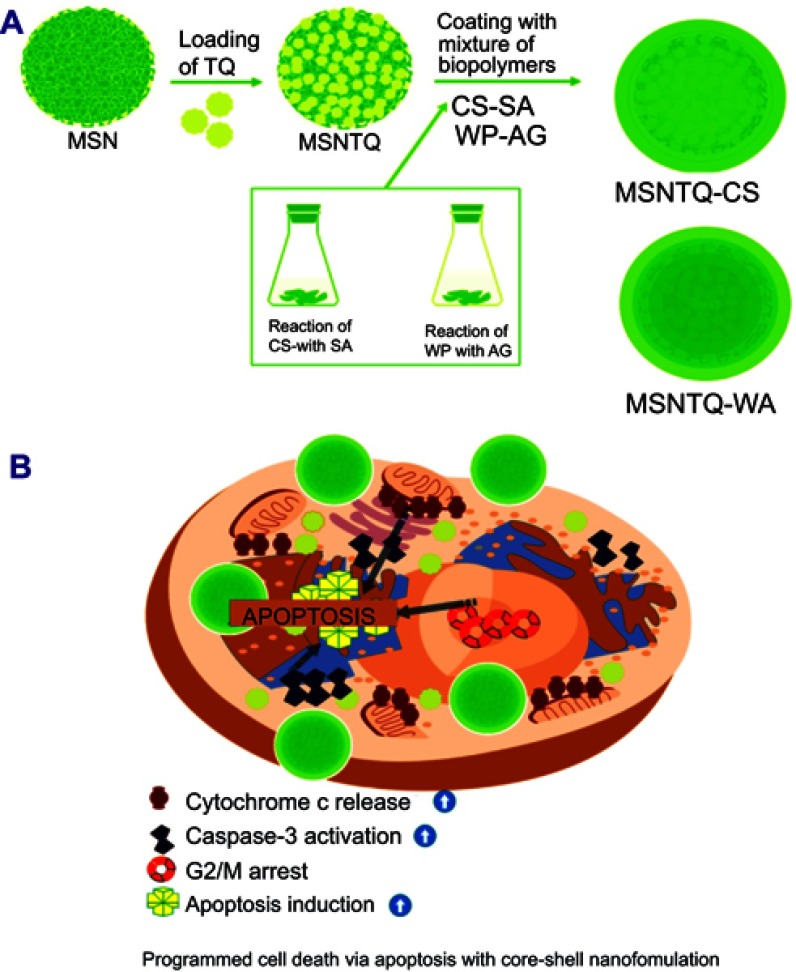
Glioma is one of the most aggressive primary brain tumors and is incurable. Surgical resection, radiation, and chemotherapies have been the standard treatments for brain tumors, however, they damage healthy tissue. Therefore, there is a need for safe anticancer drug delivery systems. This is particularly true for natural prodrugs such as thymoquinone (TQ), which has a high therapeutic potential for cancers but has poor water solubility and insufficient targeting capacity. We have tailored novel core-shell nanoformulations for TQ delivery against glioma cells using mesoporous silica nanoparticles (MSNs) as a carrier.
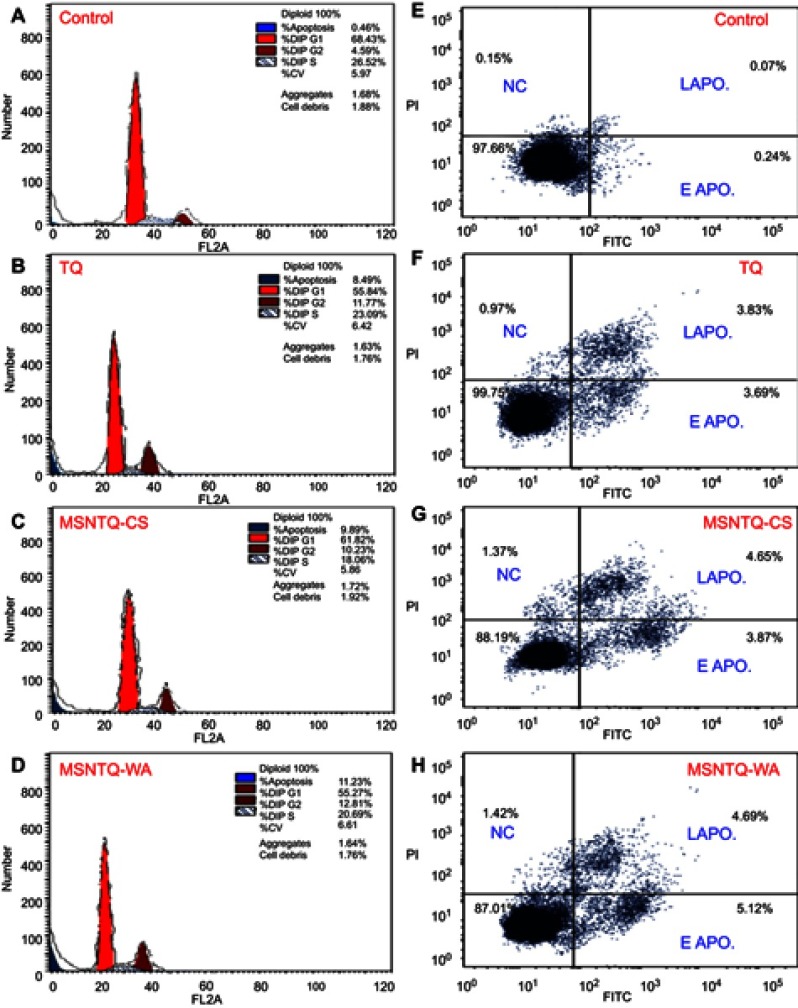
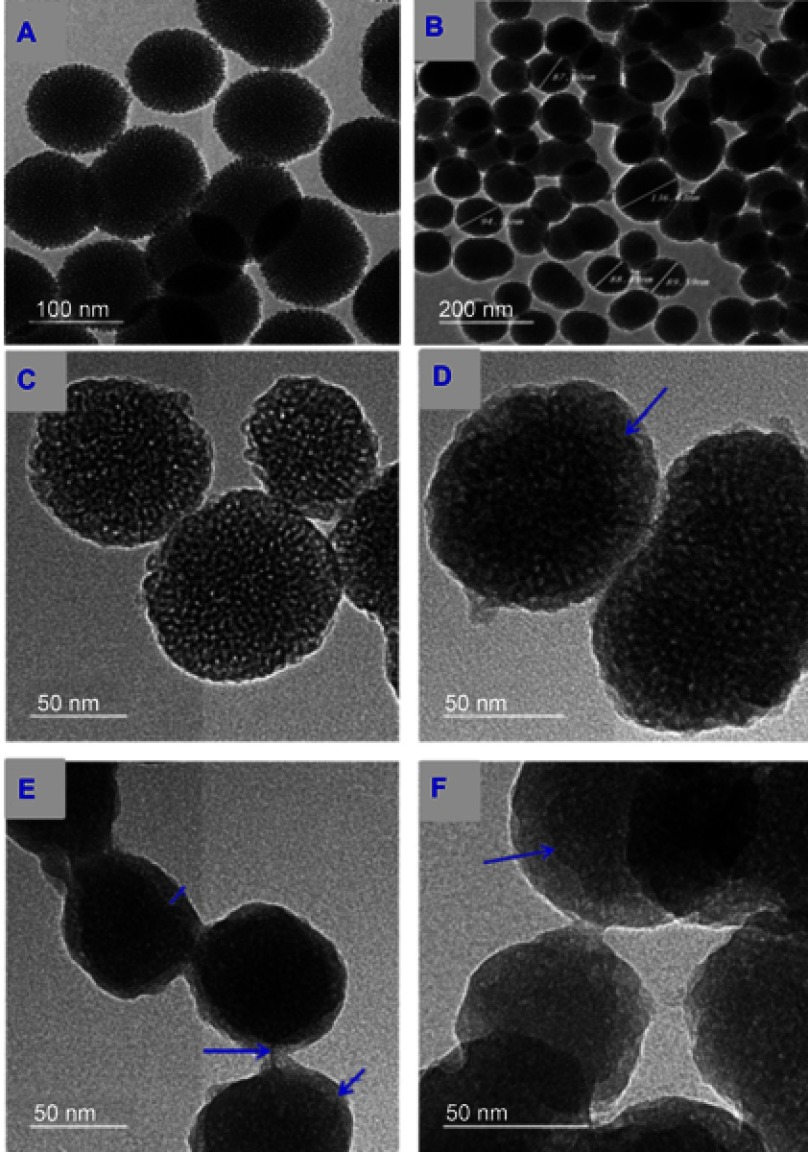
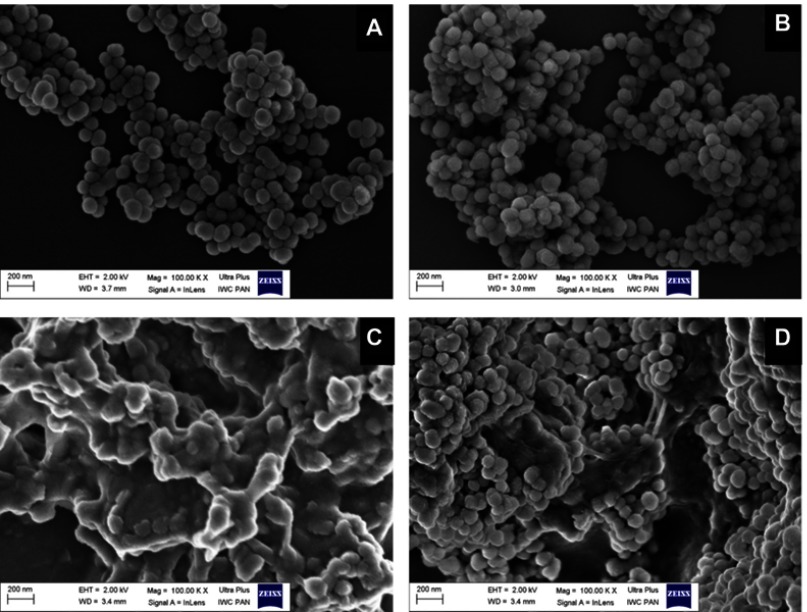
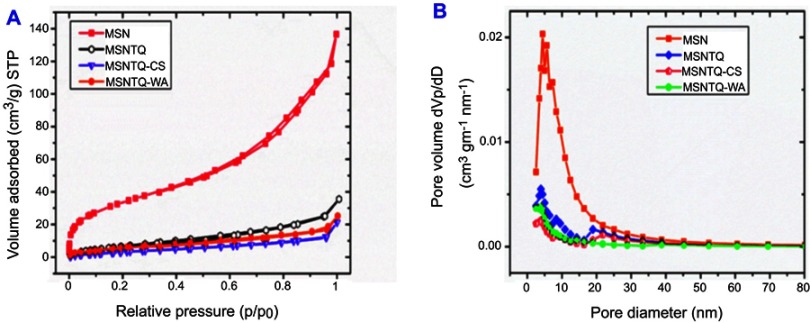
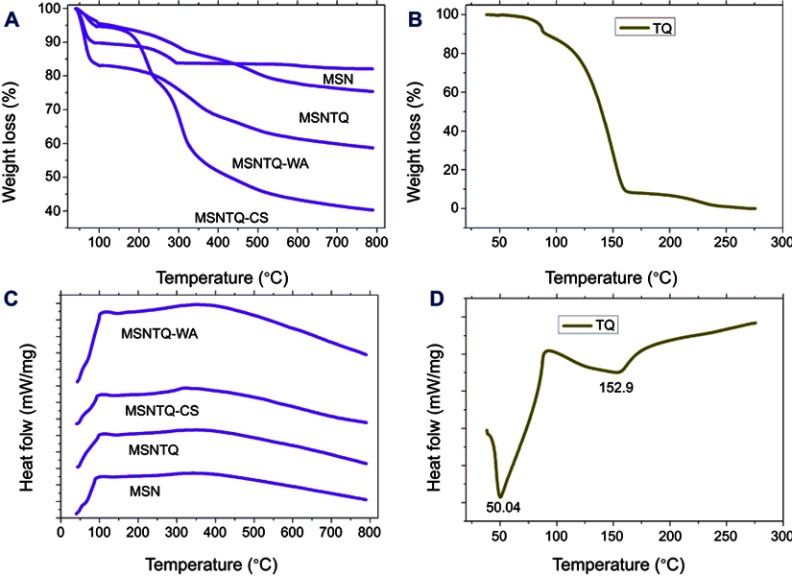
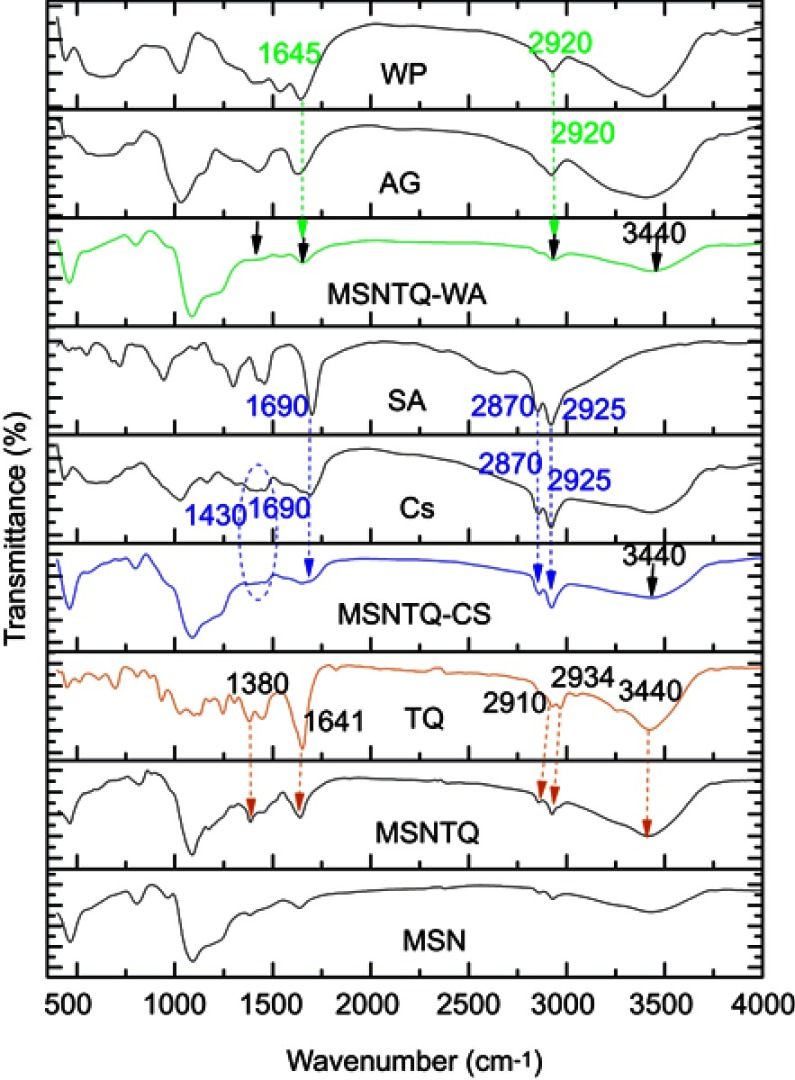
The core-shell nanoformulations were prepared with a core of MSNs loaded with TQ (MSNTQ), and the shell consisted of whey protein and gum Arabic (MSNTQ-WA), or chitosan and stearic acid (MSNTQ-CS). Nanoformulations were characterized, studied for release kinetics and evaluated for anticancer activity on brain cancer cells (SW1088 and A172) and cortical neuronal cells-2 (HCN2) as normal cells. Furthermore, they were evaluated for caspase-3, cytochrome c, cell cycle arrest, and apoptosis to understand the possible anticancer mechanism.
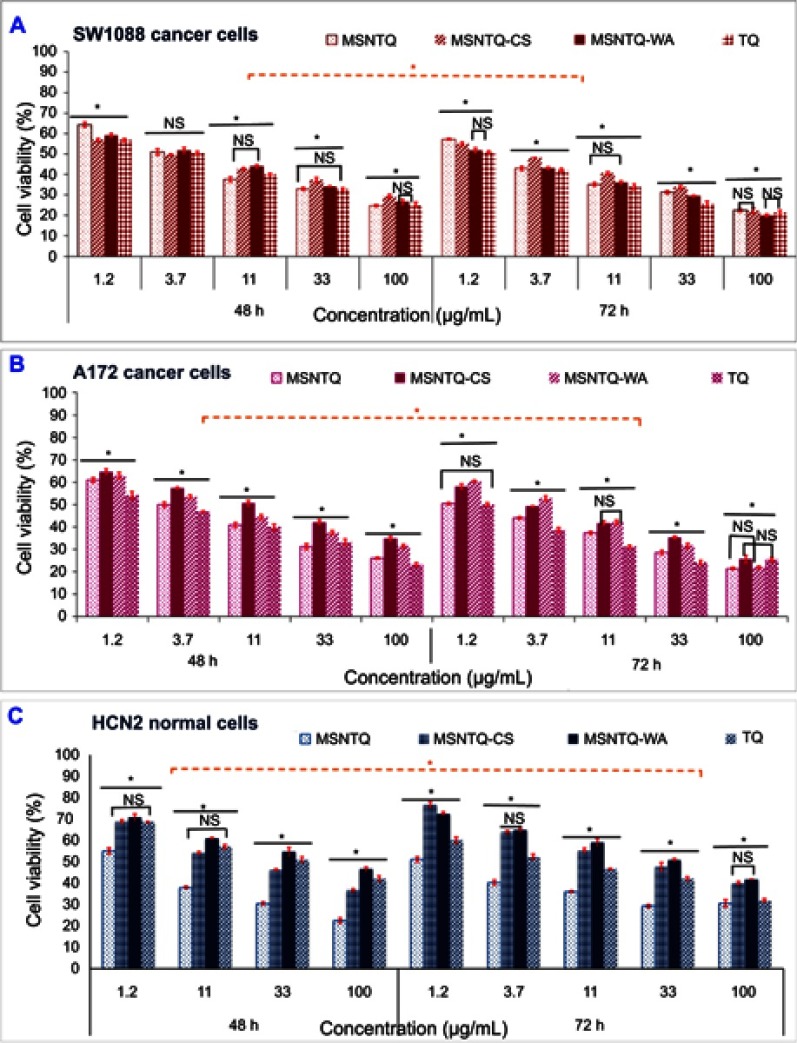
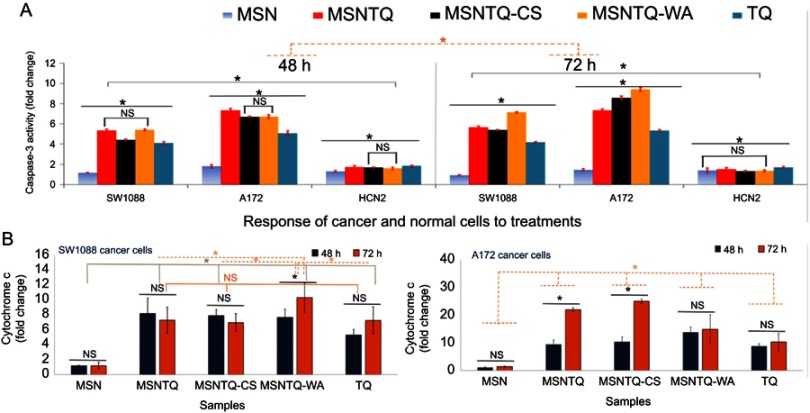
TQ release was pH-dependent and different for core and core-shell nanoformulations. A high TQ release from MSNTQ was detected at neutral pH 7.4, while a high TQ release from MSNTQ-WA and MSNTQ-CS was obtained at acidic pH 5.5 and 6.8, respectively; thus, TQ release in acidic tumor environment was enhanced. The release kinetics fitted with the Korsmeyer-Peppas kinetic model corresponding to diffusion-controlled release. Comparative in vitro tests with cancer and normal cells indicated a high anticancer efficiency for MSNTQ-WA compared to free TQ, and low cytotoxicity in the case of normal cells. The core-shell nanoformulations significantly improved caspase-3 activation, cytochrome c triggers, cell cycle arrest at G2/M, and apoptosis induction compared to TQ.
Use of MSNs loaded with TQ permit improved cancer targeting and opens the door to translating TQ into clinical application. Particularly good results were obtained for MSNTQ-WA.
脑胶质瘤是最具侵袭性的原发性脑肿瘤之一,目前尚无有效的治疗方法。手术切除、放疗和化疗一直是脑肿瘤的标准治疗方法,但这些方法会损伤健康组织。因此,需要安全的抗癌药物输送系统。对于天然前药如百里醌(TQ)来说尤其如此,TQ 具有治疗癌症的巨大潜力,但水溶性差,靶向能力不足。我们使用介孔硅纳米粒子(MSNs)作为载体,为 TQ 递药设计了新型核壳纳米制剂来对抗脑胶质瘤细胞。
采用介孔硅纳米粒子(MSNs)负载 TQ(MSNTQ)作为核,乳清蛋白和阿拉伯胶(MSNTQ-WA)或壳聚糖和硬脂酸(MSNTQ-CS)作为壳,制备核壳纳米制剂。对纳米制剂进行了表征,研究了它们的释放动力学,并在脑癌细胞(SW1088 和 A172)和皮质神经元细胞-2(HCN2)(正常细胞)上评估了它们的抗癌活性。此外,还评估了它们对 caspase-3、细胞色素 c、细胞周期阻滞和细胞凋亡的影响,以了解可能的抗癌机制。
TQ 的释放呈 pH 依赖性,且在核心和核壳纳米制剂中有所不同。在中性 pH 值 7.4 时,MSNTQ 释放量较高,而在酸性 pH 值 5.5 和 6.8 时,MSNTQ-WA 和 MSNTQ-CS 的 TQ 释放量较高;因此,在酸性肿瘤环境中 TQ 的释放得到增强。释放动力学符合扩散控制释放的 Korsmeyer-Peppas 动力学模型。与游离 TQ 相比,癌症和正常细胞的体外比较试验表明,MSNTQ-WA 具有较高的抗癌效率,而对正常细胞的细胞毒性较低。与 TQ 相比,核壳纳米制剂显著提高了 caspase-3 的激活、细胞色素 c 的触发、G2/M 期的细胞周期阻滞和细胞凋亡的诱导。
使用负载 TQ 的 MSNs 可以提高癌症靶向性,并为将 TQ 转化为临床应用打开大门。MSNTQ-WA 的效果尤其显著。