Department of Pathology, Shanxi Medical University, Taiyuan, China.
Laboratory of Chronobiology, Shanxi Medical University, Taiyuan, China.
CNS Neurosci Ther. 2020 Mar;26(3):343-354. doi: 10.1111/cns.13211. Epub 2019 Aug 14.
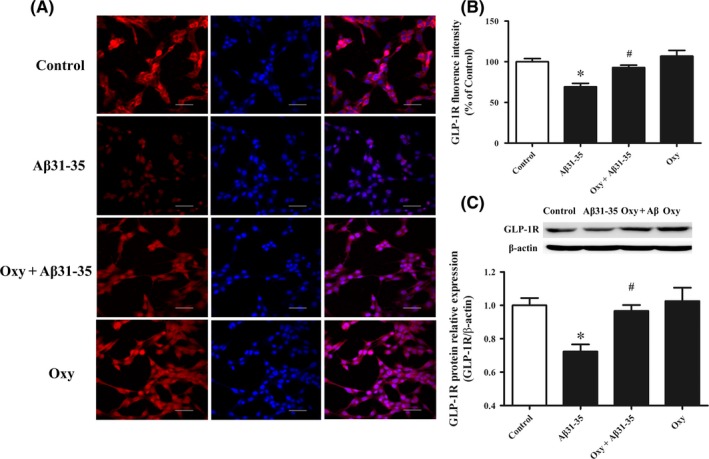
The occurrence of circadian rhythm disorder in patients with Alzheimer's disease (AD) is closely related to the abnormal deposition of amyloid-β (Aβ), and d-Ser2-oxyntomodulin (Oxy) is a protease-resistant oxyntomodulin analogue that has been shown to exert neuroprotective effects.
This study aimed to explore whether Oxy, a new GLP-1R/GCGR dual receptor agonist, can improve the Aβ-induced disrupted circadian rhythm and the role of GLP-1R.
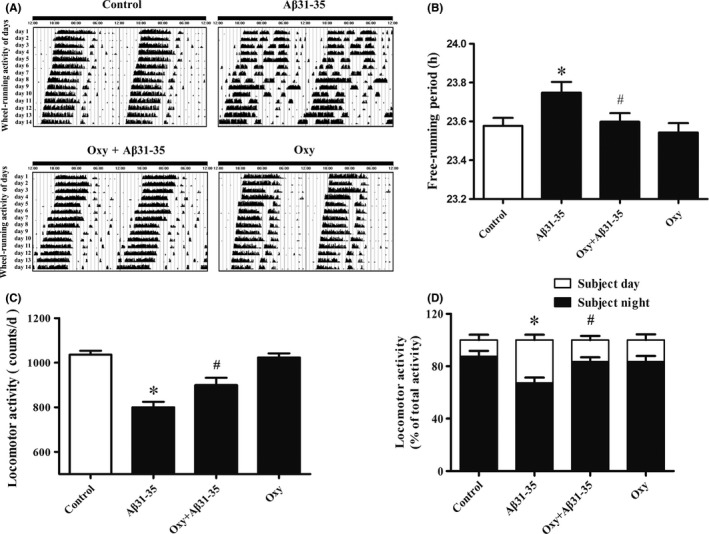
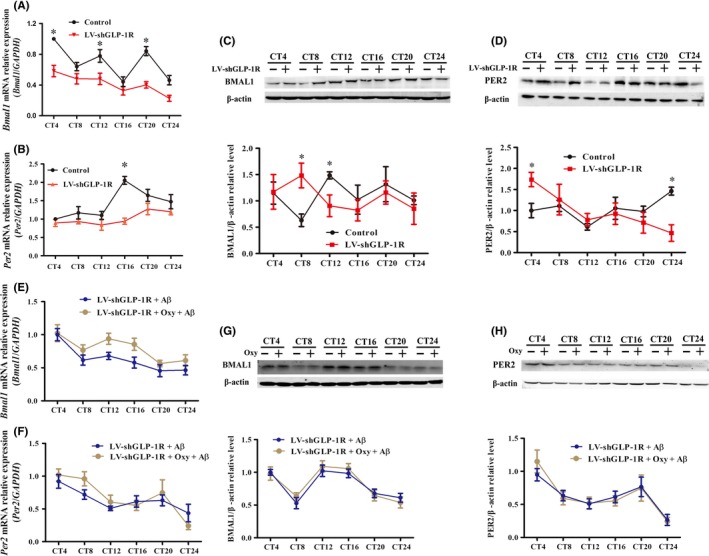
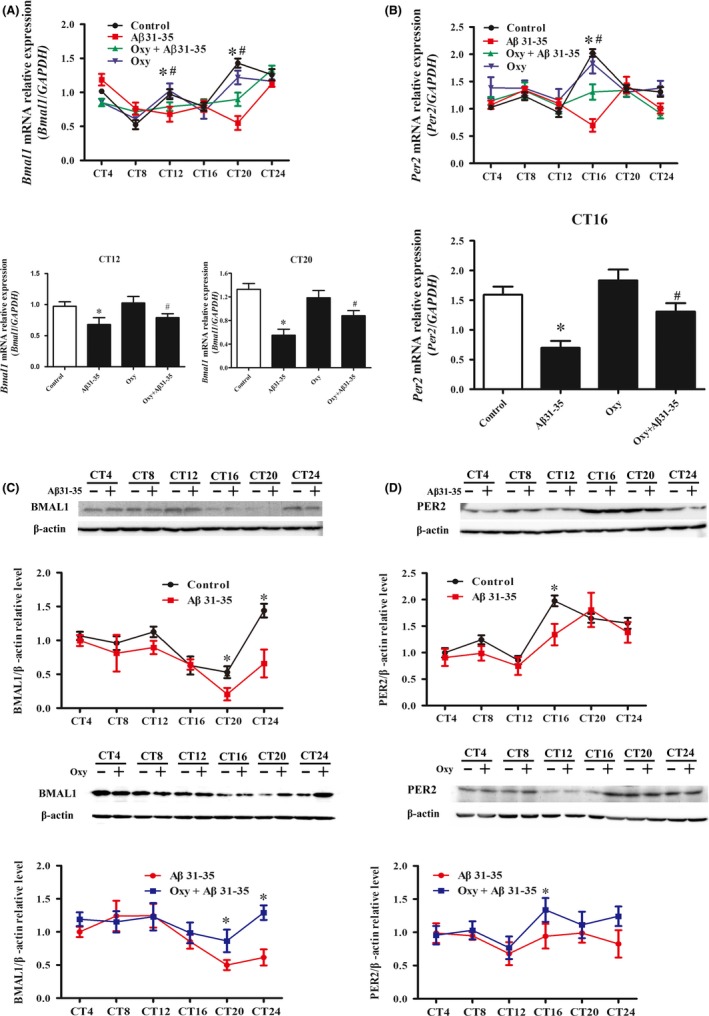
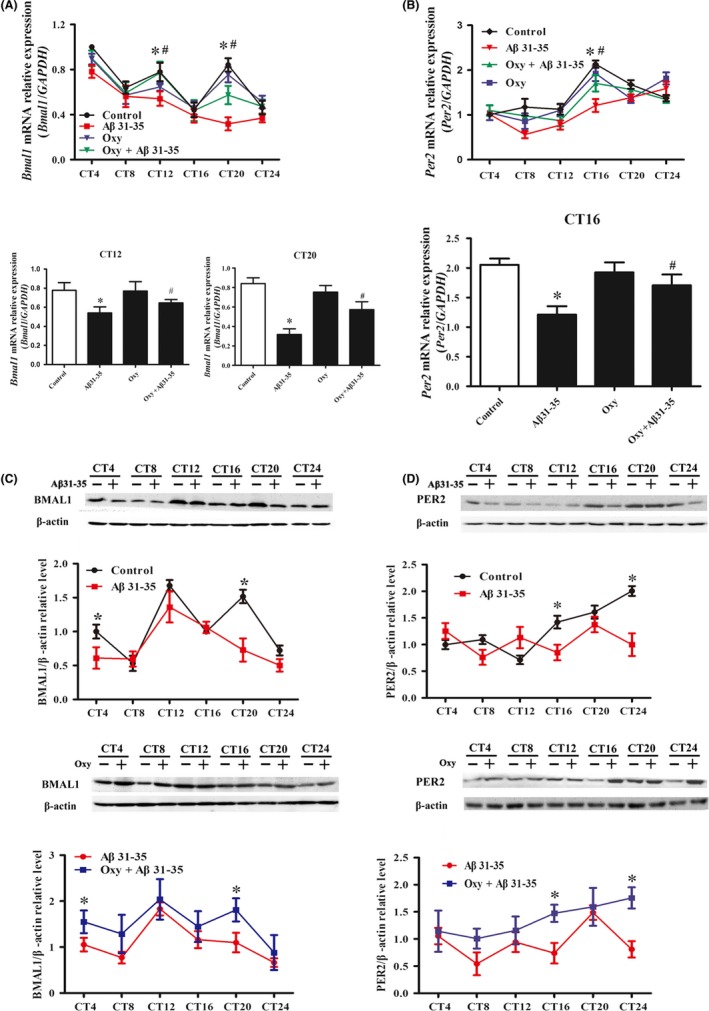
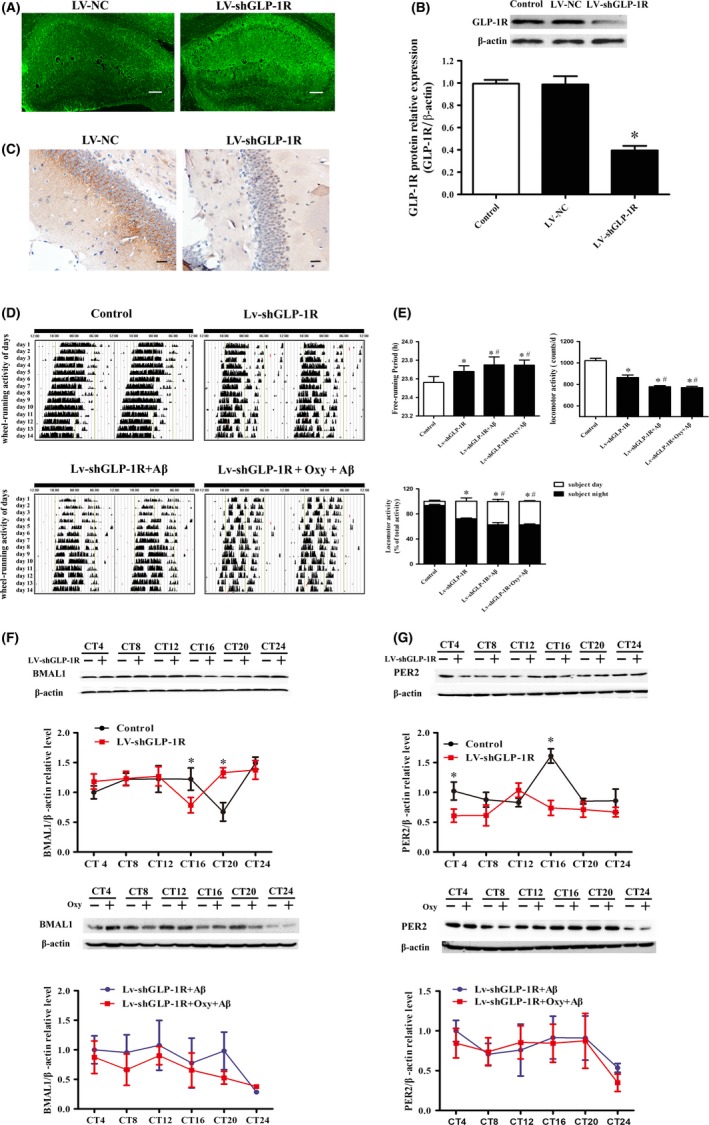
A mouse wheel-running experiment was performed to explore the circadian rhythm, and western blotting and real-time PCR were performed to assess the expression of the circadian clock genes Bmal1 and Per2. Furthermore, a lentivirus encoding an shGLP-1R-GFP-PURO was used to interfere with GLP-1R gene expression and so explore the role of GLP-1R.
The present study has confirmed that Oxy could restore Aβ31-35-induced circadian rhythm disorders and improve the abnormal expression of Bmal1 and Per2. After interfering the GLP-1R gene, we found that Oxy could not improve the Aβ31-35-induced circadian rhythm disorder and abnormal expression of clock genes.
This study demonstrated that Oxy could improve Aβ31-35-induced circadian rhythm disorders, and GLP-1R plays a critical role. This study thus describes a novel target that may be potentially used in the treatment of AD.
阿尔茨海默病(AD)患者昼夜节律紊乱的发生与淀粉样蛋白-β(Aβ)的异常沉积密切相关,而 d-丝氨酸 2-氧基酪啡肽(Oxy)是一种蛋白酶抗性的氧基酪啡肽类似物,已被证明具有神经保护作用。
本研究旨在探讨新型 GLP-1R/GCGR 双重受体激动剂 Oxy 是否能改善 Aβ 诱导的昼夜节律紊乱及 GLP-1R 的作用。
采用小鼠转轮实验探索昼夜节律,采用 Western blot 和实时 PCR 评估昼夜节律基因 Bmal1 和 Per2 的表达。此外,还使用编码 shGLP-1R-GFP-PURO 的慢病毒干扰 GLP-1R 基因表达,以探讨 GLP-1R 的作用。
本研究证实 Oxy 可恢复 Aβ31-35 诱导的昼夜节律紊乱,改善 Bmal1 和 Per2 的异常表达。干扰 GLP-1R 基因后,我们发现 Oxy 不能改善 Aβ31-35 诱导的昼夜节律紊乱和时钟基因的异常表达。
本研究表明,Oxy 可改善 Aβ31-35 诱导的昼夜节律紊乱,GLP-1R 发挥关键作用。因此,本研究描述了一个可能用于治疗 AD 的新靶点。