Shanghai Public Health Clinical Center & Institutes of Biomedical Sciences, Shanghai Medical College, Fudan University, Shanghai, 201508, China.
Department of Medical Biotechnology, Yeungnam University, Gyeongsan, 38541, South Korea.
J Immunother Cancer. 2019 Aug 14;7(1):220. doi: 10.1186/s40425-019-0702-1.
Efficient cancer therapy is sought not only for primary tumor treatment but also for the prevention of metastatic cancer growth. Immunotherapy has been shown to prevent cancer metastasis by inducing antigen-specific immune responses. Indocyanine green (ICG) has a peak spectral absorption at about 800 nm, which makes it a photothermal reagent for direct treatment of solid tumors by photothermal therapy (PTT). Since PTT alone cannot fully induce antigen-specific immune response for prevention of cancer metastasis, the combination of PTT and immunotherapy has been developed as a new strategy of cancer treatment.
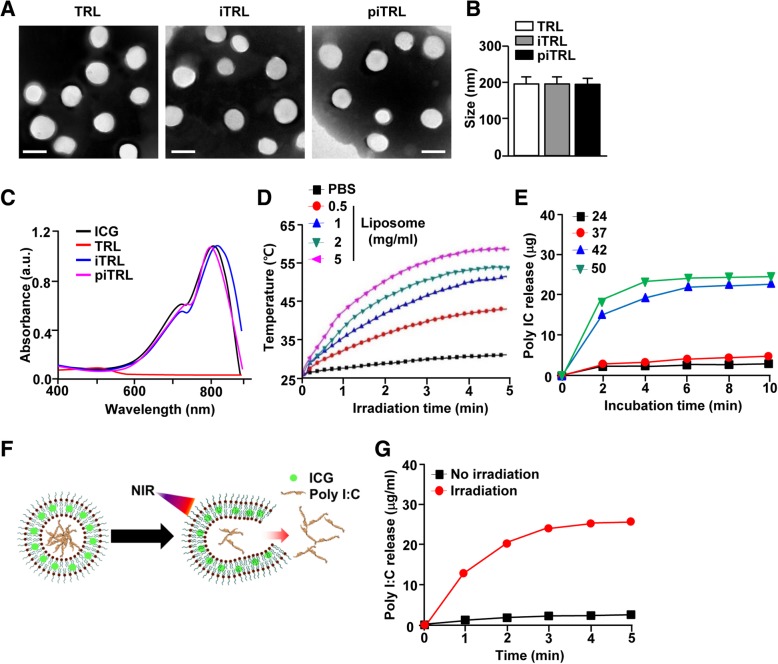
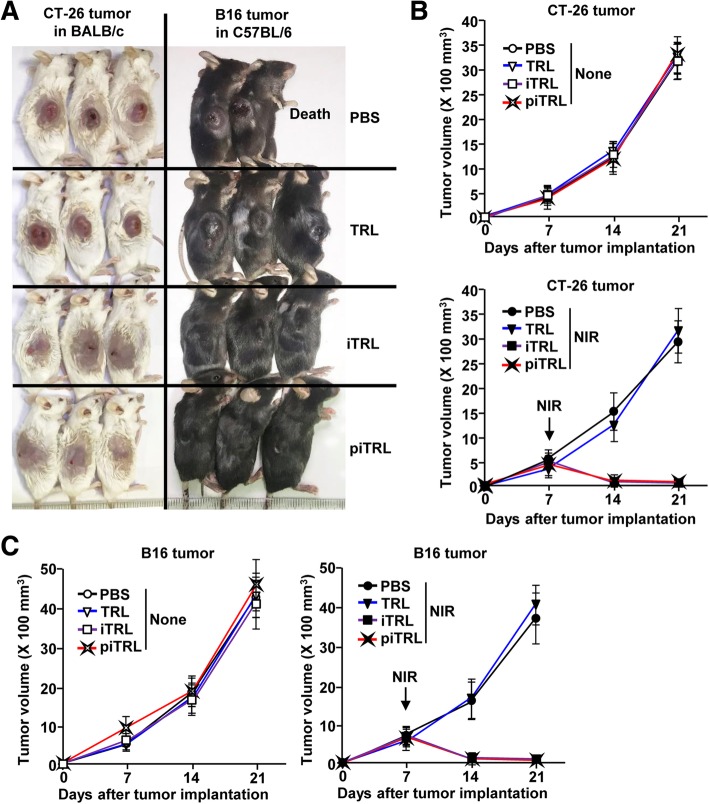
Thermal responsive liposomes (TRL) were synthesized by incorporating ICG into the lipid bilayer and encapsulating the water-soluble immune stimulatory molecule polyinosinic:polycytidylic acid (poly I:C) in the hydrophilic core. The poly I:C- and ICG-containing TRLs (piTRLs) were analyzed according to size, and their photothermal effect was evaluated following laser irradiation at 808 nm. Moreover, the temperature-dependent release of poly I:C was also measured. For cancer therapy, CT-26 (carcinoma) and B16 (melanoma) cells were subcutaneously inoculated to build the 1st transplanted tumor in BALB/c and C57BL/6 mice, respectively. These mice received a 2nd transplantation with the same cancer cells by intravenous inoculation, for evaluation of the anti-metastatic effects of the liposomes after PTT.
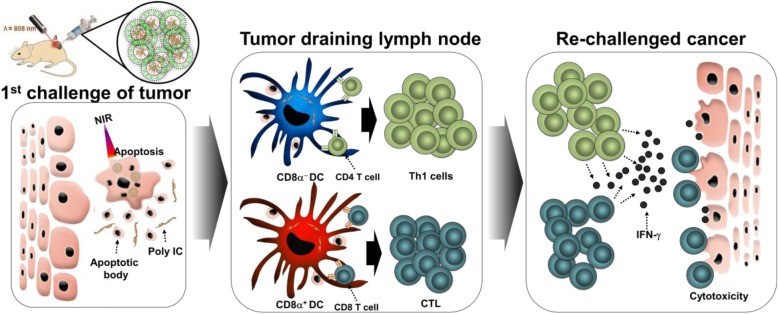
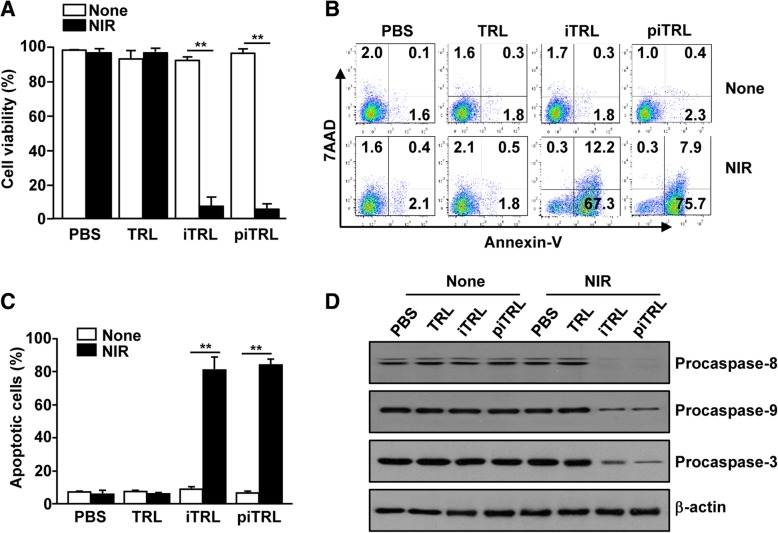
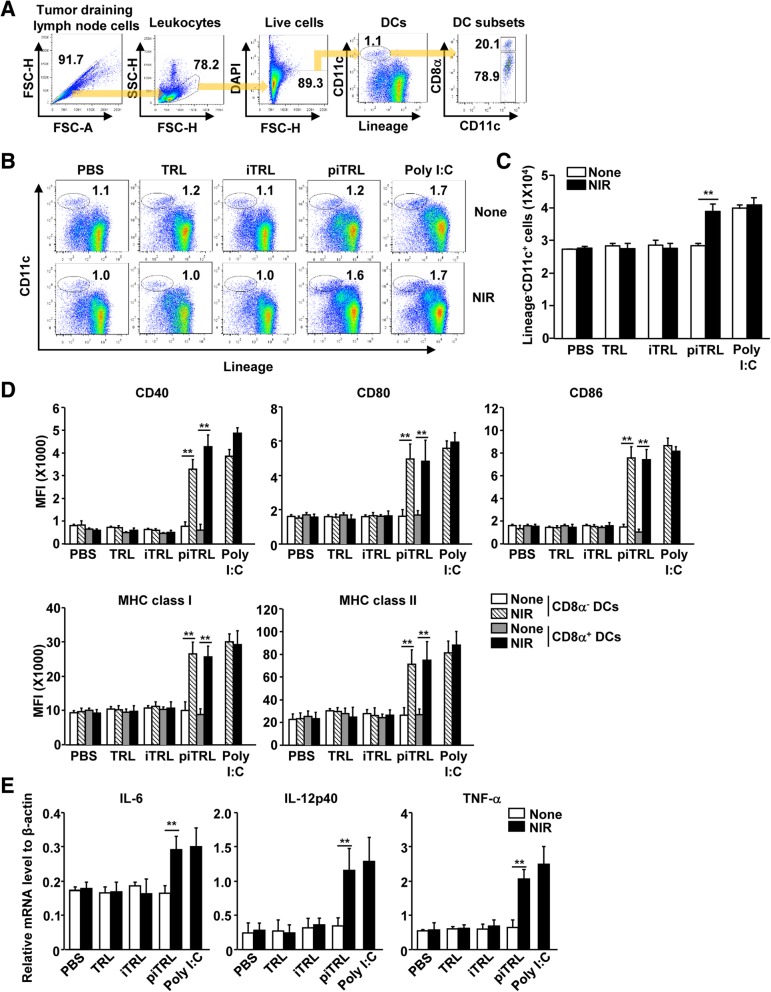
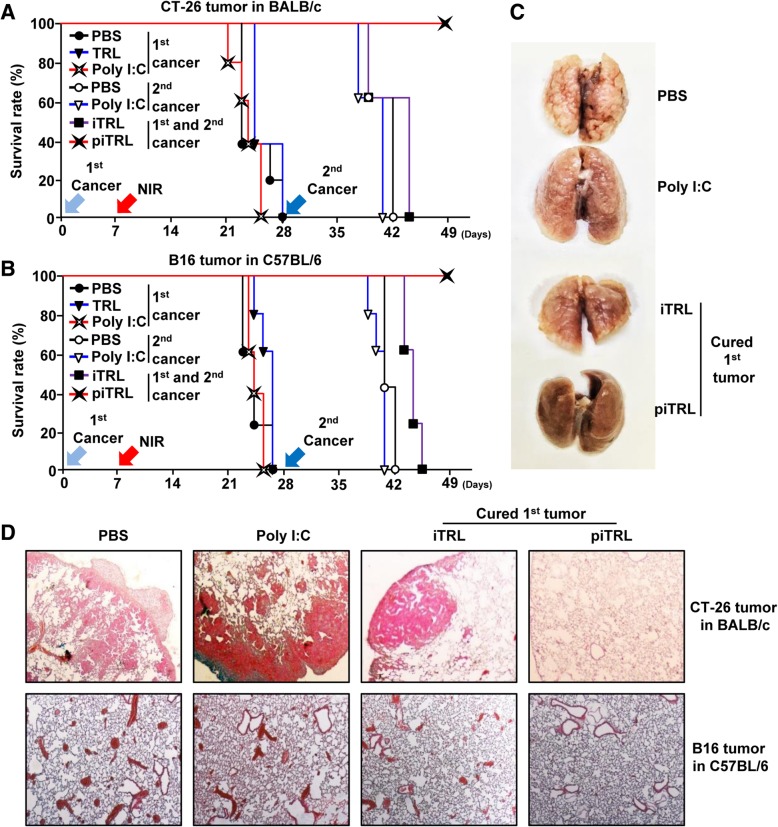
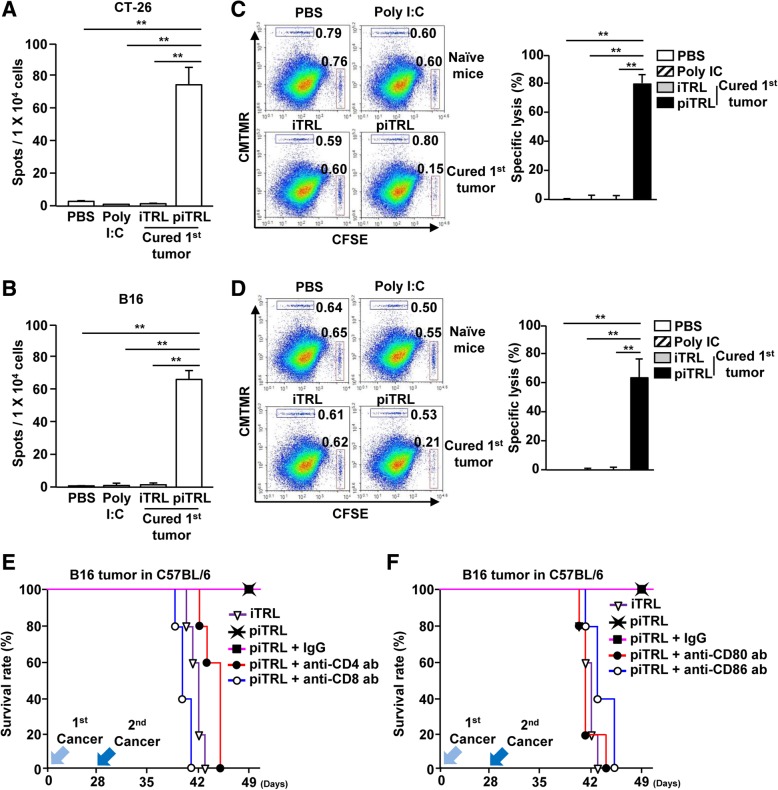
Near-infrared (NIR) laser irradiation increased the temperature of piTRLs and effectively released poly I:C from the liposomes. The increased temperature induced a photothermal effect, which promoted cancer cell apoptosis and dissolution of the 1st transplanted tumor. Moreover, the released poly I:C from the piTRL induced activation of dendritic cells (DCs) in tumor draining lymph node (tdLN). Cancer cell apoptosis and DC-activation-mediated cancer antigen-specific immune responses further prevented growth of lung metastatic cancer developed following intravenous transplantation of cancer cells.
These results demonstrated the potential usage of a piTRL with laser irradiation for immuno-photothermal therapy against various types of cancer and their metastases.
人们不仅寻求有效的癌症疗法来治疗原发性肿瘤,也寻求预防癌症转移的方法。免疫疗法已被证明可以通过诱导抗原特异性免疫反应来预防癌症转移。吲哚菁绿(ICG)在约 800nm 处有一个峰值光谱吸收,这使其成为光热疗法(PTT)直接治疗实体瘤的光热试剂。由于单独的 PTT 不能完全诱导抗原特异性免疫反应以预防癌症转移,因此已经开发出 PTT 和免疫疗法的联合作为癌症治疗的新策略。
通过将 ICG 掺入脂质双层并将水溶性免疫刺激性分子聚肌苷酸:聚胞苷酸(poly I:C)包封在亲水性核中,合成热敏脂质体(TRL)。根据大小分析了含有 poly I:C 和 ICG 的 TRL(piTRLs),并在 808nm 激光照射下评估了它们的光热效应。此外,还测量了温度依赖性的 poly I:C 释放。为了癌症治疗,将 CT-26(癌)和 B16(黑色素瘤)细胞皮下接种到 BALB/c 和 C57BL/6 小鼠中,分别建立第 1 个移植瘤。这些小鼠通过静脉接种接受相同癌细胞的第 2 次移植,以评估 PTT 后脂质体的抗转移作用。
近红外(NIR)激光照射增加了 piTRLs 的温度,并有效地从脂质体中释放出 poly I:C。升高的温度引起光热效应,促进癌细胞凋亡和第 1 个移植瘤的溶解。此外,piTRL 从肿瘤引流淋巴结(tdLN)中释放的 poly I:C 诱导树突状细胞(DC)的激活。癌细胞凋亡和 DC 激活介导的癌症抗原特异性免疫反应进一步阻止了静脉接种癌细胞后肺部转移性癌症的生长。
这些结果表明,激光照射的 piTRL 具有针对各种类型癌症及其转移的免疫光热治疗的潜力。