Chen Yi-Chun, Hsiao Chun-Chieh, Zheng Wen-Dian, Lee Ren-Guey, Lin Robert
Department of Neurology, Chang Gung Memorial Hospital Linkou Medical Center and College of Medicine, Chang-Gung University.
Dementia Center, Chang Gung Memorial Hospital Linkou Medical Center.
Medicine (Baltimore). 2019 Aug;98(33):e16863. doi: 10.1097/MD.0000000000016863.
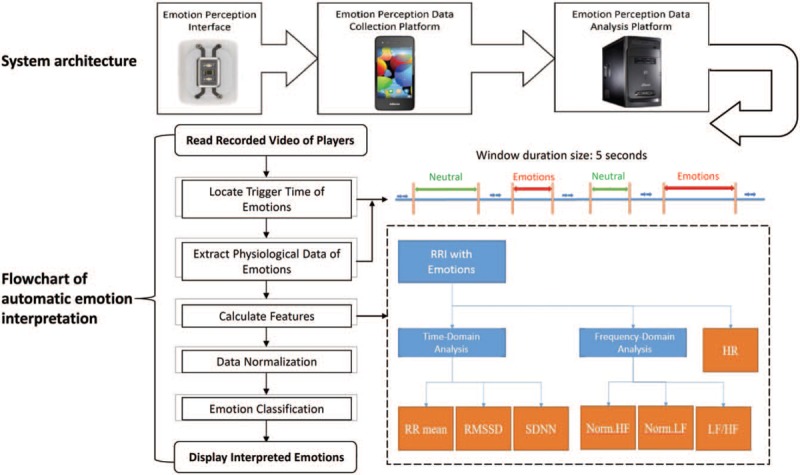
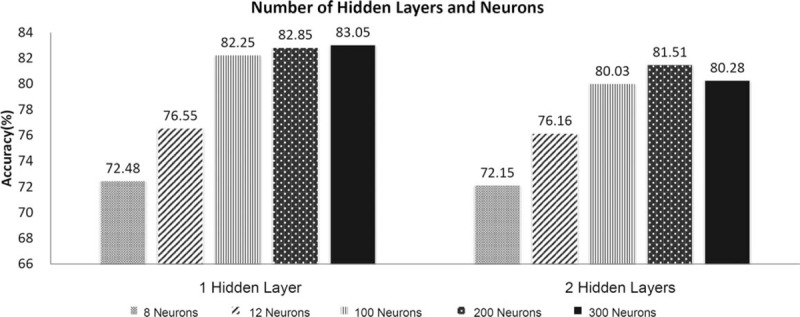
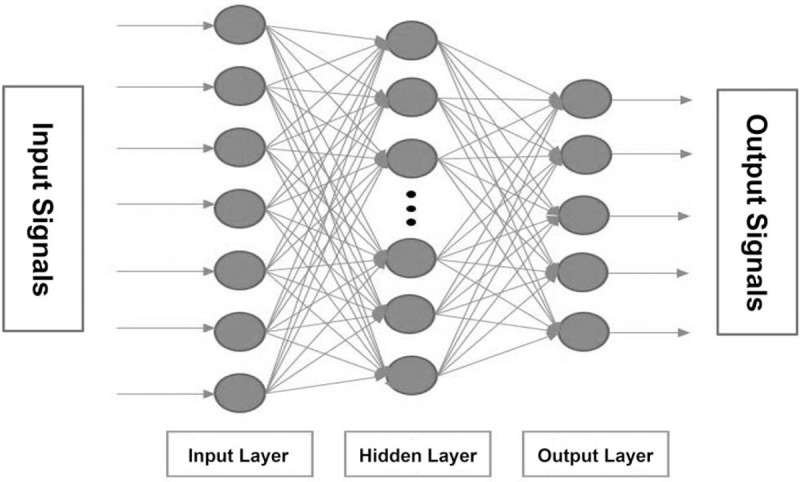
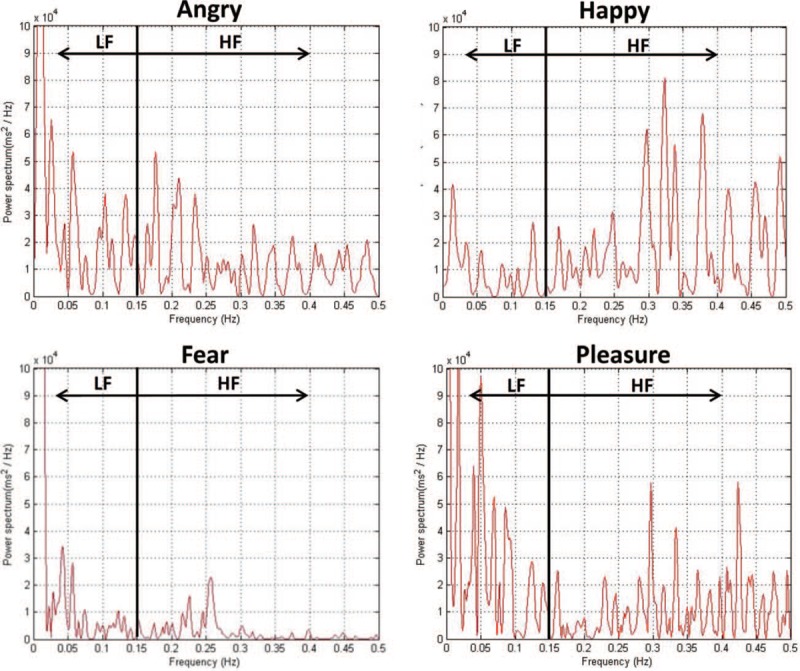
Heart rate variability (HRV) is an objective measure of emotional regulation. This study aimed to estimate the accuracy with which an artificial neural network (ANN) algorithm could classify emotions using HRV data that were obtained using wristband heart rate monitors.Four emotions were evoked during gameplay: pleasure, happiness, fear, and anger. Seven normalized HRV features (i.e., 3 time-domain features, 3 frequency-domain features, and heart rate), which yielded 29,727 segments during gameplay, were collected and analyzed first by statistics and then classified by the trained ANN model.General linear model adjusted for individual differences in HRV showed that all HRV features significantly differed across emotions, despite disparities in their magnitudes and associations. When compared to neutral status (i.e., no emotion evoked), the mean of R-R interval was significantly higher for pleasure and fear but lower for happiness and anger. In addition, pleasure evidenced the HRV features that suggested a superior parasympathetic to sympathetic activation. Happiness was associated with a prominent sympathetic activation. These statistical findings suggest that HRV features significantly differ across emotions evoked by gameplay. When further utilizing ANN-based emotion classification, the accuracy rates for prediction were above 75.0% across the 4 emotions with accuracy rates for classification of paired emotions ranging from 82.0% to 93.4%.For classifying emotion in an individual person, the trained ANN model utilizing HRV features yielded a high accuracy rate in our study. ANN is a time-efficient and accurate means to classify emotions using HRV data obtained from wristband heart rate monitors. Thus, this integrated platform can help monitor and quantify human emotions and physiological biometrics.
心率变异性(HRV)是情绪调节的一种客观测量指标。本研究旨在评估一种人工神经网络(ANN)算法利用腕带心率监测器获取的HRV数据对情绪进行分类的准确性。游戏过程中诱发了四种情绪:愉悦、快乐、恐惧和愤怒。首先收集并分析了七个标准化的HRV特征(即3个时域特征、3个频域特征和心率),这些特征在游戏过程中产生了29727个片段,先进行统计分析,然后由训练好的ANN模型进行分类。针对HRV个体差异进行调整的一般线性模型表明,尽管各HRV特征的大小和关联存在差异,但所有HRV特征在不同情绪间均有显著差异。与中性状态(即未诱发情绪)相比,愉悦和恐惧时的R-R间期平均值显著更高,而快乐和愤怒时则更低。此外,愉悦表现出的HRV特征表明副交感神经对交感神经的激活更为优越。快乐与显著的交感神经激活有关。这些统计结果表明,游戏诱发的不同情绪下HRV特征存在显著差异。当进一步利用基于ANN的情绪分类时,四种情绪的预测准确率均高于75.0%,配对情绪分类的准确率在82.0%至93.4%之间。在本研究中,利用HRV特征训练的ANN模型对个体情绪进行分类时具有较高的准确率。ANN是一种利用从腕带心率监测器获得的HRV数据对情绪进行分类的高效且准确的方法。因此,这个集成平台有助于监测和量化人类情绪及生理生物特征。