Department of Anthropology, Rutgers University, New Brunswick, New Jersey, United States of America.
Department of Psychology, Arizona State University, Tempe, Arizona, United States of America.
PLoS One. 2019 Aug 15;14(8):e0220682. doi: 10.1371/journal.pone.0220682. eCollection 2019.
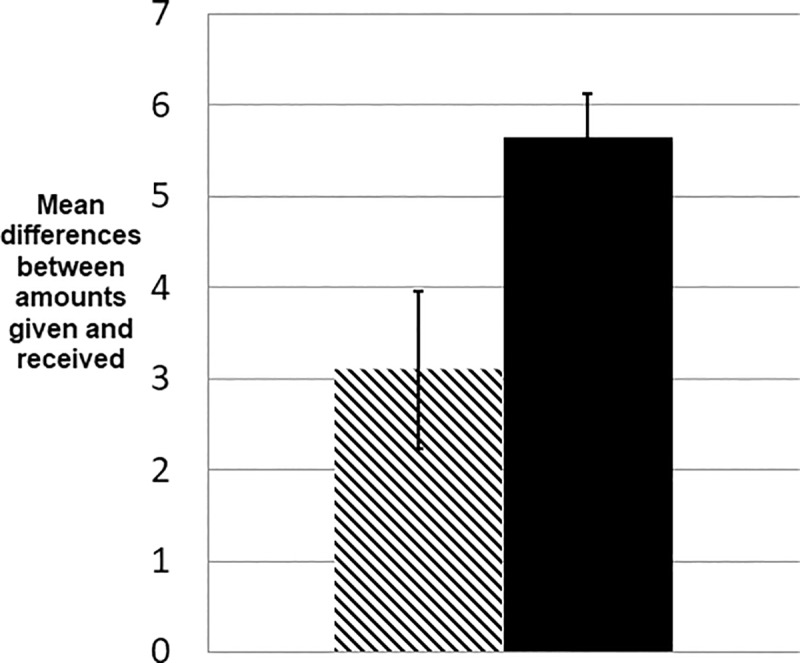
Risk management is a problem humans have faced throughout history and across societies. One way to manage risk is to transfer it to other parties through formal and informal insurance systems. One informal method of self-insurance is limited risk pooling, where individuals can ask for help only when in need. Models suggest that need-based transfer systems may require coordination and common knowledge to be effective. To explore the impact of common knowledge on social coordination and risk pooling in volatile environments, we designed and ran a Risk Pooling Game. We compared participants who played the game with no advance priming or framing to participants who read one of two texts describing real-world systems of risk pooling. Players in the primed games engaged in more repetitive asking and repetitive giving than those in the control games. Players in the primed games also gave more in response to requests and were more likely to respond positively to requests than players in the control games. In addition, players in the primed games were more tolerant of wide differences between what the two players gave and received. These results suggest that the priming texts led players to pay less attention to debt and repayment and more attention to the survival of the other player, and thus to more risk pooling. These results are consistent with findings from fieldwork in small-scale societies that suggest that humans use need-based transfer systems to pool risk when environmental volatility leads to needs with unpredictable timing. Models suggest that the need-based transfer strategy observed in this experiment can outperform debt-based strategies. The results of the present study suggest that the suite of behaviors associated with need-based transfers is an easily triggered part of the human behavioral repertoire.
风险管理是人类在历史和社会中一直面临的问题。一种管理风险的方法是通过正式和非正式的保险系统将其转移给其他方。一种非正式的自我保险方法是有限风险聚合,即个人只有在需要时才能寻求帮助。模型表明,基于需求的转移系统可能需要协调和共同知识才能有效。为了探索共同知识对波动环境下社会协调和风险聚合的影响,我们设计并运行了一个风险聚合游戏。我们将参与者分为两组,一组在没有预先提示或框架的情况下玩游戏,另一组阅读描述现实世界风险聚合系统的两个文本之一。在有提示的游戏中,参与者比对照组更频繁地提出和回应请求。在有提示的游戏中,参与者对请求的回应也更多,对请求做出积极回应的可能性也更高。此外,在有提示的游戏中,参与者对两个玩家给予和接收的差异更宽容。这些结果表明,提示文本使参与者更少关注债务和偿还,更多关注另一个玩家的生存,从而进行更多的风险聚合。这些结果与小规模社会实地调查的结果一致,表明当环境波动导致需求具有不可预测的时间时,人类会使用基于需求的转移系统来聚合风险。模型表明,实验中观察到的基于需求的转移策略可以胜过基于债务的策略。本研究的结果表明,与基于需求的转移相关的行为组合是人类行为组合中容易触发的一部分。