Exploratory Research Center on Life and Living Systems (ExCELLS), National Institutes of Natural Sciences, 5-1 Higashiyama, Myodaiji, Okazaki, 444-8787, Japan.
Graduate School of Pharmaceutical Sciences, Nagoya City University, 3-1 Tanabe-dori, Mizuho-ku, Nagoya, Aichi, 467-8603, Japan.
Sci Rep. 2019 Aug 16;9(1):11957. doi: 10.1038/s41598-019-48323-w.
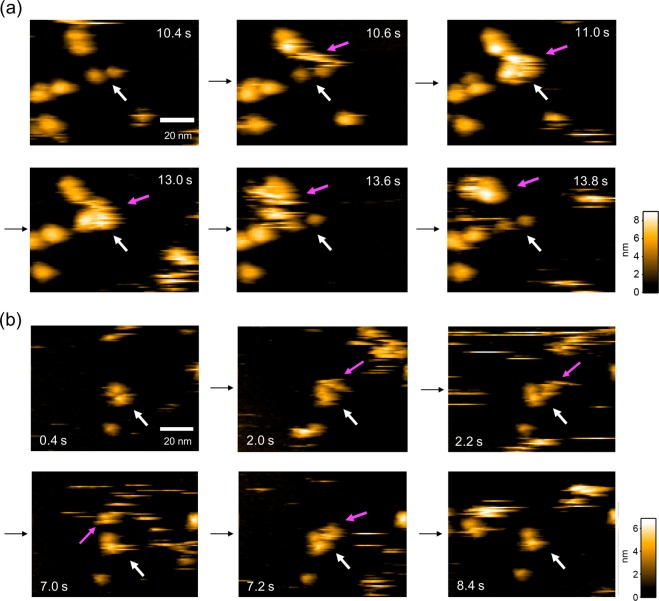
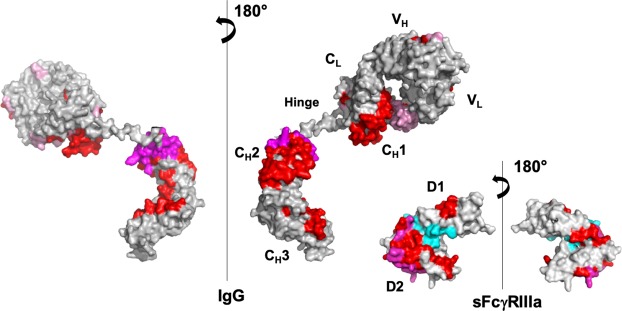
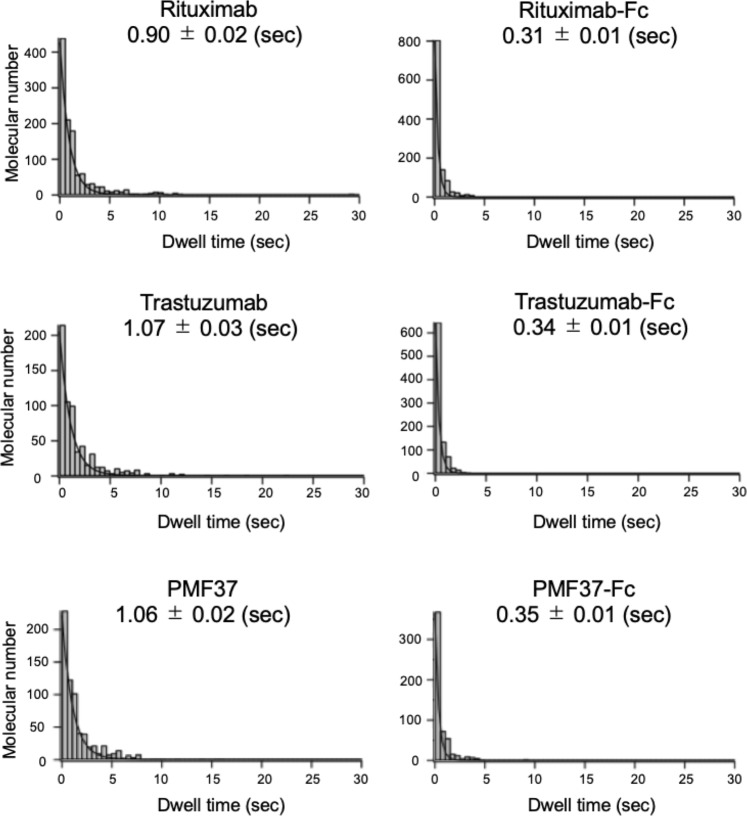
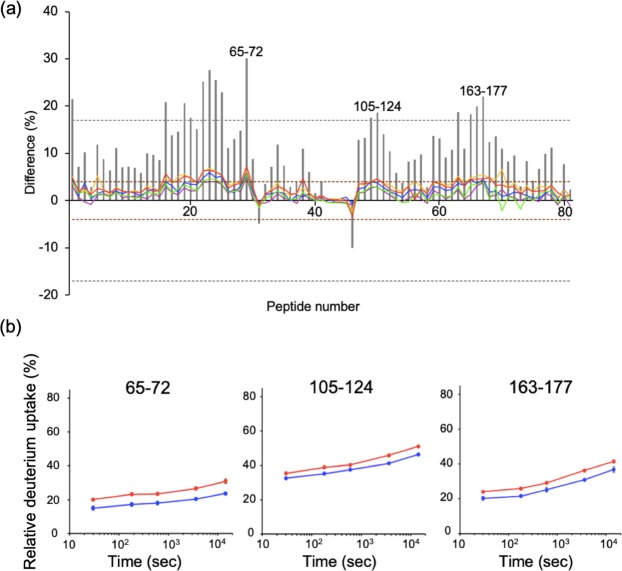
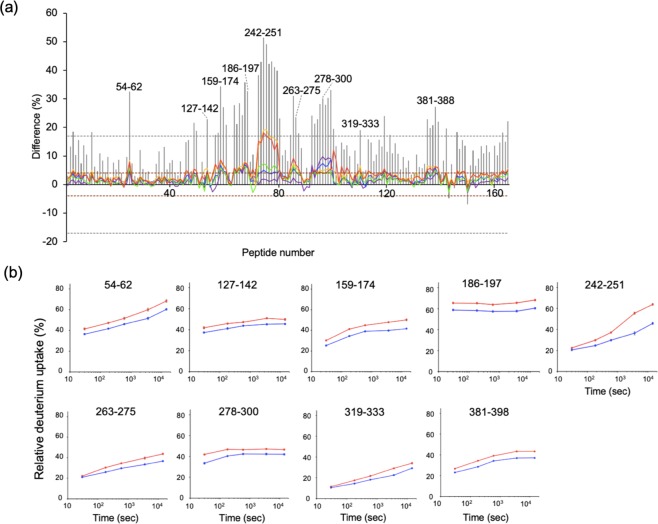
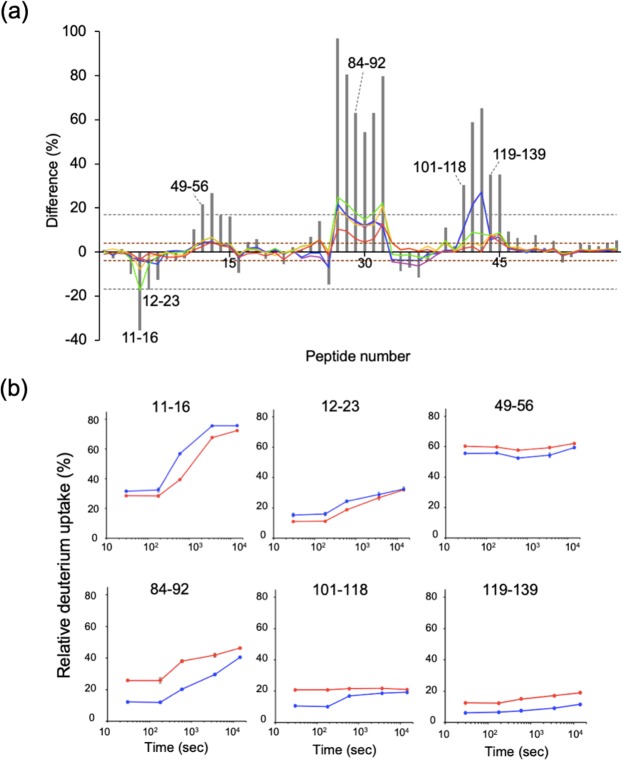
Most cells active in the immune system express receptors for antibodies which mediate a variety of defensive mechanisms. These receptors interact with the Fc portion of the antibody and are therefore collectively called Fc receptors. Here, using high-speed atomic force microscopy, we observe interactions of human, humanized, and mouse/human-chimeric immunoglobulin G1 (IgG1) antibodies and their cognate Fc receptor, FcγRIIIa. Our results demonstrate that not only Fc but also Fab positively contributes to the interaction with the receptor. Furthermore, hydrogen/deuterium exchange mass spectrometric analysis reveals that the Fab portion of IgG1 is directly involved in its interaction with FcγRIIIa, in addition to the canonical Fc-mediated interaction. By targeting the previously unidentified receptor-interaction sites in IgG-Fab, our findings could inspire therapeutic antibody engineering.
大多数在免疫系统中活跃的细胞表达抗体的受体,这些受体介导多种防御机制。这些受体与抗体的 Fc 部分相互作用,因此统称为 Fc 受体。在这里,我们使用高速原子力显微镜观察了人源化、人源和鼠/人嵌合免疫球蛋白 G1(IgG1)抗体及其同源 Fc 受体 FcγRIIIa 的相互作用。我们的结果表明,不仅 Fc 而且 Fab 都对与受体的相互作用有积极贡献。此外,氢/氘交换质谱分析表明,除了经典的 Fc 介导的相互作用外,IgG1 的 Fab 部分还直接参与其与 FcγRIIIa 的相互作用。通过靶向 IgG-Fab 中以前未识别的受体相互作用位点,我们的发现可以为治疗性抗体工程提供灵感。