Division of Infectious Diseases, Department of Medicine, McGill University Health Centre, Montreal, Canada.
ViiV Healthcare, London, England, United Kingdom.
PLoS One. 2019 Aug 19;14(8):e0220060. doi: 10.1371/journal.pone.0220060. eCollection 2019.
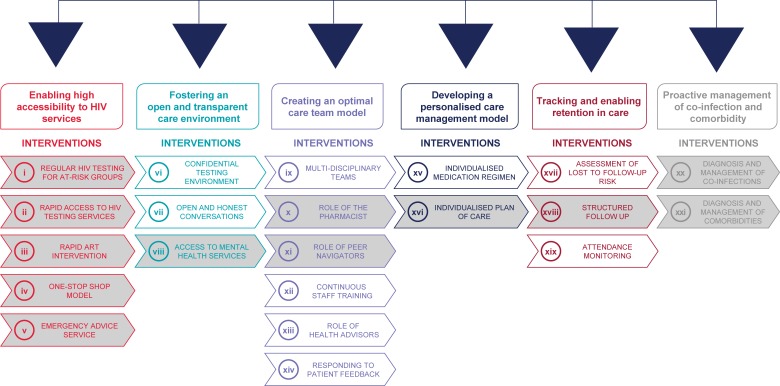
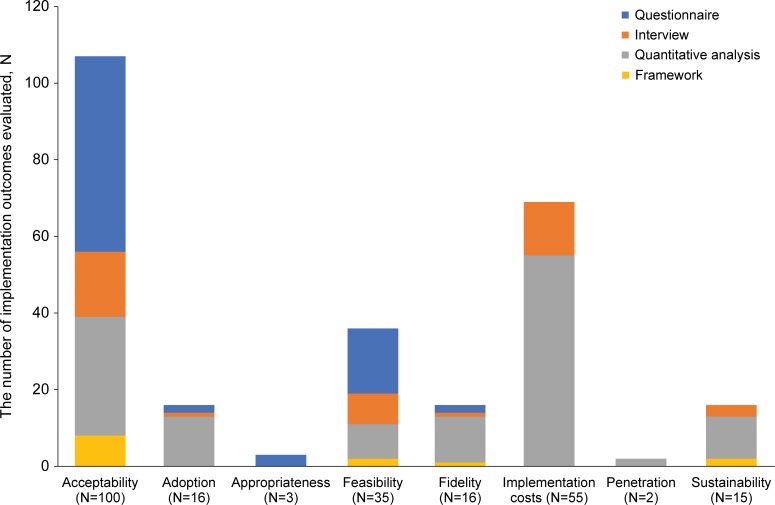
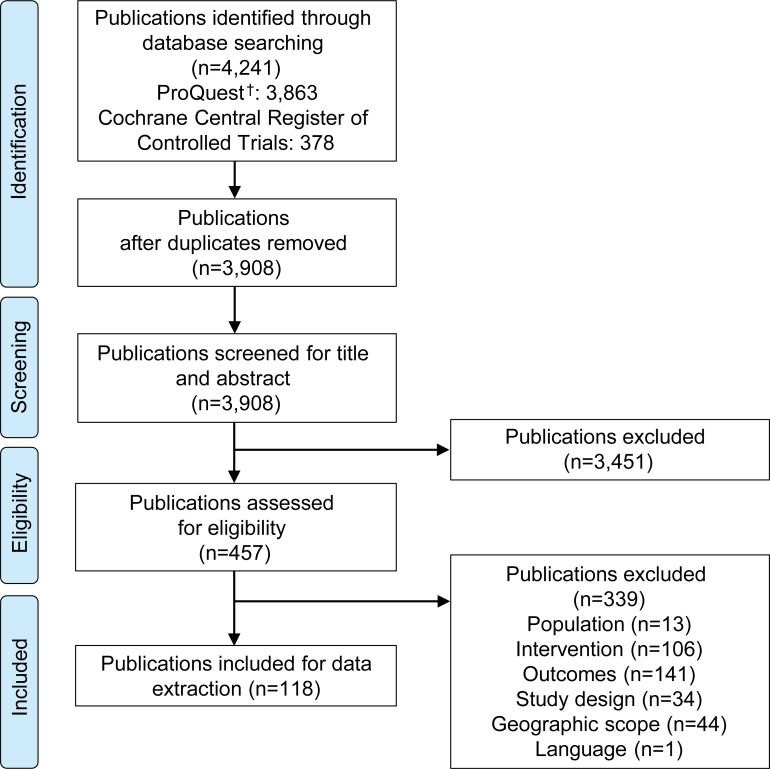
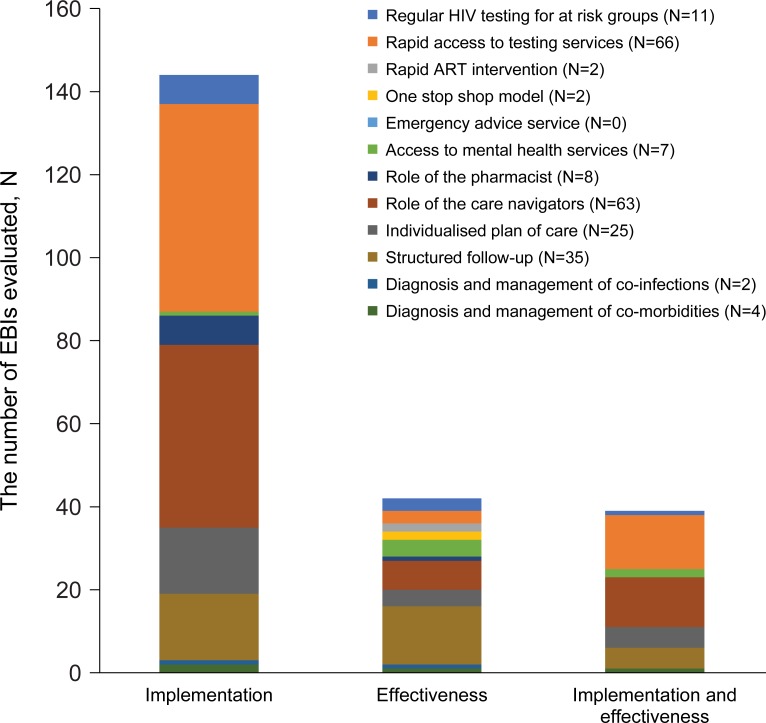
To improve health outcomes in people living with HIV, adoption of evidence-based interventions (EBIs) using effective and transferable implementation strategies to optimise the delivery of healthcare is needed. ViiV Healthcare's Positive Pathways initiative was established to support the UNAIDS 90-90-90 goals. A compendium of EBIs was developed to address gaps within the HIV care continuum, yet it was unknown whether efforts existed to adapt and implement these EBIs across diverse clinical contexts. Therefore, this review sought to report on the use of implementation science in adapting HIV continuum of care EBIs. A systematic literature review was undertaken to summarise the evaluation of implementation and effectiveness outcomes, and report on the use of implementation science in HIV care. Ten databases were reviewed to identify studies (time-period: 2013-2018; geographic scope: United States, United Kingdom, France, Germany, Italy, Spain, Canada, Australia and Europe; English only publications). Studies were included if they reported on people living with HIV or those at risk of acquiring HIV and used interventions consistent with the EBIs. A broad range of study designs and methods were searched, including hybrid designs. Overall, 118 publications covering 225 interventions consistent with the EBIs were identified. These interventions were evaluated on implementation (N = 183), effectiveness (N = 81), or both outcomes (N = 39). High variability in the methodological approaches was observed. Implementation outcomes were frequently evaluated but use of theoretical frameworks was limited (N = 13). Evaluations undertaken to assess effectiveness were inconsistent, resulting in a range of measures. This review revealed extensive reporting on implementation science as defined using evaluation outcomes. However, high variability was observed in how implementation outcomes and effectiveness were defined, quantified, and reported. A more specific and consistent approach to conducting and reporting on implementation science in HIV could facilitate achievement of UNAIDS 90-90-90 targets.
为了改善艾滋病毒感染者的健康结果,需要采用基于证据的干预措施(EBIs),并使用有效的可转移实施策略来优化医疗保健的提供。ViiV 医疗保健的“积极途径倡议”旨在支持联合国艾滋病规划署的 90-90-90 目标。制定了一套 EBI 综合手册,以解决艾滋病毒护理连续体中的差距问题,但尚不清楚是否有努力来调整和在不同的临床环境中实施这些 EBI。因此,本综述旨在报告在适应艾滋病毒护理连续体 EBI 中使用实施科学的情况。进行了系统文献综述,以总结实施和效果结果的评估,并报告在艾滋病毒护理中使用实施科学的情况。审查了 10 个数据库,以确定 2013-2018 年期间在美国、英国、法国、德国、意大利、西班牙、加拿大、澳大利亚和欧洲发表的英文出版物)。如果研究报告了艾滋病毒感染者或有感染艾滋病毒风险的人,并使用与 EBI 一致的干预措施,则纳入研究。广泛搜索了各种研究设计和方法,包括混合设计。总的来说,确定了 118 项符合 EBI 的出版物,涵盖了 225 项干预措施。这些干预措施在实施(N=183)、效果(N=81)或两者方面进行了评估。研究方法的高度变异性。实施结果经常得到评估,但理论框架的使用有限(N=13)。为评估效果而进行的评估不一致,导致采用了一系列措施。本综述揭示了广泛报道的实施科学,其定义是使用评估结果。然而,在如何定义、量化和报告实施结果和效果方面存在高度变异性。在艾滋病毒中更具体和一致的方法来进行和报告实施科学可能有助于实现联合国艾滋病规划署的 90-90-90 目标。