Richard Olivia K, Grahofer Alexander, Nathues Heiko, Posthaus Horst
1Institute of Animal Pathology, Department of Infectious Diseases and Pathobiology, Vetsuisse Faculty, University of Bern, Längassstrasse 122, 3012 Bern, Switzerland.
2Clinic for Swine, Department of Clinical Veterinary Science, Vetsuisse Faculty, University of Bern, 3012 Bern, Switzerland.
Porcine Health Manag. 2019 Aug 15;5:20. doi: 10.1186/s40813-019-0127-8. eCollection 2019.
type C induced necrotizing enteritis (NE) causes high mortality in newborn piglets. Immunization programs employing commercially available vaccines are used to prevent disease. Sows are vaccinated during every gestation period and piglets take up antibodies from the colostrum. Antibodies against the major clostridial toxin beta-toxin (CPB) are considered essential for protective immunity. Because the pathogen can persist for several years on farms, continuous vaccination is essential to protect pig herds from the re-occurrence of NE.
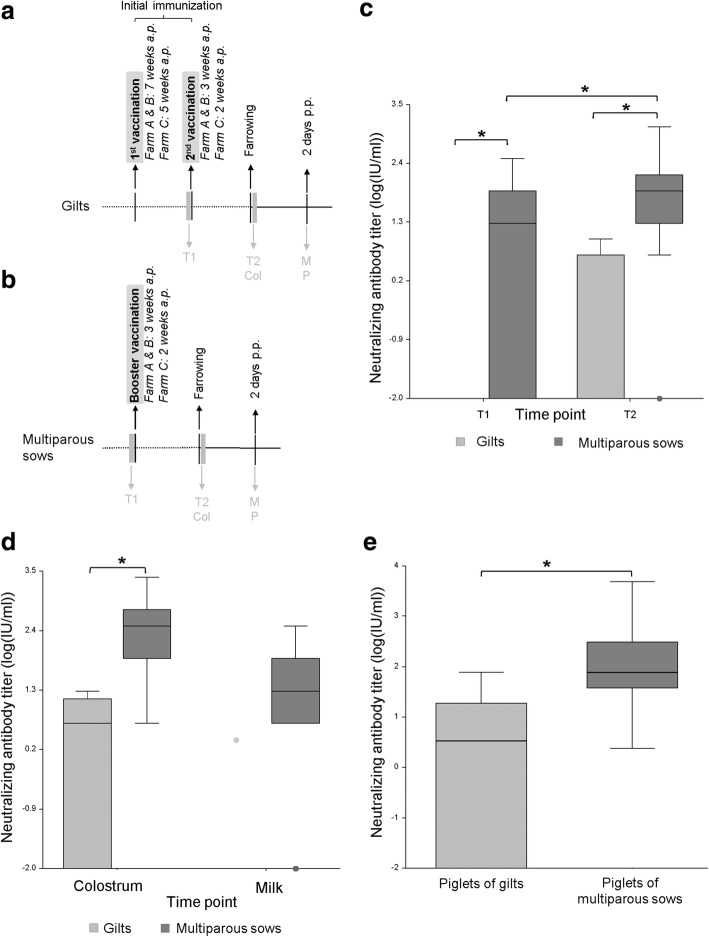
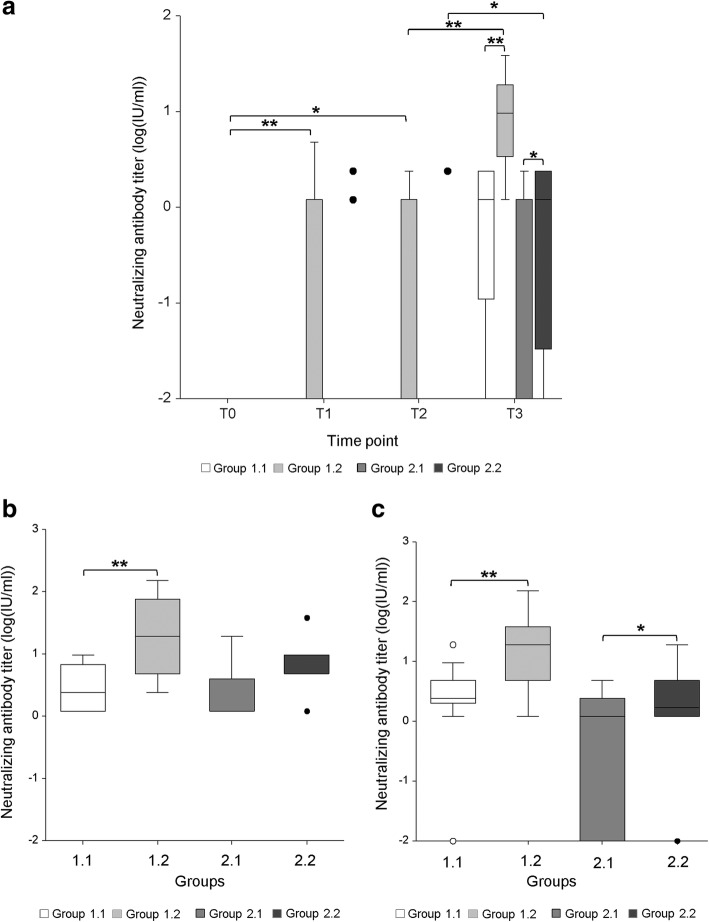
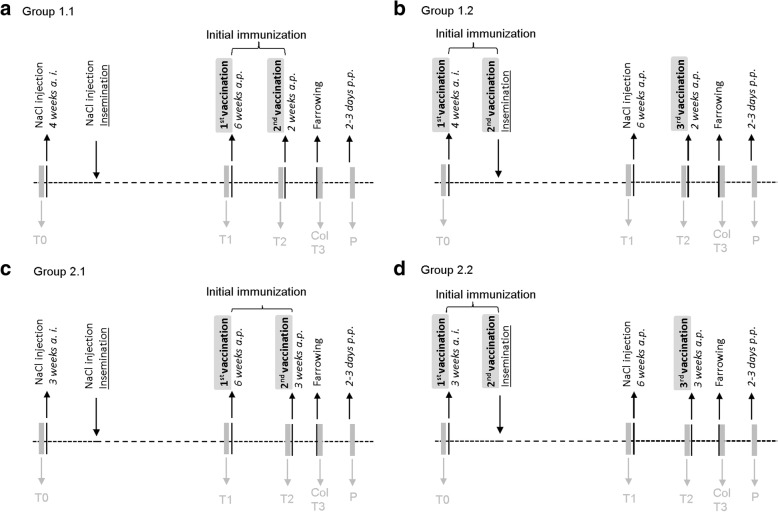
In two field trials using commercially available vaccines we monitored neutralizing anti-CPB antibodies in pigs after vaccination. The first trial compared antibody titers in primiparous (gilts) and multiparous sows and their piglets after vaccination. A proportion of gilts and their piglets' showed no or low antibody titers. All multiparous sows developed significantly higher serum and colostrum antibody titers after a booster vaccination shortly before their next farrowing. These colostral antibody titer highly correlated with the serum antibody titer of their piglets after consumption of colostrum. In a second field trial, we adapted the vaccination schemes using 3 instead of 2 initial vaccinations before the first farrowing of gilts. This significantly increased serum and colostrum antibody titers in gilts and serum antibody titers in piglets.
We demonstrate that despite following recommended vaccination protocols, a proportion of gilts might not sufficiently seroconvert to provide efficient passive immunity to their offsprings. A simple adaptation of the vaccination scheme can however improve passive protection of piglets from NE.
C型产气荚膜梭菌引起的坏死性肠炎(NE)在新生仔猪中导致高死亡率。采用市售疫苗的免疫程序用于预防该病。母猪在每个妊娠期都进行疫苗接种,仔猪从初乳中获取抗体。针对主要产气荚膜梭菌毒素β毒素(CPB)的抗体被认为是保护性免疫所必需的。由于病原体可在农场持续存在数年,持续接种疫苗对于保护猪群免受NE再次发生至关重要。
在两项使用市售疫苗的田间试验中,我们监测了接种疫苗后猪体内的中和抗CPB抗体。第一项试验比较了初产母猪(后备母猪)和经产母猪及其仔猪接种疫苗后的抗体滴度。一部分后备母猪及其仔猪的抗体滴度无或较低。所有经产母猪在下一次分娩前不久进行加强免疫后,血清和初乳抗体滴度显著升高。这些初乳抗体滴度与仔猪食用初乳后的血清抗体滴度高度相关。在第二项田间试验中,我们调整了疫苗接种方案,在后备母猪首次分娩前使用3次而非2次初始接种。这显著提高了后备母猪的血清和初乳抗体滴度以及仔猪的血清抗体滴度。
我们证明,尽管遵循了推荐的疫苗接种方案,但一部分后备母猪可能无法充分血清转化以向其后代提供有效的被动免疫。然而,简单调整疫苗接种方案可以改善仔猪对NE的被动保护。