Asadi Payman, Zia Ziabari Seyyed Mahdi, Naghshe Jahan Donya, Jafarian Yazdi Arezoo
Road Trauma Research Center, School of Medicine Guilan University of Medical Sciences, Rasht, Iran.
Arch Acad Emerg Med. 2019 Apr 27;7(1):e27. eCollection 2019.
Various factors such as age and severity of the stroke have been deemed connected with risk of mortality in patients with acute ischemic brain stroke. The present study was performed with the aim of evaluating the role of electrocardiogram (ECG) changes in predicting the outcome of these patients.
In this cohort study, patients who had presented to the emergency department of a teaching hospital during 1 year and were diagnosed with acute ischemic stroke were evaluated. Demographic data and 12-lead ECG findings of the patients were gathered and their relationship with 1-year mortality was analyzed.
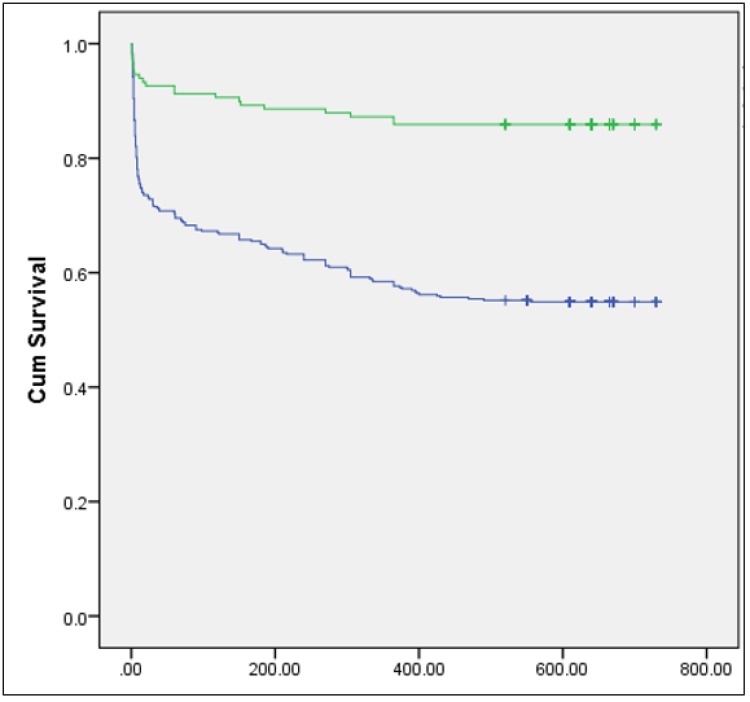
Finally, 546 stroke patients with the mean age of 69.5±12.7 (24 - 100) years were studied (53.3% female). 82.7% of the studied patients had at least one of the evaluated ECG abnormalities. The most common ECG findings included normal sinus rhythm (27.3%), inverted T wave (21.2%), sinus tachycardia (11.7%), atrial fibrillation (AF) (11.5%), and pathologic Q wave (9.9%). In the end, 117 (20.9%) patients died during the 1-year follow-up. Frequencies of non-sinus rhythm (p < 0.0001), inverted T wave (p = 0.0001), AF rhythm (p<0.0001), pathologic Q (p<0.0001), ST segment changes (p = 0.011), and atrioventricular (AV) node block (p = 0.007) were significantly higher in patients who died. ECG changes increased the odds of 1-year mortality of these patients 4 times (Odds ratio = 4.05 with 95% CI: 2.39 - 6.87; p < 0.0001). Additionally, age over 60 years and having a history of cardiac diseases increased the odds of mortality 6 (95% CI: 1.4 - 27.9) and 1.5 (95% CI: 0.9 - 2.1) times, respectively.
Based on the findings of the present study, it seems that along with age and history of cardiac diseases, ECG changes can be considered as an independent predictive factor of mortality in patients with ischemic stroke.
诸如年龄和中风严重程度等多种因素被认为与急性缺血性脑中风患者的死亡风险相关。本研究旨在评估心电图(ECG)变化在预测这些患者预后方面的作用。
在这项队列研究中,对在1年期间到一家教学医院急诊科就诊并被诊断为急性缺血性中风的患者进行了评估。收集了患者的人口统计学数据和12导联心电图结果,并分析了它们与1年死亡率的关系。
最终,研究了546例中风患者,平均年龄为69.5±12.7(24 - 100)岁(女性占53.3%)。82.7%的研究患者至少有一项评估的心电图异常。最常见的心电图表现包括正常窦性心律(27.3%)、T波倒置(21.2%)、窦性心动过速(11.7%)、心房颤动(AF)(11.5%)和病理性Q波(9.9%)。最终,117例(20.9%)患者在1年随访期间死亡。死亡患者中非窦性心律(p < 0.0001)、T波倒置(p = 0.0001)、AF心律(p<0.0001)、病理性Q波(p<0.0001)、ST段改变(p = 0.011)和房室(AV)结阻滞(p = 0.007)的发生率显著更高。心电图变化使这些患者1年死亡几率增加4倍(优势比 = 4.05,95%置信区间:2.39 - 6.87;p < 0.0001)。此外,60岁以上和有心脏病史分别使死亡几率增加6倍(95%置信区间:1.4 - 27.9)和1.5倍(95%置信区间:0.9 - 2.1)。
根据本研究结果,似乎除了年龄和心脏病史外,心电图变化可被视为缺血性中风患者死亡的独立预测因素。