Joint first authors.
BMJ. 2019 Aug 21;366:l4697. doi: 10.1136/bmj.l4697.
To assess effects of increasing omega-3, omega-6, and total polyunsaturated fatty acids (PUFA) on diabetes diagnosis and glucose metabolism.
Systematic review and meta-analyses.
Medline, Embase, Cochrane CENTRAL, WHO International Clinical Trials Registry Platform, Clinicaltrials.gov, and trials in relevant systematic reviews.
Randomised controlled trials of at least 24 weeks' duration assessing effects of increasing α-linolenic acid, long chain omega-3, omega-6, or total PUFA, which collected data on diabetes diagnoses, fasting glucose or insulin, glycated haemoglobin (HbA), and/or homoeostatic model assessment for insulin resistance (HOMA-IR).
Statistical analysis included random effects meta-analyses using relative risk and mean difference, and sensitivity analyses. Funnel plots were examined and subgrouping assessed effects of intervention type, replacement, baseline risk of diabetes and use of antidiabetes drugs, trial duration, and dose. Risk of bias was assessed with the Cochrane tool and quality of evidence with GRADE.
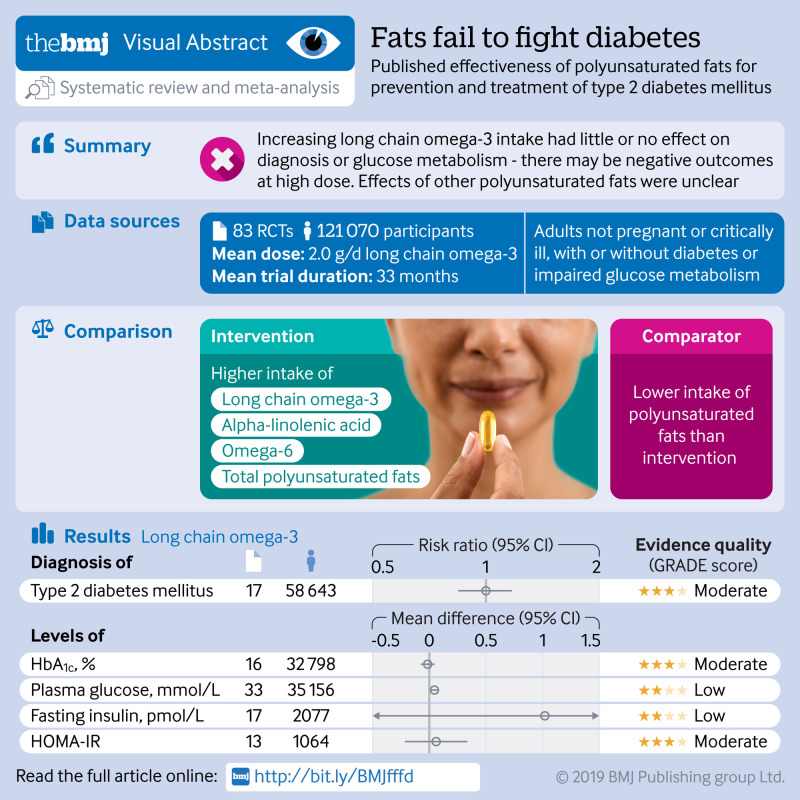
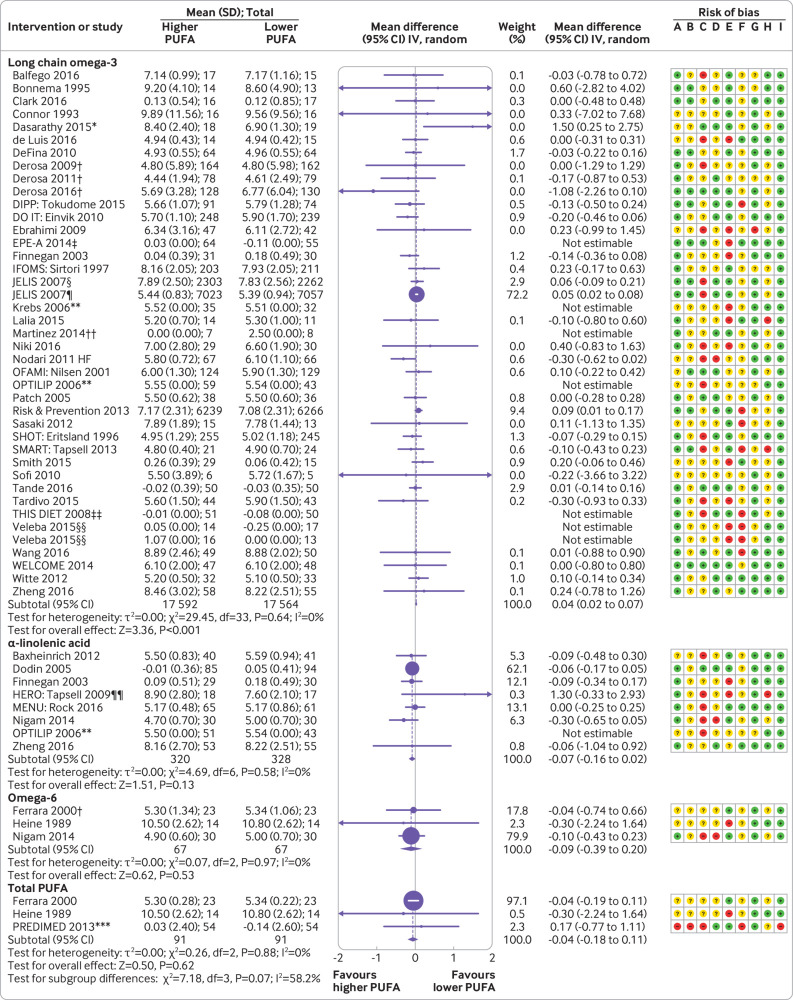
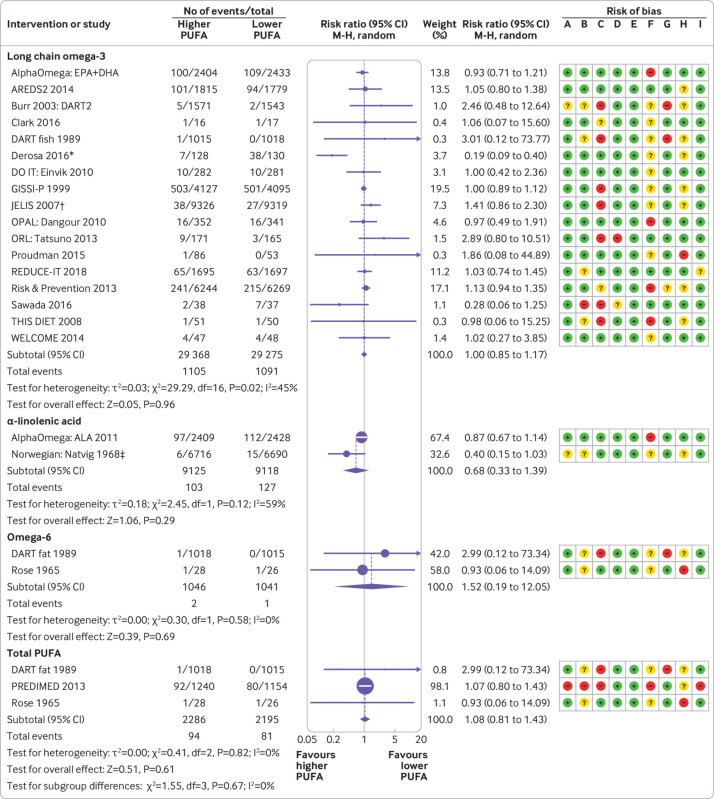
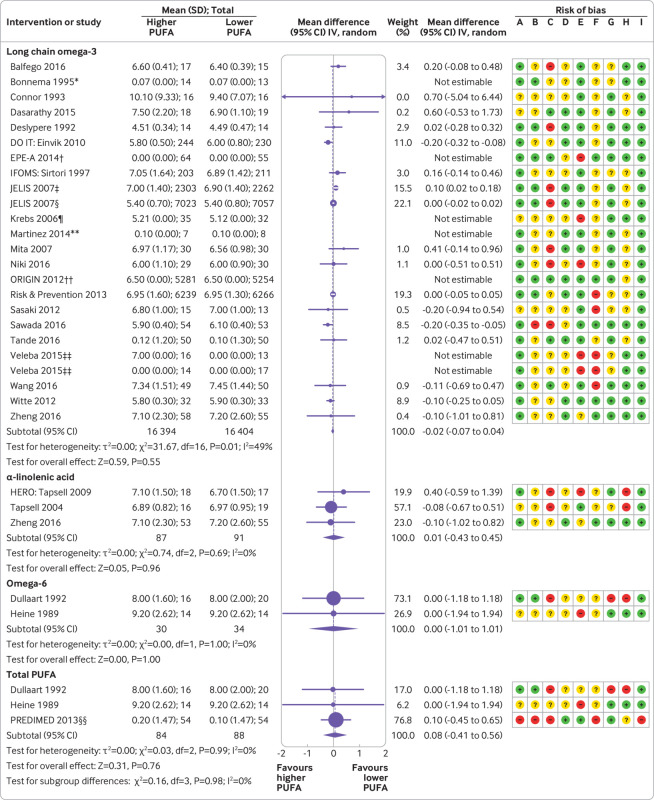
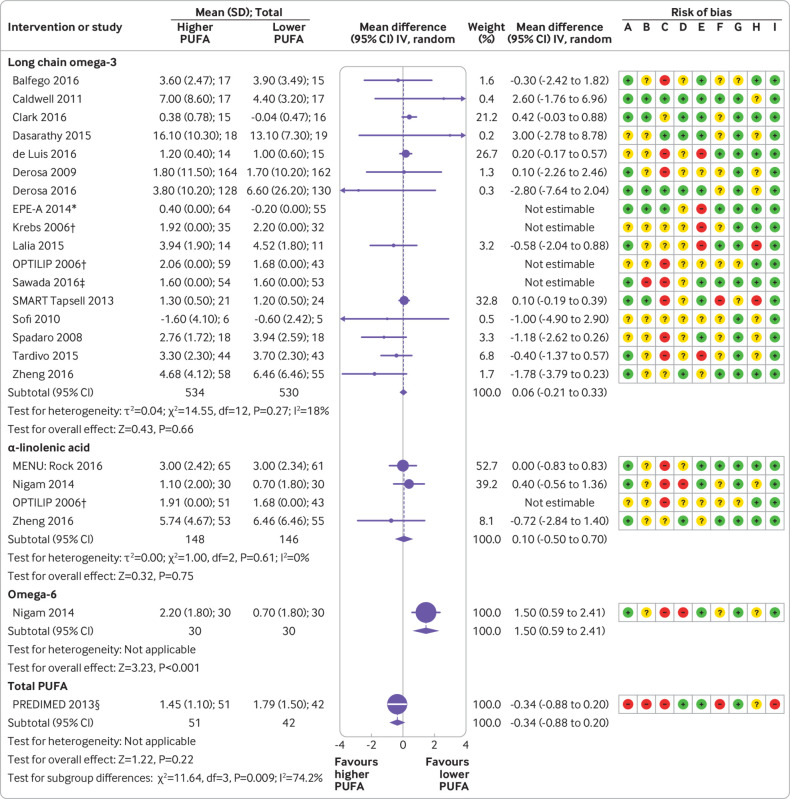
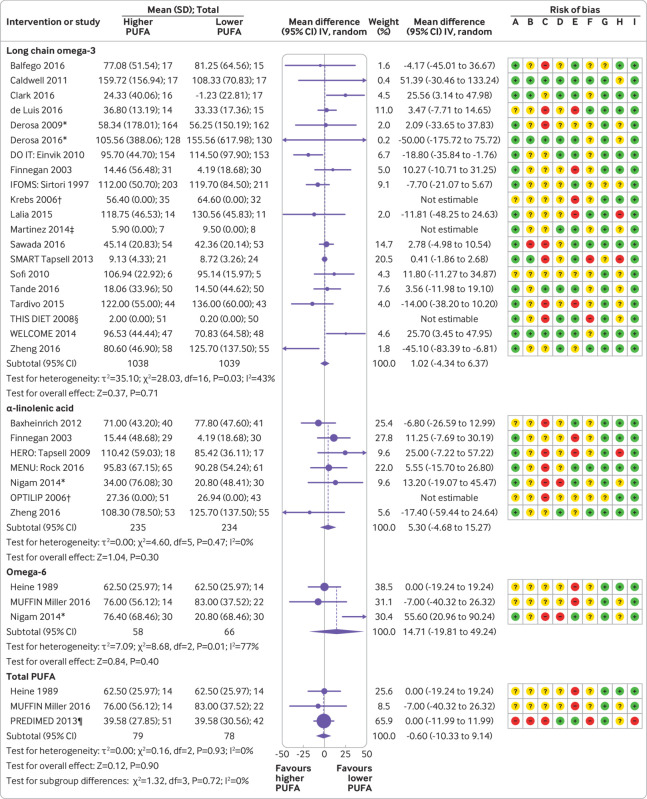
83 randomised controlled trials (mainly assessing effects of supplementary long chain omega-3) were included; 10 were at low summary risk of bias. Long chain omega-3 had little or no effect on likelihood of diagnosis of diabetes (relative risk 1.00, 95% confidence interval 0.85 to 1.17; 58 643 participants, 3.7% developed diabetes) or measures of glucose metabolism (HbA mean difference -0.02%, 95% confidence interval -0.07% to 0.04%; plasma glucose 0.04, 0.02 to 0.07, mmol/L; fasting insulin 1.02, -4.34 to 6.37, pmol/L; HOMA-IR 0.06, -0.21 to 0.33). A suggestion of negative outcomes was observed when dose of supplemental long chain omega-3 was above 4.4 g/d. Effects of α-linolenic acid, omega-6, and total PUFA on diagnosis of diabetes were unclear (as the evidence was of very low quality), but little or no effect on measures of glucose metabolism was seen, except that increasing α-linolenic acid may increase fasting insulin (by about 7%). No evidence was found that the omega-3/omega-6 ratio is important for diabetes or glucose metabolism.
This is the most extensive systematic review of trials to date to assess effects of polyunsaturated fats on newly diagnosed diabetes and glucose metabolism, including previously unpublished data following contact with authors. Evidence suggests that increasing omega-3, omega-6, or total PUFA has little or no effect on prevention and treatment of type 2 diabetes mellitus.
PROSPERO CRD42017064110.
评估增加 ω-3、ω-6 和多不饱和脂肪酸(PUFA)总量对糖尿病诊断和葡萄糖代谢的影响。
系统评价和荟萃分析。
Medline、Embase、Cochrane 中央、世界卫生组织国际临床试验注册平台、Clinicaltrials.gov 和相关系统评价中的试验。
至少 24 周的随机对照试验,评估增加 α-亚麻酸、长链 ω-3、ω-6 或总 PUFA 的效果,并收集有关糖尿病诊断、空腹血糖或胰岛素、糖化血红蛋白(HbA)和/或稳态模型评估胰岛素抵抗(HOMA-IR)的数据。
统计分析包括使用相对风险和均数差值的随机效应荟萃分析,并进行敏感性分析。检查漏斗图并进行亚组分析,以评估干预类型、替代、糖尿病发病的基线风险以及使用抗糖尿病药物、试验持续时间和剂量的影响。使用 Cochrane 工具评估偏倚风险,并使用 GRADE 评估证据质量。
纳入了 83 项随机对照试验(主要评估长链 ω-3 补充剂的效果);10 项试验的综合偏倚风险较低。长链 ω-3 对糖尿病诊断的可能性(相对风险 1.00,95%置信区间 0.85 至 1.17;58643 名参与者,3.7%发生糖尿病)或葡萄糖代谢指标(HbA 平均差值-0.02%,95%置信区间-0.07%至 0.04%;血浆葡萄糖 0.04,0.02 至 0.07mmol/L;空腹胰岛素 1.02,-4.34 至 6.37pmol/L;HOMA-IR 0.06,-0.21 至 0.33)几乎没有或没有影响。当补充长链 ω-3 的剂量超过 4.4g/d 时,观察到负面结果的迹象。α-亚麻酸、ω-6 和总 PUFA 对糖尿病诊断的影响尚不清楚(因为证据质量非常低),但对葡萄糖代谢指标几乎没有影响,除了增加 α-亚麻酸可能会增加空腹胰岛素(约 7%)。没有证据表明 ω-3/ω-6 比值对糖尿病或葡萄糖代谢很重要。
这是迄今为止评估多不饱和脂肪对新发糖尿病和葡萄糖代谢影响的最广泛的系统评价,包括与作者联系后获得的未发表数据。证据表明,增加 ω-3、ω-6 或总 PUFA 对 2 型糖尿病的预防和治疗几乎没有或没有影响。
PROSPERO CRD42017064110。