Ameer Mariam A, Muaidi Qassim I
Department of Physiotherapy, College of Applied Medical Sciences, Imam Abdulrahman Bin Faisal University (formerly University of Dammam), Al-Dammam, KSA.
J Taibah Univ Med Sci. 2017 Jul 6;12(6):497-503. doi: 10.1016/j.jtumed.2017.06.001. eCollection 2017 Dec.
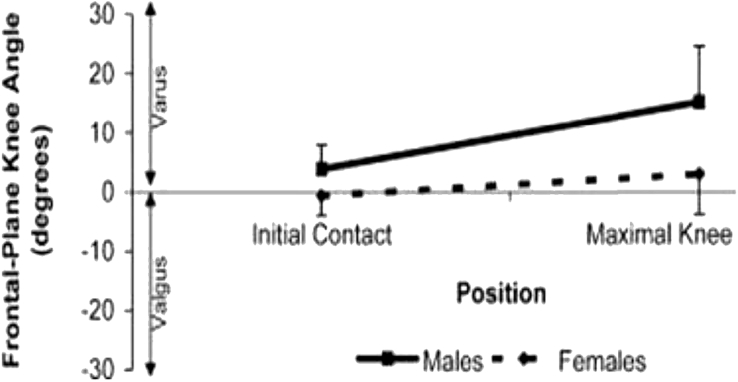
The primary aim of this study was to identify the relationship between the peak knee flexion angle and knee-ankle varus stress in the landing phase of the single-leg jump during running.
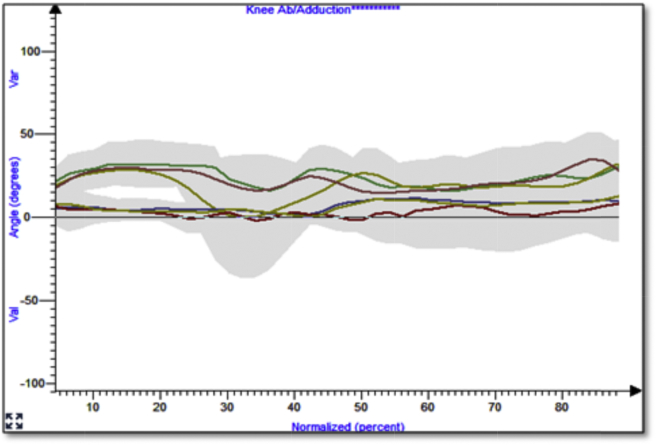
Fifteen male handball players from the first Saudi Arabian handball team were incorporated in this study. Each player performed a single-leg jump-land after running a fixed distance of 450 cm. The data were measured using a 3D motion analysis system. The maximum knee flexion angle, knee varus angle, centre of pressure pathway in the medio-lateral direction, and ankle varus moment were measured.
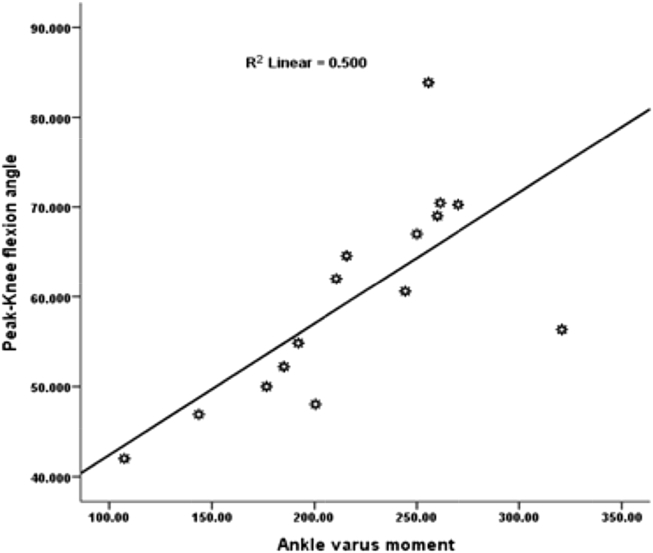
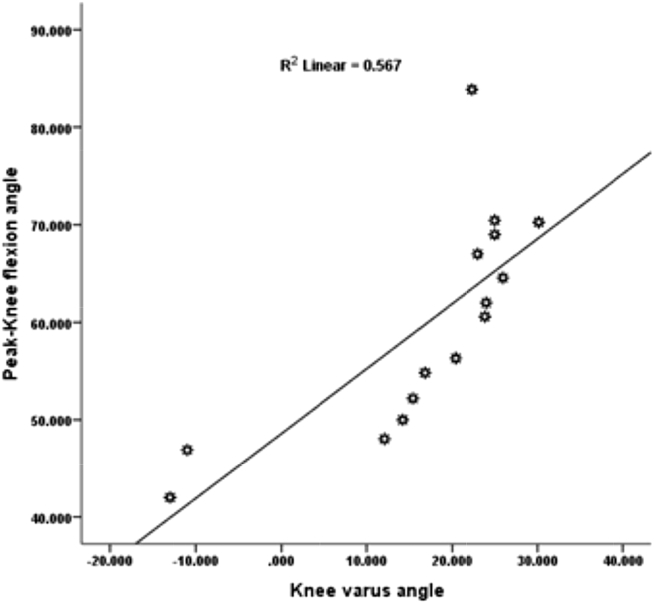
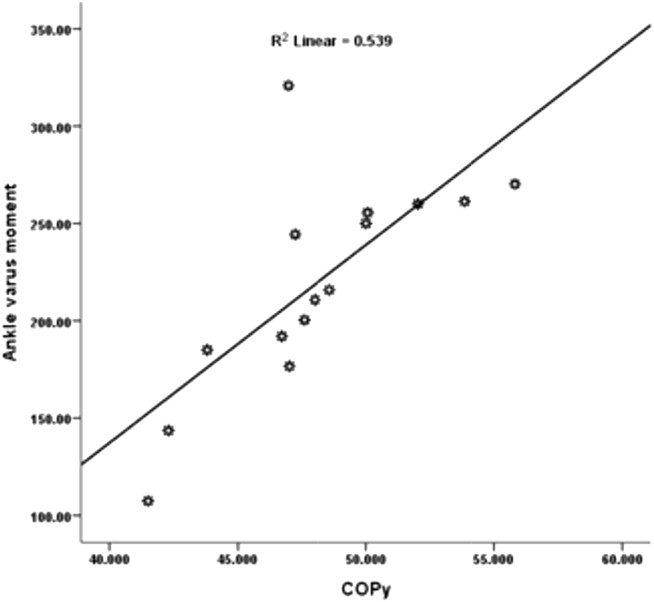
The Pearson Product Moment Correlation showed that a greater knee flexion angle was related to a greater lateral displacement of the centre of pressure (r = 0.794, P = 0.000), a greater ankle varus moment (r = 0.707, P = 0.003), and a greater knee varus angle (r = 0.753, P = 0.001). In addition, the greater ankle varus moment was related to the greater lateral displacement of the centre of pressure (r = 0.734, P = 0.002).
These findings may help physical therapists and conditioning professionals to understand the impact of increasing knee flexion angle on the lower limb joints. Such findings may help to develop training protocols for enhancing the lateral body reaction during the landing phase of the single-leg jump, which may protect the knee and ankle joints from excessive varus stresses.
本研究的主要目的是确定在跑步中单腿跳着陆阶段膝关节最大屈曲角度与膝-踝内翻应力之间的关系。
纳入了来自沙特阿拉伯第一支手球队的15名男性手球运动员。每位运动员在跑完固定的450厘米距离后进行单腿跳着陆。使用三维运动分析系统测量数据。测量了最大膝关节屈曲角度、膝内翻角度、中-外侧方向的压力中心路径以及踝内翻力矩。
皮尔逊积差相关分析表明,更大的膝关节屈曲角度与压力中心更大的侧向位移相关(r = 0.794,P = 0.000)、更大的踝内翻力矩相关(r = 0.707,P = 0.003)以及更大的膝内翻角度相关(r = 0.753,P = 0.001)。此外,更大的踝内翻力矩与压力中心更大的侧向位移相关(r = 0.734,P = 0.002)。
这些发现可能有助于物理治疗师和体能训练专业人员了解增加膝关节屈曲角度对下肢关节的影响。此类发现可能有助于制定训练方案,以增强单腿跳着陆阶段的身体侧向反应,这可能保护膝关节和踝关节免受过度的内翻应力。