Zając Magdalena, Sztromwasser Paweł, Bortolaia Valeria, Leekitcharoenphon Pimlapas, Cavaco Lina M, Ziȩtek-Barszcz Anna, Hendriksen Rene S, Wasyl Dariusz
Department of Microbiology, National Veterinary Research Institute, Puławy, Poland.
Department of Omics Analyses, National Veterinary Research Institute, Puławy, Poland.
Front Microbiol. 2019 Aug 8;10:1753. doi: 10.3389/fmicb.2019.01753. eCollection 2019.
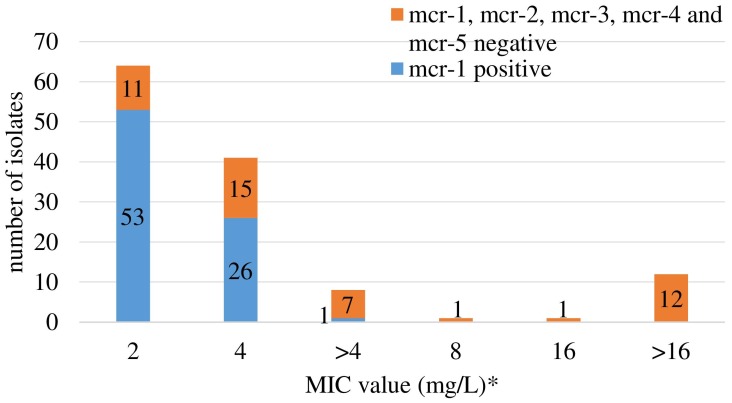
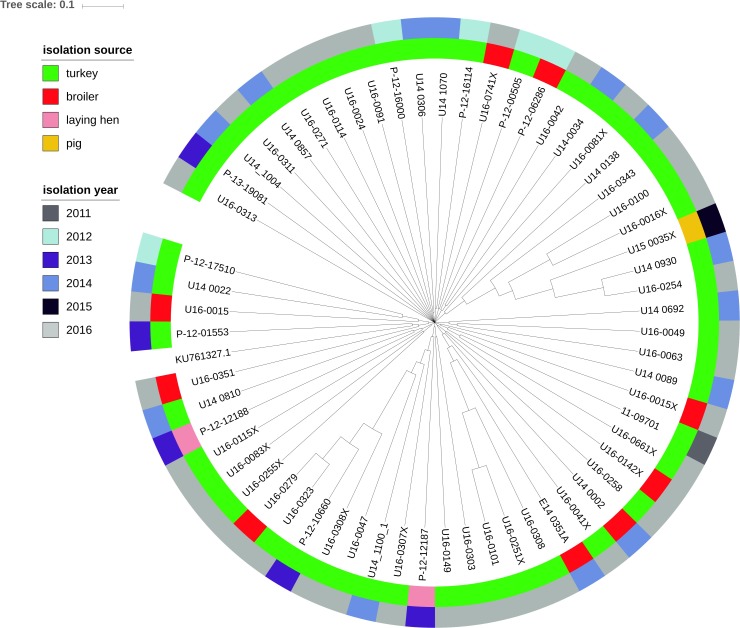
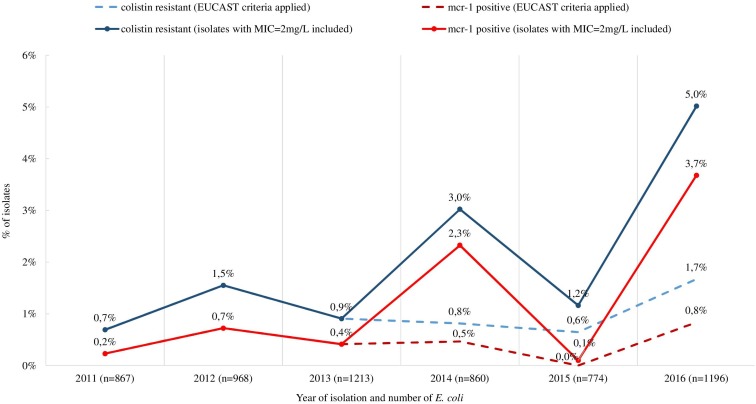
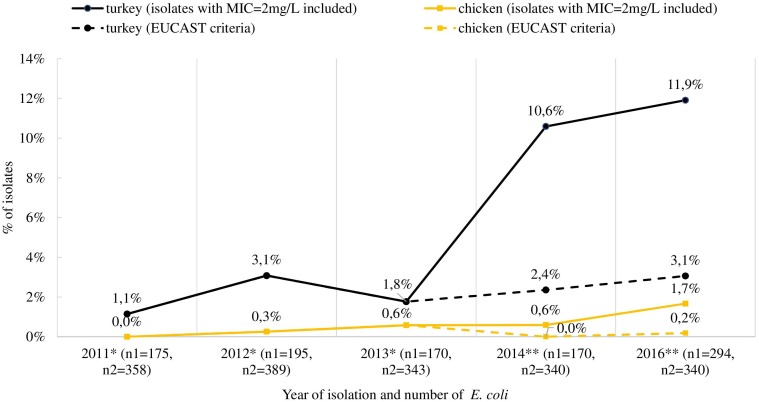
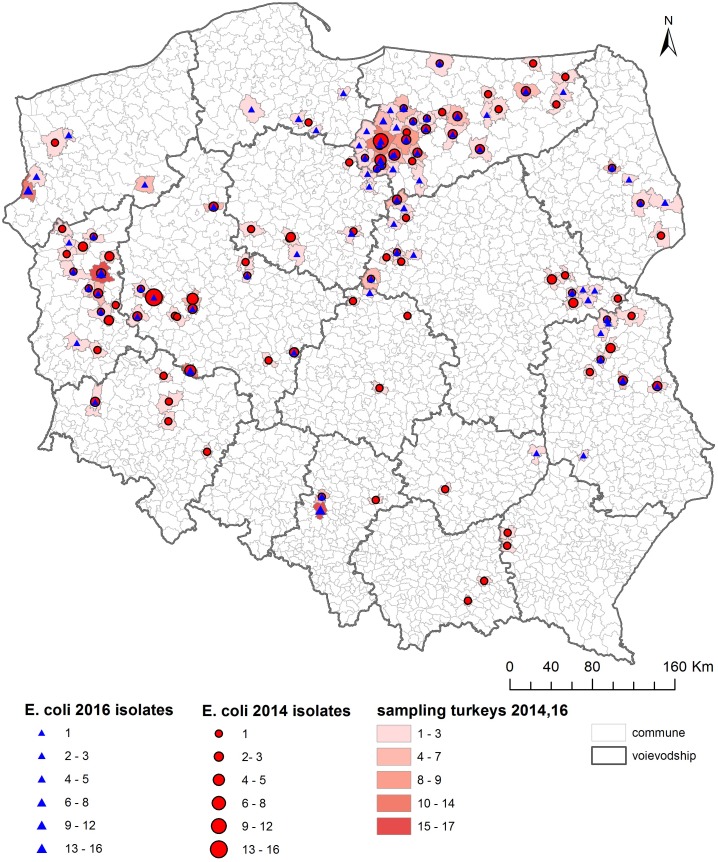
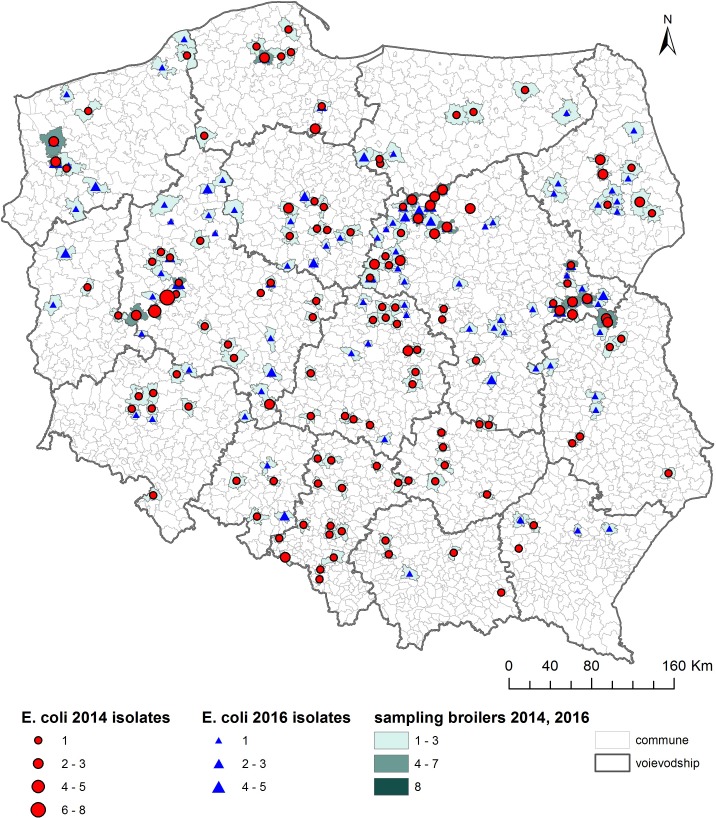
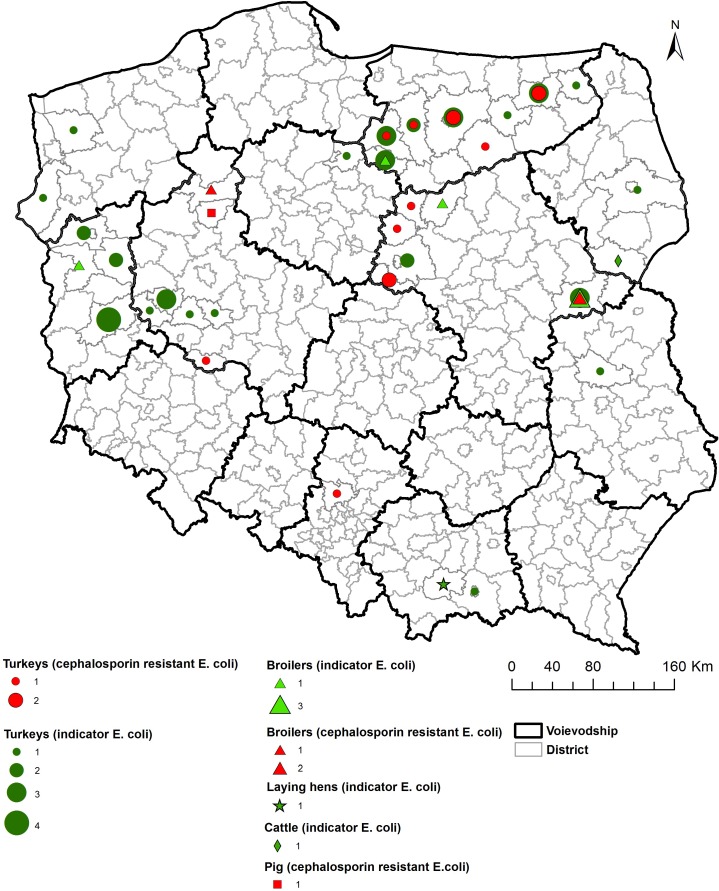
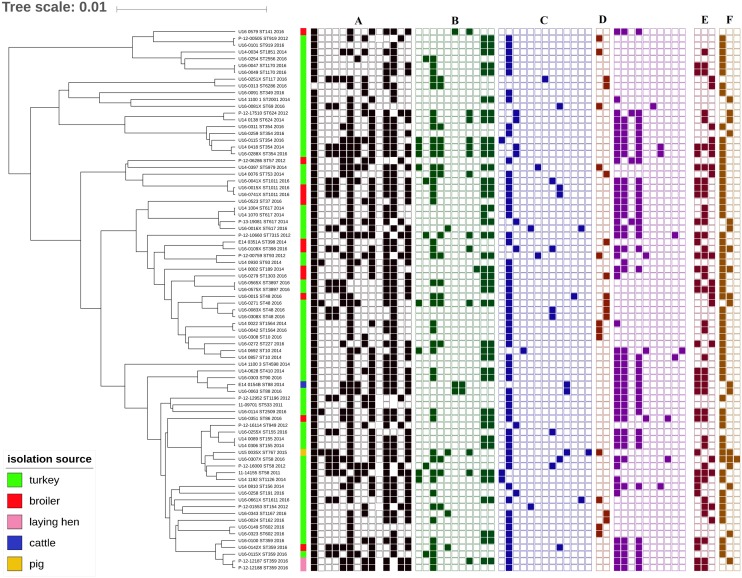
The emergence of plasmid-mediated colistin resistance ( genes) threatens the effectiveness of polymyxins, which are last-resort drugs to treat infections by multidrug- and carbapenem-resistant Gram-negative bacteria. Based on the occurrence of colistin resistance the aims of the study were to determine possible resistance mechanisms and then characterize the -positive . The research used material from the Polish national and EU harmonized antimicrobial resistance (AMR) monitoring programs. A total of 5,878 commensal from fecal samples of turkeys, chickens, pigs, and cattle collected in 2011-2016 were screened by minimum inhibitory concentration (MIC) determination for the presence of resistance to colistin (R) defined as > 2 mg/L. Strains with MIC = 2 mg/L isolated in 2014-2016 were also included. A total of 128 isolates were obtained, and most (66.3%) had colistin MIC of 2 mg/L. PCR revealed in 80 (62.5%) isolates recovered from 61 turkeys, 11 broilers, 2 laying hens, 1 pig, and 1 bovine. No other -type genes (including to -) were detected. Whole-genome sequencing (WGS) of the -positive isolates showed high diversity in the multi-locus sequence types (MLST) of , plasmid replicons, and AMR and virulence genes. Generally was detected on the same contig as the IncX4 (76.3%) and IncHI2 (6.3%) replicons. One isolate harbored . on the chromosome. Various extended-spectrum beta-lactamase ( , , , , , and ) and quinolone resistance genes (, , and chromosomal , and mutations) were present in the .-positive . A total of 49 sequence types (ST) were identified, ST354, ST359, ST48, and ST617 predominating. One isolate, identified as ST189, belonged to atypical enteropathogenic Our findings show that . has spread widely among production animals in Poland, particularly in turkeys and appears to be transferable mainly by IncX4 and IncHI2 plasmids spread across diverse lineages. Interestingly, most of these -positive would remain undetected using phenotypic methods with the current epidemiological cut-off value (ECOFF). The appearance and spread of among various animals, but notably in turkeys, might be considered a food chain, and public health hazard.
质粒介导的黏菌素耐药性(基因)的出现威胁着多黏菌素的有效性,多黏菌素是治疗耐多药和耐碳青霉烯革兰氏阴性菌感染的最后一道防线药物。基于黏菌素耐药性的发生情况,本研究的目的是确定可能的耐药机制,然后对阳性菌株进行特征分析。该研究使用了来自波兰国家和欧盟统一的抗菌药物耐药性(AMR)监测项目的材料。通过最低抑菌浓度(MIC)测定,对2011 - 2016年收集的火鸡、鸡、猪和牛粪便样本中的5878株共生菌进行筛选,以检测对黏菌素耐药(R)的情况,耐药定义为MIC > 2 mg/L。2014 - 2016年分离出的MIC = 2 mg/L的菌株也包括在内。共获得128株分离株,其中大多数(66.3%)的黏菌素MIC为2 mg/L。PCR检测发现,从61只火鸡、11只肉鸡、2只蛋鸡、1头猪和1头牛中分离出的80株(62.5%)分离株中存在该基因。未检测到其他类型的基因(包括对 - 的基因)。对阳性分离株进行全基因组测序(WGS)显示,在序列类型(MLST)、质粒复制子以及AMR和毒力基因方面存在高度多样性。一般来说,该基因与IncX4(76.3%)和IncHI2(6.3%)复制子在同一条重叠群上被检测到。一株分离株在染色体上携带该基因。在阳性菌株中存在各种超广谱β-内酰胺酶(、、、、、和)和喹诺酮耐药基因(、、染色体上的以及突变)。共鉴定出49种序列类型(ST),其中ST354、ST359、ST48和ST617占主导。一株被鉴定为ST189的分离株属于非典型肠致病性菌株。我们的研究结果表明,该基因在波兰养殖动物中广泛传播,并在火鸡中尤为常见,且似乎主要通过IncX4和IncHI2质粒在不同的菌株谱系中传播。有趣的是,使用当前的流行病学临界值(ECOFF)通过表型方法,这些阳性菌株中的大多数将无法被检测到。该基因在各种动物中出现和传播,尤其是在火鸡中,可能被视为一种食物链和公共卫生危害。