Ioannides Andreas A, Liu Lichan, Kostopoulos George K
Laboratory for Human Brain Dynamics, AAI Scientific Cultural Services Ltd., Nicosia, Cyprus.
Neurophysiology Unit, Department of Physiology, School of Medicine, University of Patras, Patras, Greece.
Front Neurosci. 2019 Aug 7;13:814. doi: 10.3389/fnins.2019.00814. eCollection 2019.
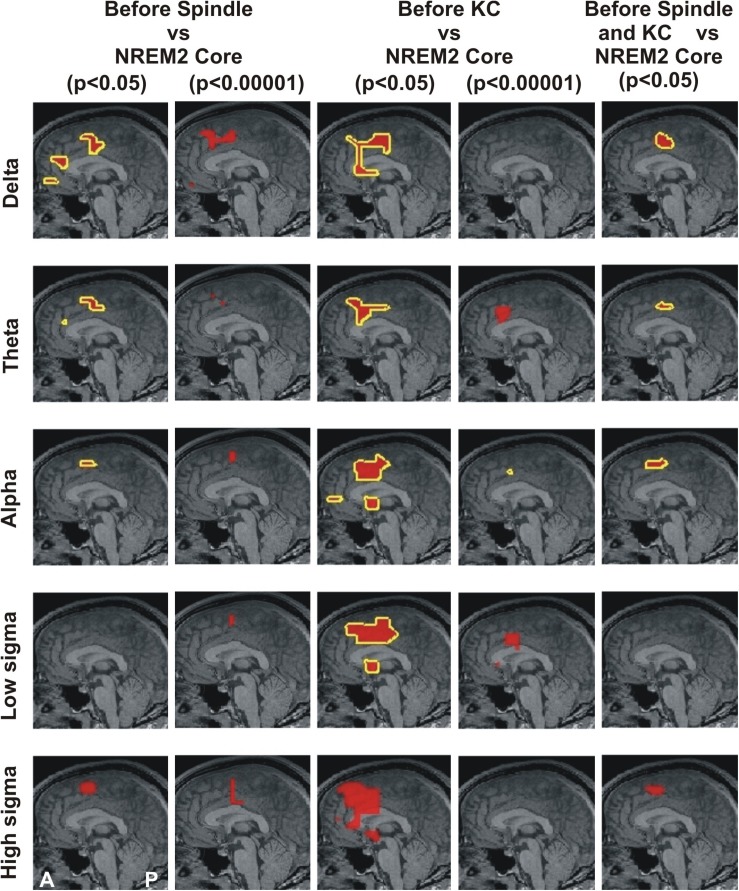
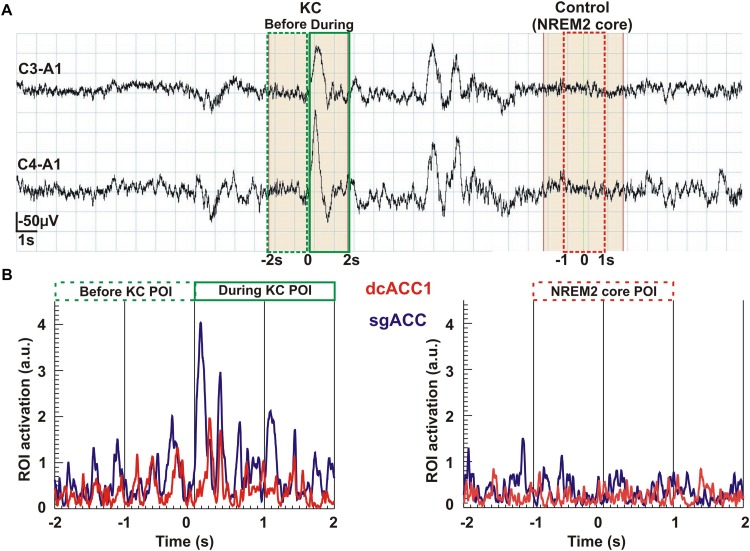
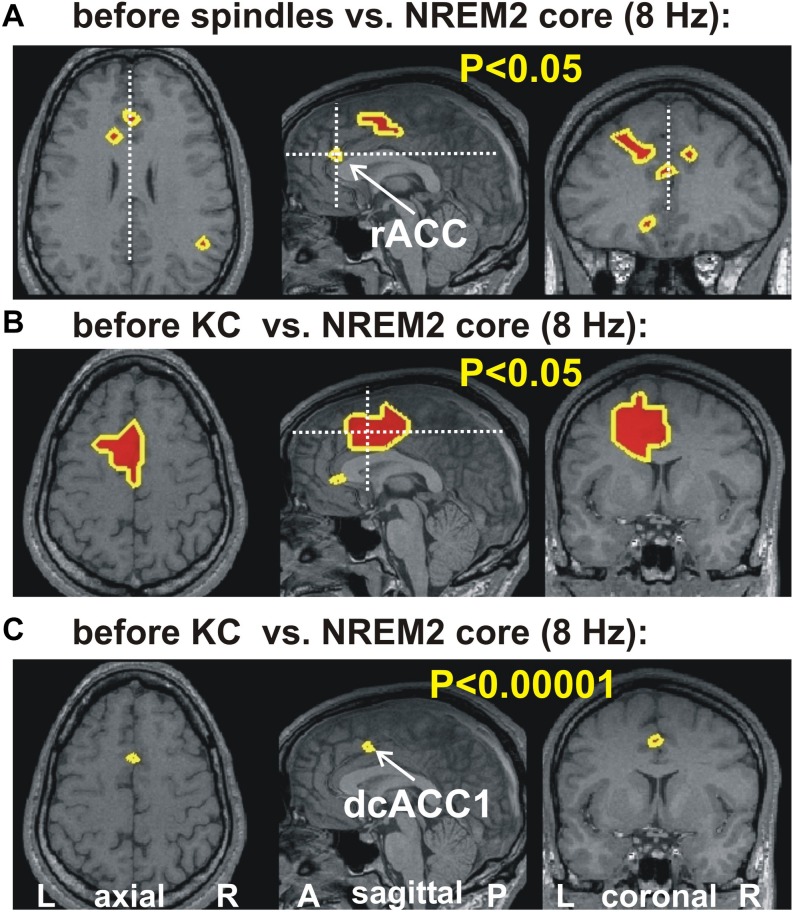
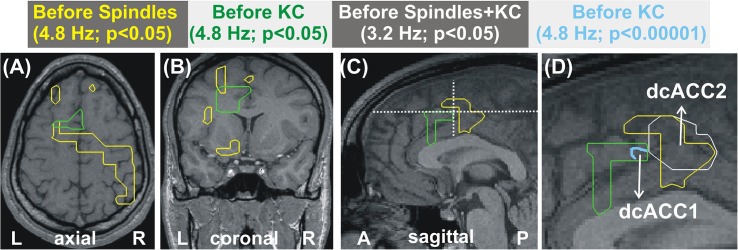
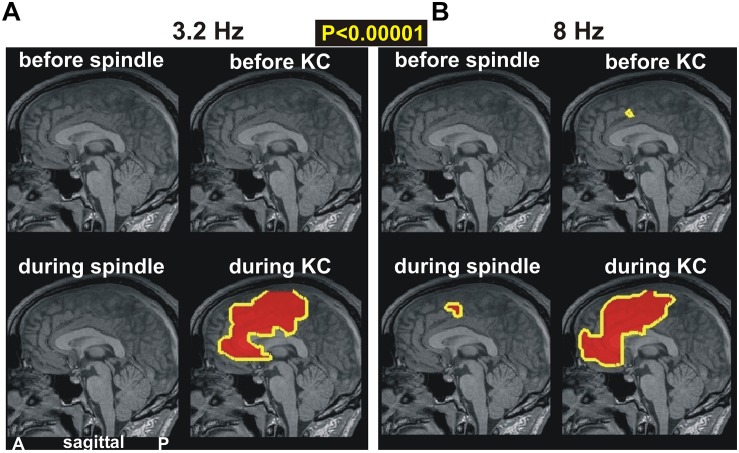
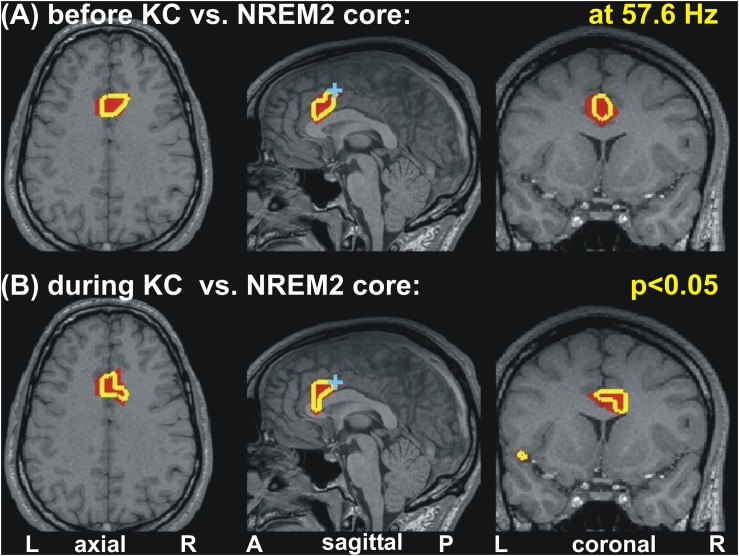
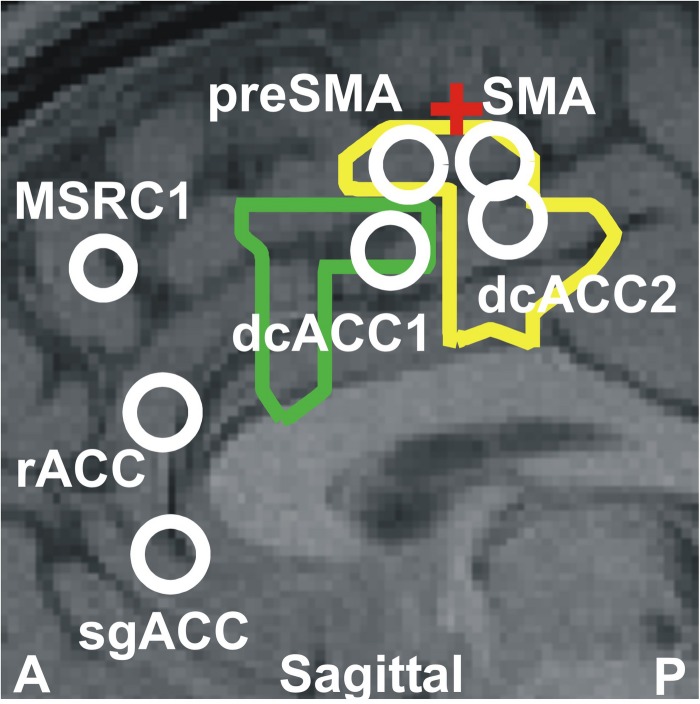
The large multicomponent K-complex (KC) and the rhythmic spindle are the hallmarks of non-rapid eye movement (NREM)-2 sleep stage. We studied with magnetoencephalography (MEG) the progress of light sleep (NREM-1 and NREM-2) and emergence of KCs and spindles. Seven periods of interest (POI) were analyzed: wakefulness, the two quiet "core" periods of light sleep (periods free from any prominent phasic or oscillatory events) and four periods before and during spindles and KCs. For each POI, eight 2-s (1250 time slices) segments were used. We employed magnetic field tomography (MFT) to extract an independent tomographic estimate of brain activity from each MEG data sample. The spectral power was then computed for each voxel in the brain for each segment of each POI. The sets of eight maps from two POIs were contrasted using a voxel-by-voxel -test. Only increased spectral power was identified in the four key contrasts between POIs before and during spindles and KCs versus the NREM2 core. Common increases were identified for all four subjects, especially within and close to the anterior cingulate cortex (ACC). These common increases were widespread for low frequencies, while for higher frequencies they were focal, confined to specific brain areas. For the pre-KC POI, only one prominent increase was identified, confined to the theta/alpha bands in a small area in the dorsal caudal part of ACC (dcACC). During KCs, the activity in this area grows in intensity and extent (in space and frequency), filling the space between the areas that expanded their low frequency activity (in the delta band) during NREM2 compared to NREM1. Our main finding is that prominent spectral power increases before NREM2 graphoelements are confined to the dcACC, and only for KCs, sharing common features with changes of activity in dcACC of the well-studied error related negativity (ERN). ERN is seen in awake state, in perceptual conflict and situations where there is a difference between expected and actual environmental or internal events. These results suggest that a KC is the sleep side of the awake state ERN, both serving their putative sentinel roles in the frame of the saliency network.
大型多成分K复合波(KC)和节律性纺锤波是非快速眼动(NREM)-2睡眠阶段的标志。我们使用脑磁图(MEG)研究了浅睡眠(NREM-1和NREM-2)的进展以及KC和纺锤波的出现。分析了七个感兴趣的时期(POI):清醒状态、浅睡眠的两个安静“核心”时期(没有任何明显的相位或振荡事件的时期)以及纺锤波和KC之前及期间的四个时期。对于每个POI,使用了八个2秒(1250个时间切片)的片段。我们采用磁场断层扫描(MFT)从每个MEG数据样本中提取大脑活动的独立断层估计值。然后针对每个POI的每个片段计算大脑中每个体素的频谱功率。使用逐体素t检验对比来自两个POI的八组图谱。在纺锤波和KC之前及期间的POI与NREM2核心之间的四个关键对比中,仅发现频谱功率增加。所有四名受试者均出现了共同的增加,特别是在前扣带回皮质(ACC)内部及附近。这些共同的增加在低频范围内广泛存在,而在高频时则集中在特定脑区。对于KC前POI,仅在ACC背侧尾部(dcACC)的一个小区域内的theta/alpha频段发现了一个显著增加。在KC期间,该区域的活动强度和范围(在空间和频率上)增加,填补了与NREM1相比在NREM2期间低频活动(在delta频段)扩展的区域之间的空间。我们的主要发现是,在NREM2图形元素出现之前,显著的频谱功率增加仅限于dcACC,并且仅针对KC,与研究充分的错误相关负波(ERN)的dcACC活动变化具有共同特征。ERN出现在清醒状态、感知冲突以及预期与实际环境或内部事件存在差异的情况下。这些结果表明,KC是清醒状态ERN的睡眠对应物,两者在显著性网络框架中都发挥着假定的哨兵作用。