Yousif Dalia, Bellos Ioannis, Penzlin Ana Isabel, Hijazi Mido Max, Illigens Ben Min-Woo, Pinter Alexandra, Siepmann Timo
Division of Healthcare Sciences, Center for Clinical Research and Management Education, Dresden International University, Dresden, Germany.
Laboratory of Experimental Surgery and Surgical Research N.S. Christeas, Athens University Medical School, National and Kapodistrian University of Athens, Athens, Greece.
Front Neurol. 2019 Aug 6;10:816. doi: 10.3389/fneur.2019.00816. eCollection 2019.
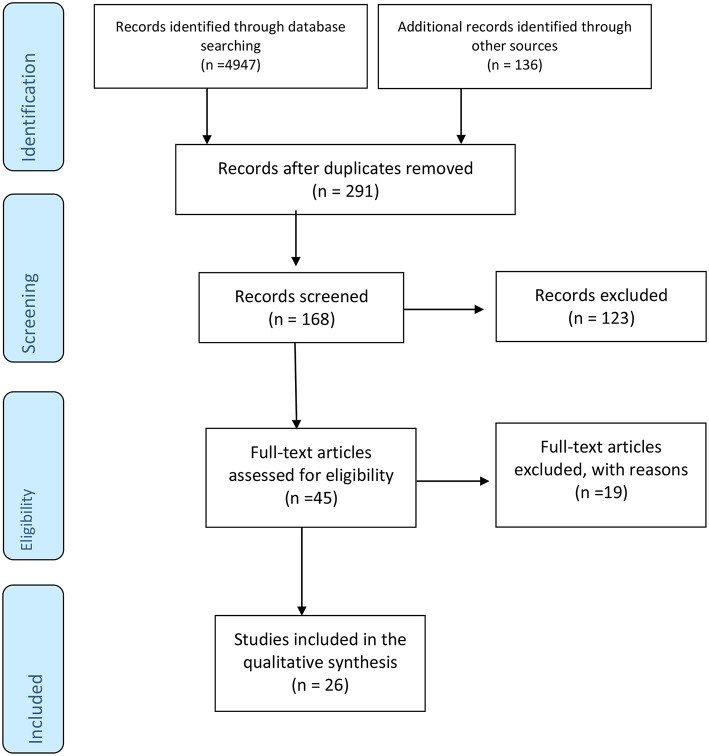
Preeclampsia (PE) is a major obstetric complication that leads to severe maternal and fetal morbidity. Early detection of preeclampsia can reduce the severity of complications and improve clinical outcomes. It is believed that the autonomic nervous system (ANS) is involved in the pathogenesis of PE. We aimed to review the current literature on the prevalence and nature of ANS dysfunction in women with PE and the possible prognostic value of ANS testing in the early detection of PE. Literature search was performed using Medline (1966-2018), EMBase (1947-2018), Google Scholar (1970-2018), BIOSIS (1926-2018), Web of science (1900-2018); CINAHL (1937-2018); Cochrane Library, Cochrane Database of Systematic Reviews, Cochrane Central Register of Controlled Trials (CENTRAL) and Cochrane Methodology Register (1999-2018). Additionally, the reference lists of articles included were screened. A total of 26 studies were included in the present review presenting data of 1,854 pregnant women. Among these women, 453 were diagnosed with PE, 93.6% (424/453) of which displayed autonomic dysfunction. ANS function was assessed by cardiovascular reflex tests ( = 9), heart rate variability ( = 11), cardiac baroreflex gain ( = 5), muscle sympathetic nerve activity (MSNA) ( = 3), and biomarkers of sympathetic activity ( = 4). Overall, 21 studies (80.8%) reported at least one of the following abnormalities in ANS function in women diagnosed with PE compared to healthy pregnant control women: reduced parasympathetic activity ( = 16/21, 76%), increased sympathetic activity ( = 12/20, 60%), or reduced baroreflex gain ( = 4/5, 80%). Some of these studies indicated that pressor and orthostatic stress test may be useful in early pregnancy to help estimate the risk of developing PE. However, autonomic function tests seem not to be able to differentiate between mild and severe PE. Current evidence suggests that autonomic dysfunction is highly prevalent in pre-eclamptic women. Among autonomic functions, cardiovascular reflexes appear to be predominantly affected, seen as reduced cardiac parasympathetic activity and elevated cardiac sympathetic activity. The diagnostic value of autonomic testing in the prediction and monitoring of autonomic failure in pre-eclamptic women remains to be determined.
子痫前期(PE)是一种主要的产科并发症,可导致严重的母婴发病。子痫前期的早期检测可降低并发症的严重程度并改善临床结局。据信,自主神经系统(ANS)参与了子痫前期的发病机制。我们旨在综述当前关于子痫前期女性自主神经功能障碍的患病率和性质以及自主神经检测在子痫前期早期检测中可能的预后价值的文献。使用Medline(1966 - 2018年)、EMBase(1947 - 2018年)、谷歌学术(1970 - 2018年)、BIOSIS(1926 - 2018年)、科学网(1900 - 2018年);CINAHL(1937 - 2018年);Cochrane图书馆、Cochrane系统评价数据库、Cochrane对照试验中心注册库(CENTRAL)和Cochrane方法学注册库(1999 - 2018年)进行文献检索。此外,还筛选了所纳入文章的参考文献列表。本综述共纳入26项研究,呈现了1854名孕妇的数据。在这些女性中,453人被诊断为子痫前期,其中93.6%(424/453)表现出自主神经功能障碍。通过心血管反射试验(n = 9)、心率变异性(n = 11)、心脏压力反射增益(n = 5)、肌肉交感神经活动(MSNA)(n = 3)和交感神经活动生物标志物(n = 4)评估自主神经功能。总体而言,21项研究(80.8%)报告称,与健康孕妇对照组相比,诊断为子痫前期的女性在自主神经功能方面至少存在以下一种异常:副交感神经活动降低(16/21,76%)、交感神经活动增加(12/20,60%)或压力反射增益降低(4/5,80%)。其中一些研究表明,升压和直立应激试验可能有助于在孕早期估计发生子痫前期的风险。然而,自主神经功能测试似乎无法区分轻度和重度子痫前期。目前的证据表明,自主神经功能障碍在子痫前期女性中非常普遍。在自主神经功能中,心血管反射似乎主要受到影响,表现为心脏副交感神经活动降低和心脏交感神经活动升高。自主神经检测在子痫前期女性自主神经功能衰竭的预测和监测中的诊断价值仍有待确定。