Xing Lu, Zhang Xiaoqian, Chen Anwei
School of Stomatology, Shandong University, Shandong Provincial Key Laboratory of Oral Tissue Regeneration, Jinan, Shandong 250012, P.R. China.
Department of Stomatology, Haiyuan College of Kunming Medical University, Kunming, Yunnan 650000, P.R. China.
Oncol Lett. 2019 Sep;18(3):3304-3316. doi: 10.3892/ol.2019.10670. Epub 2019 Jul 26.
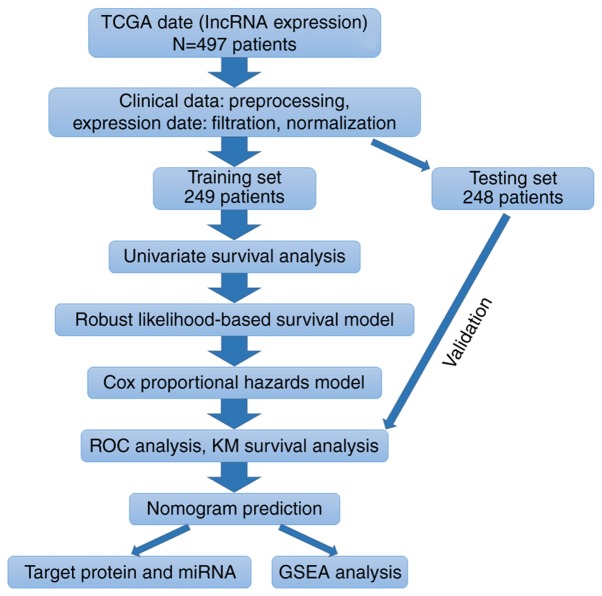
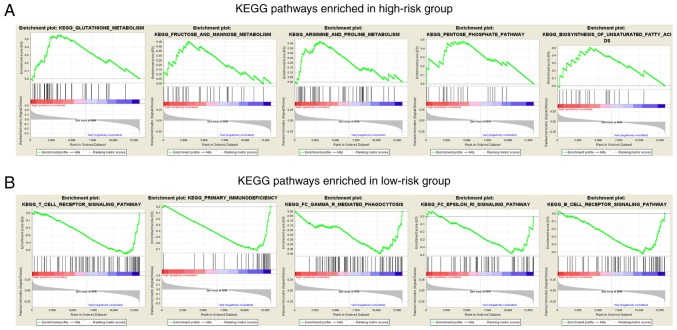
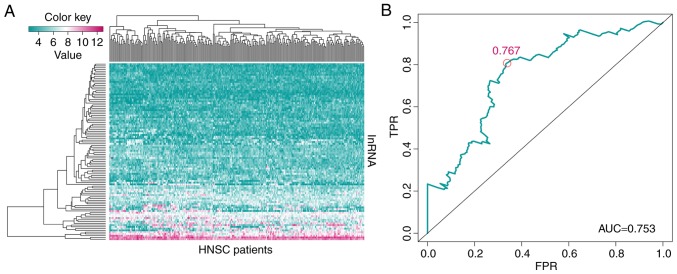
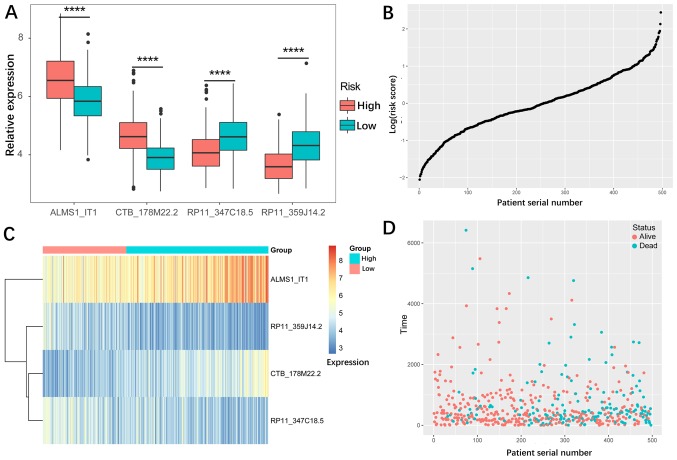
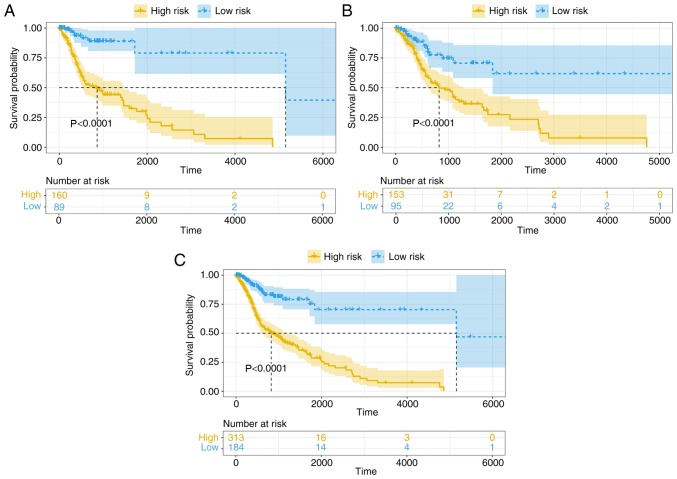
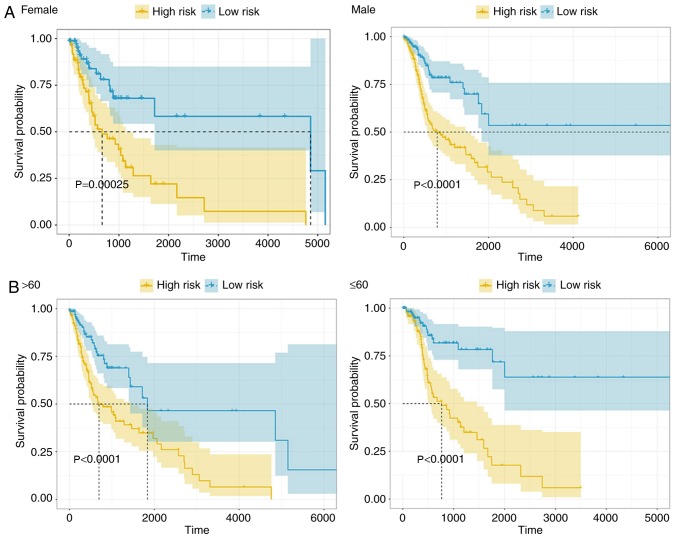
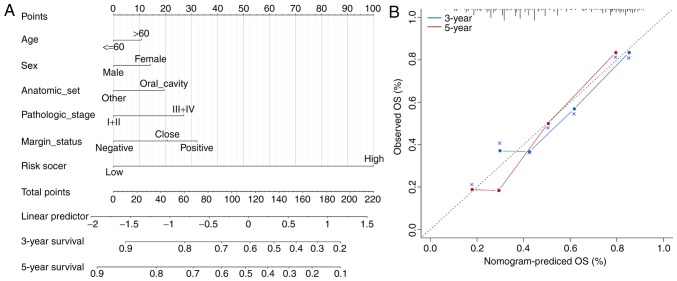
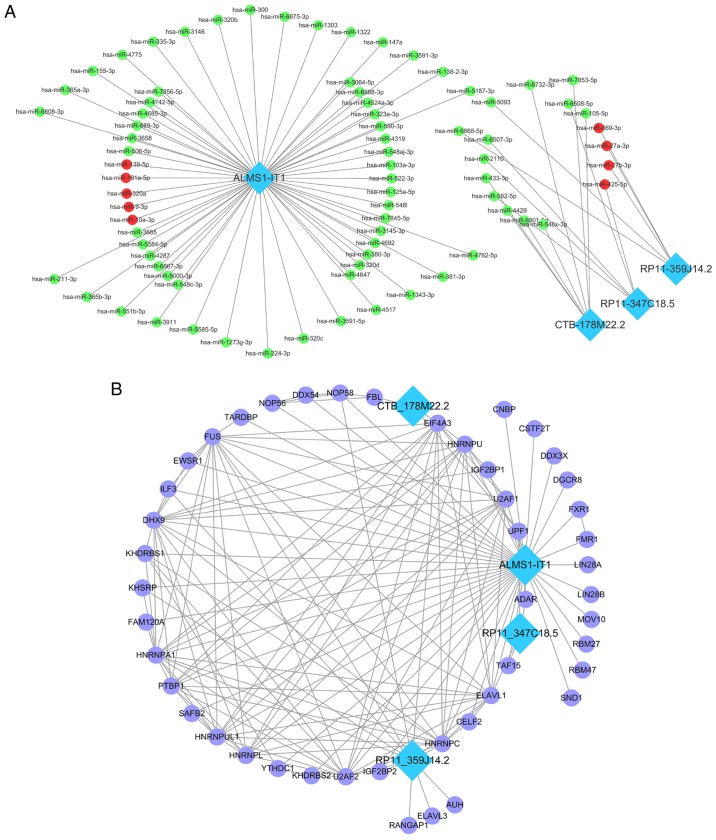
Head and neck squamous cell carcinoma (HNSCC) is a common malignant disease with high mortality rates. Recently, long non-coding RNAs (lncRNAs) have been demonstrated to participate in a number of important biological functions and could serve as prognostic biomarkers in the field of oncology. Therefore, the present study aimed to identify an lncRNA-based model that was associated with prognosis. RNA-sequencing data was downloaded from The Cancer Genome Atlas and R software was used to analyze the data. Univariate analyses, robust likelihood analyses and multivariate analyses were performed to screen out key lncRNA candidates associated with prognosis and construct a risk model. A Kaplan-Meier plot was constructed for survival analysis. LncBase and Starbase were used to identify the miRNA and protein targets. Gene set enrichment analysis was used for functional analysis. As a result, a 4-lncRNA (ALMS1-IT1, RP11-359J14.2, CTB-178M22.2 and RP11-347C18.5) based risk model was identified and patients in the high-risk group were revealed to have a lower survival rate than patients in the low-risk group. A nomogram that could predict the survival of patients was plotted. A total of 79 target miRNAs and 61 target proteins were identified. The gene set enrichment analysis results revealed that nutrient metabolism pathways were enriched in the high-risk group and immune regulation pathways were enriched in the low-risk group. In summary, a 4-lncRNA based risk model was identified that was associated with prognosis, which may serve as a prognosis prediction biomarker for HNSCC.
头颈部鳞状细胞癌(HNSCC)是一种常见的恶性疾病,死亡率很高。最近,长链非编码RNA(lncRNA)已被证明参与许多重要的生物学功能,并可作为肿瘤学领域的预后生物标志物。因此,本研究旨在确定一种与预后相关的基于lncRNA的模型。从癌症基因组图谱下载RNA测序数据,并使用R软件分析数据。进行单变量分析、稳健似然分析和多变量分析,以筛选出与预后相关的关键lncRNA候选物,并构建风险模型。构建Kaplan-Meier图进行生存分析。使用LncBase和Starbase识别miRNA和蛋白质靶点。基因集富集分析用于功能分析。结果,确定了一个基于4种lncRNA(ALMS1-IT1、RP11-359J14.2、CTB-178M22.2和RP11-347C18.5)的风险模型,高危组患者的生存率低于低危组患者。绘制了一个可以预测患者生存的列线图。共鉴定出79个靶miRNA和61个靶蛋白。基因集富集分析结果显示,高危组中营养代谢途径富集,低危组中免疫调节途径富集。总之,确定了一个基于4种lncRNA的与预后相关的风险模型,该模型可作为HNSCC的预后预测生物标志物。