Zheng Li, Liu Sijia, Cheng Xiaojing, Qin Zainen, Lu Zhenhui, Zhang Kun, Zhao Jinmin
Guangxi Engineering Center in Biomedical Materials for Tissue and Organ Regeneration The First Affiliated Hospital of Guangxi Medical University No. 6 Shuangyong Road Nanning 530021 P. R. China.
Guangxi Collaborative Innovation Center for Biomedicine The First Affiliated Hospital of Guangxi Medical University No. 6 Shuangyong Road Nanning 530021 P. R. China.
Adv Sci (Weinh). 2019 Jul 15;6(16):1900099. doi: 10.1002/advs.201900099. eCollection 2019 Aug 21.
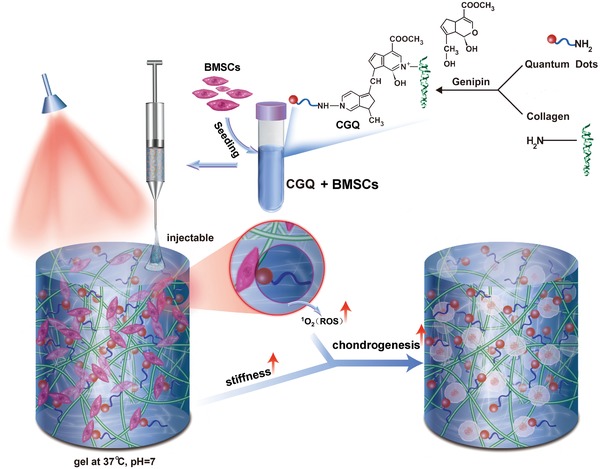
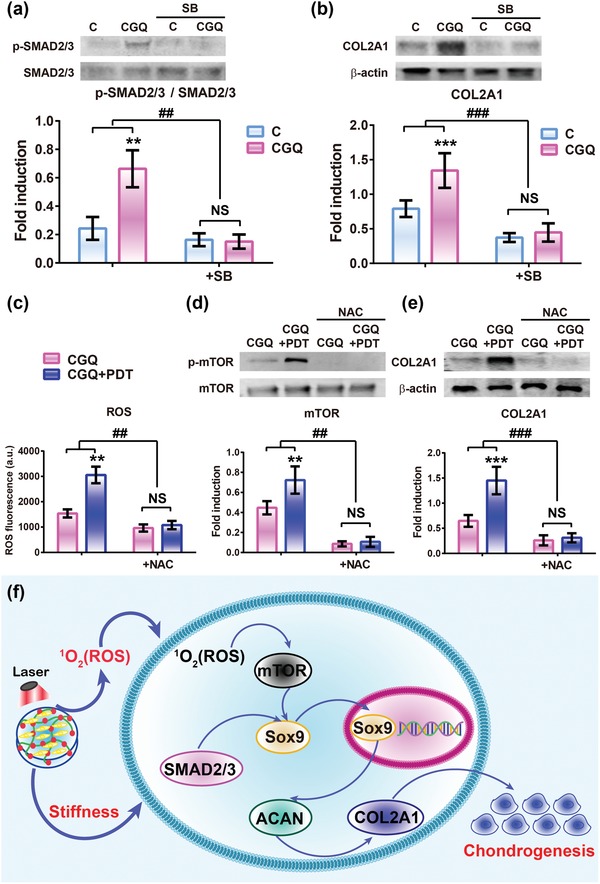
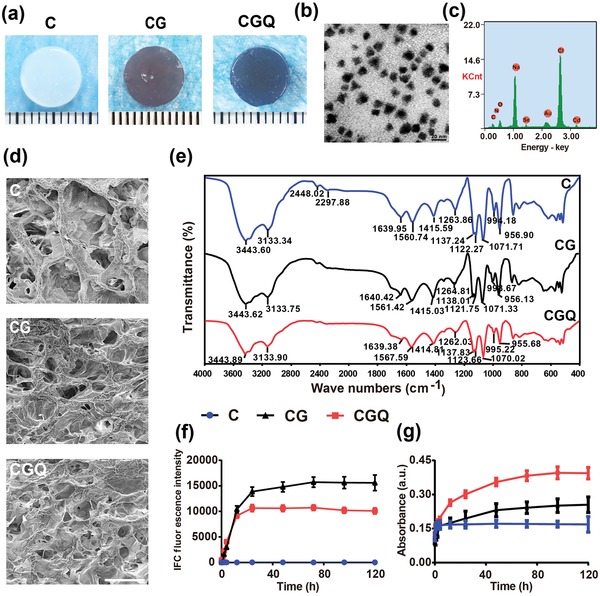
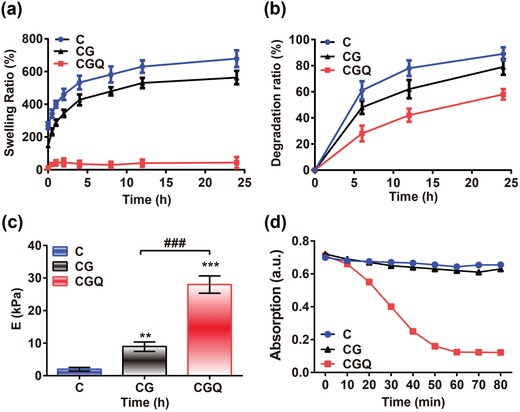
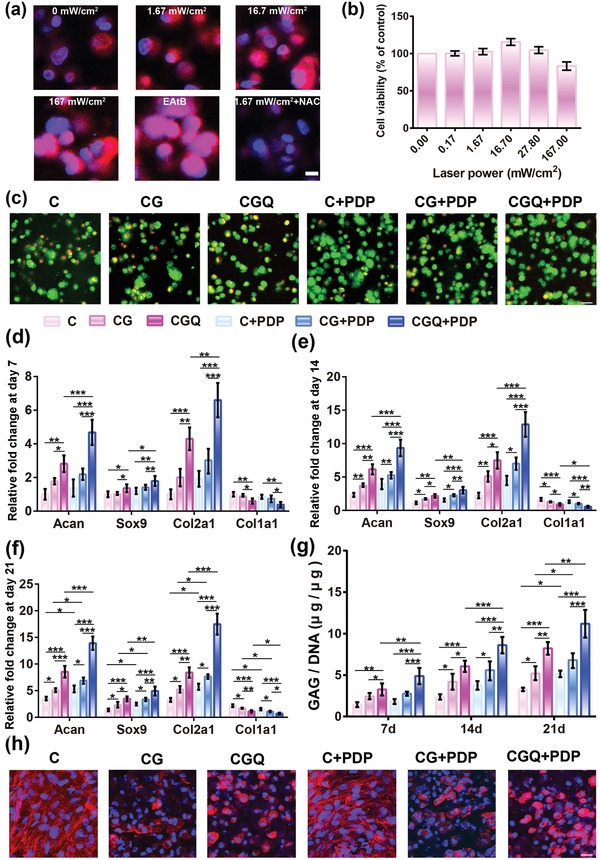
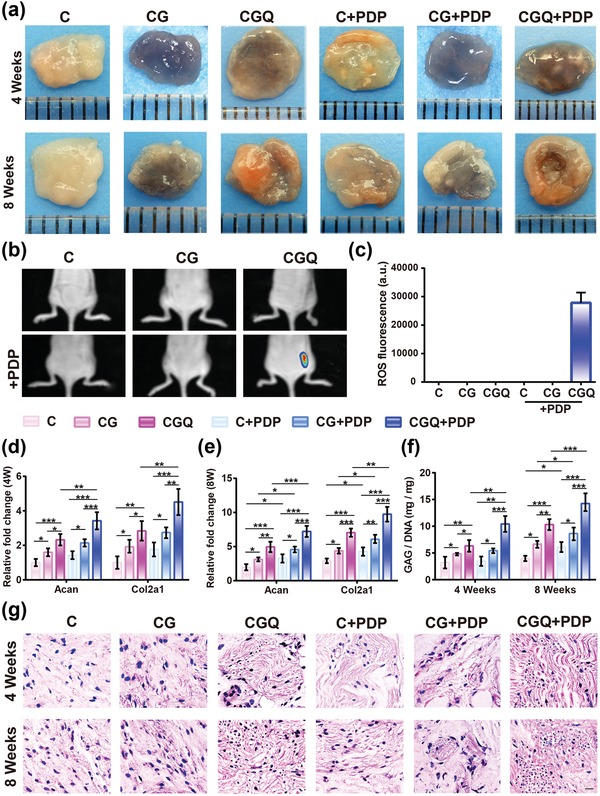
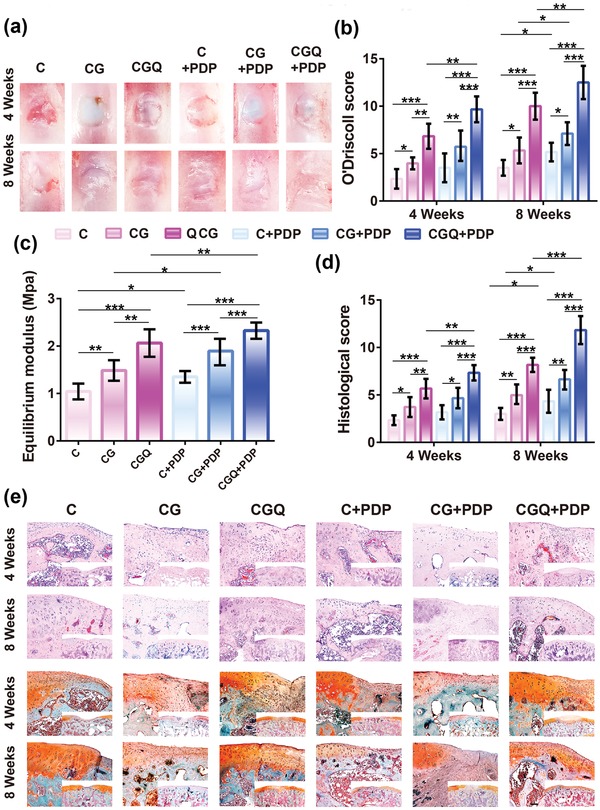
Directed differentiation of bone-marrow-derived stem cells (BMSCs) toward chondrogenesis has served as a predominant method for cartilage repair but suffers from poor oriented differentiation tendency and low differentiation efficiency. To overcome these two obstacles, an injectable composite hydrogel that consists of collagen hydrogels serving as the scaffold support to accommodate BMSCs and cadmium selenide (CdSe) quantum dots (QDs) is constructed. The introduction of CdSe QDs considerably strengthens the stiffness of the collagen hydrogels via mutual crosslinking using a natural crosslinker (i.e., genipin), which simultaneously triggers photodynamic provocation (PDP) to produce reactive oxygen species (ROS). Experimental results demonstrate that the intensified stiffness and augmented ROS production can synergistically promote the proliferation of BMSCs, induce cartilage-specific gene expression and increase secretion of glycosaminoglycan. As a result, this approach can facilitate the directed differentiation of BMSCs toward chondrogenesis and accelerate cartilage regeneration in cartilage defect repair, which routes through activation of the TGF-β/SMAD and mTOR signaling pathways, respectively. Thus, this synergistic strategy based on increased stiffness and PDP-mediated ROS production provides a general and instructive approach for developing alternative materials applicable for cartilage repair.
骨髓来源干细胞(BMSCs)向软骨形成的定向分化一直是软骨修复的主要方法,但存在定向分化趋势差和分化效率低的问题。为了克服这两个障碍,构建了一种可注射复合水凝胶,它由作为支架支持物以容纳BMSCs的胶原水凝胶和硒化镉(CdSe)量子点(QDs)组成。CdSe QDs的引入通过使用天然交联剂(即京尼平)进行相互交联,显著增强了胶原水凝胶的硬度,同时引发光动力激发(PDP)以产生活性氧(ROS)。实验结果表明,增强的硬度和增加的ROS产生可协同促进BMSCs的增殖,诱导软骨特异性基因表达并增加糖胺聚糖的分泌。因此,这种方法可促进BMSCs向软骨形成的定向分化,并加速软骨缺损修复中的软骨再生,其分别通过激活TGF-β/SMAD和mTOR信号通路来实现。因此,这种基于增加硬度和PDP介导的ROS产生的协同策略为开发适用于软骨修复的替代材料提供了一种通用且具有指导意义的方法。