Knox Susan J, Jayachandran Priya, Keeling Christine A, Stevens Kathryn J, Sandhu Navjot, Stamps-DeAnda Stacy Leanne, Savic Rada, Shura Lei, Buyyounouski Mark K, Grimes Kevin
Department of Radiation Oncology, Stanford University, Stanford, CA.
Department of Bioengineering and Therapeutic Sciences, University of California San Francisco, San Francisco, CA, USA.
Transl Oncol. 2019 Nov;12(11):1525-1531. doi: 10.1016/j.tranon.2019.08.006. Epub 2019 Aug 24.
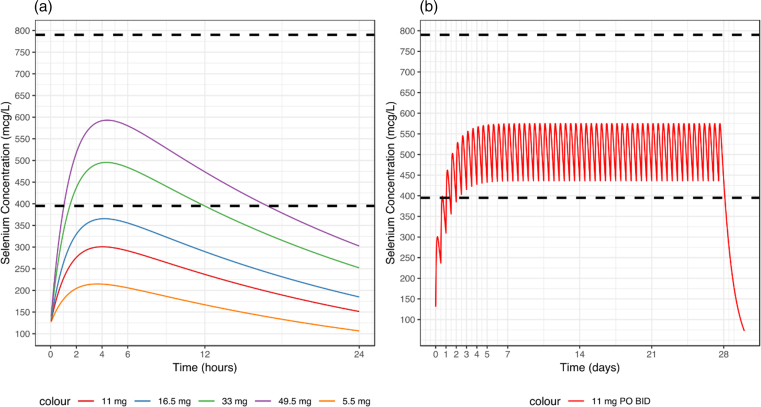
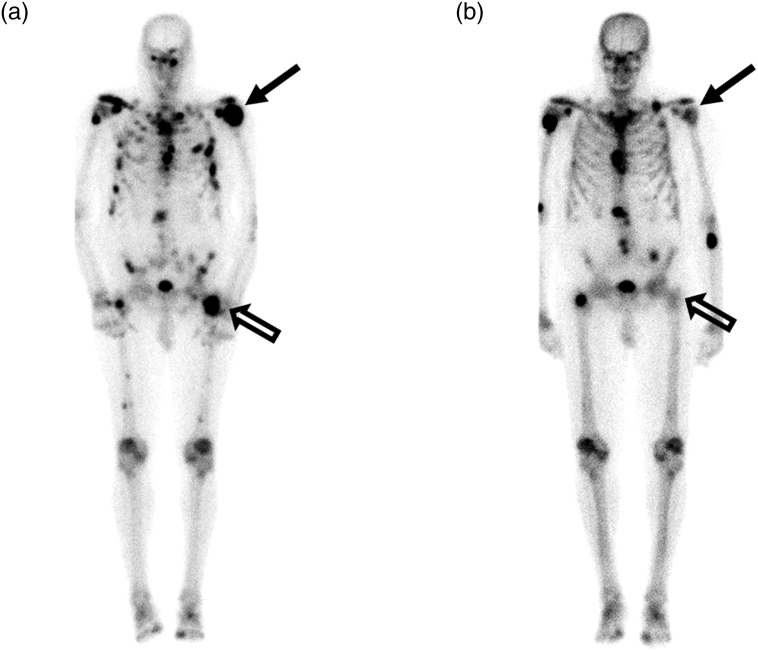
In preclinical studies, selenite had single agent activity and radiosensitized tumors in vivo. Here we report results from a Phase 1 trial in 15 patients with metastatic cancer treated with selenite (5.5 to 49.5 mg) orally as a single dose 2 hours before each radiation therapy (RT) treatment. Patients received RT regimens that were standard of care. The primary objective of the study was to assess the safety of this combination therapy. Secondary objectives included measurement of pharmacokinetics (PK) and evaluation of efficacy. Endpoints included assessment of PK, toxicity, tumor response, and pain before and after treatment. The half-life of selenite was 18.5 hours. There were no adverse events attributable to selenite until the 33 mg dose level, at which the primary toxicities were grade 1 GI side effects. One patient treated with 49.5 mg had grade 2 GI toxicity. Although this was not a DLT, it was felt that the highest acceptable dose in this patient population was 33 mg. Most patients had stabilization of disease within the RT fields, with some demonstrating objective evidence of tumor regression. Most patients had a marked improvement in pain and seven out of nine patients with prostate cancer had a decrease in PSA ranging from 11-78%. Doses up to 33 mg selenite were well tolerated in combination with RT. A randomized, well controlled study is needed at the 33 mg dose level to determine if selenite results in clinically meaningful improvements in the response to palliative RT.
在临床前研究中,亚硒酸盐具有单药活性,并能在体内使肿瘤对放疗增敏。在此,我们报告一项1期试验的结果,该试验纳入了15例转移性癌症患者,在每次放射治疗(RT)前2小时口服单剂量亚硒酸盐(5.5至49.5毫克)。患者接受的是标准治疗的RT方案。该研究的主要目的是评估这种联合治疗的安全性。次要目的包括药代动力学(PK)测定和疗效评估。终点指标包括PK评估、毒性、肿瘤反应以及治疗前后的疼痛情况。亚硒酸盐的半衰期为18.5小时。直到33毫克剂量水平,均未出现归因于亚硒酸盐的不良事件,该剂量水平的主要毒性为1级胃肠道副作用。一名接受49.5毫克治疗的患者出现2级胃肠道毒性。虽然这并非剂量限制性毒性(DLT),但认为该患者群体中可接受的最高剂量为33毫克。大多数患者在放疗区域内疾病稳定,部分患者有肿瘤消退的客观证据。大多数患者疼痛明显改善,9例前列腺癌患者中有7例前列腺特异性抗原(PSA)下降,降幅为11%至78%。亚硒酸盐剂量高达33毫克与放疗联合时耐受性良好。需要在33毫克剂量水平进行一项随机、严格对照的研究,以确定亚硒酸盐是否能使姑息性放疗的反应在临床上有意义地改善。