Che Hamzah Ainal Mardziah, Yeo Chew Chieng, Puah Suat Moi, Chua Kek Heng, Chew Ching Hoong
Faculty of Health Sciences, Universiti Sultan Zainal Abidin, Kuala Nerus 21300, Terengganu, Malaysia.
Faculty of Medicine, Universiti Sultan Zainal Abidin, Kuala Terengganu 20400, Terengganu, Malaysia.
Antibiotics (Basel). 2019 Aug 26;8(3):128. doi: 10.3390/antibiotics8030128.
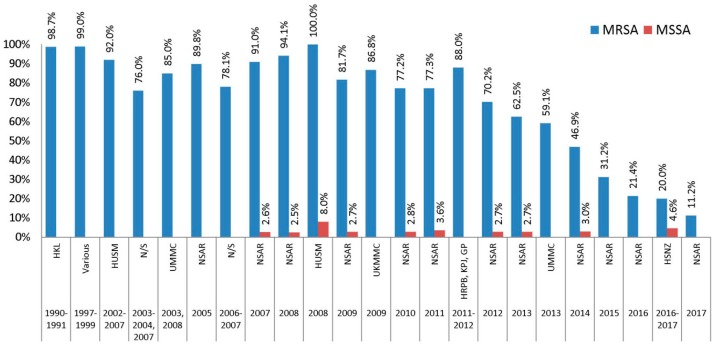
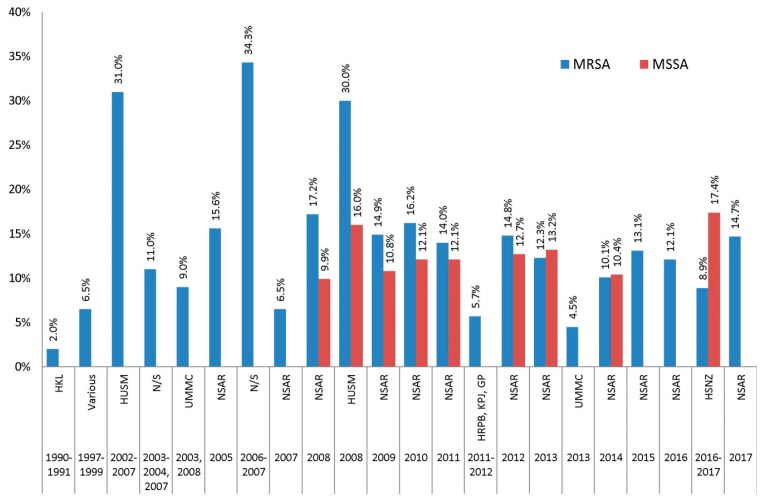
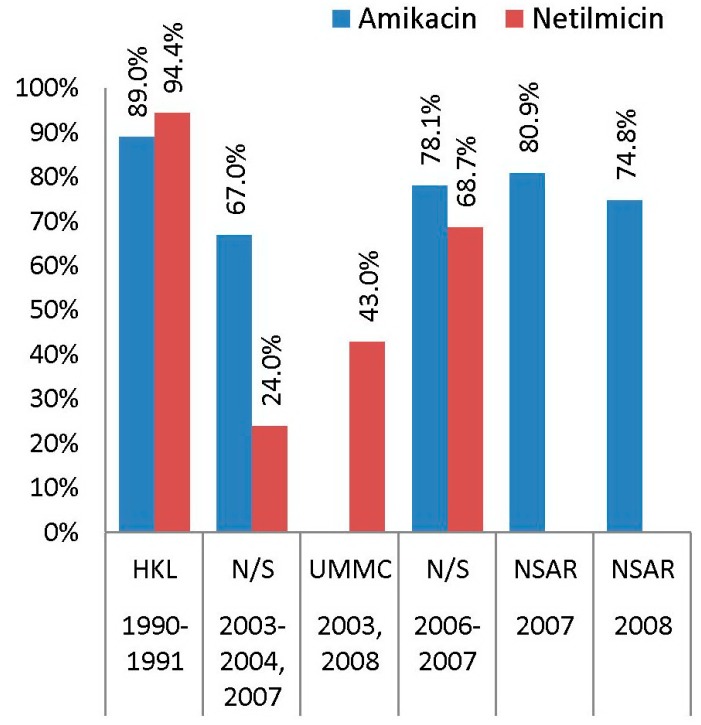
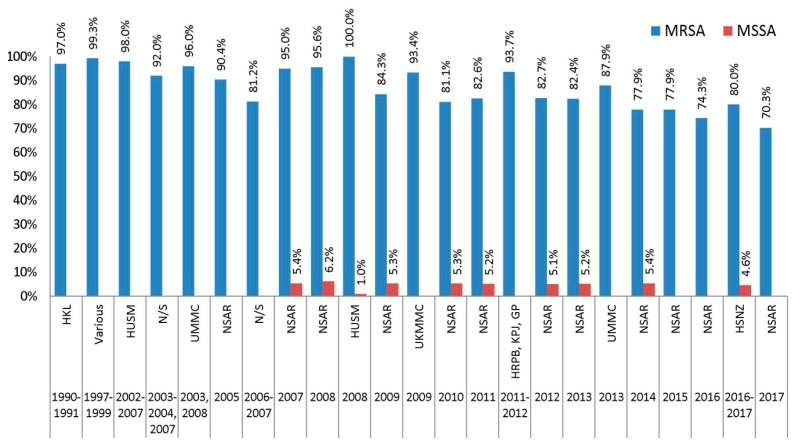
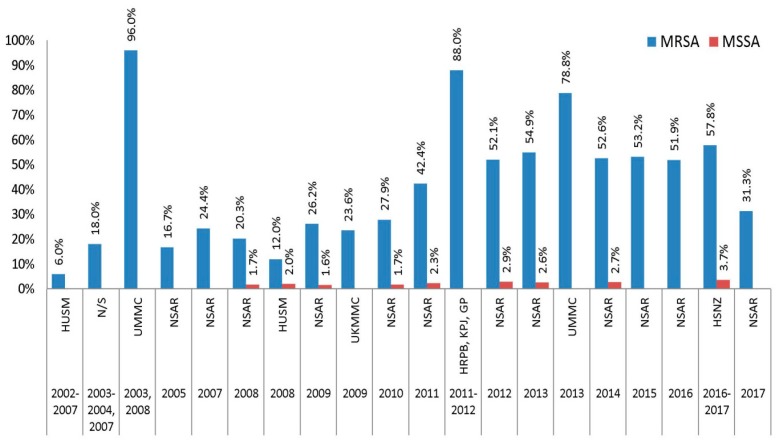
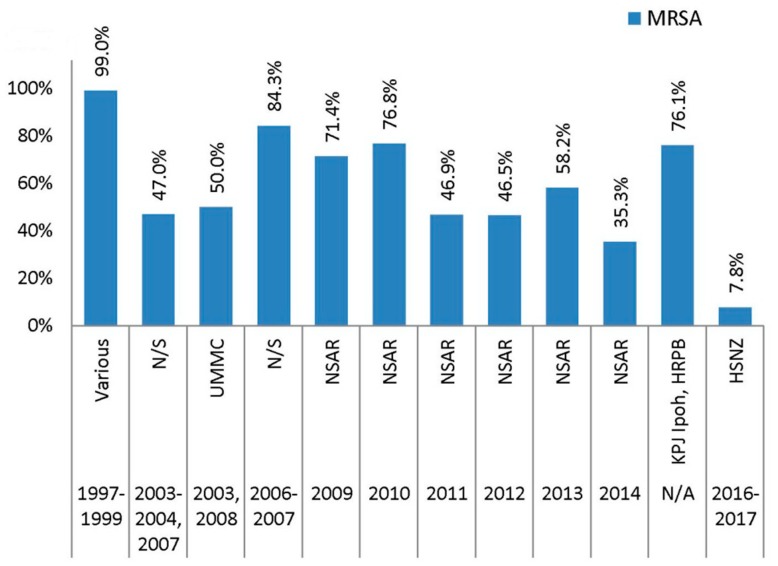
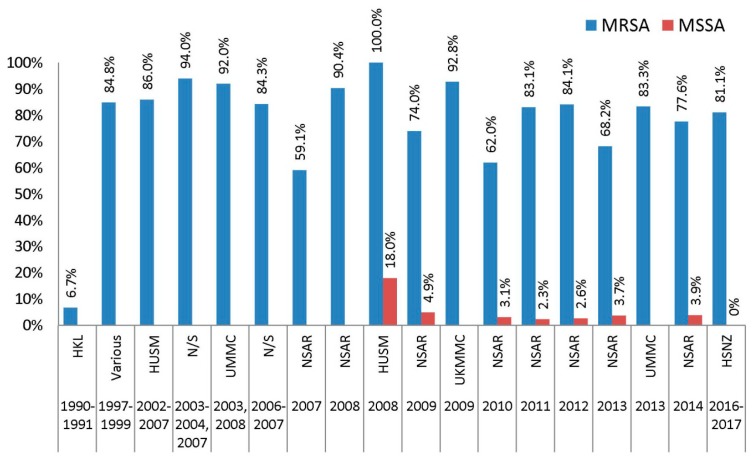
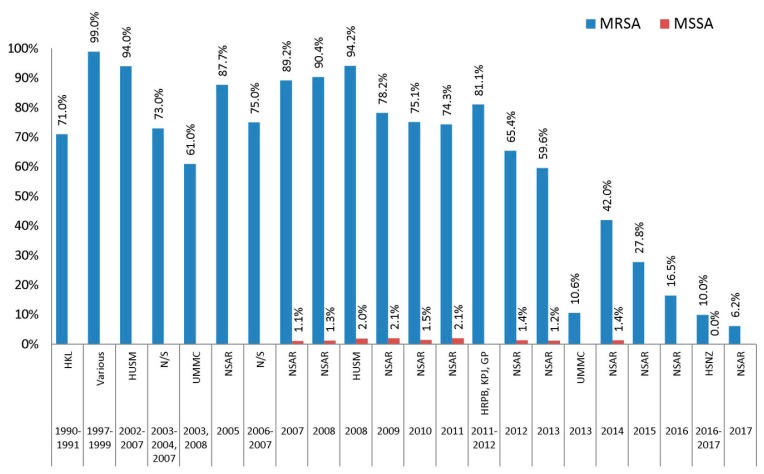
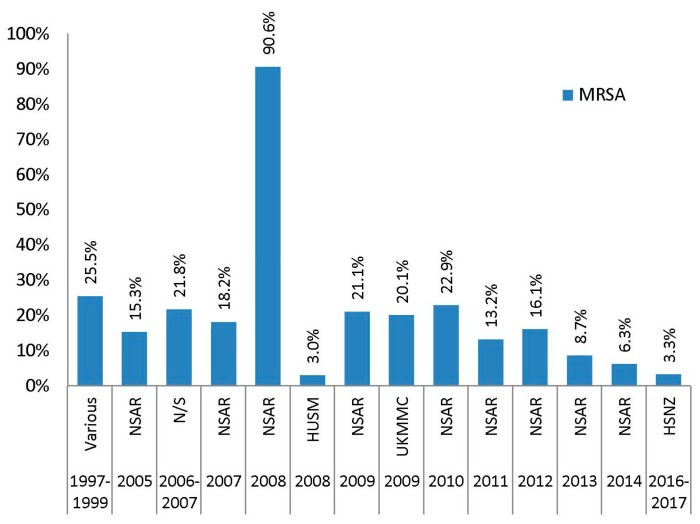
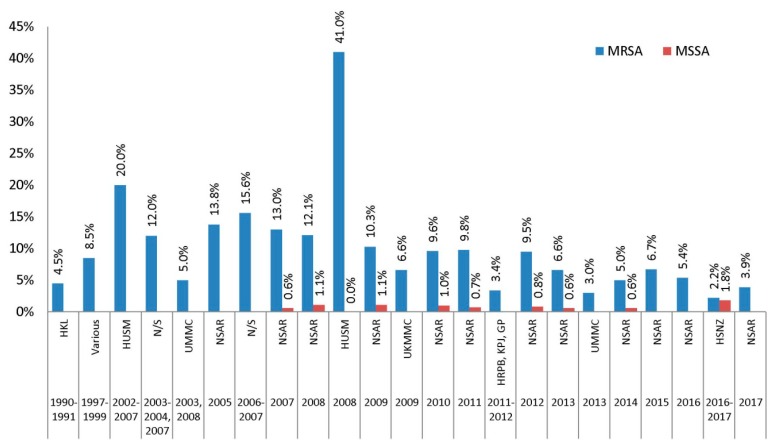
is an important nosocomial pathogen and its multidrug resistant strains, particularly methicillin-resistant (MRSA), poses a serious threat to public health due to its limited therapeutic options. The increasing MRSA resistance towards vancomycin, which is the current drug of last resort, gives a great challenge to the treatment and management of MRSA infections. While vancomycin resistance among Malaysian MRSA isolates has yet to be documented, a case of vancomycin resistant has been reported in our neighboring country, Indonesia. In this review, we present the antimicrobial resistance profiles of clinical isolates in Malaysia with data obtained from the Malaysian National Surveillance on Antimicrobial Resistance (NSAR) reports as well as various peer-reviewed published records spanning a period of nearly three decades (1990-2017). We also review the clonal types and characteristics of Malaysian isolates, where hospital-associated (HA) MRSA isolates tend to carry staphylococcal cassette chromosome (SCC) type III and were of sequence type (ST)239, whereas community-associated (CA) isolates are mostly SCC type IV/V and ST30. More comprehensive surveillance data that include molecular epidemiological data would enable further in-depth understanding of Malaysian isolates.
是一种重要的医院病原体,其多重耐药菌株,特别是耐甲氧西林(MRSA),由于其治疗选择有限,对公共卫生构成严重威胁。耐甲氧西林金黄色葡萄球菌对目前作为最后手段的万古霉素的耐药性不断增加,这给耐甲氧西林金黄色葡萄球菌感染的治疗和管理带来了巨大挑战。虽然马来西亚耐甲氧西林金黄色葡萄球菌分离株中的万古霉素耐药性尚未有记录,但在我们的邻国印度尼西亚已报告了一例万古霉素耐药病例。在本综述中,我们通过从马来西亚国家抗菌药物耐药性监测(NSAR)报告以及近三十年(1990 - 2017年)期间各种同行评审的已发表记录中获得的数据,展示了马来西亚临床分离株的抗菌药物耐药性概况。我们还回顾了马来西亚分离株的克隆类型和特征,其中医院相关(HA)耐甲氧西林金黄色葡萄球菌分离株倾向于携带III型葡萄球菌盒式染色体(SCC)且序列类型为(ST)239,而社区相关(CA)分离株大多为SCC IV/V型和ST30。更全面的监测数据,包括分子流行病学数据,将有助于进一步深入了解马来西亚分离株。