Pandey Bhawana, Mahato Jaladhar, Cotta Karishma Berta, Das Soumen, Sharma Dharmendar Kumar, Sen Gupta Sayam, Chowdhury Arindam
Chemical Engineering Division, CSIR-National Chemical Laboratory, Dr. Homi Bhabha Road, Pune 411008, India.
Academy of Scientific and Innovative Research, (AcSIR), New Delhi 110 025, India.
ACS Omega. 2016 Oct 17;1(4):600-612. doi: 10.1021/acsomega.6b00142. eCollection 2016 Oct 31.
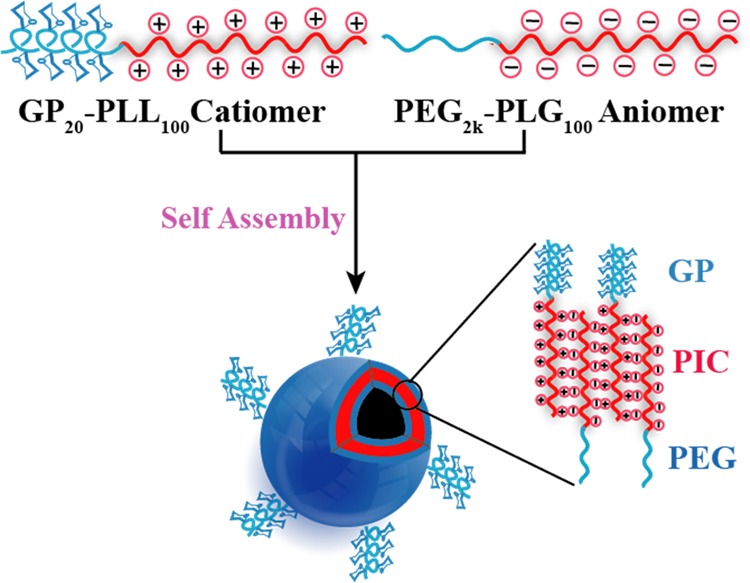
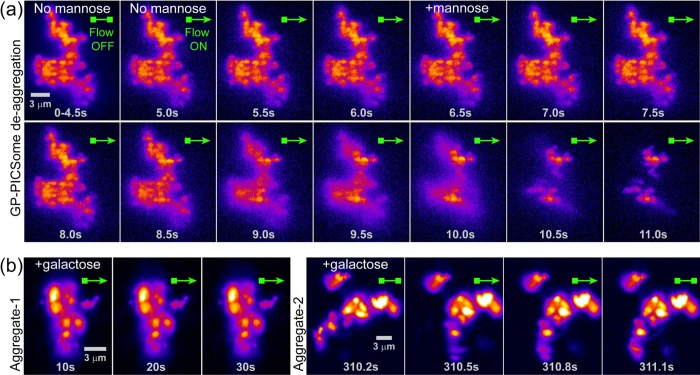
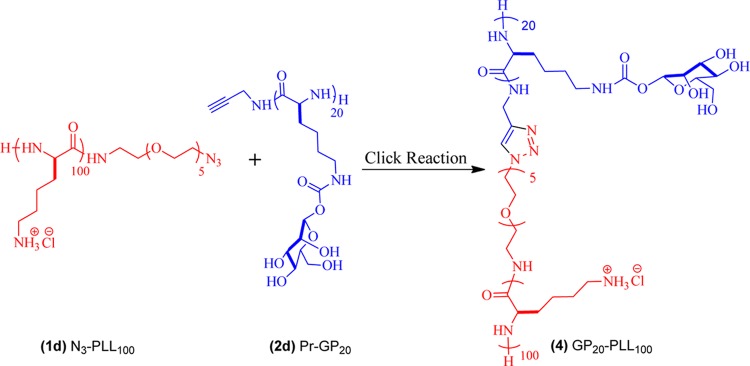
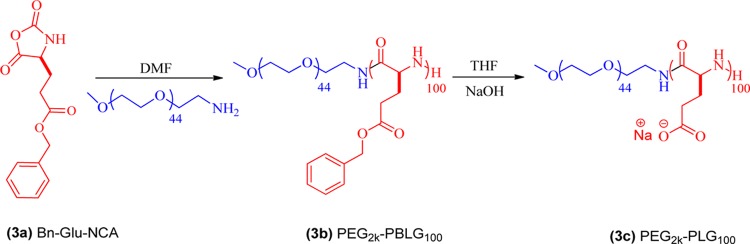
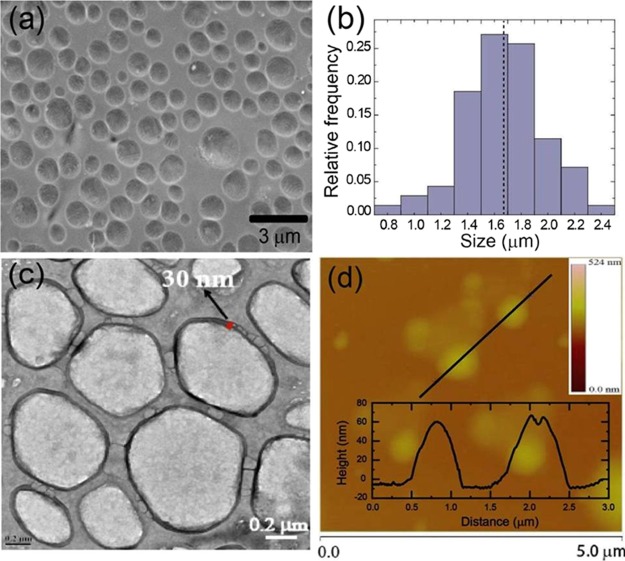
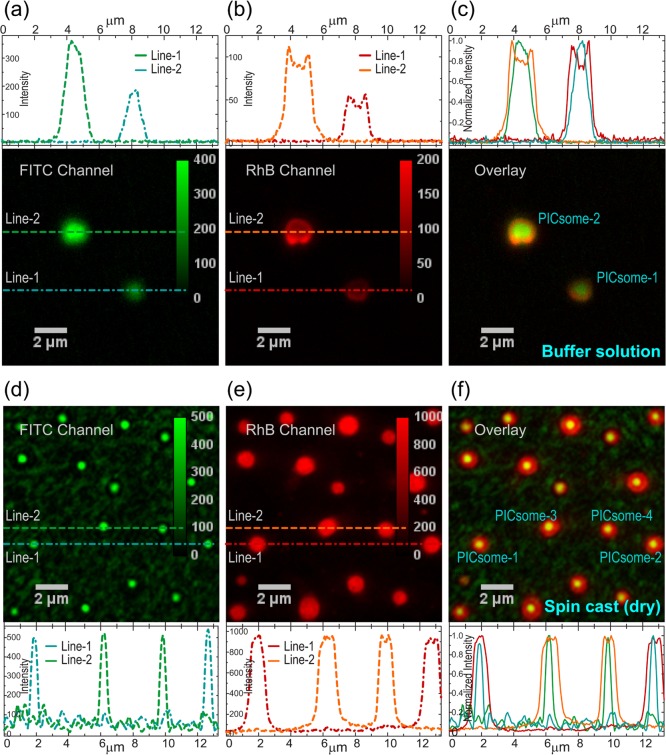
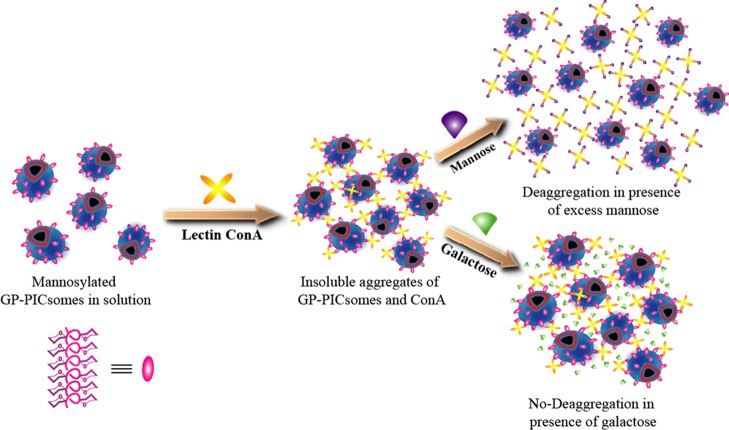
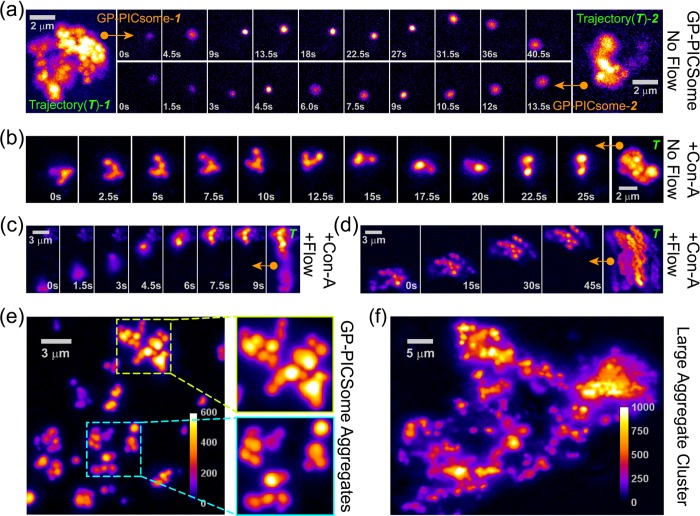
Glycopolypeptide-based self-assembled nano-/microstructures with surface-tethered carbohydrates are excellent mimics of glycoproteins on the cell surface. To expand the broad repertoire of glycopolypeptide-based supramolecular soft structures such as polymersomes formed via self-assembly of amphiphilic polymers, we have developed a new class of polyionic complex vesicles (PICsomes) with glycopolypeptides grafted on the external surface. Oppositely charged hydrophilic block copolymers of glycopolypeptide--poly-l-lysine and PEG--poly-l-glutamate [PEG = poly(ethylene glycol)] were synthesized using a combination of ring-opening polymerization of -carboxyanhydrides and "click" chemistry. Under physiological conditions, the catiomer and aniomer self-assemble to form glycopolypeptide-conjugated PICsomes (GP-PICsomes) of micrometer dimensions. Electron and atomic force microscopy suggests a hollow morphology of the PICsomes, with inner aqueous pool (core) and peripheral PIC (shell) regions. Owing to their relatively large (∼micrometers) size, the hollowness of the supramolecular structure could be established via fluorescence microscopy of single GP-PICsomes, both in solution and under dry conditions, using spatially distributed fluorescent probes. Furthermore, the dynamics of single PICsomes in solution could be imaged in real time, which also allowed us to test for multivalent interactions between PICsomes mediated by a carbohydrate (mannose)-binding protein (lectin, Con-A). The immediate association of several GP-PICsomes in the presence of Con-A and their eventual aggregation to form large insoluble aggregate clusters reveal that upon self-assembly carbohydrate moieties protrude on the outer surface which retains their biochemical activity. Challenge experiments with excess mannose reveal fast deaggregation of GP-PICsomes as opposed to that in the presence of excess galactose, which further establishes the specificity of lectin-mediated polyvalent interactions of the GP-PICsomes.
基于糖多肽的自组装纳米/微结构,其表面连接有碳水化合物,是细胞表面糖蛋白的出色模拟物。为了扩展基于糖多肽的超分子软结构的广泛种类,例如通过两亲聚合物自组装形成的聚合物囊泡,我们开发了一类新型的聚离子复合囊泡(PIC囊泡),其外表面接枝有糖多肽。使用α-羧基酸酐的开环聚合和“点击”化学相结合的方法,合成了带相反电荷的糖多肽-聚-L-赖氨酸和聚乙二醇-聚-L-谷氨酸的亲水嵌段共聚物[PEG =聚(乙二醇)]。在生理条件下,阳离子体和阴离子体自组装形成微米尺寸的糖多肽共轭PIC囊泡(GP-PIC囊泡)。电子显微镜和原子力显微镜表明PIC囊泡具有中空形态,有内部水相池(核心)和外围PIC(壳)区域。由于其相对较大(约微米)的尺寸,可以通过使用空间分布的荧光探针,对溶液中和干燥条件下的单个GP-PIC囊泡进行荧光显微镜观察,来确定超分子结构的中空性。此外,可以实时成像溶液中单个PIC囊泡的动力学,这也使我们能够测试由碳水化合物(甘露糖)结合蛋白(凝集素,伴刀豆球蛋白A)介导的PIC囊泡之间的多价相互作用。在伴刀豆球蛋白A存在下,几个GP-PIC囊泡立即缔合,并最终聚集形成大的不溶性聚集体簇,这表明在自组装时,碳水化合物部分突出在外表面,保留了它们的生化活性。用过量甘露糖进行的挑战实验表明,与存在过量半乳糖时相反,GP-PIC囊泡会快速解聚,这进一步证实了凝集素介导的GP-PIC囊泡多价相互作用的特异性。