Barman Arghya, Hamelberg Donald
Department of Chemistry and Center for Diagnostics and Therapeutics, Georgia State University, P.O. Box 3965, Atlanta, Georgia 30302-3965, United States.
ACS Omega. 2016 Nov 7;1(5):837-842. doi: 10.1021/acsomega.6b00231. eCollection 2016 Nov 30.
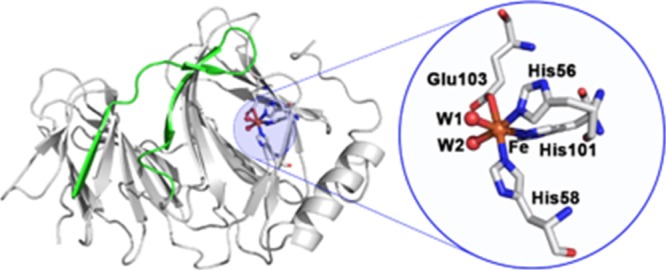
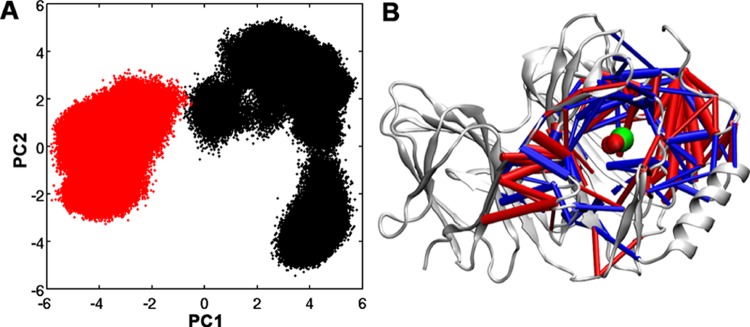
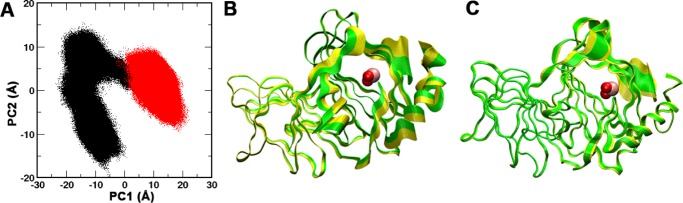
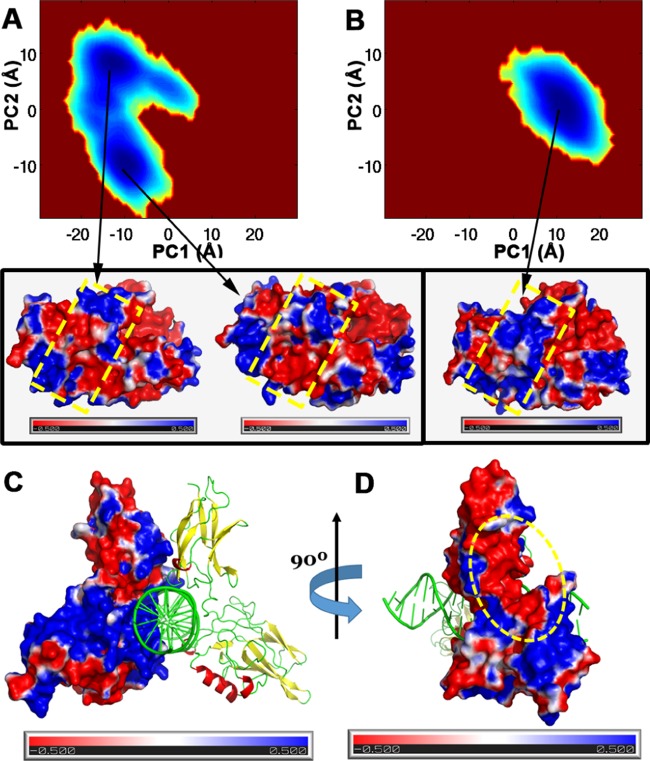
Pirin is an iron (Fe)-dependent regulatory protein of nuclear factor κB (NF-κB) transcription factors. Binding studies have suggested that the oxidative state of iron plays a crucial role in modulating the binding of Pirin to NF-κB p65, in turn enhancing the binding of p65 to DNA. The Fe(III) form of Pirin is the active form and binds to NF-κB, whereas the Fe(II) form does not bind to NF-κB. However, the surprising consequence of a single charge perturbation in the functional modulation of NF-κB is not well understood. Here, we use quantum mechanical calculations and microsecond-long molecular dynamics simulations to explore the free-energy landscapes of the Fe(II) and Fe(III) forms of Pirin. We show that the restricted conformational space and electrostatic complementarity of the Fe(III) form of Pirin are crucial for binding and regulation of NF-κB. Our results suggest that a subtle single-electron redox trigger could significantly modulate the conformational dynamics and electrostatics of proteins in subcellular allosteric regulatory processes.
吡啉是一种核因子κB(NF-κB)转录因子的铁(Fe)依赖性调节蛋白。结合研究表明,铁的氧化状态在调节吡啉与NF-κB p65的结合中起关键作用,进而增强p65与DNA的结合。吡啉的Fe(III)形式是活性形式并与NF-κB结合,而Fe(II)形式不与NF-κB结合。然而,NF-κB功能调节中单个电荷扰动的惊人后果尚未得到很好的理解。在这里,我们使用量子力学计算和微秒级的分子动力学模拟来探索吡啉的Fe(II)和Fe(III)形式的自由能景观。我们表明,吡啉的Fe(III)形式的受限构象空间和静电互补性对于NF-κB的结合和调节至关重要。我们的结果表明,一个微妙的单电子氧化还原触发因素可以在亚细胞变构调节过程中显著调节蛋白质的构象动力学和静电作用。