Department of Medical Oncology, Cancer Research Center Groningen, University Medical Center Groningen, University of Groningen, Hanzeplein 1, 9713GZ Groningen, the Netherlands.
Program in Systems Biology and Program in Molecular Medicine, University of Massachusetts Medical School, Worcester, MA 01605, USA.
Cell Rep. 2019 Aug 27;28(9):2345-2357.e5. doi: 10.1016/j.celrep.2019.07.070.
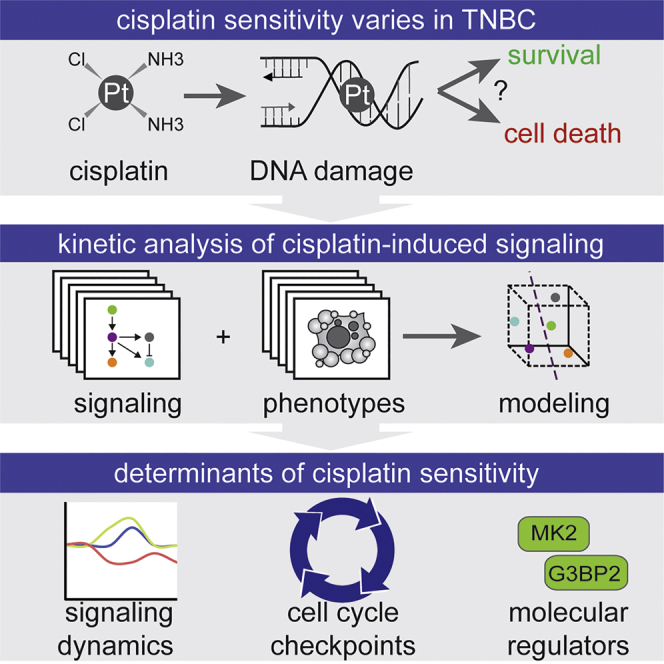
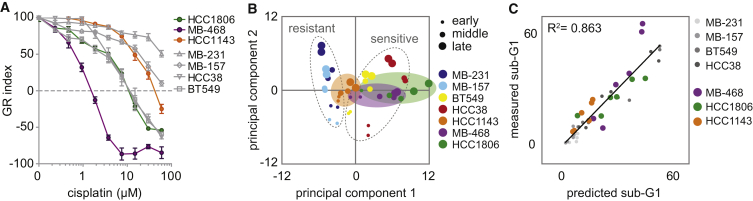
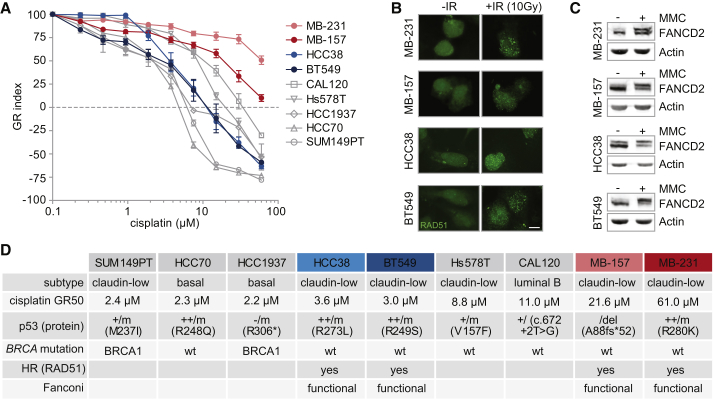
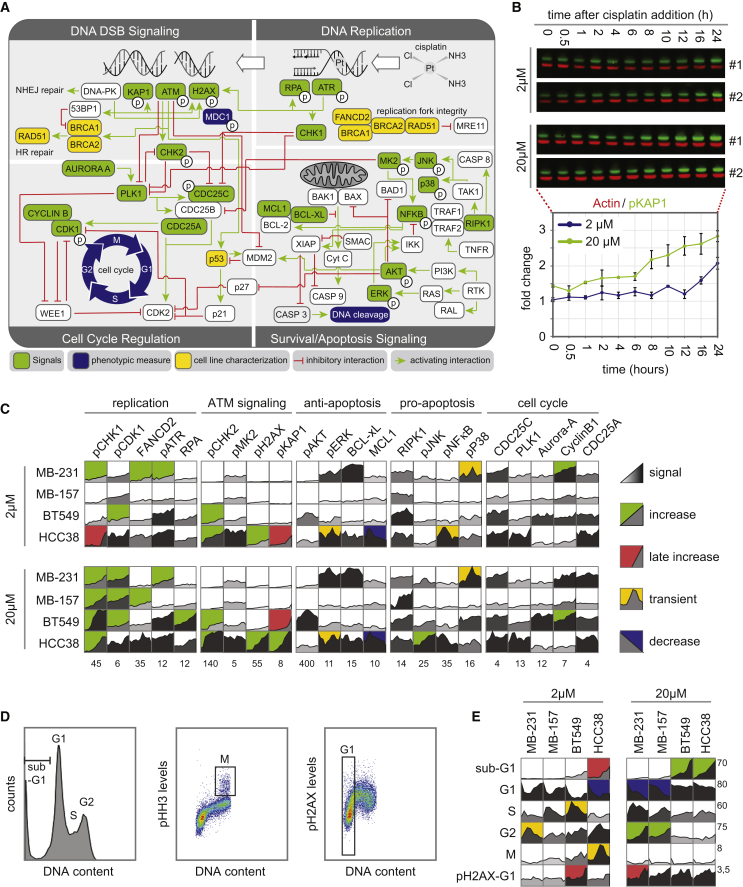
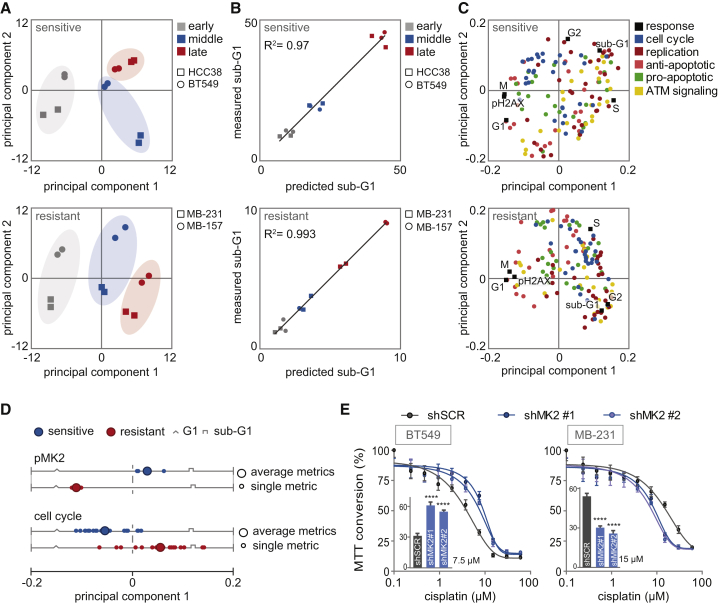
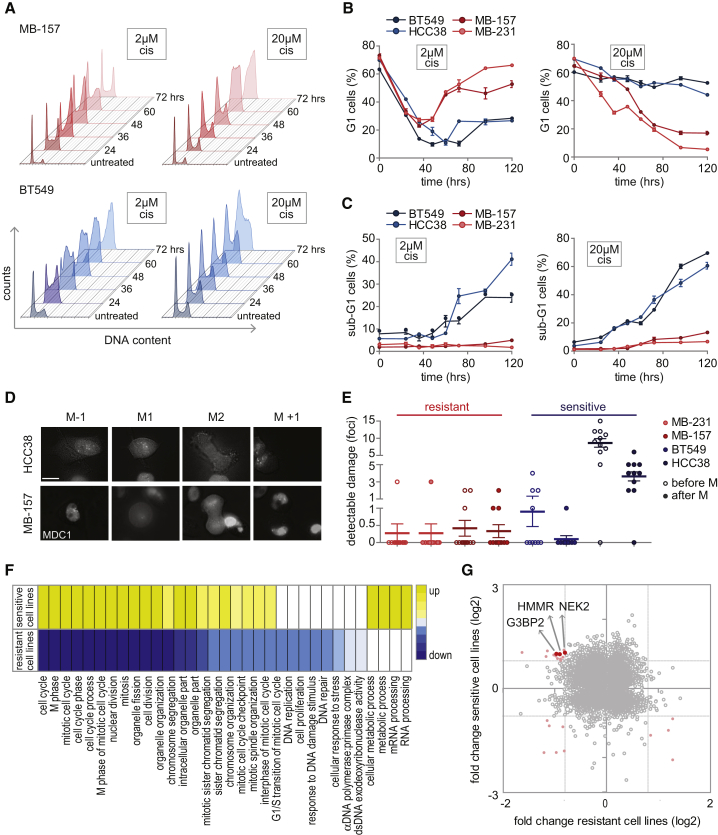
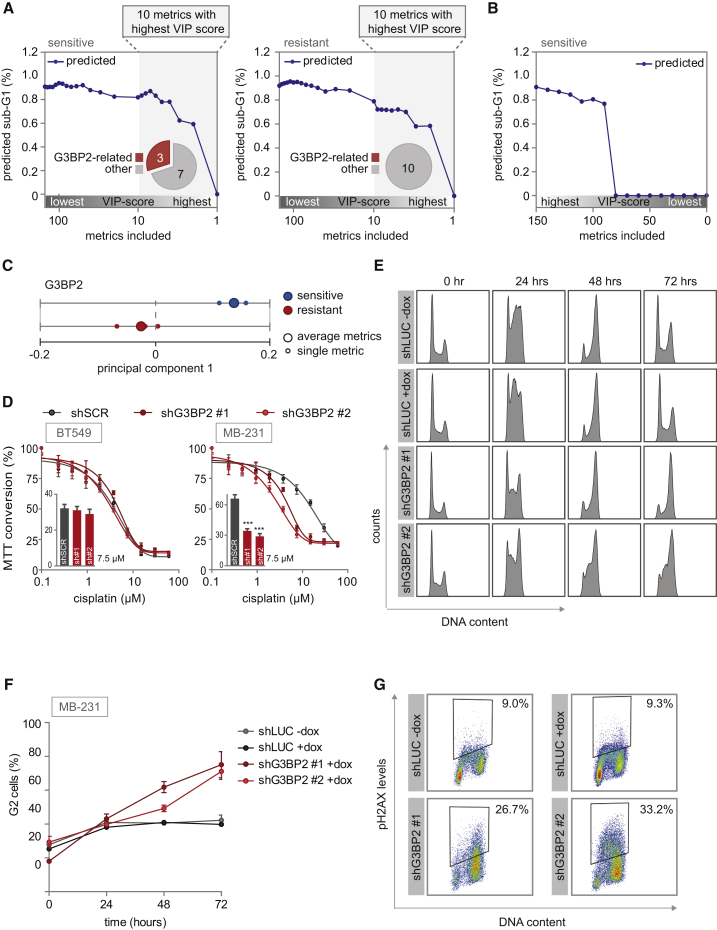
Triple-negative breast cancers (TNBCs) display great diversity in cisplatin sensitivity that cannot be explained solely by cancer-associated DNA repair defects. Differential activation of the DNA damage response (DDR) to cisplatin has been proposed to underlie the observed differential sensitivity, but it has not been investigated systematically. Systems-level analysis-using quantitative time-resolved signaling data and phenotypic responses, in combination with mathematical modeling-identifies that the activation status of cell-cycle checkpoints determines cisplatin sensitivity in TNBC cell lines. Specifically, inactivation of the cell-cycle checkpoint regulator MK2 or G3BP2 sensitizes cisplatin-resistant TNBC cell lines to cisplatin. Dynamic signaling data of five cell cycle-related signals predicts cisplatin sensitivity of TNBC cell lines. We provide a time-resolved map of cisplatin-induced signaling that uncovers determinants of chemo-sensitivity, underscores the impact of cell-cycle checkpoints on cisplatin sensitivity, and offers starting points to optimize treatment efficacy.
三阴性乳腺癌 (TNBCs) 对顺铂的敏感性存在很大差异,仅用与癌症相关的 DNA 修复缺陷无法解释。据推测,顺铂引起的 DNA 损伤反应 (DDR) 的差异激活是导致观察到的差异敏感性的基础,但尚未进行系统研究。使用定量时间分辨信号数据和表型反应的系统级分析,并结合数学建模,确定细胞周期检查点的激活状态决定了 TNBC 细胞系对顺铂的敏感性。具体来说,细胞周期检查点调节剂 MK2 或 G3BP2 的失活使顺铂耐药的 TNBC 细胞系对顺铂敏感。五种细胞周期相关信号的动态信号数据预测了 TNBC 细胞系对顺铂的敏感性。我们提供了顺铂诱导的信号的时间分辨图谱,揭示了化疗敏感性的决定因素,强调了细胞周期检查点对顺铂敏感性的影响,并为优化治疗效果提供了起点。