Department of Pediatrics/Rady Children's Hospital San Diego, School of Medicine, University of California, San Diego, La Jolla, CA 92093, USA; Department of Cellular & Molecular Medicine, School of Medicine, University of California, San Diego, La Jolla, CA 92093, USA.
Neurosciences Graduate Program, Institute for Neural Computation, Department of Cognitive Science, University of California, San Diego, La Jolla, CA 92093, USA.
Cell Stem Cell. 2019 Oct 3;25(4):558-569.e7. doi: 10.1016/j.stem.2019.08.002. Epub 2019 Aug 29.
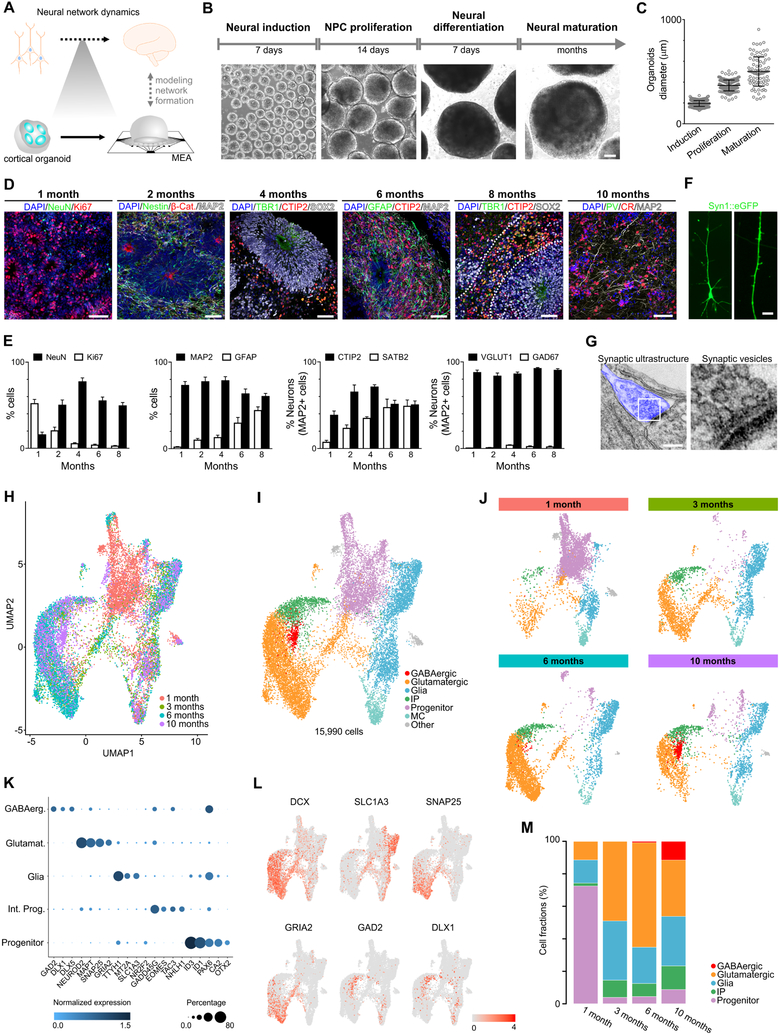
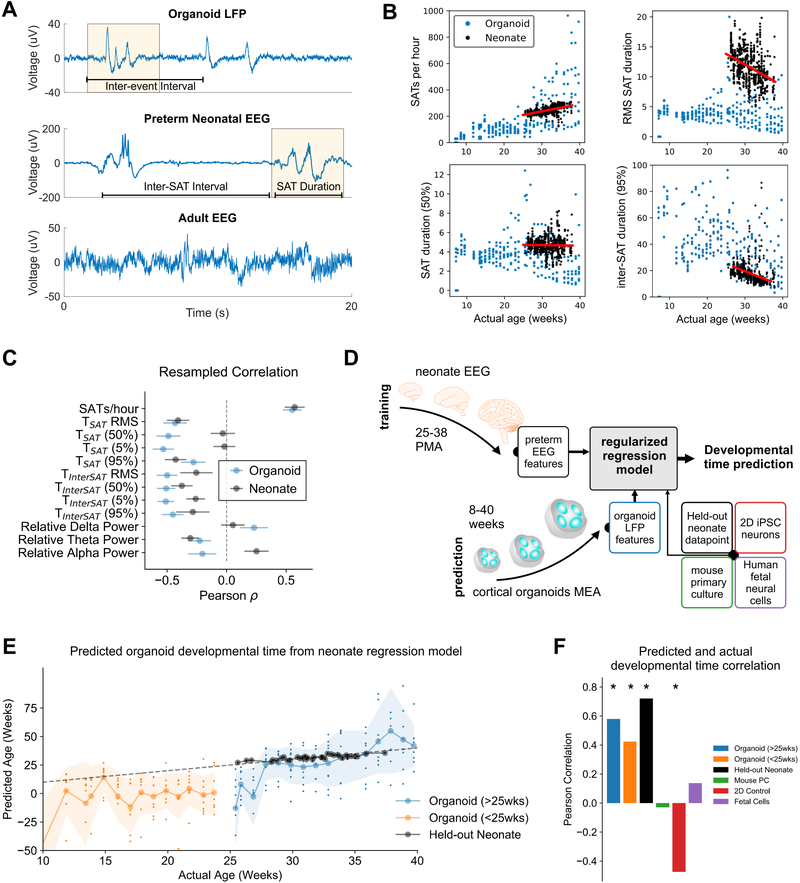
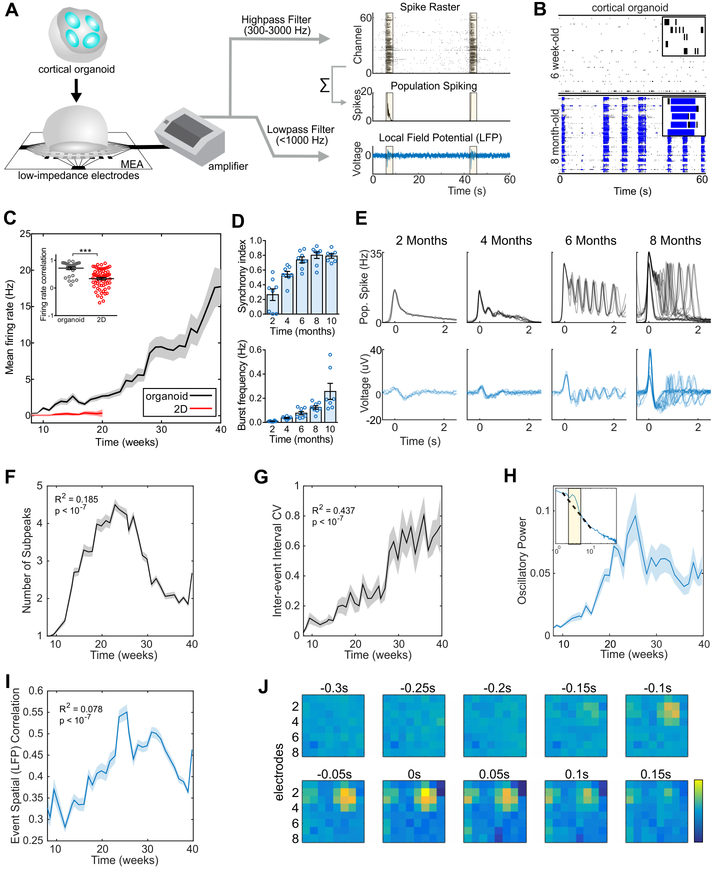
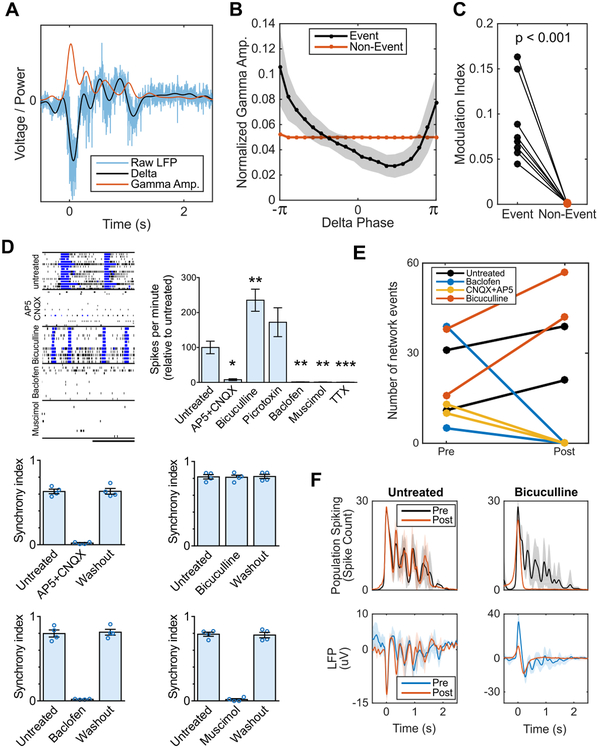
Structural and transcriptional changes during early brain maturation follow fixed developmental programs defined by genetics. However, whether this is true for functional network activity remains unknown, primarily due to experimental inaccessibility of the initial stages of the living human brain. Here, we developed human cortical organoids that dynamically change cellular populations during maturation and exhibited consistent increases in electrical activity over the span of several months. The spontaneous network formation displayed periodic and regular oscillatory events that were dependent on glutamatergic and GABAergic signaling. The oscillatory activity transitioned to more spatiotemporally irregular patterns, and synchronous network events resembled features similar to those observed in preterm human electroencephalography. These results show that the development of structured network activity in a human neocortex model may follow stable genetic programming. Our approach provides opportunities for investigating and manipulating the role of network activity in the developing human cortex.
在早期大脑成熟过程中,结构和转录变化遵循由遗传定义的固定发育程序。然而,功能网络活动是否也是如此尚不清楚,主要是因为活体人脑初始阶段的实验难以实现。在这里,我们开发了人类皮质类器官,在成熟过程中其细胞群体动态变化,并在几个月的时间内表现出一致的电活动增加。自发的网络形成显示出周期性和规则的振荡事件,这些事件依赖于谷氨酸能和 GABA 能信号。振荡活动转变为更时空不规则的模式,同步网络事件类似于在早产儿人类脑电图中观察到的特征。这些结果表明,人类新皮层模型中结构网络活动的发展可能遵循稳定的遗传编程。我们的方法为研究和操纵网络活动在发育中人类皮层中的作用提供了机会。