Department of Neuroscience, College of Medicine, University of Florida, Gainesville, FL, 32610, USA.
Center for Translational Research in Neurodegenerative Disease, College of Medicine, University of Florida, Gainesville, FL, 32610, USA.
Acta Neuropathol Commun. 2019 Sep 2;7(1):142. doi: 10.1186/s40478-019-0787-2.
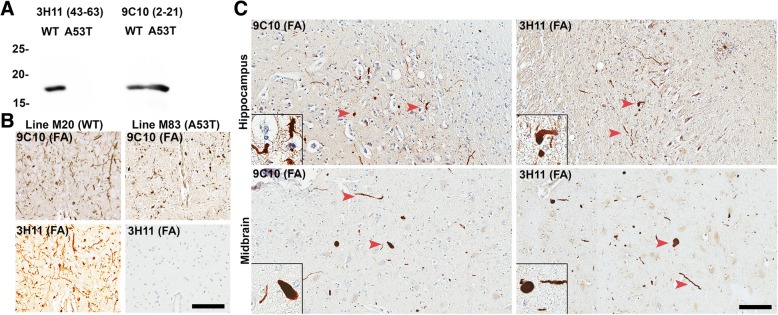
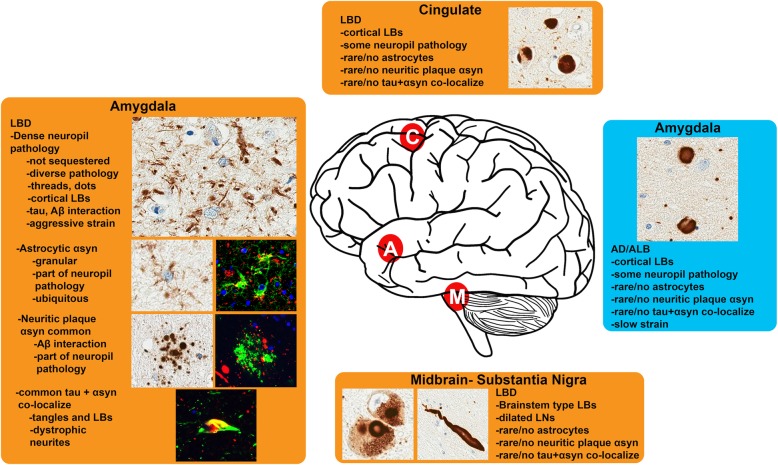
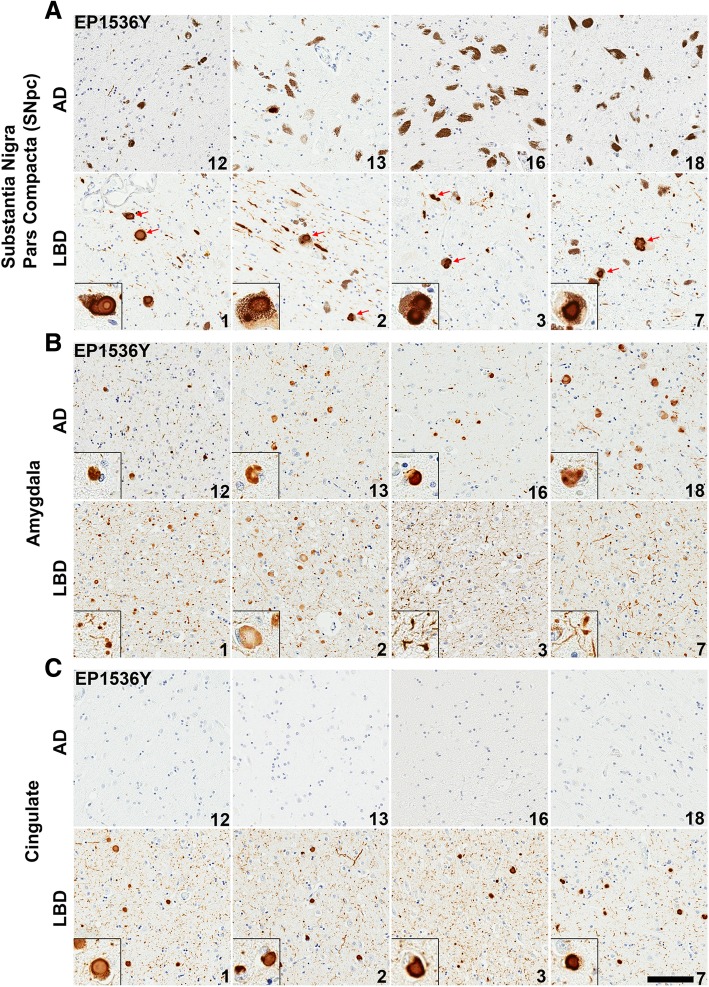
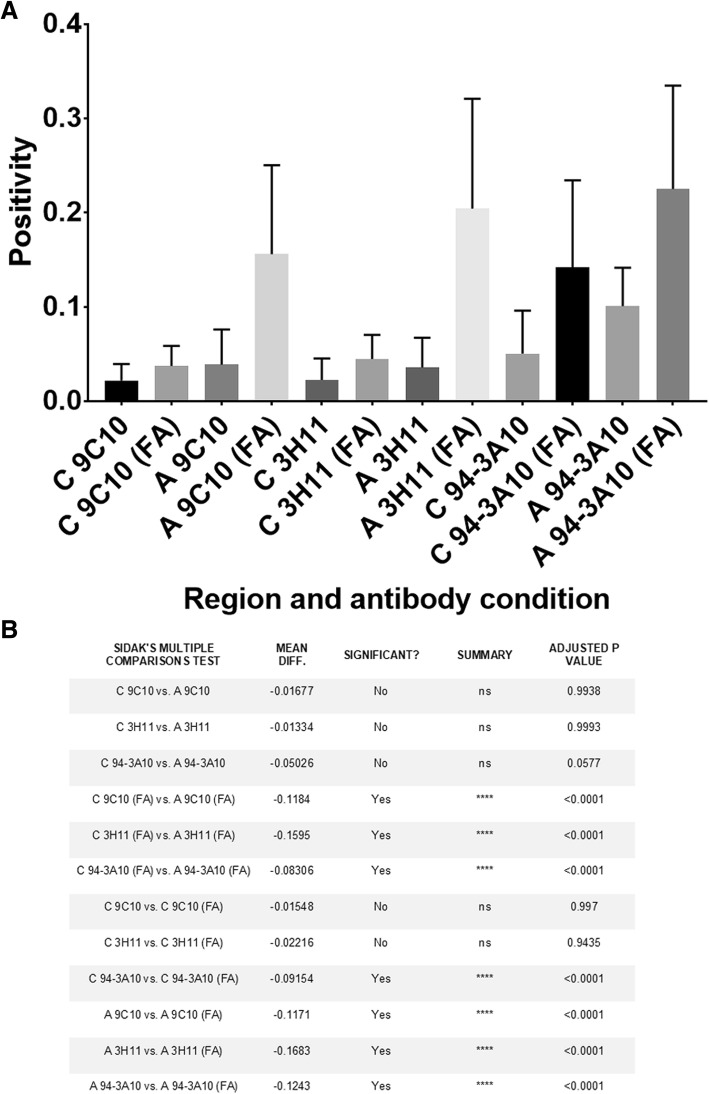
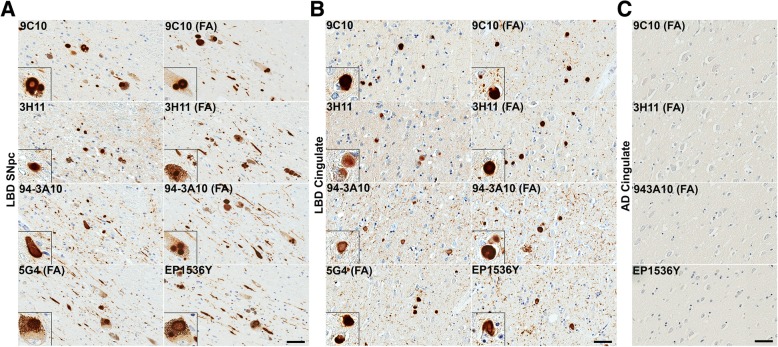
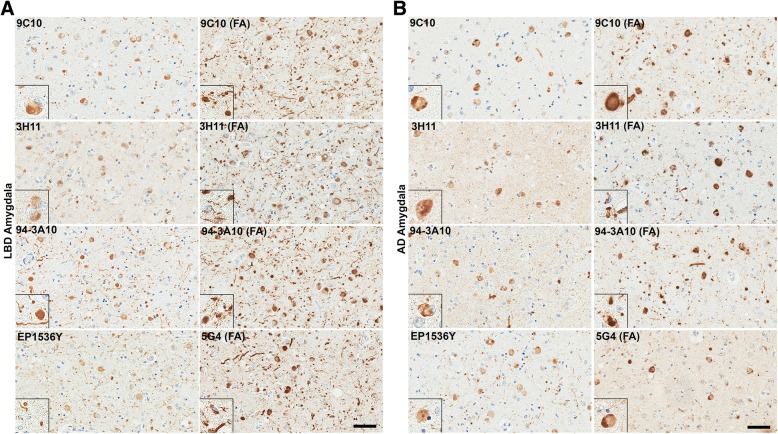
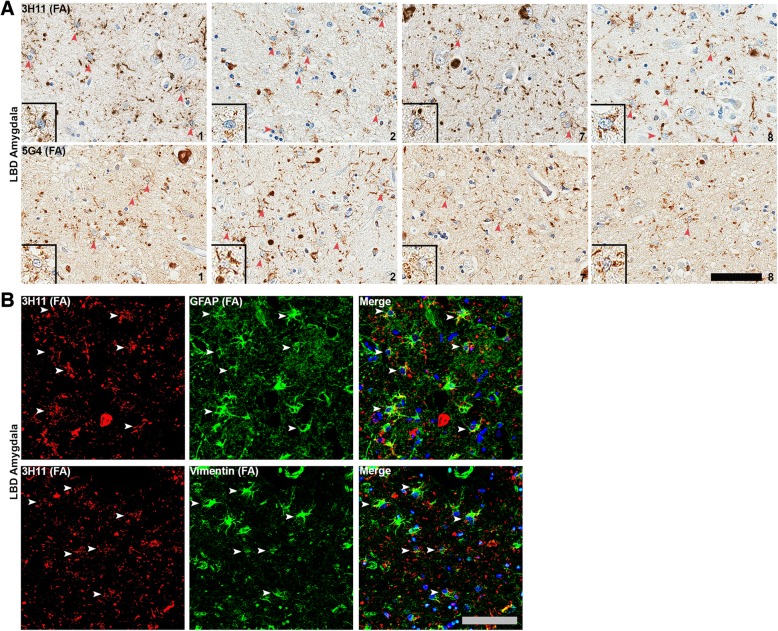
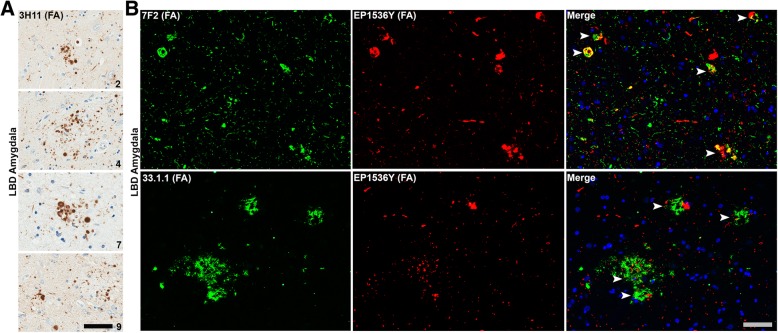
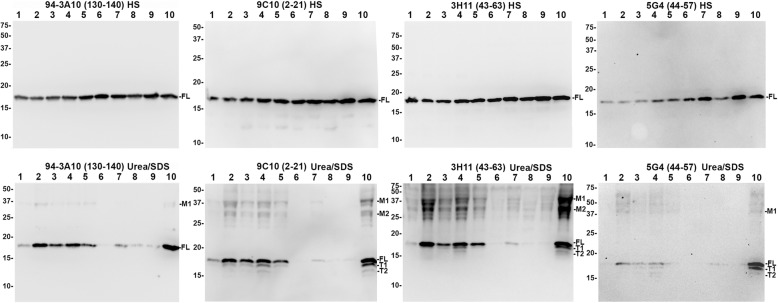
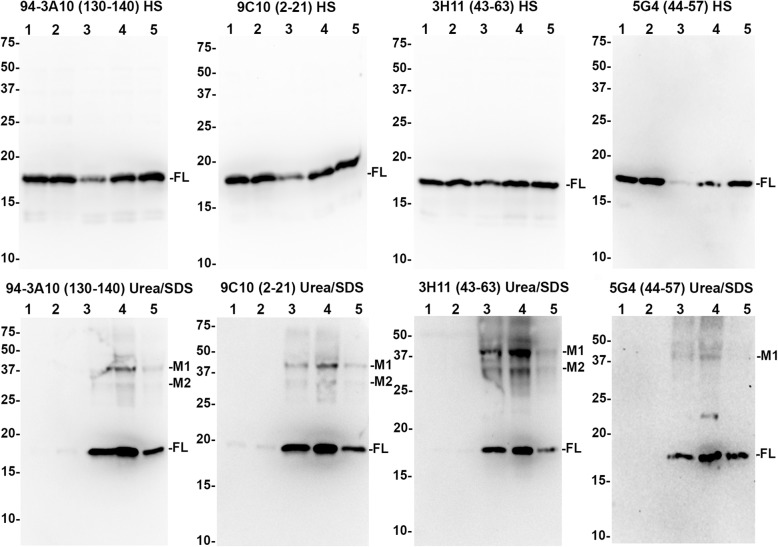
The protein α-synuclein (αsyn) forms pathologic aggregates in a number of neurodegenerative diseases including Lewy body dementia (LBD) and Parkinson's disease (PD). It is unclear why diseases such as LBD may develop widespread αsyn pathology, while in Alzheimer's disease with amygdala restricted Lewy bodies (AD/ALB) the αsyn aggregates remain localized. The amygdala contains αsyn aggregates in both LBD and in AD/ALB; to understand why αsyn pathology continues to progress in LBD but not in AD/ALB, tissue from the amygdala and other regions were obtained from 14 cases of LBD, 9 cases of AD/ALB, and 4 controls for immunohistochemical and biochemical characterization. Utilizing a panel of previously characterized αsyn antibodies, numerous unique pathologies differentiating LBD and AD/ALB were revealed; particularly the presence of dense neuropil αsyn aggregates, astrocytic αsyn, and αsyn-containing dystrophic neurites within senile plaques. Within LBD, these unique pathologies were predominantly present within the amygdala. Biochemically, the amygdala in LBD prominently contained specific carboxy-truncated forms of αsyn which are highly prone to aggregate, suggesting that the amygdala may be prone to initiate development of αsyn pathology. Similar to carboxy-truncated αsyn, it was demonstrated herein that the presence of aggregation prone A53T αsyn is sufficient to drive misfolding of wild-type αsyn in human disease. Overall, this study identifies within the amygdala in LBD the presence of unique strain-like variation in αsyn pathology that may be a determinant of disease progression.
蛋白 α-突触核蛋白(αsyn)在包括路易体痴呆症(LBD)和帕金森病(PD)在内的许多神经退行性疾病中形成病理性聚集体。目前尚不清楚为什么像 LBD 这样的疾病可能会出现广泛的 αsyn 病理学,而在阿尔茨海默病伴杏仁核局限型路易体(AD/ALB)中,αsyn 聚集体仍然局限于局部。LBD 和 AD/ALB 中均存在杏仁核 αsyn 聚集体;为了了解为什么 LBD 中的 αsyn 病理学继续进展而 AD/ALB 中没有,从 14 例 LBD、9 例 AD/ALB 和 4 例对照中获取杏仁核和其他区域的组织,进行免疫组织化学和生化特征分析。利用一组先前表征的 αsyn 抗体,揭示了区分 LBD 和 AD/ALB 的许多独特病理学;特别是存在密集的神经突 αsyn 聚集体、星形胶质细胞 αsyn 和含有 αsyn 的神经原纤维缠结内的老年斑。在 LBD 中,这些独特的病理学主要存在于杏仁核内。从生物化学角度来看,LBD 的杏仁核中明显含有易聚集的特定羧基截断形式的 αsyn,这表明杏仁核可能容易引发 αsyn 病理学的发展。与羧基截断的 αsyn 相似,本文证明在 LBD 中存在易于聚集的 A53T αsyn 足以驱动人类疾病中野生型 αsyn 的错误折叠。总的来说,这项研究在 LBD 的杏仁核中确定了 αsyn 病理学中存在独特的菌株样变异,这可能是疾病进展的决定因素。