IEEE Trans Med Imaging. 2020 Apr;39(4):964-974. doi: 10.1109/TMI.2019.2938411. Epub 2019 Aug 29.
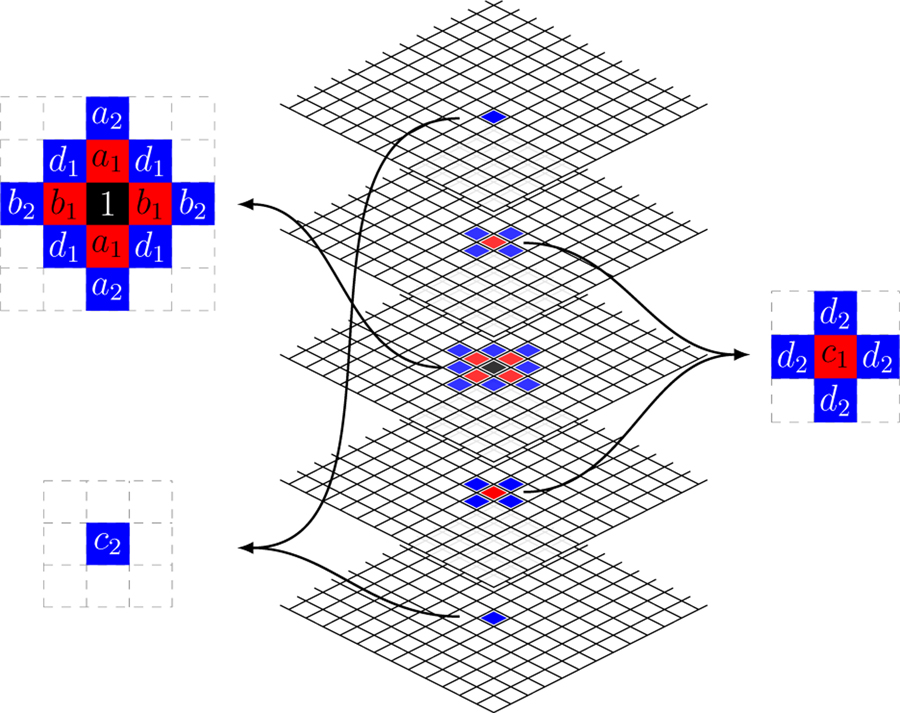
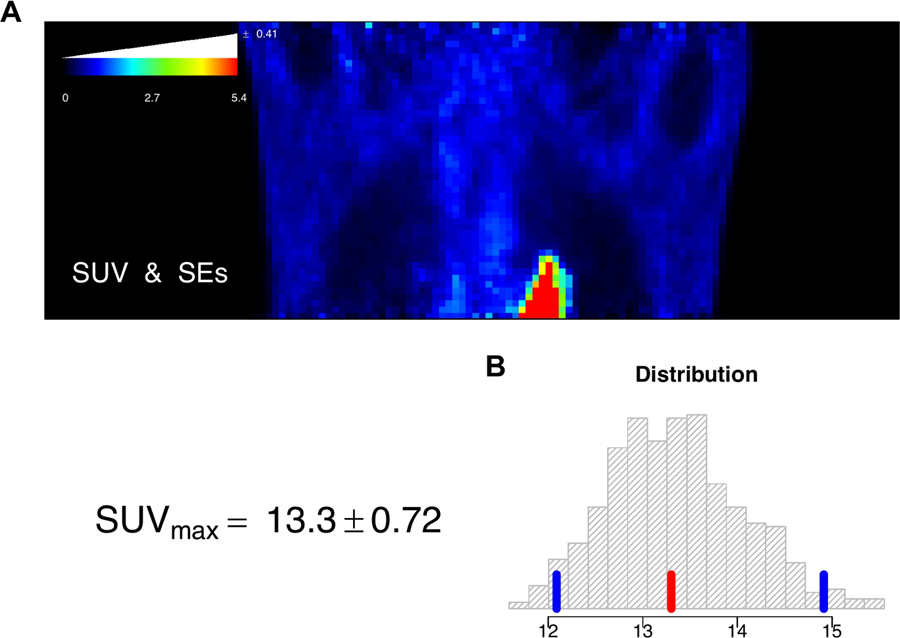
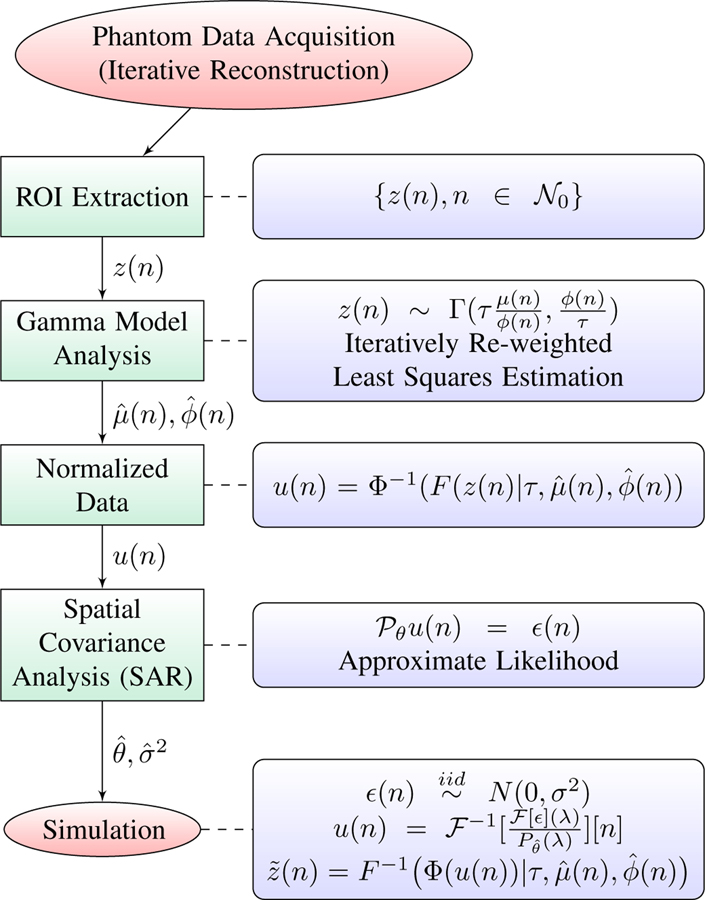
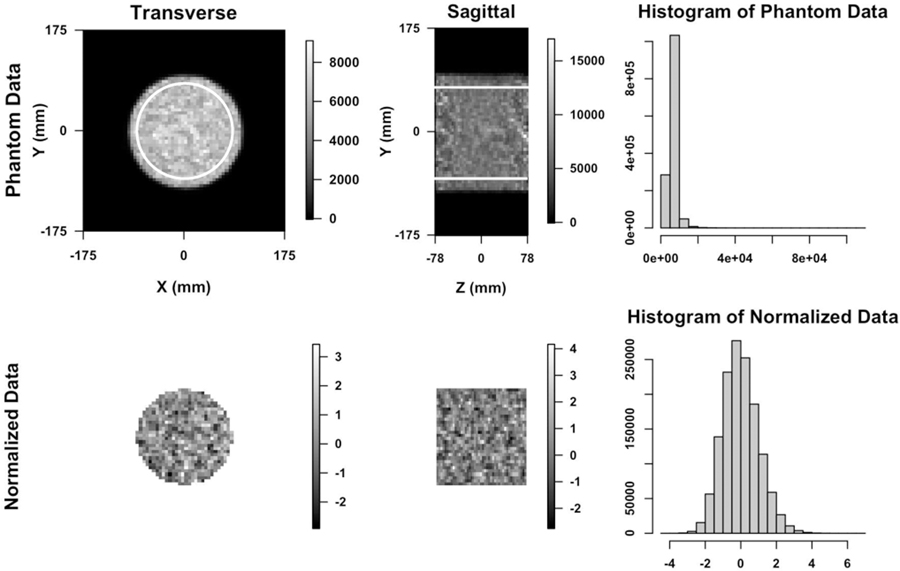
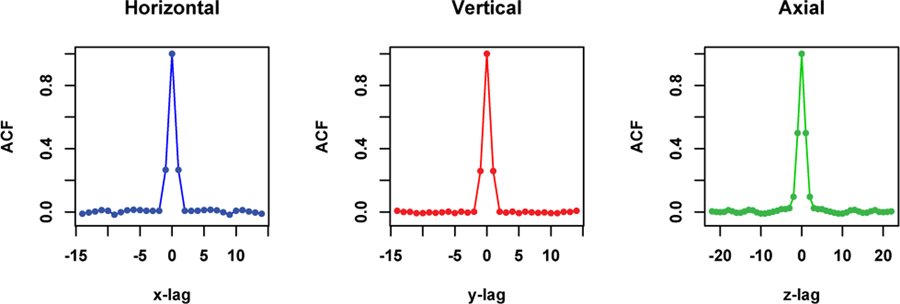
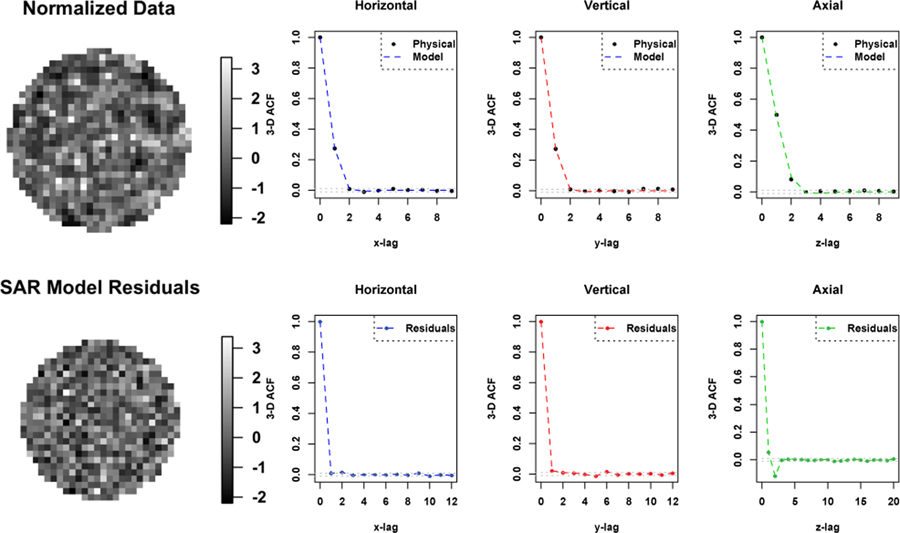
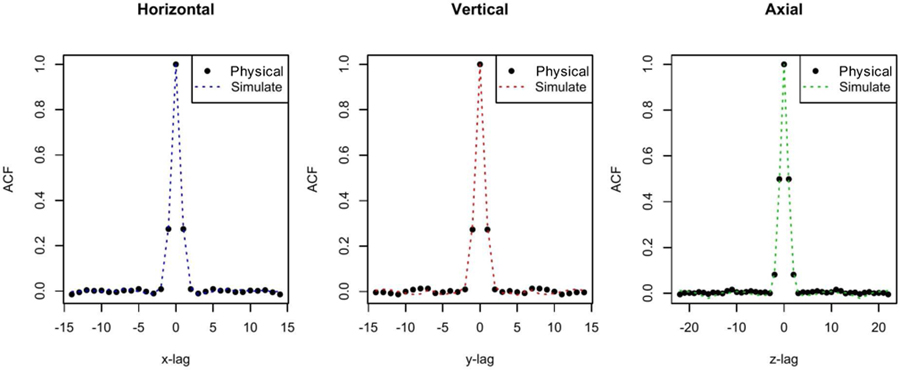
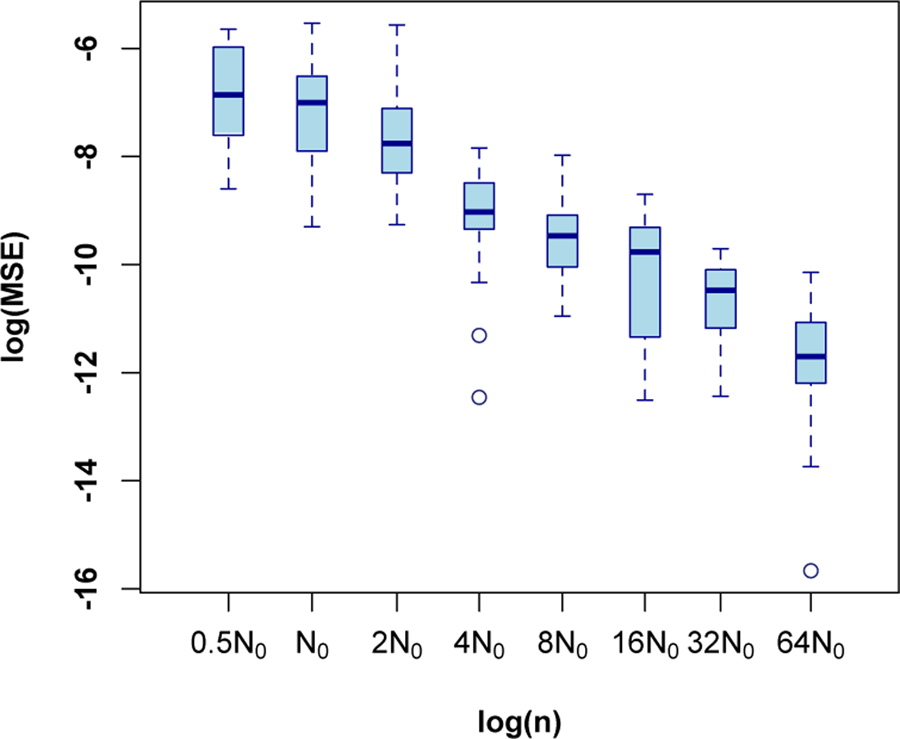
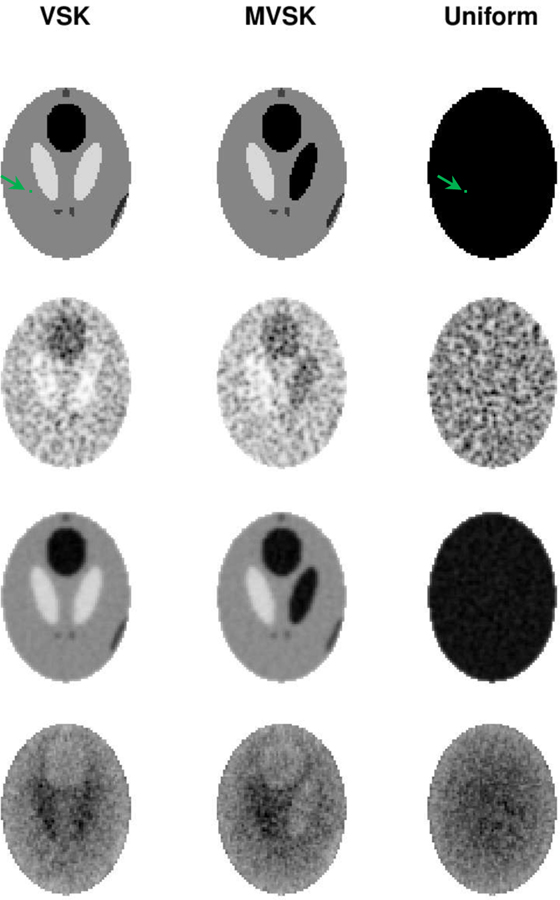
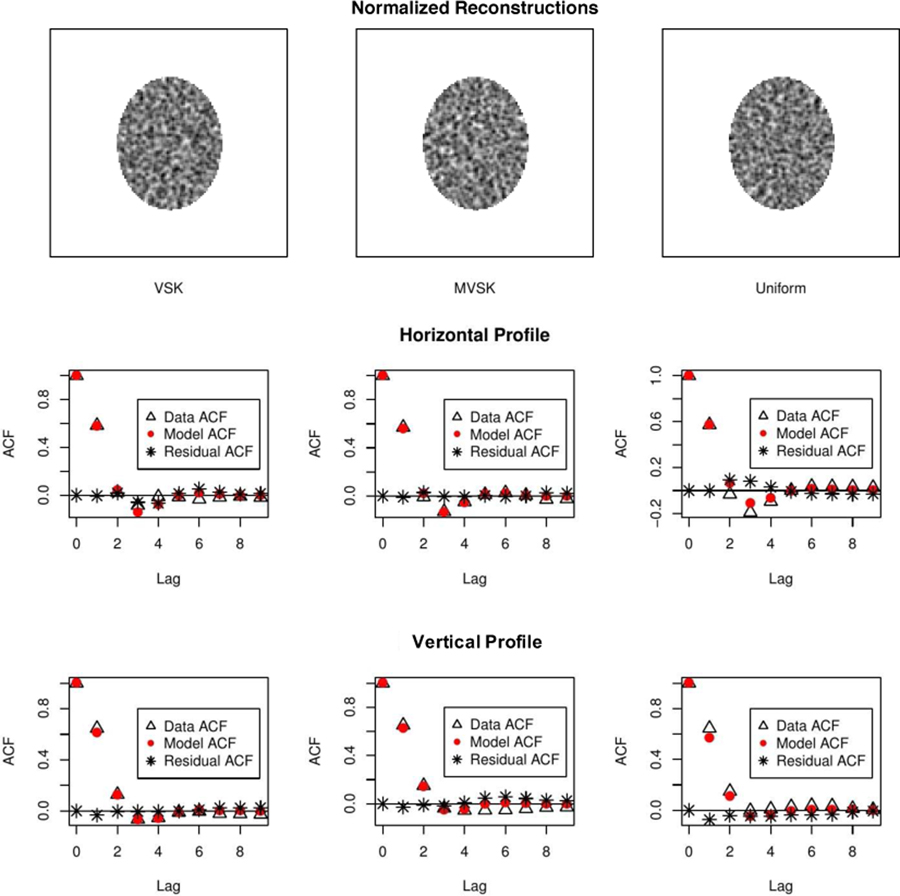
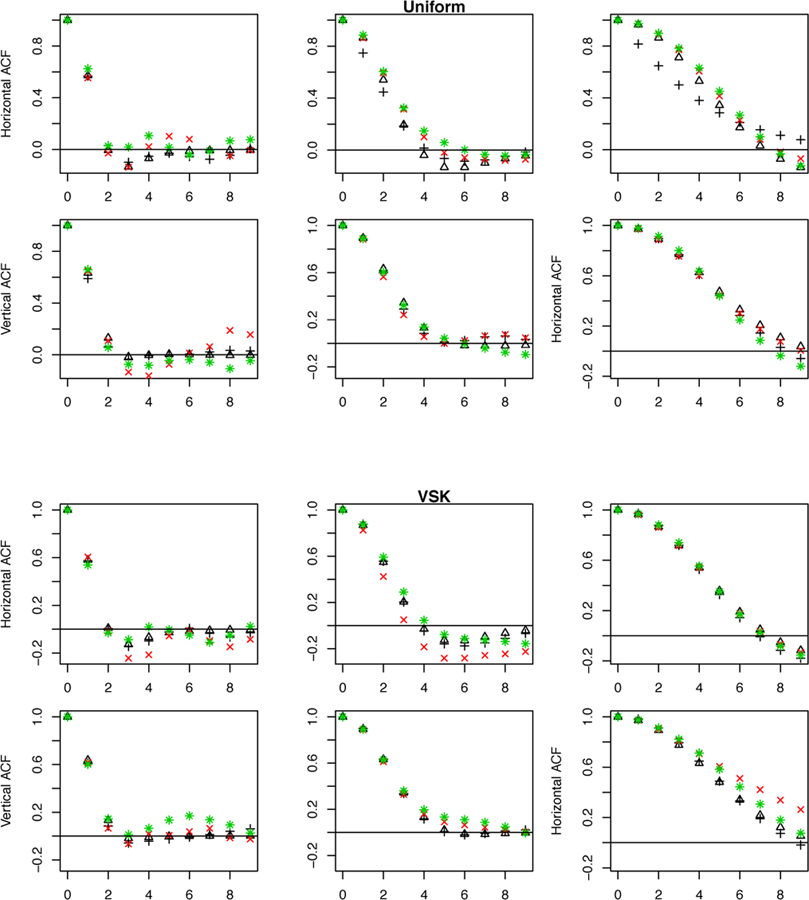
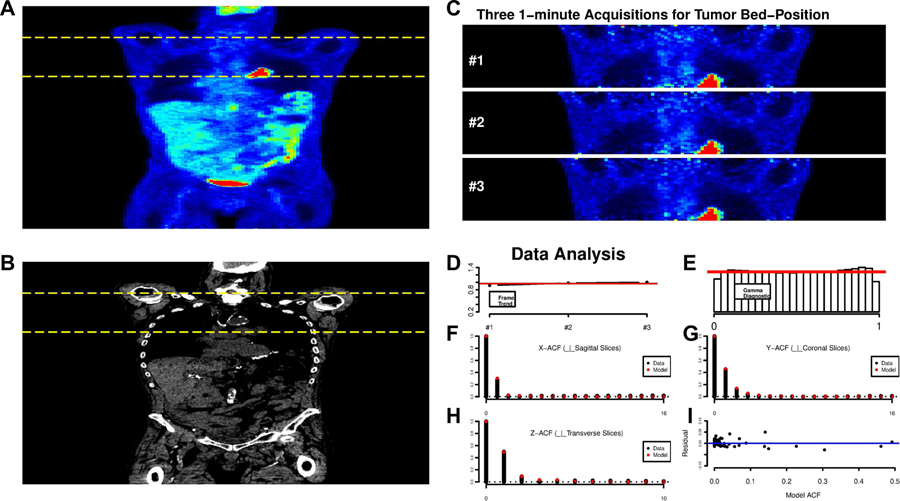
When a scanner is installed and begins to be used operationally, its actual performance may deviate somewhat from the predictions made at the design stage. Thus it is recommended that routine quality assurance (QA) measurements be used to provide an operational understanding of scanning properties. While QA data are primarily used to evaluate sensitivity and bias patterns, there is a possibility to also make use of such data sets for a more refined understanding of the 3-D scanning properties. Building on some recent work on analysis of the distributional characteristics of iteratively reconstructed PET data, we construct an auto-regression model for analysis of the 3-D spatial auto-covariance structure of iteratively reconstructed data, after normalization. Appropriate likelihood-based statistical techniques for estimation of the auto-regression model coefficients are described. The fitted model leads to a simple process for approximate simulation of scanner performance-one that is readily implemented in an R script. The analysis provides a practical mechanism for evaluating the operational error characteristics of iteratively reconstructed PET images. Simulation studies are used for validation. The approach is illustrated on QA data from an operational clinical scanner and numerical phantom data. We also demonstrate the potential for use of these techniques, as a form of model-based bootstrapping, to provide assessments of measurement uncertainties in variables derived from clinical FDG-PET scans. This is illustrated using data from a clinical scan in a lung cancer patient, after a 3-minute acquisition has been re-binned into three consecutive 1-minute time-frames. An uncertainty measure for the tumor SUV value is obtained. The methodology is seen to be practical and could be a useful support for quantitative decision making based on PET data.
当扫描仪安装并开始投入运行时,其实际性能可能会与设计阶段的预测有些偏差。因此,建议使用常规质量保证 (QA) 测量来提供对扫描特性的操作理解。虽然 QA 数据主要用于评估灵敏度和偏差模式,但也有可能利用这些数据集更精细地了解 3-D 扫描特性。在对迭代重建 PET 数据分布特征进行分析的一些最新工作的基础上,我们构建了一个自回归模型,用于分析归一化后迭代重建数据的 3-D 空间自协方差结构。描述了用于估计自回归模型系数的适当似然统计技术。拟合模型为近似模拟扫描仪性能提供了一种简单的方法——一种可以在 R 脚本中轻松实现的方法。该分析提供了一种实用的机制,用于评估迭代重建 PET 图像的操作误差特性。模拟研究用于验证。该方法通过临床操作扫描仪的 QA 数据和数值体模数据来说明。我们还展示了这些技术的潜在用途,作为一种基于模型的自举形式,为从临床 FDG-PET 扫描中提取的变量提供测量不确定性的评估。这是使用肺癌患者的临床扫描数据来说明的,在将 3 分钟的采集重新分为三个连续的 1 分钟时间帧后。获得了肿瘤 SUV 值的不确定性度量。该方法被认为是实用的,并且可以为基于 PET 数据的定量决策提供有用的支持。