Paniel Nathalie, Noguer Thierry
Laboratoire BAE, Université de Perpignan Via Domitia, 52 Avenue Paul Alduy, 66860 Perpignan, France.
Unité EMaiRIT'S, Centre Technique de la Conservation des Produits Agricoles (CTCPA), Site Agroparc, 449 Avenue Clément Ader, BP21203, 84911 Avignon, France.
Foods. 2019 Sep 1;8(9):371. doi: 10.3390/foods8090371.
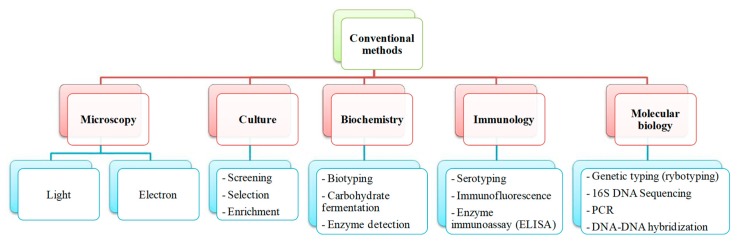
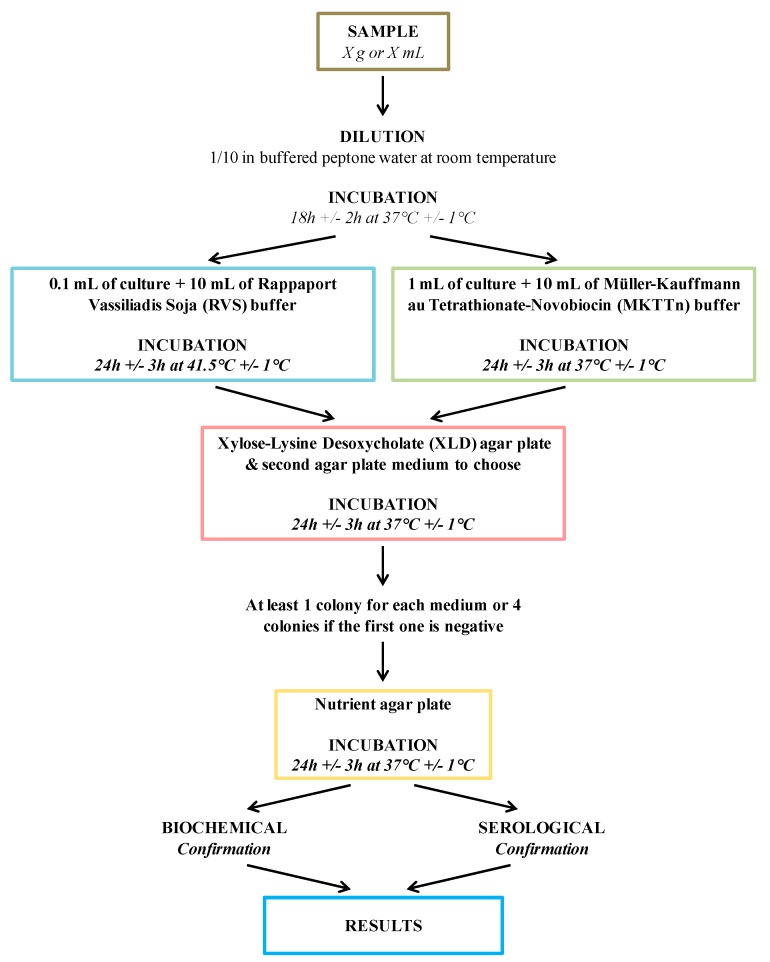
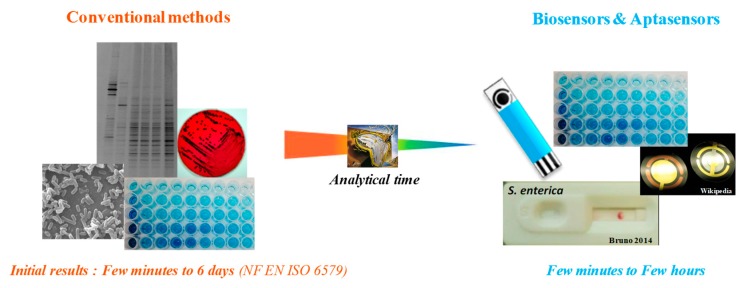
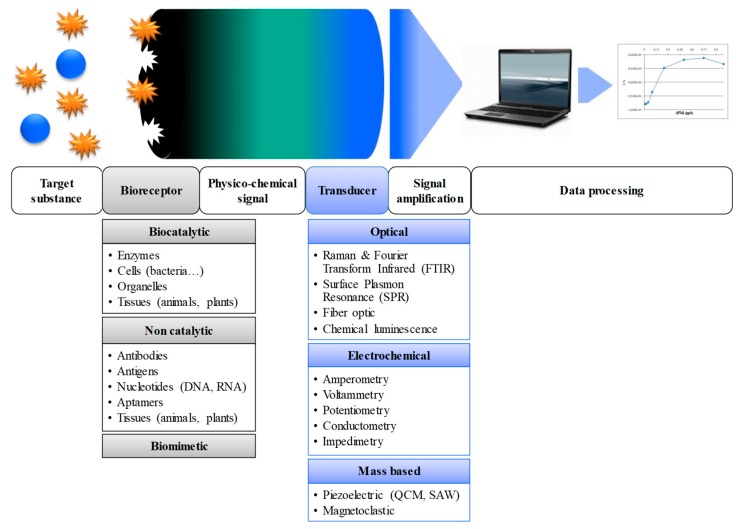
Rapid detection of the foodborne pathogen in food processing is of crucial importance to prevent food outbreaks and to ensure consumer safety. Detection and quantification of species in food samples is routinely performed using conventional culture-based techniques, which are labor intensive, involve well-trained personnel, and are unsuitable for on-site and high-throughput analysis. To overcome these drawbacks, many research teams have developed alternative methods like biosensors, and more particularly aptasensors, were a nucleic acid is used as biorecognition element. The increasing interest in these devices is related to their high specificity, convenience, and relative rapid response. This review aims to present the advances made in these last years in the development of biosensors for the detection and the quantification of , highlighting applications on meat from the chicken food chain.
在食品加工过程中快速检测食源性病原体对于预防食源性疾病爆发和确保消费者安全至关重要。食品样本中病原体的检测和定量通常使用传统的基于培养的技术,这些技术劳动强度大,需要训练有素的人员,并且不适用于现场和高通量分析。为了克服这些缺点,许多研究团队开发了替代方法,如生物传感器,尤其是适体传感器,其中核酸被用作生物识别元件。对这些设备的兴趣日益增加与其高特异性、便利性和相对快速的响应有关。本综述旨在介绍近年来在用于检测和定量病原体的生物传感器开发方面取得的进展,重点介绍在鸡肉食品链肉类上的应用。