First Department of Pathology, Medical School, National and Kapodistrian University of Athens, 11527 Athens, Greece.
Dis Markers. 2019 Aug 14;2019:9417914. doi: 10.1155/2019/9417914. eCollection 2019.
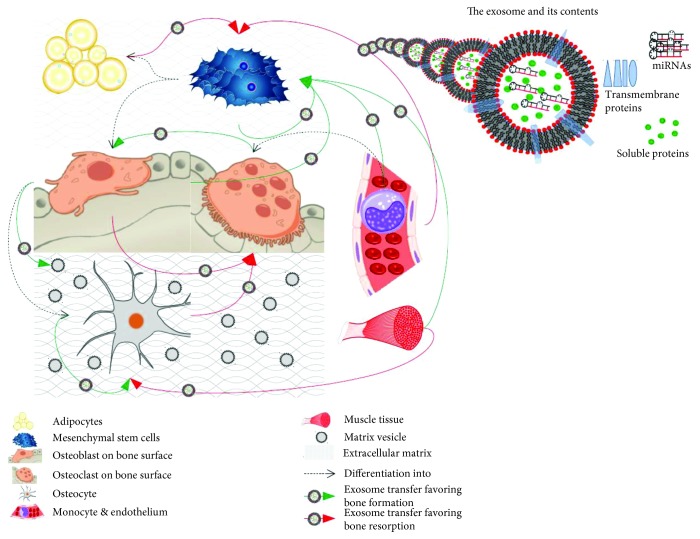
Bone remodeling represents a physiological phenomenon of continuous bone tissue renewal that requires fine orchestration of multiple cell types, which is critical for the understanding of bone disease but not yet clarified in precise detail. Exosomes, which are cell-secreted nanovesicles drawing increasing attention for their broad biosignaling functions, can shed new light on how multiple heterogeneous cells communicate for the purpose of bone remodeling. In the healthy bone, exosomes transmit signals favoring both bone synthesis and resorption, regulating the differentiation, recruitment, and activity of most cell types involved in bone remodeling and even assuming an active role in extracellular matrix mineralization. Additionally, in the ailing bone, they actively participate in pathogenic processes constituting also potential therapeutic agents and drug vectors. The present review summarizes the current knowledge on bone exosomes and bone remodeling in health and disease.
骨重建代表了一种持续更新骨组织的生理现象,需要多种细胞类型的精细协调,这对于理解骨疾病至关重要,但目前还没有得到精确阐明。外泌体是细胞分泌的纳米囊泡,由于其广泛的生物信号功能而引起越来越多的关注,它可以揭示多种异质细胞如何为了骨重建而进行通信。在健康的骨骼中,外泌体传递有利于骨合成和吸收的信号,调节参与骨重建的大多数细胞类型的分化、募集和活性,甚至在细胞外基质矿化中发挥积极作用。此外,在患病的骨骼中,它们积极参与构成潜在治疗剂和药物载体的病理过程。本综述总结了目前关于健康和疾病中骨外泌体和骨重建的知识。