Laboratory of Neuroscience "R. Levi-Montalcini," Department of Biotechnology and Bioscience, University of Milano-Bicocca, Milano, Italy.
SYSBIO Centre of Systems Biology ISBE.ITALY, University of Milano-Bicocca, Milano, Italy.
Oxid Med Cell Longev. 2019 Aug 14;2019:8056904. doi: 10.1155/2019/8056904. eCollection 2019.
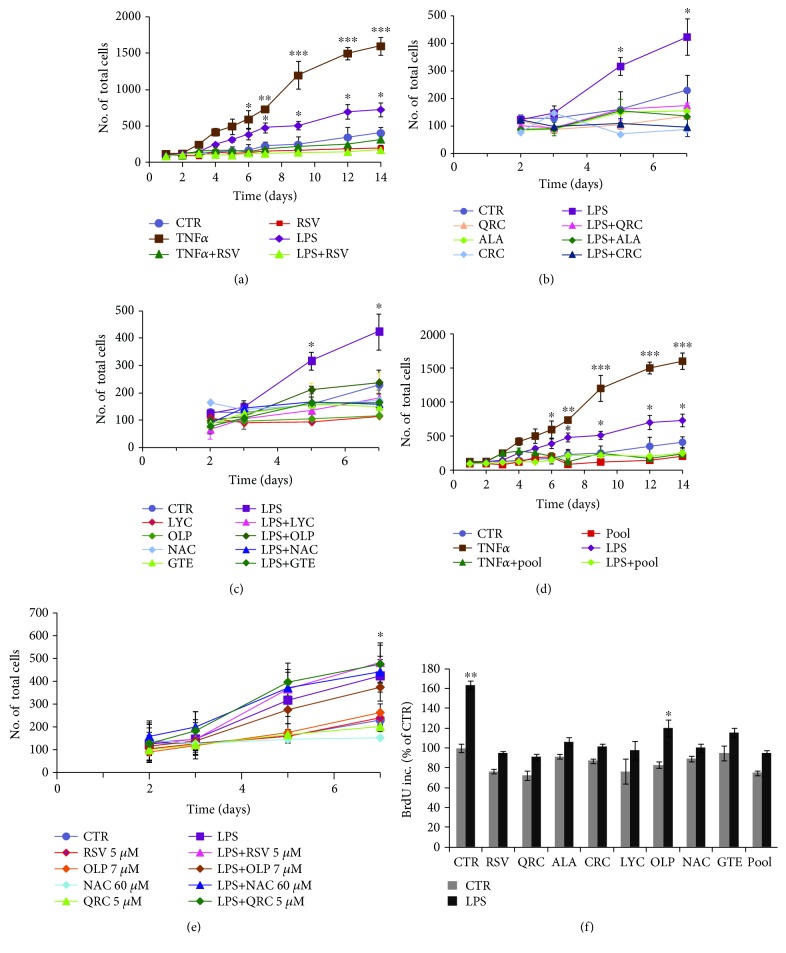
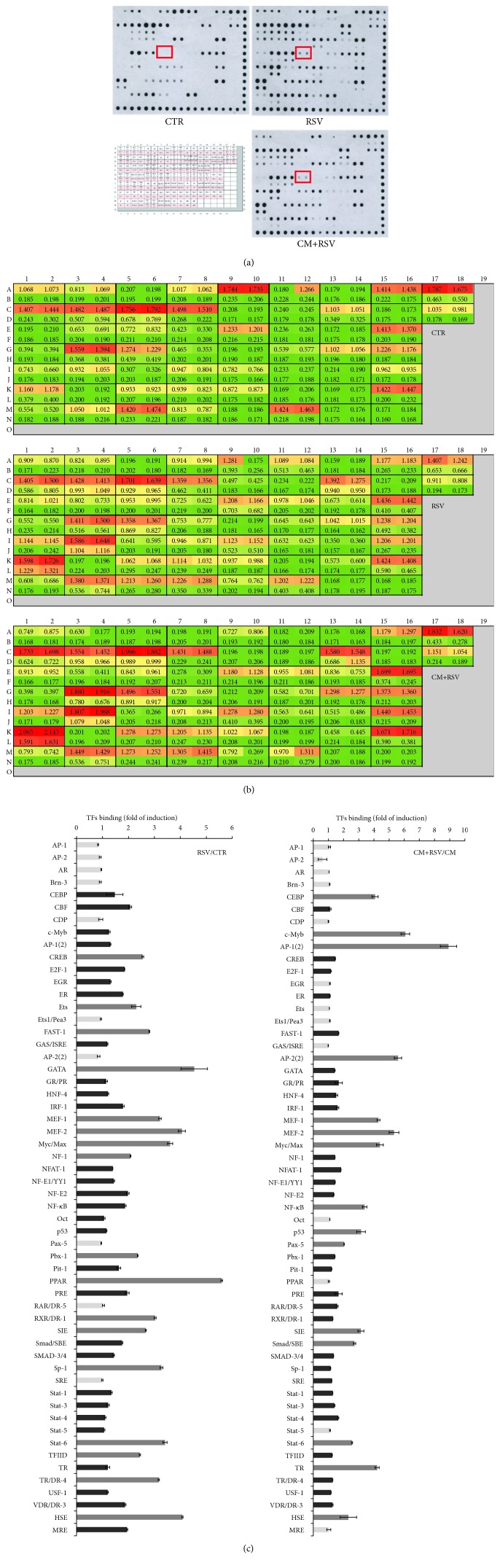
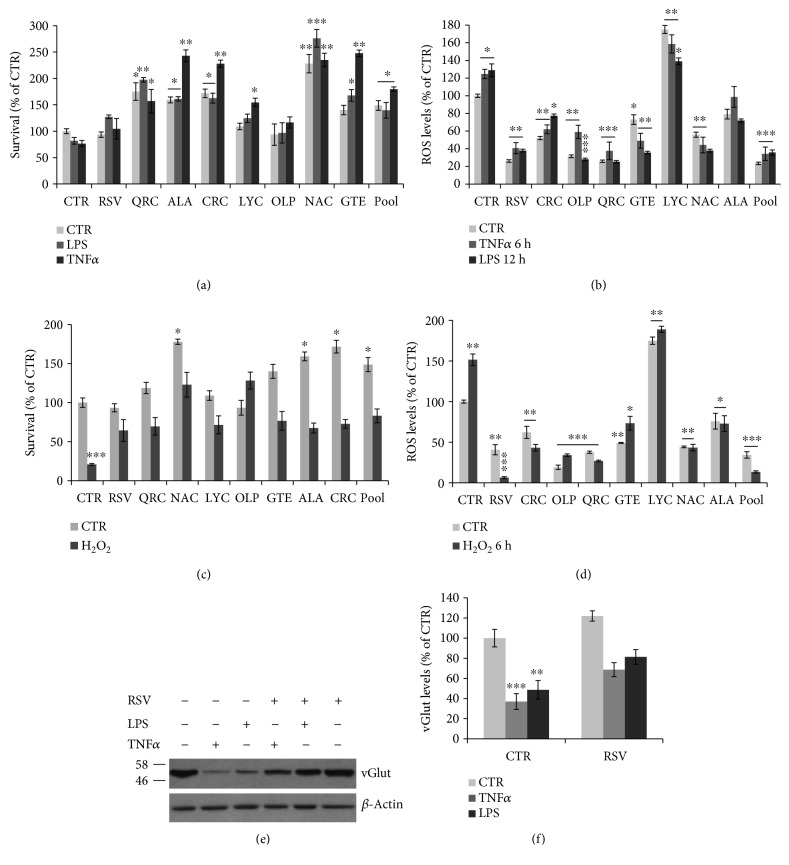
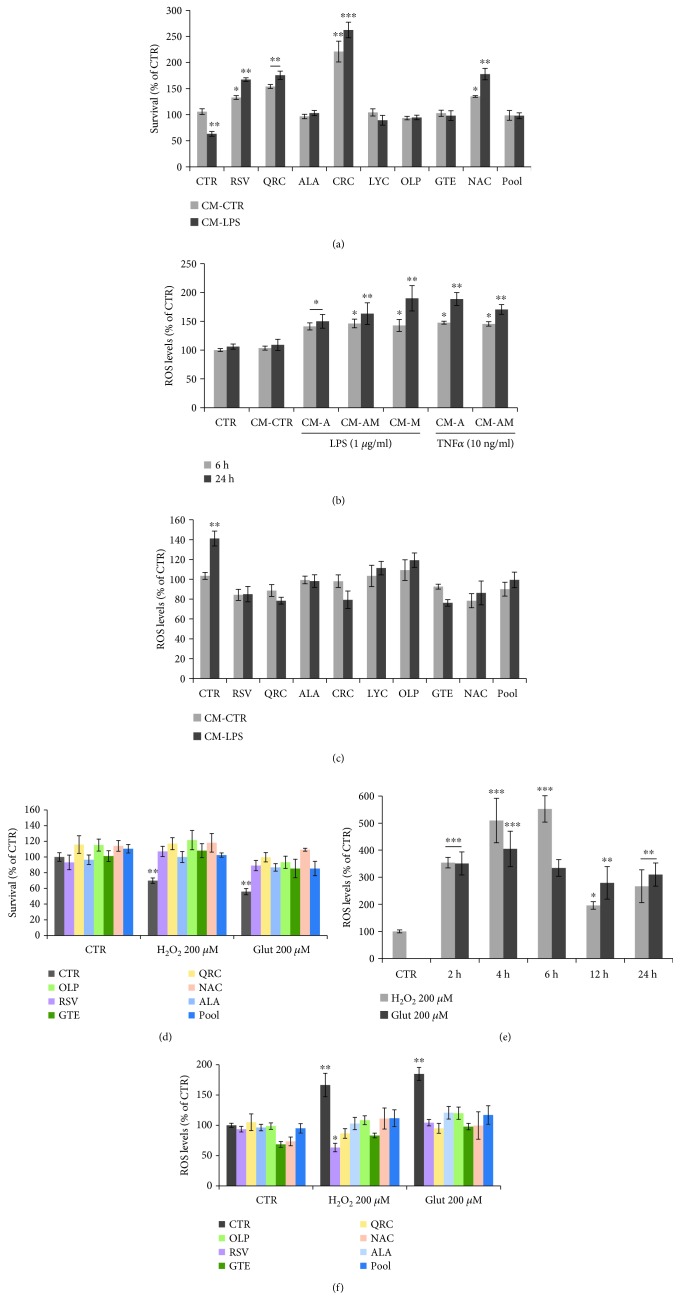
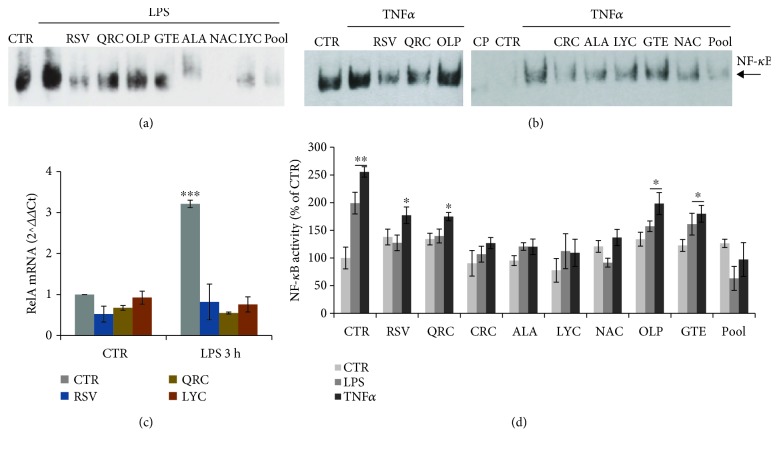
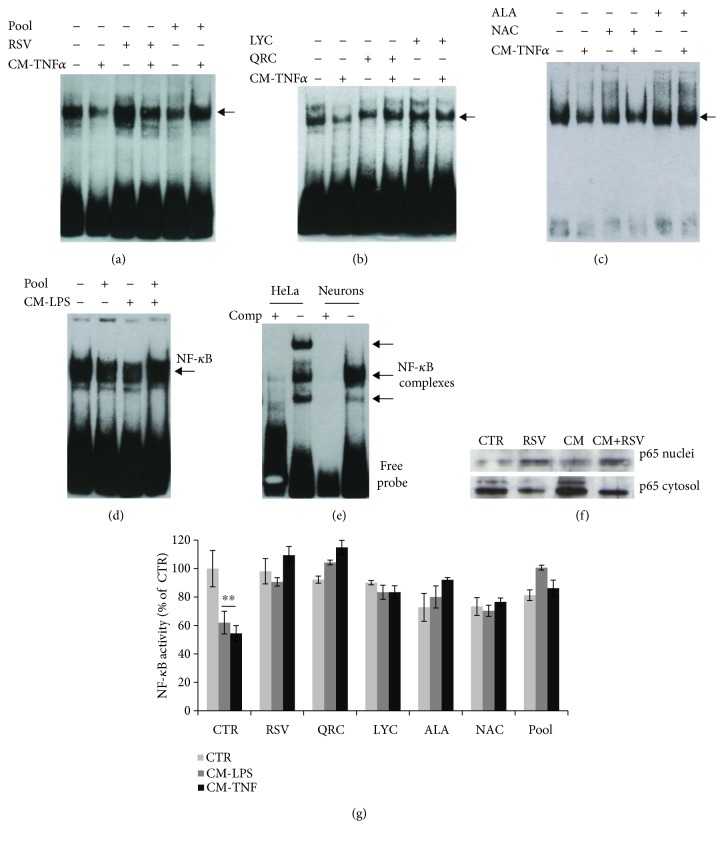
Neuroinflammation, a hallmark of chronic neurodegenerative disorders, is characterized by sustained glial activation and the generation of an inflammatory loop, through the release of cytokines and other neurotoxic mediators that cause oxidative stress and limit functional repair of brain parenchyma. Dietary antioxidants may protect against neurodegenerative diseases by counteracting chronic neuroinflammation and reducing oxidative stress. Here, we describe the effects of a number of natural antioxidants (polyphenols, carotenoids, and thiolic molecules) in rescuing astrocytic function and neuronal viability following glial activation by reducing astrocyte proliferation and restoring astrocytic and neuronal survival and basal levels of reactive oxygen species (ROS). All antioxidant molecules are also effective under conditions of oxidative stress and glutamate toxicity, two maladaptive components of neuroinflammatory processes. Moreover, it is remarkable that their antioxidant and anti-inflammatory activity occurs through differential modulation of NF-B binding activity in neurons and astrocytes. In fact, we show that inflammatory stimuli promote a significant induction of NF-B binding activity in astrocytes and its concomitant reduction in neurons. These changes are prevented in astrocytes and neurons pretreated with the antioxidant molecules, suggesting that NF-B plays a key role in the modulation of survival and anti-inflammatory responses. Finally, we newly demonstrate that effective antigliosis and neuroprotective activity is achieved with a defined cocktail of four natural antioxidants at very low concentrations, suggesting a promising strategy to reduce inflammatory and oxidative damage in neurodegenerative diseases with limited side effects.
神经炎症是慢性神经退行性疾病的标志,其特征是持续的神经胶质激活和炎症循环的产生,通过释放细胞因子和其他神经毒性介质引起氧化应激,并限制脑实质的功能修复。膳食抗氧化剂可以通过对抗慢性神经炎症和减少氧化应激来预防神经退行性疾病。在这里,我们描述了几种天然抗氧化剂(多酚、类胡萝卜素和硫醇分子)在通过减少星形胶质细胞增殖和恢复星形胶质细胞和神经元存活以及基础水平的活性氧(ROS)来挽救星形胶质细胞功能和神经元活力方面的作用。在氧化应激和谷氨酸毒性条件下,所有抗氧化分子也有效,这是神经炎症过程中的两种适应不良成分。此外,值得注意的是,它们的抗氧化和抗炎活性是通过神经元和星形胶质细胞中 NF-B 结合活性的差异调节来实现的。事实上,我们表明,炎症刺激会显著诱导星形胶质细胞中 NF-B 结合活性的诱导,同时减少神经元中的 NF-B 结合活性。在用抗氧化分子预处理的星形胶质细胞和神经元中可以预防这些变化,这表明 NF-B 在调节存活和抗炎反应中起着关键作用。最后,我们新证明,在非常低的浓度下,用四种天然抗氧化剂的特定混合物可以实现有效的抗神经胶质增生和神经保护活性,这表明在神经退行性疾病中减少炎症和氧化损伤具有有限的副作用的有希望的策略。