Department of Companion and Laboratory Animal Science, Kongju National University, Yesan 340‑702, Republic of Korea.
Oncol Rep. 2019 Nov;42(5):1904-1914. doi: 10.3892/or.2019.7295. Epub 2019 Aug 28.
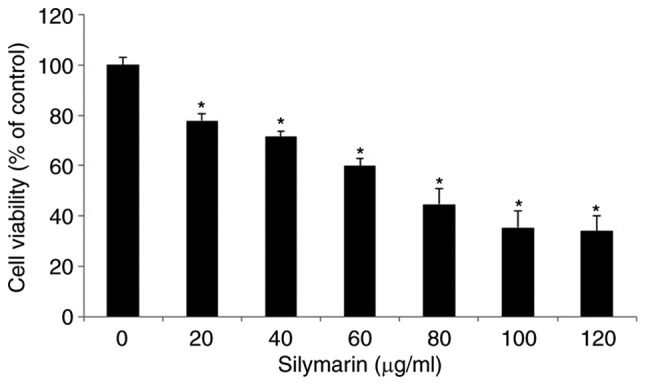
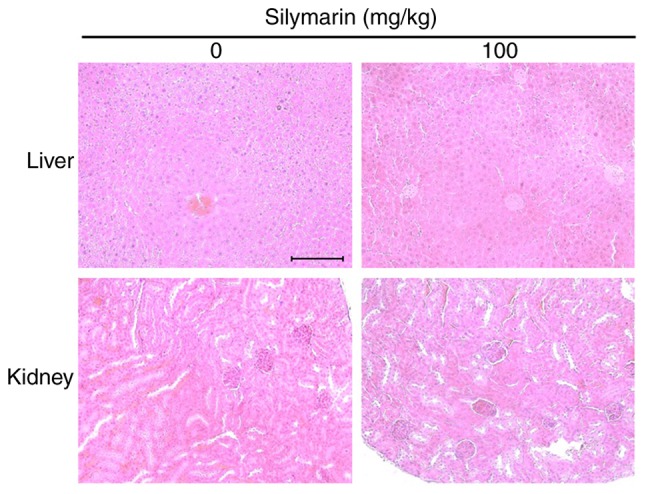
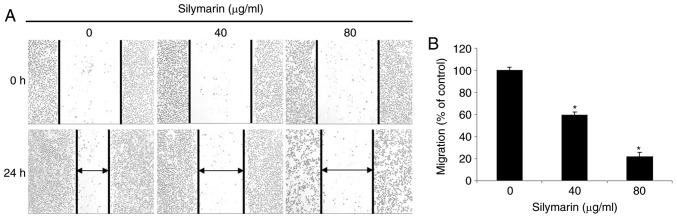
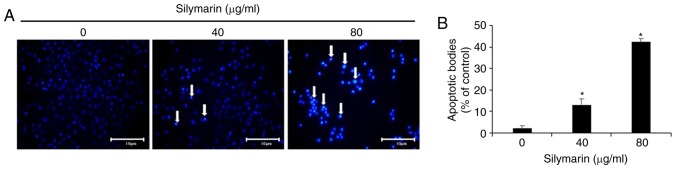
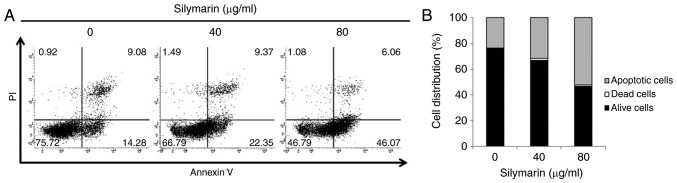
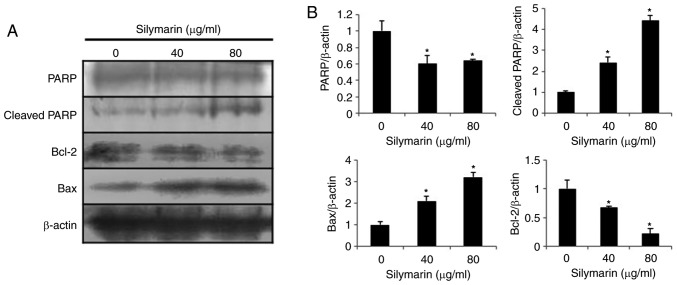
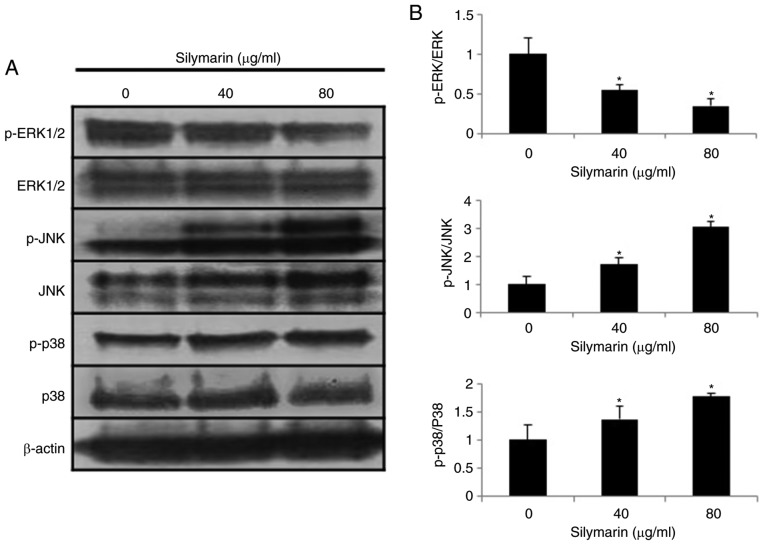
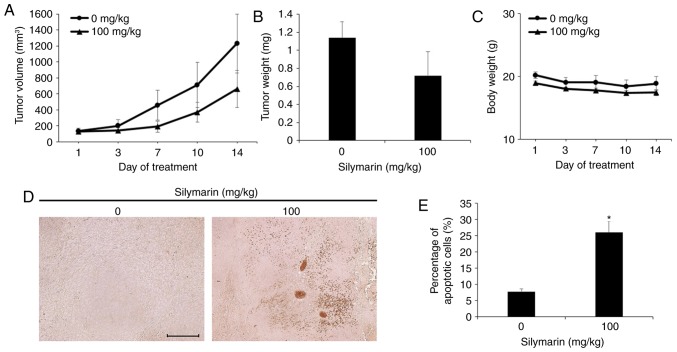
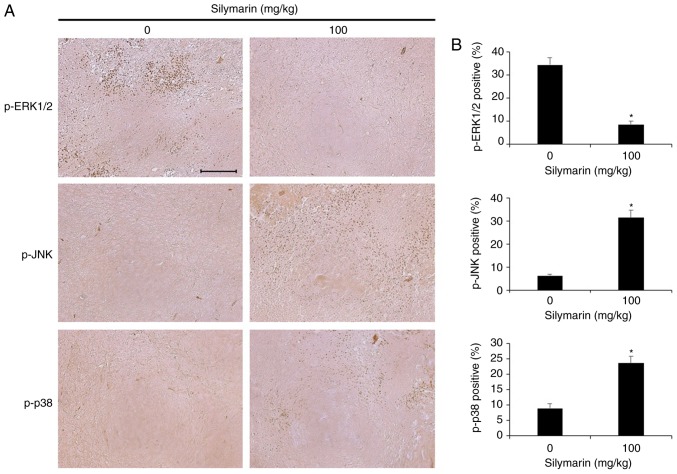
Apoptosis is regarded as a therapeutic target because it is typically disturbed in human cancer. Silymarin from milk thistle (Silybum marianum) has been reported to exhibit anticancer properties via regulation of apoptosis as well as anti‑inflammatory, antioxidant and hepatoprotective effects. In the present study, the effects of silymarin on the inhibition of proliferation and apoptosis were examined in human gastric cancer cells. The viability of AGS human gastric cancer cells was assessed by MTT assay. The migration of AGS cells was investigated by wound healing assay. Silymarin was revealed to significantly decrease viability and migration of AGS cells in a concentration‑dependent manner. In addition, the number of apoptotic bodies and the rate of apoptosis were increased in a dose‑dependent manner as determined by DAPI staining and Annexin V/propidium iodide double staining. The changes in the expression of silymarin‑induced apoptosis proteins were investigated in human gastric cancer cells by western blotting analysis. Silymarin increased the expression of Bax, phosphorylated (p)‑JNK and p‑p38, and cleaved poly‑ADP ribose polymerase, and decreased the levels of Bcl‑2 and p‑ERK1/2 in a concentration‑dependent manner. The in vivo tumor growth inhibitory effect of silymarin was investigated. Silymarin (100 mg/kg) significantly decreased the AGS tumor volume and increased apoptosis, as assessed by the TUNEL assay, confirming its tumor‑inhibitory effect. Immunohistochemical staining revealed elevated expression of p‑JNK and p‑p38 as well as reduced expression of p‑ERK1/2 associated with silymarin‑treatment. Silymarin was revealed to reduce tumor growth through inhibition of p‑ERK and activation of p‑p38 and p‑JNK in human gastric cancer cells. These results indicated that silymarin has potential for development as a cancer therapeutic due to its growth inhibitory effects and induction of apoptosis in human gastric cancer cells.
细胞凋亡被认为是一种治疗靶点,因为它通常在人类癌症中受到干扰。水飞蓟素(奶蓟草)已被报道通过调节细胞凋亡以及抗炎、抗氧化和肝保护作用表现出抗癌特性。在本研究中,研究了水飞蓟素对人胃癌细胞增殖和凋亡抑制的影响。通过 MTT 测定法评估 AGS 人胃癌细胞的活力。通过划痕愈合试验研究 AGS 细胞的迁移。结果显示,水飞蓟素呈浓度依赖性显著降低 AGS 细胞的活力和迁移。此外,通过 DAPI 染色和 Annexin V/碘化丙啶双重染色,细胞凋亡小体的数量和凋亡率呈剂量依赖性增加。通过 Western blot 分析研究了人胃癌细胞中水飞蓟素诱导的凋亡蛋白表达的变化。水飞蓟素增加了 Bax、磷酸化(p)-JNK 和 p-p38 的表达,以及多聚(ADP-核糖)聚合酶的裂解,并呈浓度依赖性降低了 Bcl-2 和 p-ERK1/2 的水平。研究了水飞蓟素的体内肿瘤生长抑制作用。水飞蓟素(100mg/kg)显著降低了 AGS 肿瘤体积,并通过 TUNEL 测定法增加了凋亡,证实了其肿瘤抑制作用。免疫组织化学染色显示,p-JNK 和 p-p38 的表达升高,p-ERK1/2 的表达降低与水飞蓟素治疗有关。水飞蓟素通过抑制 p-ERK 并激活 p-p38 和 p-JNK 来抑制人胃癌细胞的肿瘤生长。这些结果表明,由于其对人胃癌细胞的生长抑制作用和诱导凋亡作用,水飞蓟素具有作为癌症治疗剂的开发潜力。