Department of Trauma Surgery, Amsterdam University Medical Center (Amsterdam UMC, location VUmc), De Boelelaan 1117, 1081 HV, Amsterdam, The Netherlands.
Department of Trauma Surgery, Northwest Clinics Alkmaar, Alkmaar, The Netherlands.
Eur J Trauma Emerg Surg. 2021 Feb;47(1):195-200. doi: 10.1007/s00068-019-01219-w. Epub 2019 Sep 4.
The amount of studies performed regarding a link between socioeconomic status (SES) and fatal outcome after traumatic injury is limited. Most research is focused on work-related injuries without taking other important characteristics into account. The aim of this study is to examine the association between SES and outcome after traumatic injury.
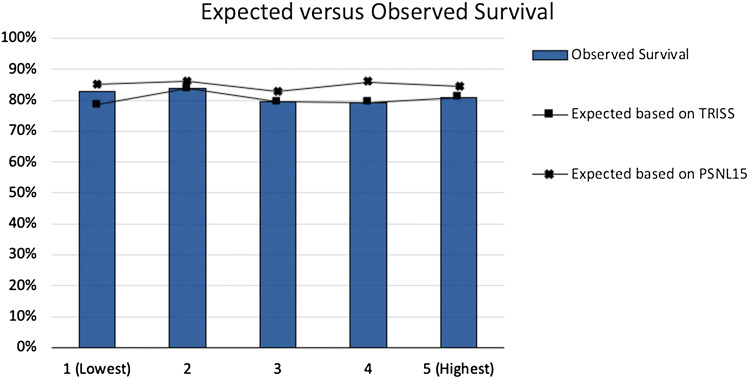
The study involved polytrauma patients [Injury Severity Score (ISS) ≥ 16] admitted to the Amsterdam University Medical Center (location VUmc) and Northwest Clinics Alkmaar (level 1 trauma centers). The SES of every patient was based on their postal code and represented with a "status score". Univariate and multivariable analyses were performed to estimate the association between SES and mortality, length of stay at the hospital and length of stay at the Intensive Care Unit (ICU). Z-statistics were used to determine the difference between the expected and actual survival, based on Trauma Revised Injury Severity Score (TRISS) and PSNL15 (probability of survival based on the Dutch population).
A total of 967 patients were included in this study. The lowest SES group was significantly associated with more penetrating injuries and a younger age (45 years versus 55 years). Additionally, severely injured patients with lower SES were noted to have a prolonged stay at the ICU. Furthermore, differences were found in the expected and observed survival, especially for the lower SES groups.
Polytrauma patients with lower SES have more often penetrating injuries, are younger and have a longer stay at the ICU. No association was found between SES and length of hospital stay and neither between SES and mortality.
关于社会经济地位(SES)与创伤后致死结局之间关联的研究数量有限。大多数研究都集中在与工作相关的伤害上,而没有考虑到其他重要特征。本研究旨在探讨 SES 与创伤后结局之间的关系。
本研究纳入了阿姆斯特丹大学医学中心(地点:VUmc)和阿尔克马尔西北诊所(1 级创伤中心)收治的多发伤患者(损伤严重程度评分[ISS]≥16)。每位患者的 SES 基于其邮政编码,并以“状态评分”表示。进行单变量和多变量分析,以估计 SES 与死亡率、住院时间和重症监护病房(ICU)住院时间之间的关联。Z 统计量用于根据创伤修订损伤严重程度评分(TRISS)和 PSNL15(基于荷兰人群的生存概率)确定预期和实际生存之间的差异。
本研究共纳入 967 例患者。最低 SES 组与更多的穿透性损伤和更年轻的年龄(45 岁与 55 岁)显著相关。此外,SES 较低的严重创伤患者 ICU 住院时间延长。此外,还发现了预期和观察到的生存率之间的差异,尤其是 SES 较低的组。
SES 较低的多发伤患者更常发生穿透性损伤,年龄更小,ICU 住院时间更长。SES 与住院时间之间以及 SES 与死亡率之间均无关联。