Hernández-Guerra Ana Isabel, Tapia Javier, Menéndez-Quintanal Luis Manuel, Lucena Joaquín S
Histopathology Service, National Institute of Toxicology and Forensic Sciences (NITFS), Canary Islands Department, Tenerife, Spain.
Forensic Pathology Service, Institute of Legal Medicine and Forensic Sciences (ILMFS), Las Palmas de Gran Canaria, Spain.
Forensic Sci Res. 2019 Aug 19;4(3):267-273. doi: 10.1080/20961790.2019.1595350. eCollection 2019.
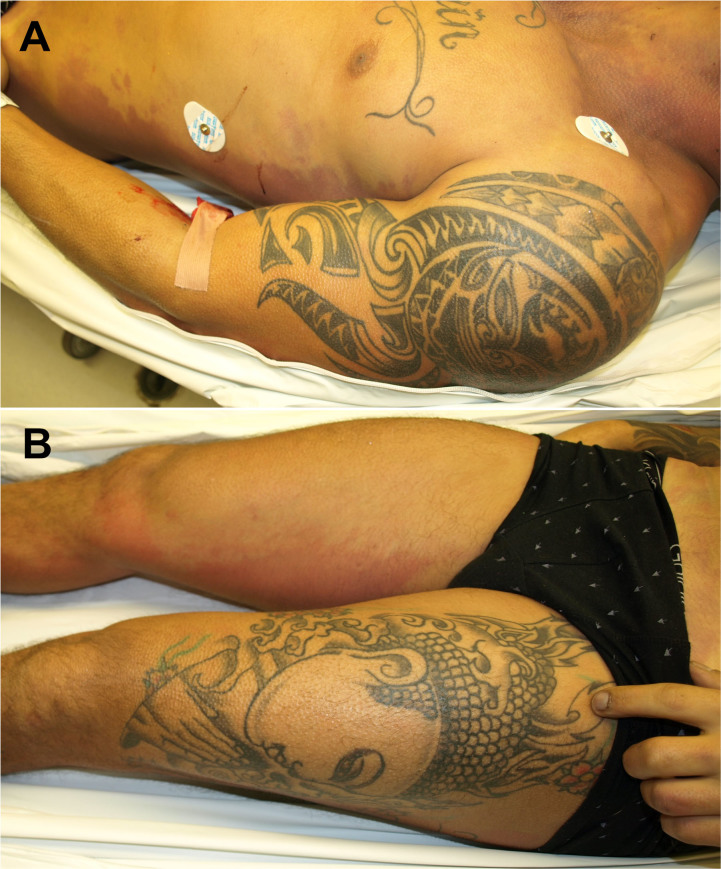
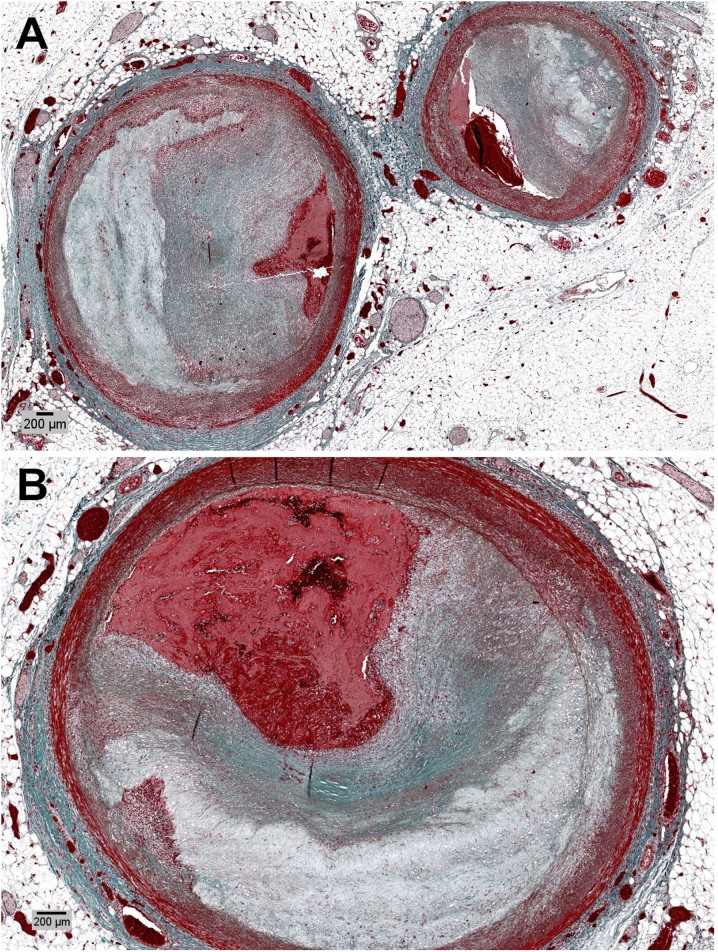
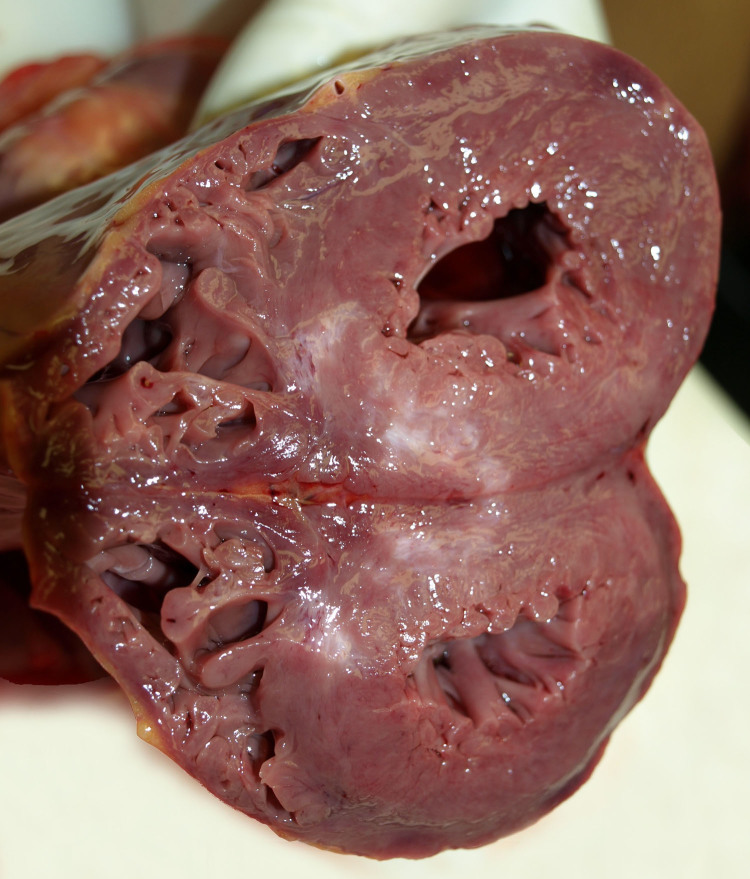
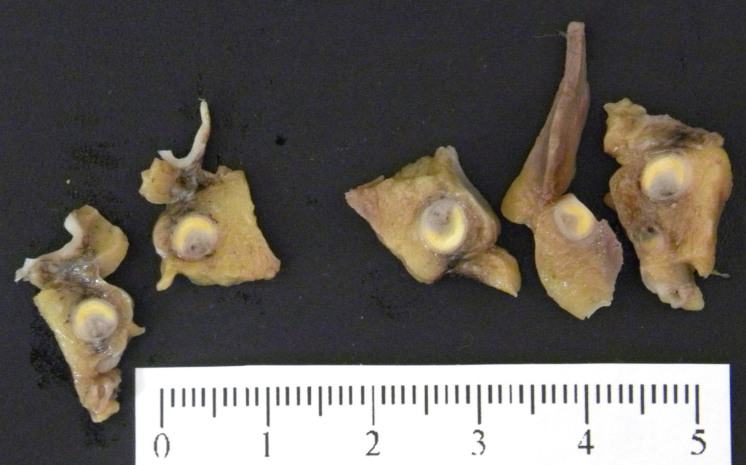
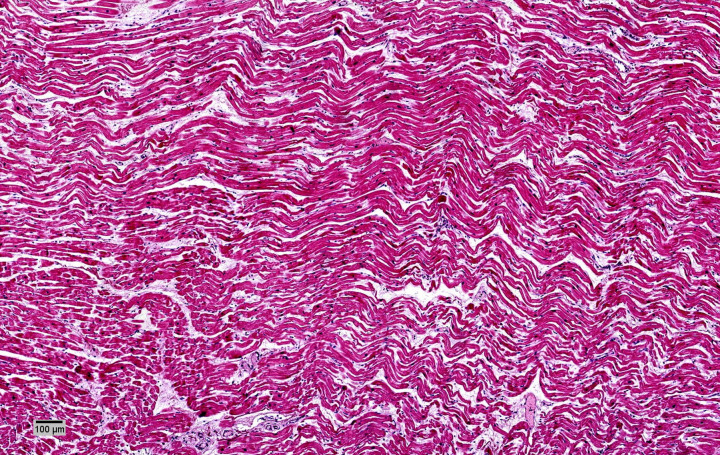
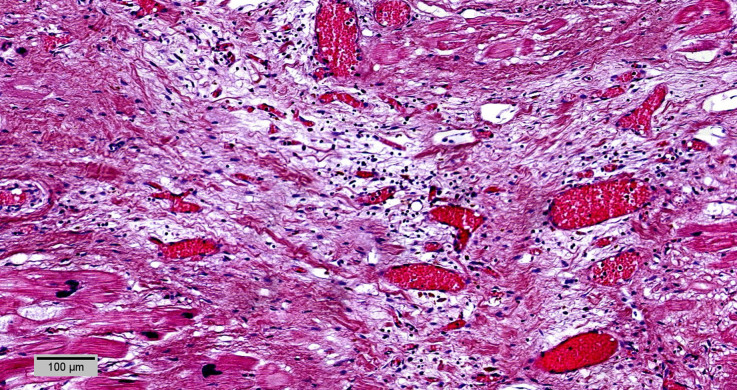
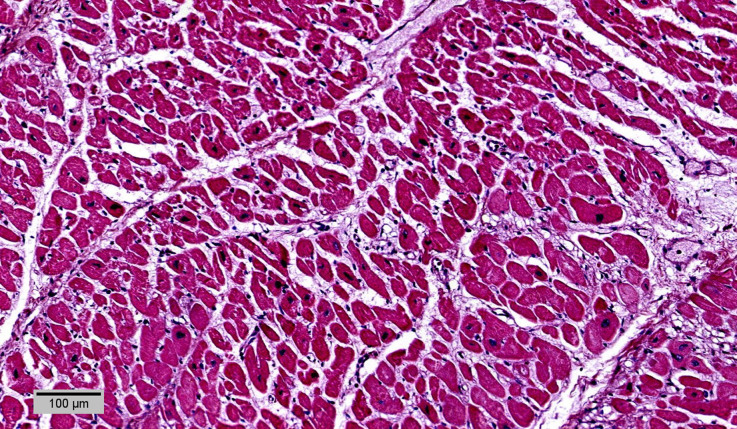
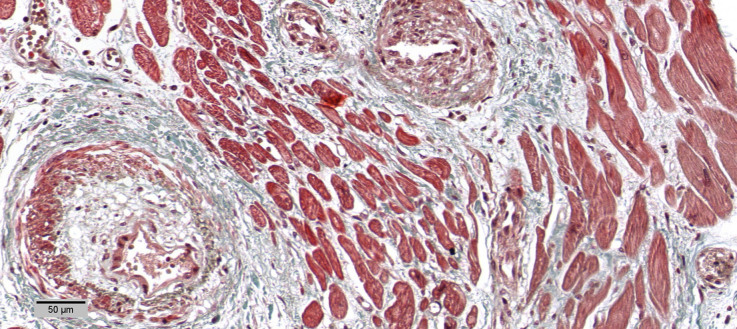
Anabolic androgenic steroids (AAS) have several adverse effects on the cardiovascular system that may lead to a sudden cardiac death (SCD). We herein report a case involving a 24-year-old male, AAS abuser with intramuscular delivery in the 6 months before, who suffered a cardiorespiratory arrest at home's bathtub when returning from New Year's party. A forensic autopsy was performed according to the guidelines of the Association for European Cardiovascular Pathology (AECVP). The body showed hypertrophy of skeletal musculature, with low amount of subcutaneous fat and no signs of injury (body mass index, BMI: 26.8 kg/m). On internal examination, there were multiorgan congestion, acute pulmonary edema, and cardiomegaly (420 g) with severe coronary atherosclerosis and superimposed acute occlusive thrombosis at the left main trunk and left anterior descendant. Areas of scarring were located at the intersection between the posterior wall and the posterior third of the septum (postero-septal). At histology, acute myocardial infarction at the anterior third of the septum and the anterior wall, and subacute myocardial infarction at apical septum and apical posterior wall were detected. Other findings were small intramyocardial vessel disease and myocytes hypertrophy. Chemicotoxicological analysis in blood showed ethanol ((0.90 ± 0.05) g/L), stanazolol (11.31 µg/L), nandrolone (2.05 µg/L) and testosterone (<1.00 µg/L). When confronted with a sudden death in a young athlete we must pay attention to the physical phenotype that may suggest AAS abuse and perform a detailed examination of the heart. Chemicotoxicological analysis is a key to establish the relationship between SCD and AAS abuse.
合成代谢雄激素类固醇(AAS)对心血管系统有多种不良影响,可能导致心源性猝死(SCD)。我们在此报告一例病例,患者为一名24岁男性,在之前6个月内有肌肉注射使用AAS的滥用史,在从新年派对回家后于家中浴缸发生心肺骤停。根据欧洲心血管病理学会(AECVP)的指南进行了法医尸检。尸体显示骨骼肌肥大,皮下脂肪量少且无损伤迹象(体重指数,BMI:26.8 kg/m²)。内部检查发现多器官充血、急性肺水肿和心脏肥大(420 g),伴有严重冠状动脉粥样硬化,左主干和左前降支有叠加的急性闭塞性血栓形成。瘢痕形成区域位于后壁与间隔后三分之一的交界处(后间隔)。组织学检查发现,间隔前三分之一和前壁有急性心肌梗死,心尖间隔和心尖后壁有亚急性心肌梗死。其他发现包括心肌内小血管病变和心肌细胞肥大。血液化学毒理学分析显示乙醇((0.90±0.05)g/L)、司坦唑醇(11.31μg/L)、诺龙(2.05μg/L)和睾酮(<1.00μg/L)。当面对年轻运动员的猝死时,我们必须注意可能提示AAS滥用的身体表型,并对心脏进行详细检查。化学毒理学分析是确定SCD与AAS滥用之间关系的关键。