School of Journalism, Fudan University, Shanghai 200433, China.
School of Humanities and Social Science, the Chinese University of Hong Kong (Shenzhen), Shenzhen 518172, China.
Nutrients. 2019 Sep 6;11(9):2124. doi: 10.3390/nu11092124.
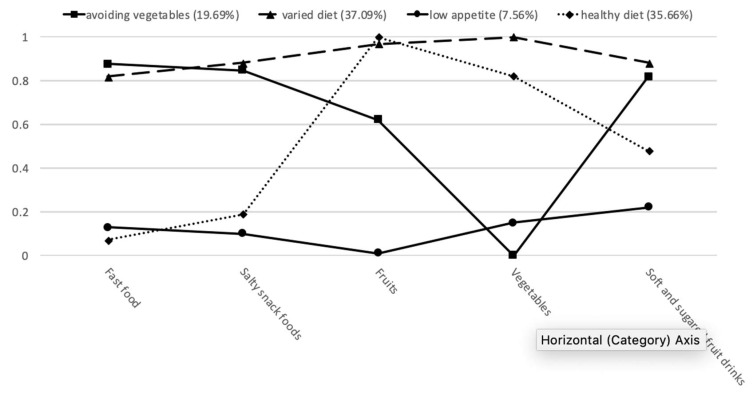
This study aimed to examine the patterns of, as well as the predictors for, Chinese adolescents' food preferences. Using the national data of the China Health and Nutrition Survey (CHNS), we analyzed the data of 697 adolescents in the age range of 12 to 17 years. Latent class analysis revealed four types of food preferences: (37.09%, = 254), (19.69%, = 131), (7.56%, = 50), and (35.66%, = 222). Major predictors for food preferences included demographic variables (e.g., gender, urban versus rural residence), nutrition knowledge, preference for activities, and social attitudes. Results did not show any significant differences in BMI -scores among the four latent classes. However, there were significant differences in the number of sleeping hours among the classes.
本研究旨在探讨中国青少年食物偏好的模式及其预测因素。我们使用中国健康与营养调查(CHNS)的全国数据,对 12 至 17 岁的 697 名青少年进行了数据分析。潜在类别分析揭示了四种食物偏好类型:(37.09%,n=254)、(19.69%,n=131)、(7.56%,n=50)和(35.66%,n=222)。食物偏好的主要预测因素包括人口统计学变量(如性别、城市与农村居住)、营养知识、活动偏好和社会态度。结果显示,在四个潜在类别中,BMI 评分没有显著差异。然而,在睡眠时间方面,各班级之间存在显著差异。