Division of Clinical Pharmacology, Department of Pediatrics, School of Medicine, University of Utah, Salt Lake City, UT, United States of America; Department of Pharmaceutics and Pharmaceutical Chemistry, College of Pharmacy, University of Utah, Salt Lake City, UT, United States of America.
Department of Chemical Engineering, University of Washington, Seattle, WA, United States of America.
Adv Drug Deliv Rev. 2019 Nov-Dec;151-152:44-55. doi: 10.1016/j.addr.2019.08.008. Epub 2019 Sep 5.
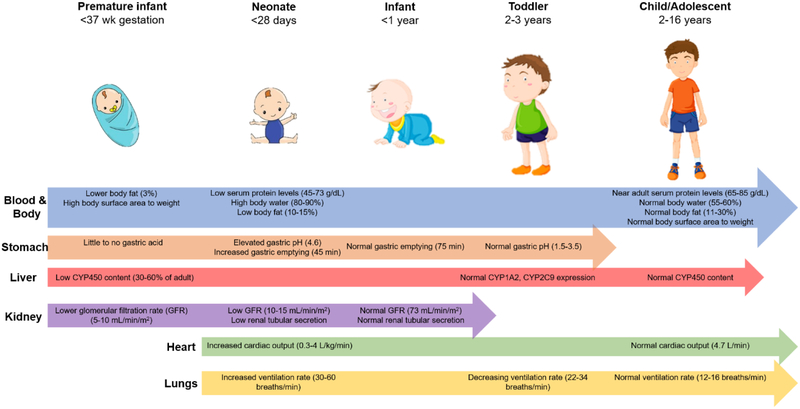
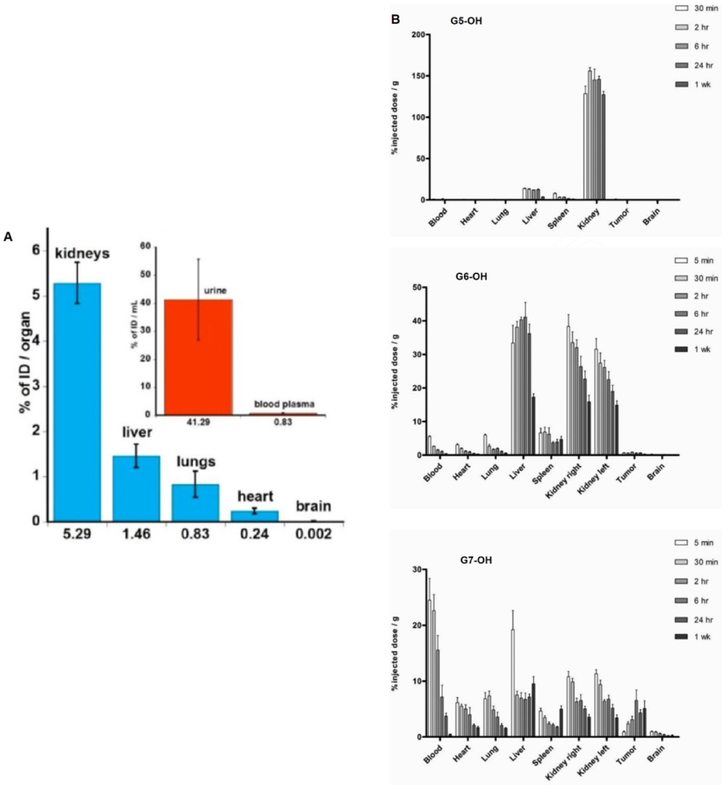
The development of therapeutics for pediatric use has advanced in the last few decades. However, off-label use of adult medications in pediatrics remains a significant clinical problem. Furthermore, the development of therapeutics for pediatrics is challenged by the lack of pharmacokinetic (PK) data in the pediatric population. To promote the development of therapeutics for pediatrics, the United States Pediatric Formulation Initiative recommended the investigation of nanotechnology-based delivery systems. Therefore, in this review, we provided comprehensive information on the PK of nanotechnology-based formulations from preclinical and clinical studies in pediatrics. Specifically, we discuss the relationship between formulation parameters of nanoformulations and PK of the encapsulated drug in the context of pediatrics. We review nanoformulations that include dendrimers, liposomes, polymeric long-acting injectables (LAIs), nanocrystals, inorganic nanoparticles, polymeric micelles, and protein nanoparticles. In addition, we describe the importance and need of PK modeling and simulation approaches used in predicting PK of nanoformulations for pediatric applications.
在过去的几十年中,儿科治疗药物的开发取得了进展。然而,在儿科中使用成人药物的超说明书用药仍然是一个重大的临床问题。此外,儿科治疗药物的开发受到儿科人群中缺乏药代动力学(PK)数据的挑战。为了促进儿科治疗药物的发展,美国儿科制剂倡议建议研究基于纳米技术的给药系统。因此,在这篇综述中,我们提供了儿科临床前和临床研究中基于纳米技术的制剂 PK 的全面信息。具体而言,我们讨论了纳米制剂的制剂参数与儿科中包裹药物的 PK 之间的关系。我们综述了包括树枝状大分子、脂质体、聚合物长效注射剂(LAIs)、纳米晶体、无机纳米粒子、聚合物胶束和蛋白纳米粒在内的纳米制剂。此外,我们还描述了在预测儿科应用中纳米制剂 PK 时使用 PK 建模和模拟方法的重要性和必要性。