Department of Ophthalmology, Zhujiang Hospital, Southern Medical University, Guangzhou 510282, People's Republic of China.
Sunlipo Biotech Research Center for Nanomedicine, Shanghai 201507, People's Republic of China.
Int J Nanomedicine. 2019 Aug 8;14:6357-6369. doi: 10.2147/IJN.S214727. eCollection 2019.
Diabetic retinopathy (DR) is a complication of diabetes that affects the eyes and vision. It is a leading cause of visual impairment and blindness in working-age people. Vascular endothelial growth factor-A (VEGF-A) is a primary initiator and potential mediator of DR. Matrix metalloproteinase-9 (MMP-9) plays a progressive role in the onset and severity of DR. Interleukin-12 (IL-12) is a cytokine of the chemokine family that could reduce the levels of MMP-9 and VEGF-A and suppress tumor angiogenesis. We hypothesize that IL-12 may also have superior therapeutic efficacy against DR. However, protein drugs are prone to degradation by various proteases after drug injection. Therefore, they have short half-lives and low blood concentrations. The objective of this study was to develop IL-12-loaded nanoparticles for long-term and sustained DR treatment.
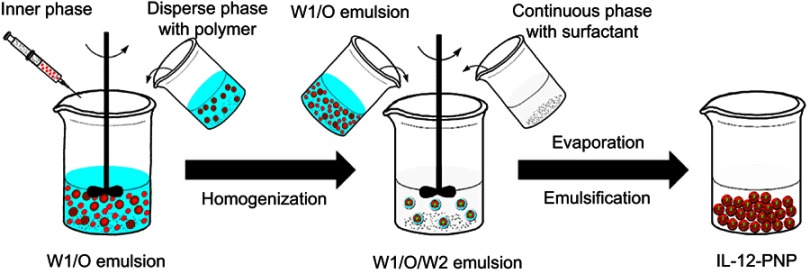
IL-12-loaded poly(lactic-co-glycolic acid) (PLGA) nanoparticles (IL-12-PNP) were developed by double emulsion. The characteristics, anti-DR activity, and mechanisms of IL-12-PNP were examined in vitro and in vivo.
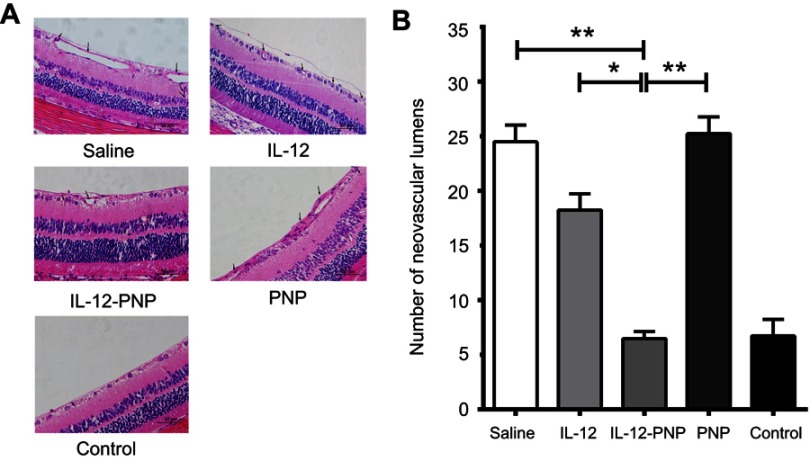
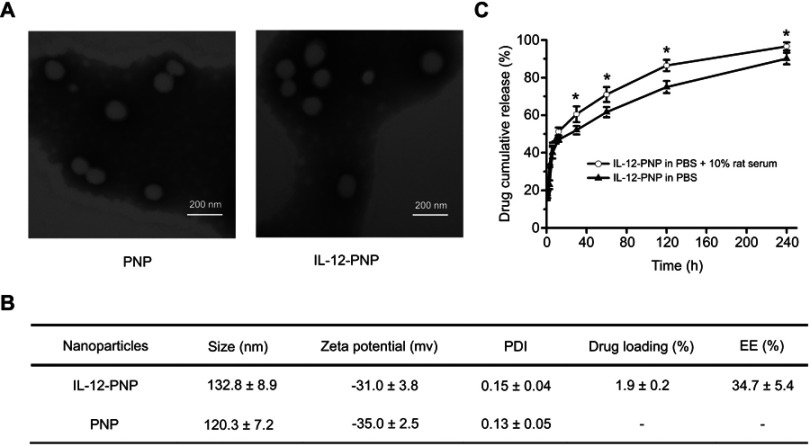
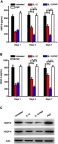
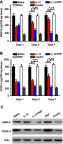
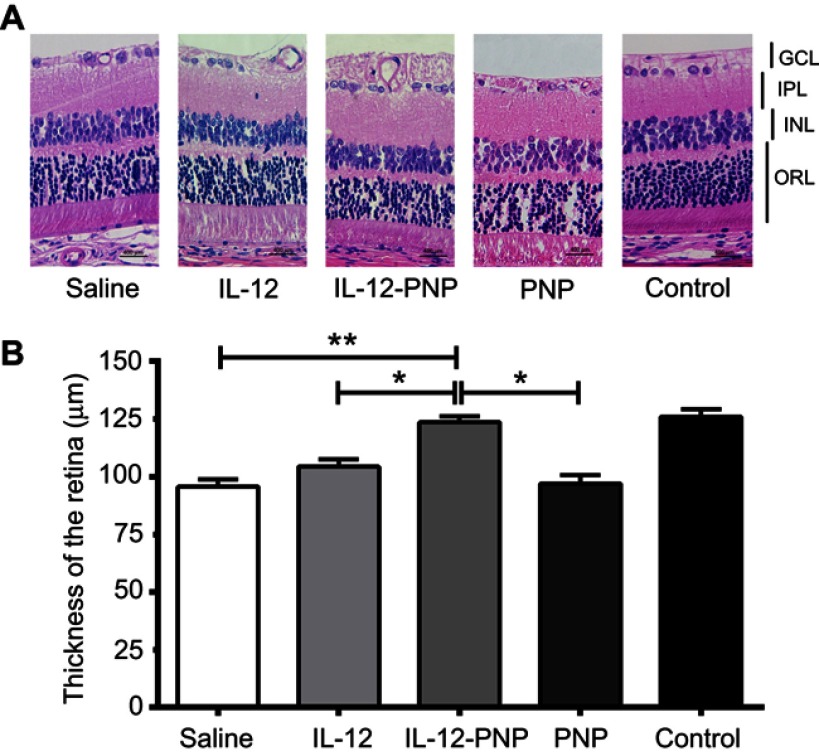
The nanoparticles had suitable particle size (132.8 nm), drug encapsulation efficiency (34.7%), and sustained drug release profile. Compared with IL-12 and blank nanoparticles, IL-12-PNP showed better inhibitory efficacy against VEGF-A and MMP-9 expression in rat endothelial cells and DR mouse retina. Intraocular IL-12-PNP administration significantly reduced retinal damage in DR mice as they presented with increased thickness and decreased neovascularization after treatment.
These data indicate that IL-12-PNP is an effective drug delivery platform for DR therapy. It restores the thickness and reduces neovascularization of the retinas of DR mice.
糖尿病视网膜病变(DR)是一种影响眼睛和视力的糖尿病并发症。它是导致工作年龄段人群视力障碍和失明的主要原因。血管内皮生长因子-A(VEGF-A)是 DR 的主要启动子和潜在介质。基质金属蛋白酶-9(MMP-9)在 DR 的发病和严重程度中发挥渐进作用。白细胞介素-12(IL-12)是趋化因子家族的细胞因子,可降低 MMP-9 和 VEGF-A 的水平,并抑制肿瘤血管生成。我们假设 IL-12 对 DR 也可能具有更好的治疗效果。然而,蛋白质药物在注射后容易被各种蛋白酶降解。因此,它们的半衰期短,血液浓度低。本研究的目的是开发负载 IL-12 的纳米颗粒,以长期持续治疗 DR。
采用双乳液法制备负载白细胞介素-12 的聚(乳酸-共-乙醇酸)(PLGA)纳米颗粒(IL-12-PNP)。在体外和体内研究了 IL-12-PNP 的特性、抗 DR 活性和机制。
纳米颗粒具有合适的粒径(132.8nm)、药物包封效率(34.7%)和持续的药物释放特性。与 IL-12 和空白纳米颗粒相比,IL-12-PNP 对大鼠内皮细胞和 DR 小鼠视网膜中 VEGF-A 和 MMP-9 表达的抑制作用更好。玻璃体内给予 IL-12-PNP 可显著减轻 DR 小鼠的视网膜损伤,治疗后视网膜厚度增加,新生血管减少。
这些数据表明,IL-12-PNP 是一种有效的 DR 治疗药物递送平台。它可恢复 DR 小鼠视网膜的厚度并减少新生血管形成。