Wang Qianrong, Han Anna, Chen Liyan, Sun Jie, Lin Zhenhua, Zhang Xianglan, Ren Xiangshan
Department of Pathology and Cancer Research Center, Yanbian University Medical College, Yanji 133002, People's Republic of China.
Key Laboratory of the Science and Technology Department of Jilin Province, Yanji 133002, People's Republic of China.
Onco Targets Ther. 2019 Aug 16;12:6565-6576. doi: 10.2147/OTT.S202698. eCollection 2019.
Gastric cancer (GC) is a major leading cause of cancer mortality worldwide. Polyadenylate (poly(A))-binding protein (PABP)-interacting protein 1 (Paip1) is a key regulator in the initiation of translation; however, its role in GC remains to be investigated.
The purpose of this study is to determine Paip1 expression levels and investigate its underlying molecular mechanism in GC.
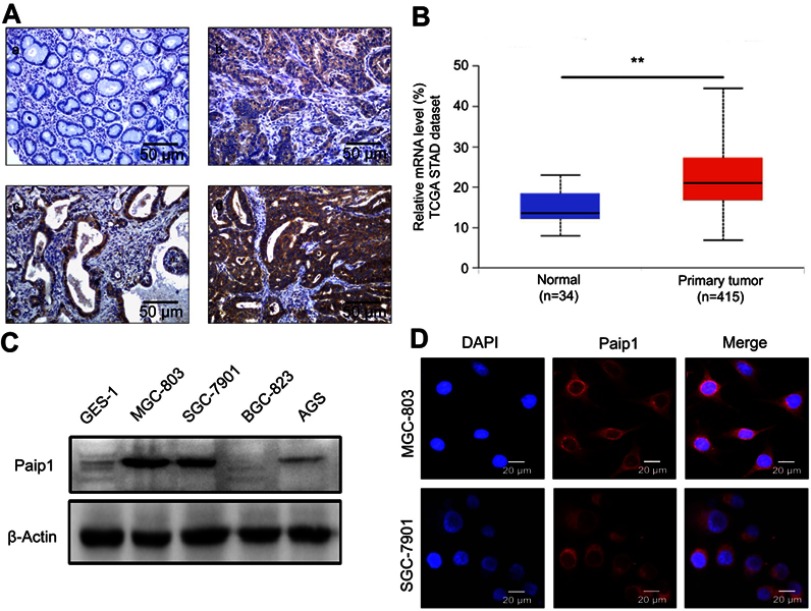
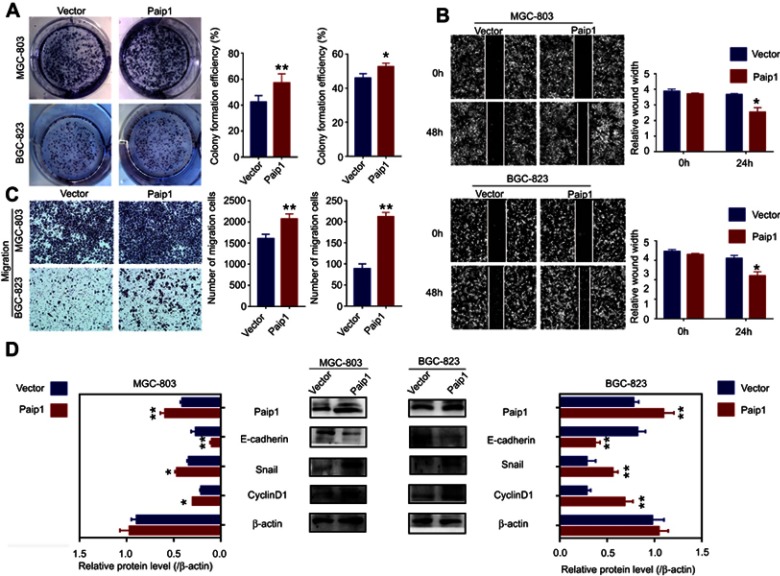
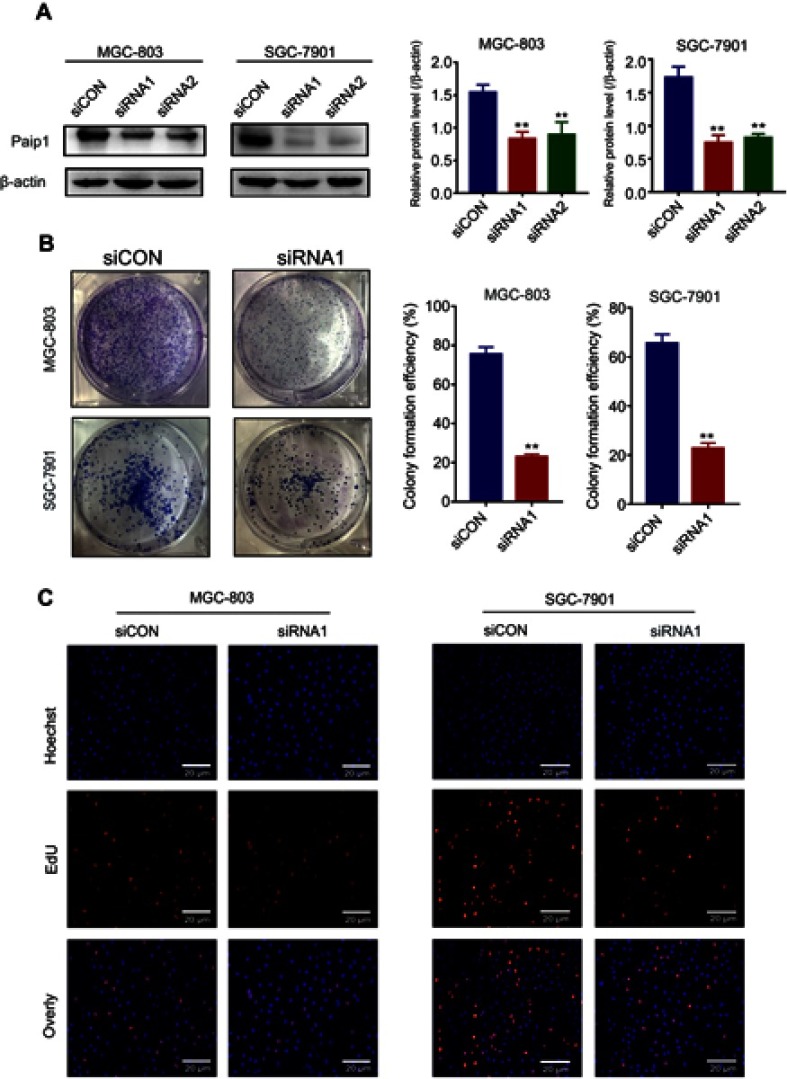
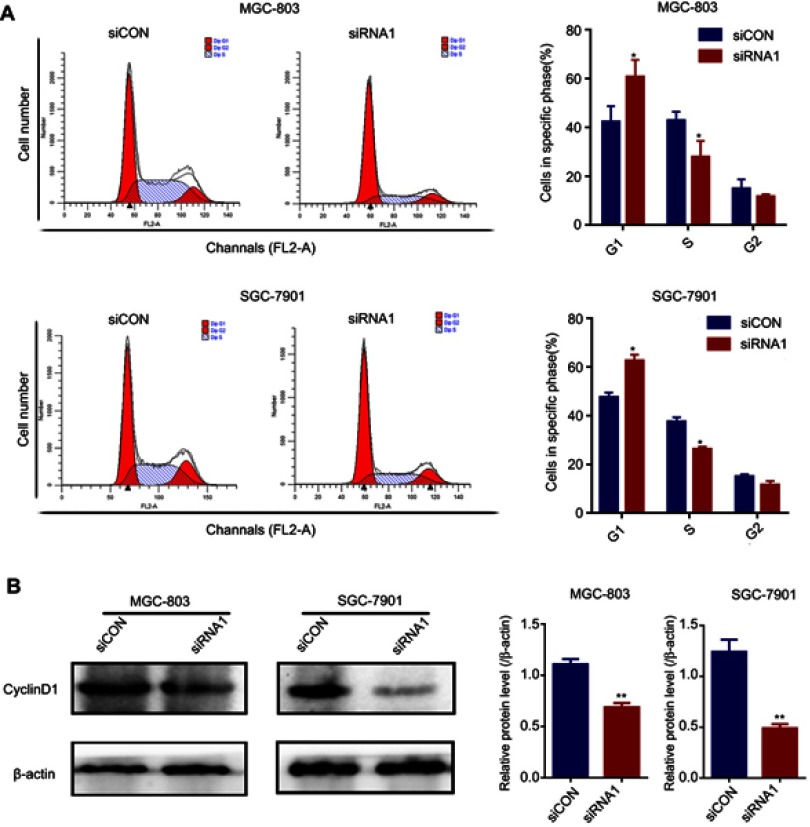
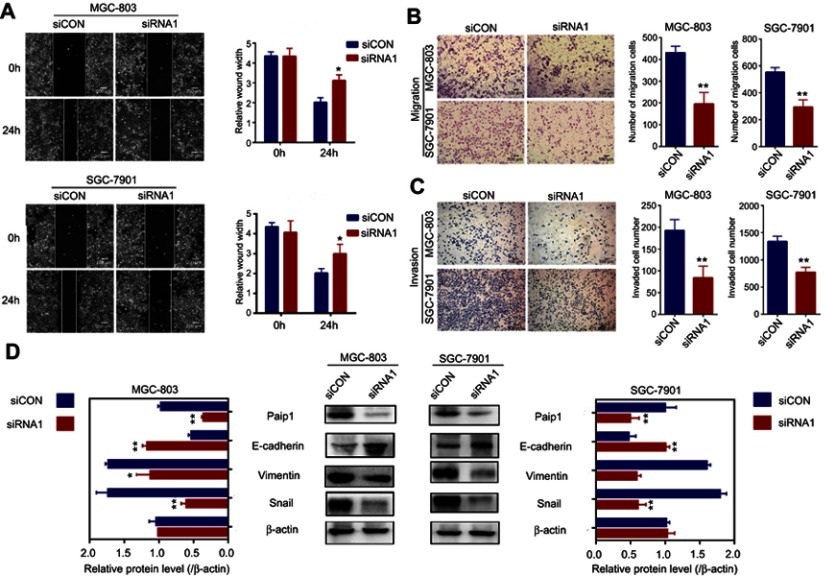
In the present study, a total of 90 GC samples and 90 adjacent noncancerous tissues were used to examine the expression of Paip1. In order to gain a deep insight into the molecular mechanism of Paip1 in GC, the Paip1 siRNA sequences were transfected into GC cell lines (MGC-803 and SGC-7901), respectively. Meanwhile, Paip1 plasmid was used to mediate overexpression of Paip1. Cell proliferation were examined via colony formation assay, EdU assay and flow cytometry assay. Cell metastasis were discovered via wound healing assay and Transwell assays. In addition, key EMT makers were detected by Western blotting assay.
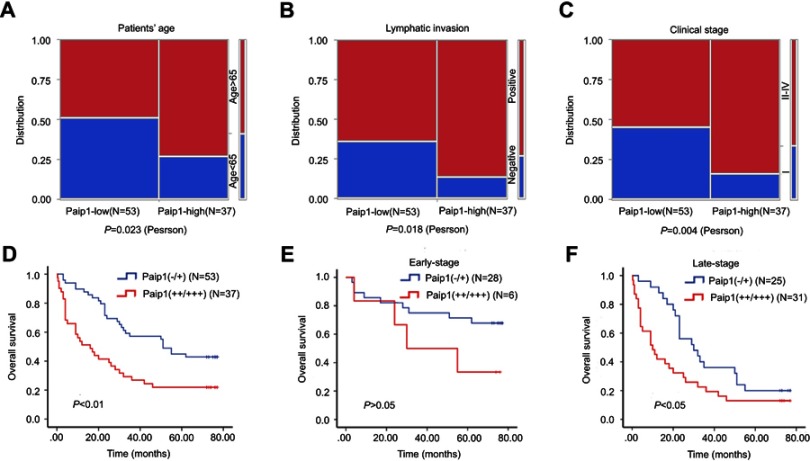
In this study, Paip1 expression was observed to be upregulated in GC and was associated with shorter overall survival. Knockdown of Paip1 inhibited cell proliferation, migration and caused cell cycle arrest in GC cells, whereas its overexpression reversed these effects. Another mechanistic study showed that Paip1 overexpression promoted EMT progression and regulated its targets expression.
High expression of Paip1 plays a significant role in the progression of GC and may be a potential biomarker of poor prognosis as well as a therapeutic target.
胃癌(GC)是全球癌症死亡的主要原因之一。聚腺苷酸(poly(A))结合蛋白(PABP)相互作用蛋白1(Paip1)是翻译起始的关键调节因子;然而,其在胃癌中的作用仍有待研究。
本研究旨在确定Paip1的表达水平,并探讨其在胃癌中的潜在分子机制。
在本研究中,共使用90例胃癌样本和90例癌旁非癌组织来检测Paip1的表达。为了深入了解Paip1在胃癌中的分子机制,将Paip1 siRNA序列分别转染到胃癌细胞系(MGC-803和SGC-7901)中。同时,使用Paip1质粒介导Paip1的过表达。通过集落形成试验、EdU试验和流式细胞术试验检测细胞增殖。通过伤口愈合试验和Transwell试验发现细胞转移情况。此外,通过蛋白质免疫印迹试验检测关键的上皮-间质转化标志物。
在本研究中,观察到Paip1在胃癌中表达上调,且与较短的总生存期相关。敲低Paip1可抑制胃癌细胞的增殖、迁移并导致细胞周期停滞,而过表达则逆转了这些作用。另一项机制研究表明,Paip1过表达促进上皮-间质转化进程并调节其靶标表达。
Paip1的高表达在胃癌进展中起重要作用,可能是预后不良的潜在生物标志物以及治疗靶点。