Zhang Fengrong, Liu Yuehong, Lei Jiani, Wang Shunhao, Ji Xunming, Liu Huiyu, Yang Qi
Department of Radiology Xuanwu Hospital Beijing 100053 P. R. China.
Beijing Advanced Innovation Center for Soft Matter Science and Engineering State Key Laboratory of Organic-Inorganic Composites Bionanomaterials & Translational Engineering Laboratory Beijing Key Laboratory of Bioprocess Beijing Laboratory of Biomedical Materials Beijing University of Chemical Technology Beijing 100029 P. R. China.
Adv Sci (Weinh). 2019 Jul 4;6(17):1901378. doi: 10.1002/advs.201901378. eCollection 2019 Sep 4.
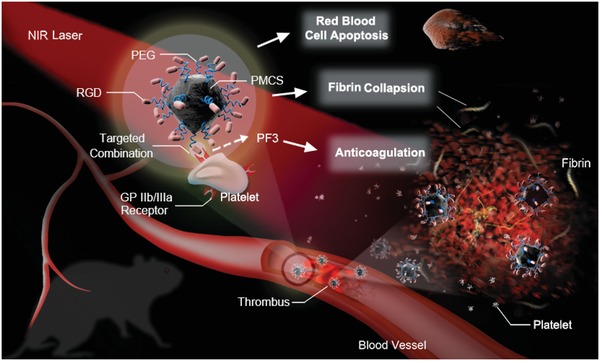
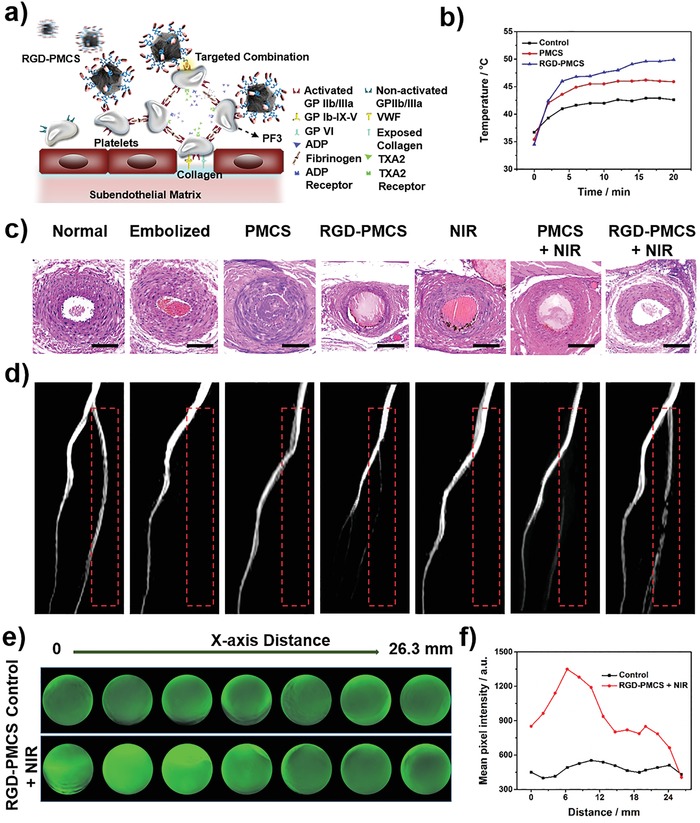
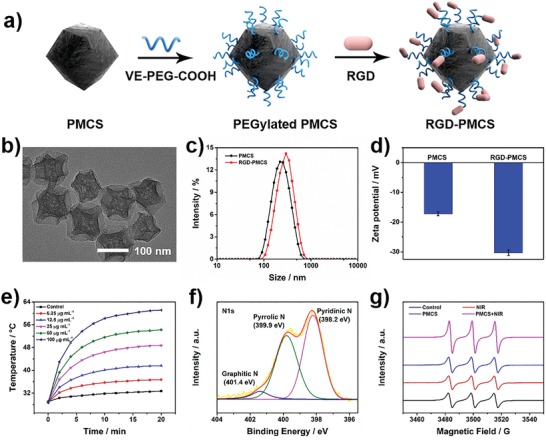
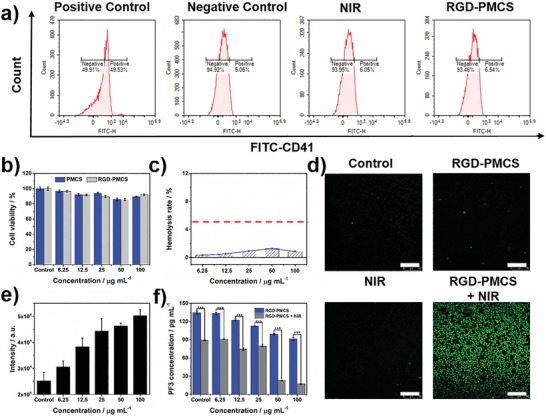
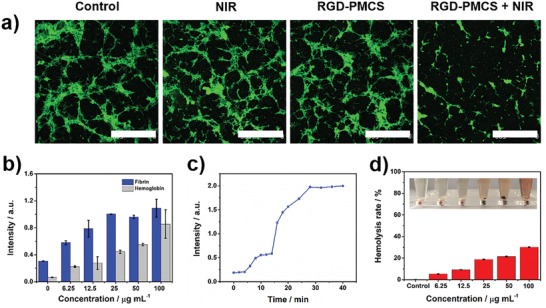
Although near-infrared (NIR)-light-mediated photothermal thrombolysis has been investigated to overcome the bleeding risk of clinical clot-busting agents, the secondary embolism of post-phototherapy fragments (>10 µm) for small vessels should not be ignored in this process. In this study, dual-modality photothermal/photodynamic thrombolysis is explored using targeting nanoagents with an emphasis on improving biosafety as well as ameliorating the thrombolytic effect. The nanoagents can actively target glycoprotein IIb/IIIa receptors on thrombus to initiate site-specific thrombolysis by hyperthermia and reactive oxygen species under NIR laser irradiation. In comparison to single photothermal thrombolysis, an 87.9% higher re-establishment rate of dual-modality photothermal/photodynamic thrombolysis by one-time treatment is achieved in a lower limb thrombosis model. The dual-modality thrombolysis can also avoid re-embolization after breaking fibrin into tiny fragments. All the results show that this strategy is a safe and validated protocol for thrombolysis, which fits the clinical translational trend of nanomedicine.
尽管近红外(NIR)光介导的光热溶栓已被研究用于克服临床溶栓剂的出血风险,但在此过程中,小血管光疗后碎片(>10 µm)的二次栓塞不容忽视。在本研究中,使用靶向纳米剂探索双模态光热/光动力溶栓,重点是提高生物安全性以及改善溶栓效果。纳米剂可以主动靶向血栓上的糖蛋白IIb/IIIa受体,在近红外激光照射下通过热疗和活性氧引发位点特异性溶栓。与单光热溶栓相比,在下肢血栓形成模型中,一次性治疗的双模态光热/光动力溶栓再通率提高了87.9%。双模态溶栓还可以避免纤维蛋白分解成微小碎片后的再栓塞。所有结果表明,该策略是一种安全有效的溶栓方案,符合纳米医学的临床转化趋势。