Biotechnology and Phycology Division, CSIR- Central Salt and Marine Chemicals Research Institute, G. B. Marg, Bhavnagar, Gujarat, India.
Academy of Scientific and Innovative Research (AcSIR), CSIR, Ghaziabad, India.
PLoS One. 2019 Sep 12;14(9):e0222405. doi: 10.1371/journal.pone.0222405. eCollection 2019.
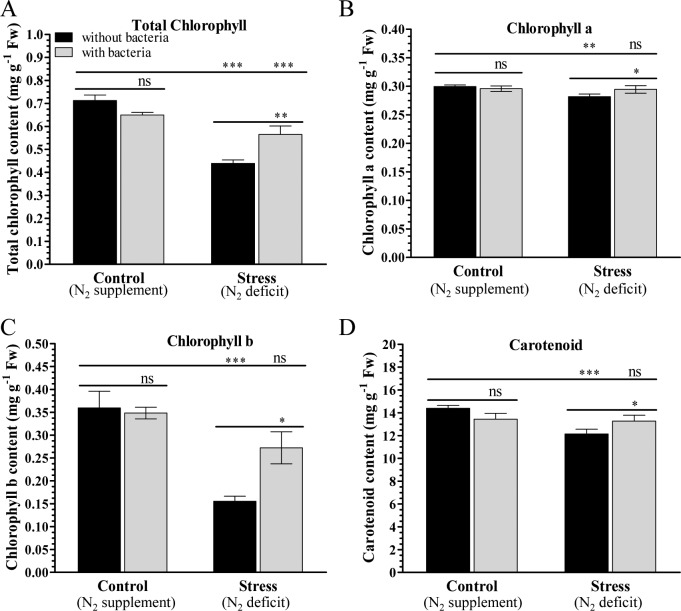
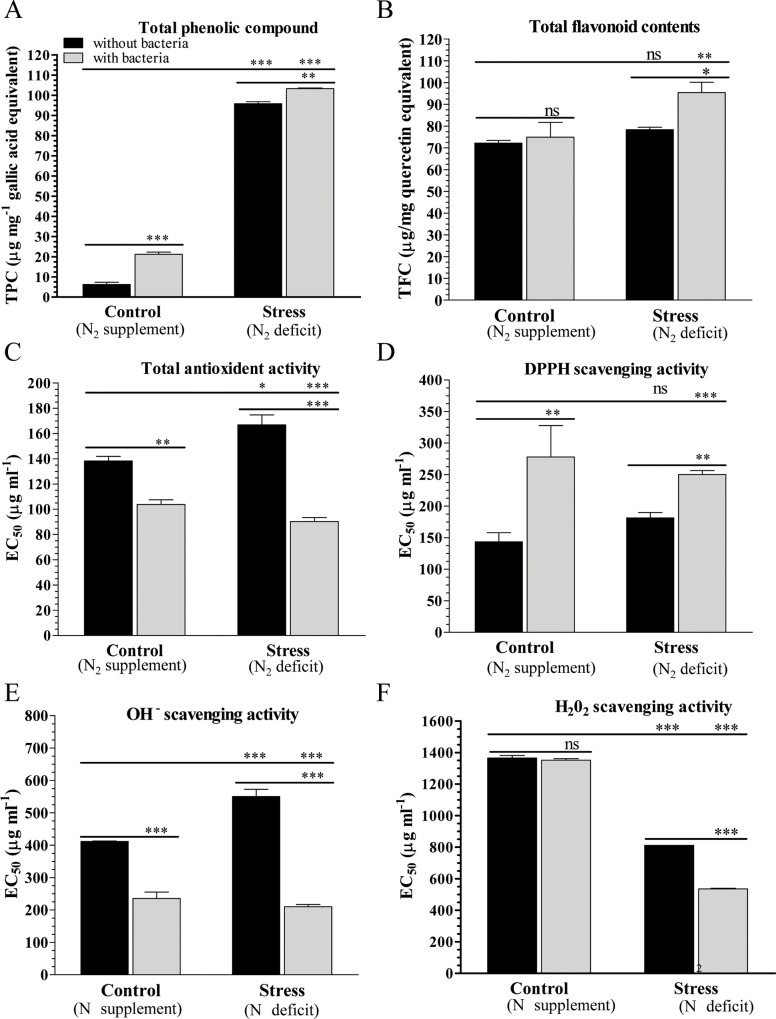
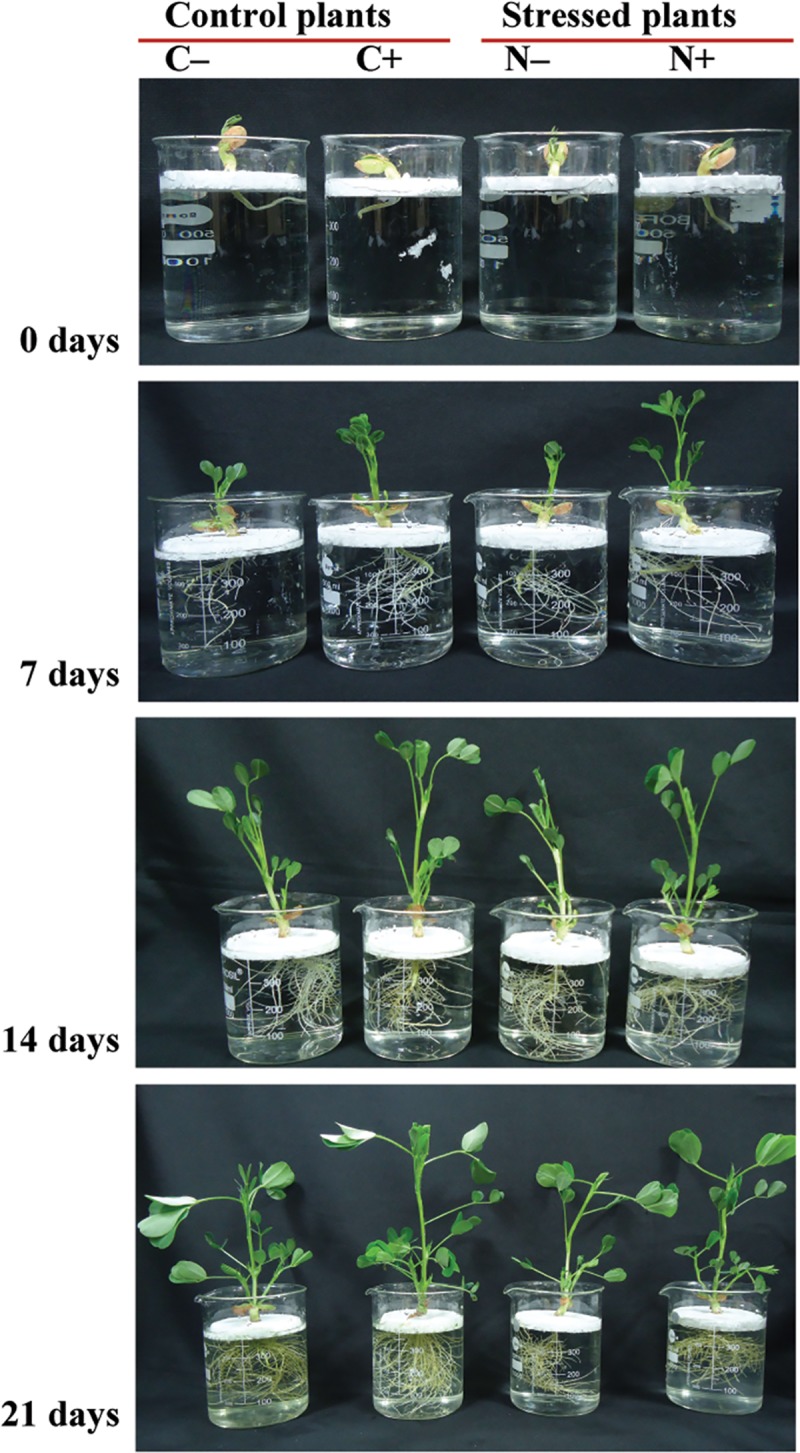
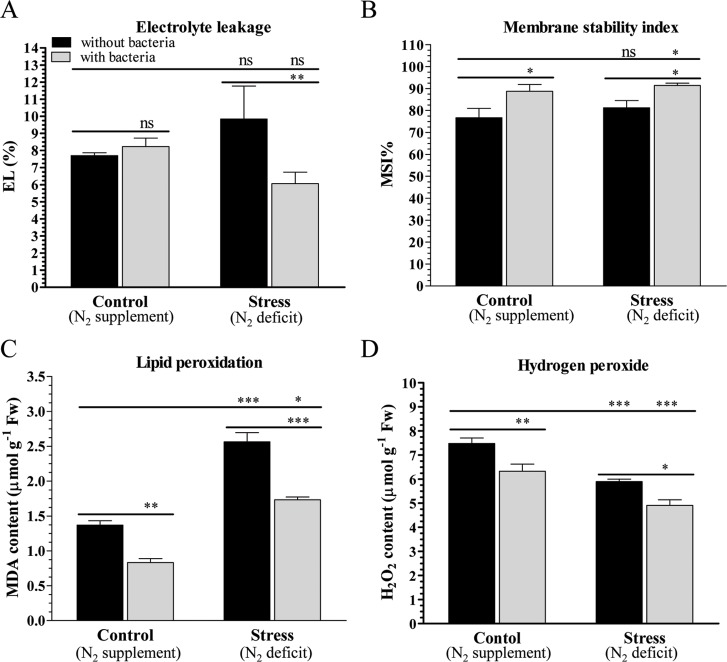
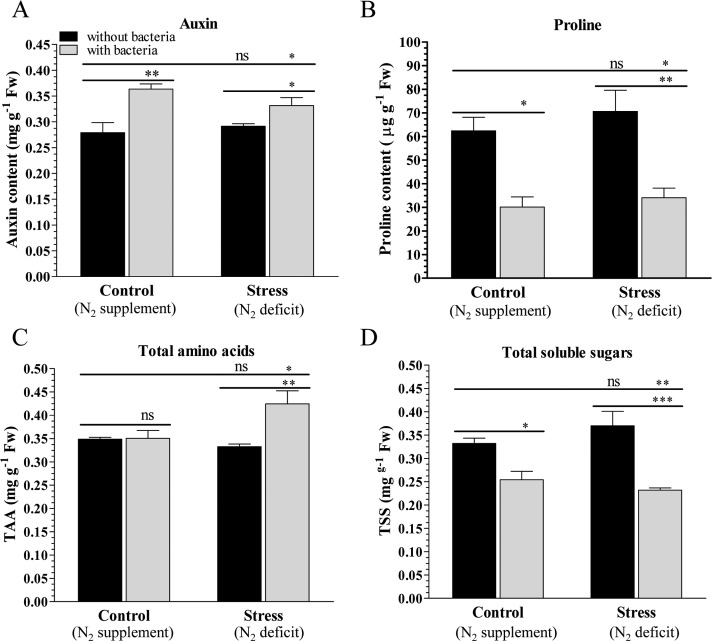
Arachis hypogea (Peanut) is one of the most important crops, and it is harvested and used for food and oil production. Being a legume crop, the fixation of atmospheric nitrogen is achieved through symbiotic association. Nitrogen deficiency is one of the major constrains for loss of crop productivity. The bacterium Stenotrophomonas maltophilia is known for interactions with plants. In this study, characteristics that promote plant growth were explored for their ability to enhance the growth of peanut plants under N2 deficit condition. In the presence of S. maltophilia, it was observed that fatty acid composition of peanut plants was influenced and increased contents of omega-7 monounsaturated fatty acid and omega-6 fatty acid (γ-Linolenic acid) were detected. Plant growth was increased in plants co-cultivated with PGPR (Plant Growth Promoting Rhizobacteria) under normal and stress (nitrogen deficient) condition. Electrolyte leakage, lipid peroxidation, and H2O2 content reduced in plants, co-cultivated with PGPR under normal (grown in a media supplemented with N2 source; C+) or stress (nitrogen deficient N+) conditions compared to the corresponding control plants (i.e. not co-cultivated with PGPR; C-or N-). The growth hormone auxin, osmoprotectants (proline, total soluble sugars and total amino acids), total phenolic-compounds and total flavonoid content were enhanced in plants co-cultivated with PGPR. Additionally, antioxidant and free radical scavenging (DPPH, hydroxyl and H2O2) activities were increased in plants that were treated with PGPR under both normal and N2 deficit condition. Overall, these results indicate that plants co-cultivated with PGPR, S. maltophilia, increase plant growth, antioxidant levels, scavenging, and stress tolerance under N2 deficit condition. The beneficial use of bacterium S. maltophilia could be explored further as an efficient PGPR for growing agricultural crops under N2 deficit conditions. However, a detail agronomic study would be prerequisite to confirm its commercial role.
落花生(花生)是最重要的作物之一,它被收获并用于食品和油生产。作为豆科作物,通过共生关系实现大气氮的固定。氮缺乏是作物生产力损失的主要限制因素之一。嗜麦芽寡养单胞菌是一种与植物相互作用的细菌。在这项研究中,研究了促进植物生长的特性,以研究它们在氮缺乏条件下增强花生植物生长的能力。在嗜麦芽寡养单胞菌存在的情况下,观察到花生植物的脂肪酸组成受到影响,并检测到ω-7 单不饱和脂肪酸和 ω-6 脂肪酸(γ-亚麻酸)的含量增加。在正常和应激(氮缺乏)条件下,与植物促生菌(PGPR)共培养的植物的生长增加。与对照植物(即未与 PGPR 共培养的植物;C-)相比,在正常条件(在添加氮源的培养基中生长;C+)或应激(氮缺乏 N+)条件下与 PGPR 共培养的植物中,电解质泄漏、脂质过氧化和 H2O2 含量降低。与对照植物(即未与 PGPR 共培养的植物;C-)相比,在正常条件(在添加氮源的培养基中生长;C+)或应激(氮缺乏 N+)条件下与 PGPR 共培养的植物中,生长激素生长素、渗透调节剂(脯氨酸、总可溶性糖和总氨基酸)、总酚类化合物和总类黄酮含量增加。在正常和 N2 缺乏条件下,用 PGPR 处理的植物的抗氧化剂和自由基清除(DPPH、羟基和 H2O2)活性增加。总的来说,这些结果表明,与 PGPR、嗜麦芽寡养单胞菌共培养的植物在 N2 缺乏条件下增加植物生长、抗氧化水平、清除和应激耐受。可以进一步探索细菌嗜麦芽寡养单胞菌的有益利用,作为在 N2 缺乏条件下生长农业作物的有效 PGPR。然而,需要进行详细的农业研究来确认其商业作用。