Hasan Shamimul, Saeed Shazina, Panigrahi Rajat, Choudhary Priyadarshini
Department of Oral Medicine and Radiology, Faculty of Dentistry, Jamia Millia Islamia, New Delhi, India.
Amity Institute of Public Health, Amity University, Noida, Uttar Pradesh, India.
J Int Soc Prev Community Dent. 2019 Jun 19;9(4):316-327. doi: 10.4103/jispcd.JISPCD_433_18. eCollection 2019 Jul-Aug.
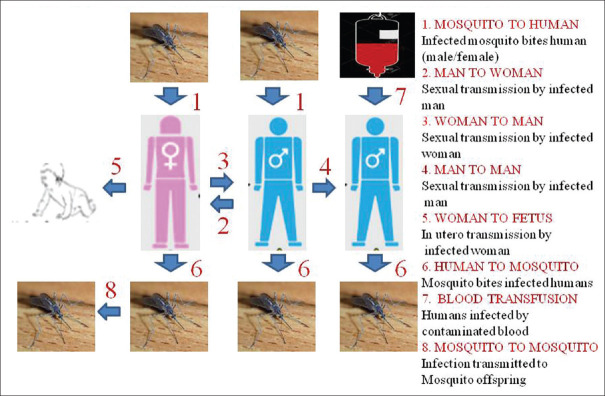
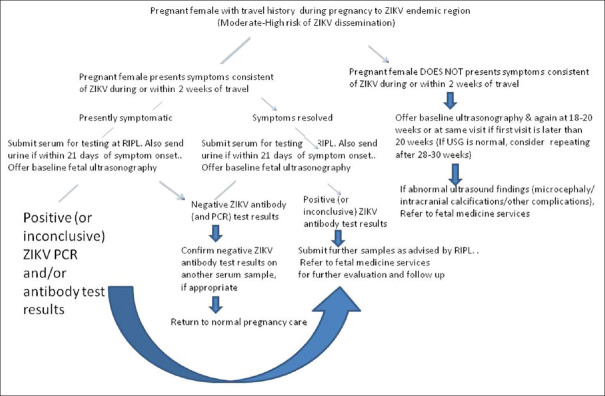
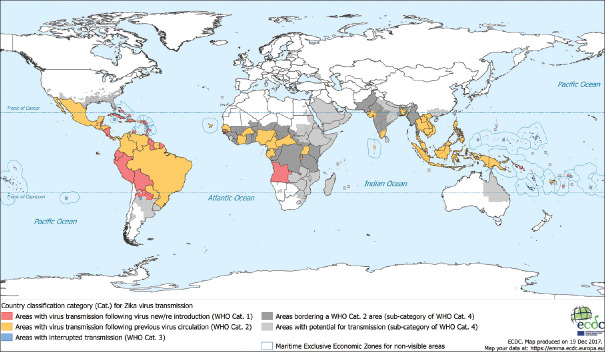
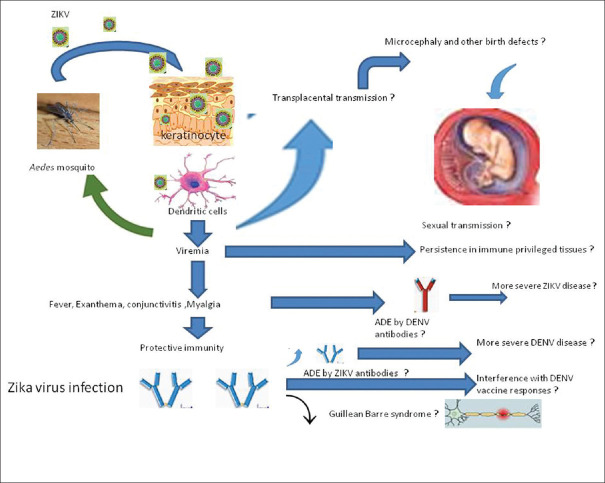
Zika virus (ZIKV) is a RNA virus and belongs to genus and family . The virus was first discovered from a febrile primate from the Zika forests of Uganda in 1947 and the first human case was documented in 1954. The nonspecific clinical manifestations of ZIKV pose diagnostic dilemmas and delays early and effective treatment. Dental professionals should have a thorough knowledge about the virus and should follow standard infection control measures as the virus has been demonstrated in various body secretions (including salivary secretions). The disease is managed by symptomatic and supportive care and no vaccine exist till date. Recent ZIKV outbreaks and increase association of microcephaly with congenital ZIKV and neurological complications (Guillain-Barré syndrome) has drawn global public health attention. The World Health Organization declared it a public health emergency of international concern in 2016. This review article provides a detailed overview on ZIKV; it is clinical and oral manifestations, diagnostic aids, differential diagnosis, preventive aspects, and management protocol.
寨卡病毒(ZIKV)是一种RNA病毒,属于[属名]属和[科名]科。该病毒于1947年首次从乌干达寨卡森林的一只发热灵长类动物身上发现,1954年记录了首例人类病例。寨卡病毒的非特异性临床表现带来了诊断难题,延误了早期有效治疗。牙科专业人员应全面了解该病毒,并应遵循标准的感染控制措施,因为该病毒已在各种体液(包括唾液分泌物)中被证实存在。该疾病通过对症和支持治疗进行管理,目前尚无疫苗。近期寨卡病毒的爆发以及小头畸形与先天性寨卡病毒和神经并发症(格林-巴利综合征)之间关联的增加引起了全球公共卫生关注。世界卫生组织于2016年宣布其为国际关注的突发公共卫生事件。这篇综述文章提供了关于寨卡病毒的详细概述;包括其临床和口腔表现、诊断辅助手段、鉴别诊断、预防方面以及管理方案。